
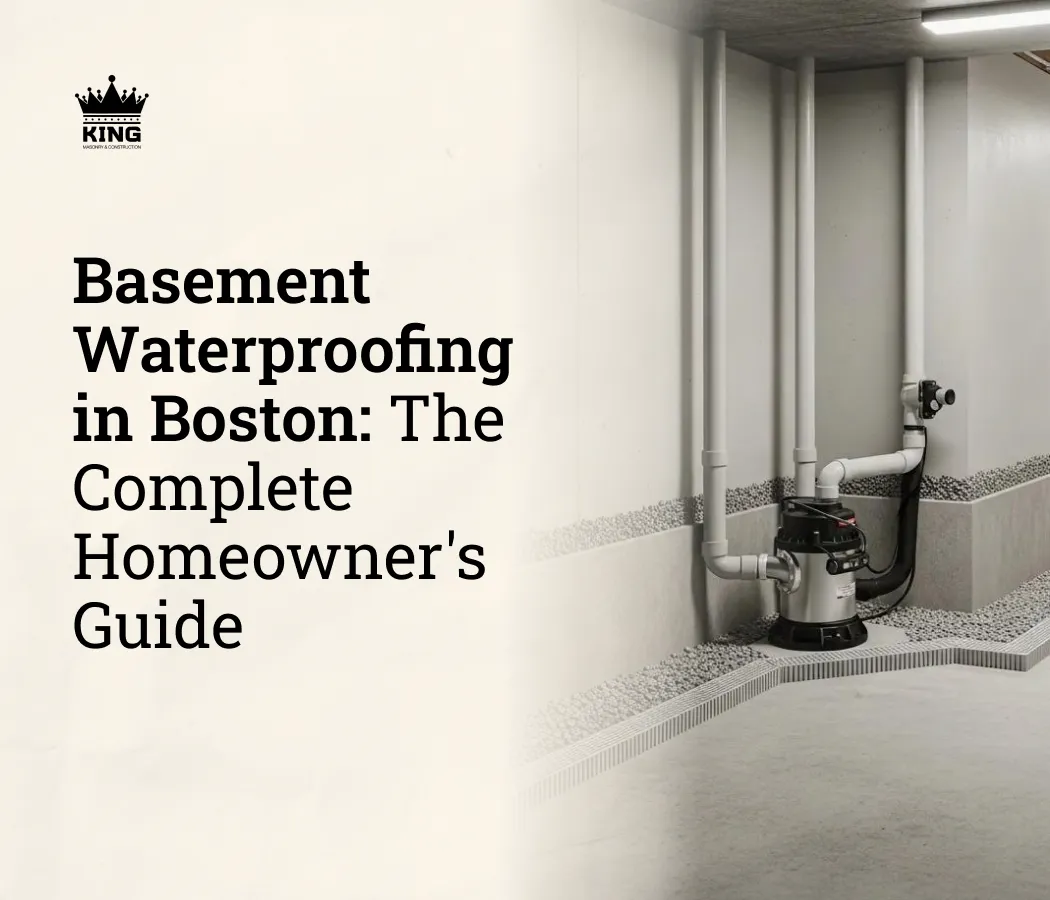
Basement Waterproofing in Boston: The Complete Homeowner's Guide
A wet basement is one of the most common problems homeowners face in the Boston area, and it is rarely a one-time fix. Between the region's clay-heavy soil, aging housing stock, and freeze-thaw winters, basements across Greater Boston take on water in ways that are often invisible until the damage is already done. This guide covers why Boston basements flood, how to spot the early warning signs, what waterproofing actually involves, what it costs, and how to prevent the problem from coming back.
Why Boston Basements Are Prone to Water Damage
Boston's basement water problems come down to a combination of geology, climate, and construction age.
Clay soil and poor drainage. Much of Greater Boston sits on dense clay soil that does not drain well. When it rains, water has nowhere to go and pools against foundation walls instead of dispersing into the ground. Over time, that hydrostatic pressure pushes water through cracks, joints, and porous concrete.
High water table in low-lying areas. Neighborhoods closer to the Charles River, harbor areas, and low-elevation towns south of the city often deal with a naturally high water table. Even without heavy rainfall, groundwater can seep into a basement simply because the foundation sits below the water line for part of the year. For a focused look at the top solutions homeowners in these areas rely on, see our guide on basement waterproofing in Boston, MA.
Freeze-thaw cycles. New England winters put constant stress on concrete and mortar. Water that gets into small cracks freezes, expands, and widens the crack. By spring, what was a hairline crack in November can be a active leak point.
Aging housing stock. Many homes in Boston, Brookline, Newton, Dedham, and surrounding towns were built decades before modern waterproofing membranes and drainage systems were standard practice. Original foundations were often built with minimal or no exterior waterproofing at all, which means the problem has usually been building for years before a homeowner notices it.
Grading and gutter issues. It is common for the ground around older homes to have settled unevenly over the decades, sometimes sloping toward the foundation instead of away from it. Combined with clogged or poorly placed gutters, this sends roof runoff directly toward the basement walls.
Signs You Need Basement Waterproofing
Basement water problems rarely announce themselves with a dramatic flood. Most start small and get worse. Watch for:
A musty, damp smell that does not go away with ventilation
Visible mold or mildew on walls, framing, or stored items
White, chalky mineral deposits on concrete walls (efflorescence)
Peeling paint or bubbling on basement walls
Damp or discolored patches on walls or floors after rain
Water stains or rust on the base of support posts
Cracks in the foundation wall, especially horizontal or stair-step cracks
A sump pump that runs constantly, or one that has never been tested
Warped baseboards, damaged drywall, or a spongy feel underfoot near the walls
If you are noticing any combination of these, it is worth having the foundation assessed before the damage spreads to framing, insulation, or finished basement space. Some of these symptoms overlap with structural issues rather than just moisture, so it helps to understand the different types of foundation cracks before assuming the fix is purely a waterproofing one.
Interior vs. Exterior Basement Waterproofing
There are two fundamentally different approaches to keeping water out of a basement, and most homes benefit from a combination of the two.
Exterior waterproofing addresses the problem at the source. This typically involves excavating around the foundation, applying a waterproof membrane or coating to the exterior wall, and installing an exterior drain system that channels water away before it ever reaches the concrete. It is more invasive and costs more upfront, but it stops water from entering the wall assembly at all, rather than just managing what gets through.
Interior waterproofing manages water after it has already reached the inside of the foundation wall. This usually means installing an interior drainage channel along the perimeter of the basement floor, connected to a sump pump system that collects and discharges the water. Interior systems are less disruptive to install and typically less expensive, but they do not stop water from penetrating the wall itself; they just intercept it before it floods the living space.
For a full breakdown of when each method makes sense, see our comparison of interior vs. exterior basement waterproofing. In many Boston-area homes, the right solution combines both: exterior grading and drainage improvements to reduce the water load, paired with an interior system as a backup.
French Drains, Sump Pumps, and Interior Drainage Systems
Two components come up in almost every basement waterproofing plan.
French drains are trenches filled with gravel and a perforated pipe that redirect water away from the foundation before it becomes a problem. They can be installed on the exterior, around the perimeter of the foundation, or as part of an interior drainage system beneath the basement floor. We cover installation specifics in our guide to French drain installation in Boston.
Sump pumps are the last line of defense. Water that collects in an interior drain or sump pit needs somewhere to go, and the sump pump is what moves it out of the house. A pump that is undersized, aging, or lacking a battery backup is one of the most common reasons a basement floods during a major storm even after waterproofing work has been done. If you are budgeting for this, our sump pump cost guide for Massachusetts breaks down pricing by pump type. If your existing pump has already failed, our emergency sump pump repair page covers what to expect from a same-week fix.
For homes with crawl spaces rather than full basements, the same moisture principles apply. See our dedicated guide on crawl space waterproofing in Massachusetts for how that process differs.
Basement Waterproofing Cost in Boston
Cost is usually the first question homeowners ask, and the honest answer is that it depends heavily on which method your basement needs and how much of the foundation is affected.
Interior waterproofing systems, including an interior drain and sump pump, are generally the more affordable option since they do not require excavation. Exterior waterproofing, which involves digging along the foundation to apply a membrane and install exterior drainage, costs more due to the labor and equipment involved, but it addresses the water problem at its source rather than managing symptoms.
Other factors that affect the final price include:
The length of foundation wall that needs treatment
Whether excavation is needed and how accessible that side of the house is
Whether a sump pump, battery backup, or additional discharge line is required
The extent of any existing damage that needs repair before waterproofing can begin
Whether crack injection or structural repair is needed alongside the waterproofing itself
We break down full pricing ranges by method and scope in our dedicated basement waterproofing cost guide for Boston, which is the best starting point if you are trying to budget for a project. It is worth getting a written, itemized quote rather than a flat number, since two homes with the same square footage can require very different scopes of work depending on soil conditions and existing damage.
How to Prevent Basement Flooding
Waterproofing work is most effective when it is paired with ongoing prevention. Some of the most effective, lowest-cost steps homeowners can take include:
Clean gutters and downspouts regularly. Clogged gutters send water straight down the foundation wall instead of away from the house.
Extend downspouts at least 4 to 6 feet from the foundation. A short downspout defeats the purpose of the gutter system entirely.
Check and correct grading. The ground around your foundation should slope away from the house, not toward it. Settled soil is a common and often overlooked cause of basement leaks.
Test your sump pump before storm season. Pour a bucket of water into the sump pit and confirm the pump activates and discharges properly.
Install a battery backup for your sump pump. Many basement floods happen during storms that also cause power outages, which is exactly when a standard sump pump stops working.
Seal visible cracks early. Small cracks are far less expensive to address than the water damage they eventually cause.
Monitor humidity levels. A basement dehumidifier can catch moisture problems before they turn into mold.
For a deeper walkthrough of storm-specific prevention steps, see our guide on how to prevent basement flooding during heavy rain. If you are already dealing with water actively coming through your walls, our guide on how to stop water seeping through basement walls covers immediate steps to take before a permanent fix is in place.
What Happens If You Wait
Postponing basement waterproofing rarely makes the problem smaller. Left alone, moisture intrusion tends to progress in a fairly predictable way: efflorescence and musty odors give way to visible mold growth, then to weakened framing and insulation, and eventually to structural concerns like a bowing basement wall as prolonged hydrostatic pressure takes a toll on the foundation itself. Our guide on how to get rid of musty smells and mold in a basement is a useful read if you are already noticing air quality issues.
Foundation movement caused by long-term water exposure can also compound with other structural issues, which is why waterproofing and foundation crack repair are so often addressed together rather than as separate projects.
DIY vs. Professional Waterproofing
Some prevention steps, like cleaning gutters, fixing grading, and testing a sump pump, are reasonable DIY tasks. Anything involving excavation, foundation membranes, structural crack repair, or a new interior drainage system should be handled by a licensed contractor. Waterproofing work that is installed incorrectly, such as a drain with insufficient slope or a membrane that is not properly sealed at the footing, tends to fail quietly. The homeowner does not find out until the next major storm, at which point the original problem is often worse and more expensive to fix.
A professional assessment will also catch problems a homeowner might miss, such as early foundation cracking hidden behind finished walls or a discharge line that empties too close to the house and recirculates water back toward the foundation.
Choosing a Basement Waterproofing Contractor in Boston
When evaluating contractors, look for:
A track record specifically with Boston-area soil and foundation types, not just general waterproofing experience
Clear, itemized quotes that specify method, materials, and warranty terms
Willingness to explain why they recommend interior, exterior, or a combined system for your specific home
Experience integrating waterproofing with related structural work, since many basement issues involve more than moisture alone
At Kings Masonry & Construction, we handle basement waterproofing across the Greater Boston area alongside our foundation, drainage, and masonry work, which means a single team can address water intrusion, foundation cracking, and structural repair together rather than treating them as separate projects. Our drainage and waterproofing services cover interior and exterior systems, French drains, and sump pump installation, and our foundation and basement services address structural repair when water damage has gone beyond a moisture issue.
We also work with commercial properties; if you are managing a multi-unit or commercial building, see our guide on commercial building waterproofing in Massachusetts. For foundations that have shifted or settled significantly, we also install helical piers; our comparison of push piers vs. helical piers explains when that level of intervention is necessary.
We serve homeowners throughout Boston and the surrounding area, including Brookline, Dedham, Braintree, Norwood, and communities across the South Shore. Visit our service area page for the full list of towns we cover.
Frequently Asked Questions
How much does basement waterproofing cost in Boston? Cost depends on whether your home needs interior drainage, exterior excavation and membrane work, or both, along with the length of foundation wall involved and any existing damage. Our basement waterproofing cost guide breaks down typical pricing by method.
What is the best way to waterproof a basement? There is no single best method for every home. Interior systems manage water after it enters the wall, while exterior systems stop it from getting in at all. Most Boston-area homes benefit from a combination of both, along with grading and gutter improvements on the exterior.
Can I waterproof my basement myself? Homeowners can handle basic prevention steps like grading corrections, gutter maintenance, and sump pump testing. Installing drainage systems, membranes, or addressing foundation cracks should be left to a licensed contractor, since improperly installed systems tend to fail without warning.
How long does basement waterproofing last? A properly installed exterior waterproofing system with quality materials can last several decades. Interior drainage and sump pump systems require more regular maintenance, including periodic pump testing and occasional component replacement.
Does homeowners insurance cover basement waterproofing? Coverage varies significantly by policy and by the cause of the water intrusion. Gradual seepage and groundwater issues are typically not covered, while sudden events like a burst pipe may be. Check your specific policy or speak with your insurance provider directly for confirmation.
What is the difference between waterproofing and damp proofing? Damp proofing is a lighter-duty coating meant to resist moisture absorption through concrete, but it is not designed to hold back standing water or significant hydrostatic pressure. Waterproofing systems, including membranes and drainage components, are built to manage active water intrusion.