
Bowing Basement Wall Repair Boston: Causes, Methods & When to Act
A bowing or leaning basement wall is not a cosmetic issue. It is a structural warning sign that your foundation is under pressure it was not designed to handle and in Boston's climate, that pressure compounds every season if left unaddressed.
Here's what causes basement walls to bow, how to identify the severity, and what repair options actually work.
What Causes Basement Walls to Bow or Lean?
Hydrostatic Pressure
The most common cause. Water-saturated soil expands and pushes hard against foundation walls from the outside. Boston's summer shrink-swell cycle dry soil followed by intense rain creates repeated cycles of lateral pressure that gradually push walls inward. Read more about how summer destroys your foundation and the shrink-swell cycle in detail.
Freeze-Thaw Cycling
Water in the soil freezes and expands in winter, exerting direct outward-then-inward pressure on basement walls. Over decades of Boston winters, this cycling progressively weakens the wall's resistance to lateral movement.
Poor Drainage
Gutters that deposit water against the foundation, downspouts that terminate at grade, and soil graded toward the home all concentrate water against the foundation wall amplifying hydrostatic pressure beyond what the wall was designed to resist. A properly functioning drainage system is one of the most effective ways to reduce this pressure.
Soil Type
Greater Boston's clay-heavy soils are particularly prone to significant expansion when wet. Clay soil exerts more lateral pressure against foundation walls than sandy or loam soils making Boston homes more vulnerable to wall bowing than homes in drier or sandier regions.
Age and Deterioration
Older Boston foundations particularly those built before 1950 with unreinforced concrete block or brick lose structural integrity over decades. Deteriorated mortar joints, carbonation of concrete, and corroded reinforcement all reduce a wall's resistance to lateral pressure.
How to Identify the Severity of a Bowing Basement Wall
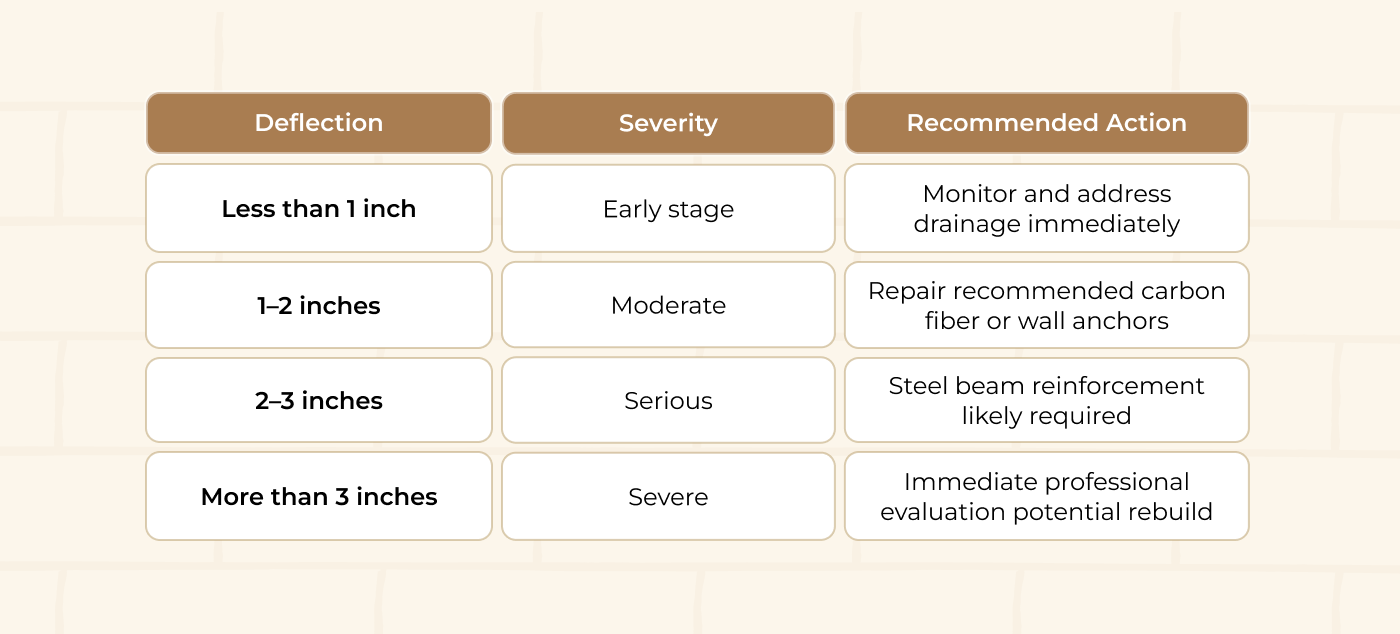
Not every bowing wall is an emergency but all bowing walls require professional evaluation. Severity is typically measured by the degree of inward deflection.
Additional warning signs that indicate urgent action:
Horizontal cracks running along a consistent height the most serious crack pattern in a basement wall
Cracks that are widening since you first noticed them
Wall visibly separated from the floor or ceiling
Doors or windows on the floor above sticking or misaligning
Basement Wall Repair Methods
1. Carbon Fiber Straps
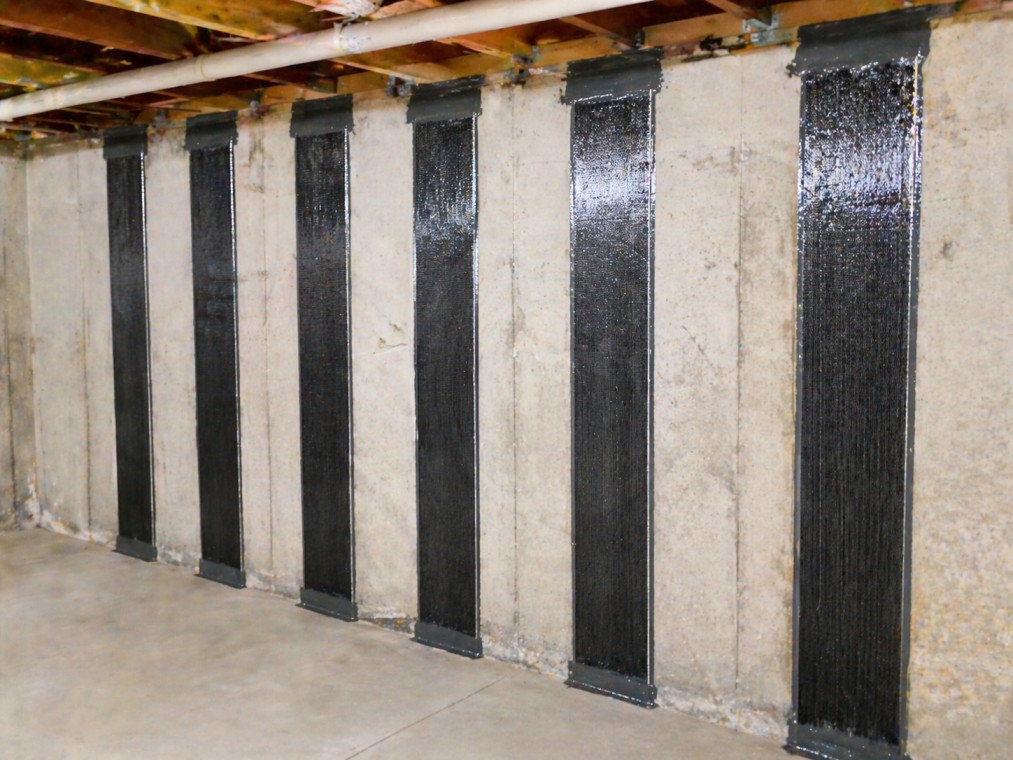
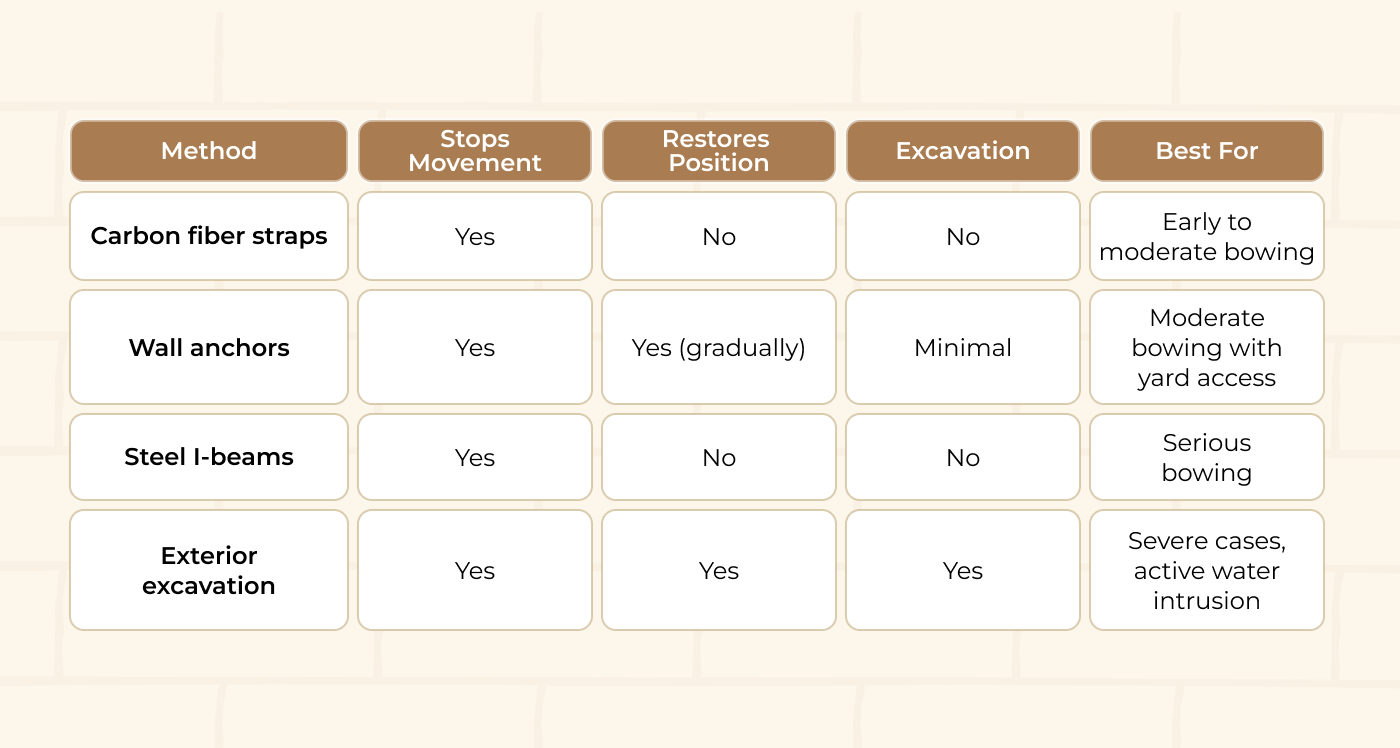
Carbon fiber straps are bonded vertically to the interior face of the bowing wall, anchored to the floor and ceiling framing. They prevent further inward movement without requiring excavation.
Best for: Walls with less than 2 inches of deflection that have not yet reached critical movement threshold. Carbon fiber does not push the wall back it stabilizes it in place.
Advantages: No excavation, minimal disruption, high tensile strength, does not corrode.
2. Wall Anchors
Steel wall anchors are installed through the foundation wall and anchored in stable soil beyond the pressure zone. Over time, the anchor bolts can be tightened to gradually straighten the wall back toward its original position.
Best for: Walls with moderate bowing where gradual straightening is desired and there is sufficient yard space for anchor placement.
Advantages: Can restore wall position over time, long-term solution, works in most soil conditions.
3. Steel I-Beam Reinforcement
Steel beams are installed vertically against the interior face of the wall, anchored to the floor and ceiling joists. They provide immediate structural support and resist further movement.
Best for: Walls with significant bowing 2-3 inches or more where carbon fiber alone is insufficient.
Advantages: High load capacity, immediate stabilization, appropriate for severely compromised walls.
4. Exterior Excavation and Wall Repair
The most comprehensive solution excavating around the foundation, relieving hydrostatic pressure, repairing the wall from the outside, and applying exterior waterproofing and drainage to prevent recurrence.
Best for: Walls with severe deflection, active water intrusion combined with structural movement, or where interior methods alone are insufficient.
Repair Method Comparison
Why Boston Homes Are Particularly Vulnerable
Boston's combination of clay-heavy soil, aggressive freeze-thaw cycling, aging housing stock, and intense summer storms creates more lateral pressure on basement walls than most other climates. Many Greater Boston homes were built without the drainage systems and waterproofing standards that are now standard in new construction.
In neighborhoods like Dorchester, South Boston, Jamaica Plain, and Brookline where most homes predate 1950 unreinforced concrete block and brick foundations are the norm. These walls have less inherent resistance to lateral pressure than modern poured concrete and require earlier intervention when bowing begins.
Act Before the Next Winter
Every freeze-thaw cycle adds pressure to a bowing wall. Every summer storm saturates the surrounding soil and pushes harder. A wall that is bowing 1 inch today is not going to reverse itself it will be bowing more next spring if the underlying pressure is not addressed.
Kings Masonry & Construction provides professional foundation wall repair and stabilization. Schedule a free structural assessment before the next season adds more pressure.
FAQ
How do I know if my basement wall is bowing?
Stand at one end of the wall and sight along its length a straight wall should have no visible curve. Place a long level or straight board against the wall to measure deflection. Horizontal cracks running along the middle third of the wall height are a reliable indicator of lateral pressure and bowing
How long does basement wall repair take?
Carbon fiber strap installation is typically completed in 1-2 days. Wall anchor installation takes 1–3 days. Steel beam reinforcement takes 2-4 days. Exterior excavation projects take 3–7 days depending on foundation perimeter and site conditions.
Will basement wall repair affect my home's resale value?
Professionally repaired and documented structural issues are significantly better for resale than undisclosed or unrepaired problems. Buyers and inspectors identify bowing walls a documented professional repair with warranty is a stronger position than an unaddressed structural issue.
Is a cracked basement wall the same as a bowing wall?
Not necessarily. Vertical cracks are often from settling or shrinkage and may not indicate lateral pressure. Horizontal cracks running parallel to the ground along the middle of the wall are the primary indicator of lateral soil pressure and bowing. Stair-step cracks indicate differential settling. A professional inspection identifies which type of movement is occurring and the appropriate repair.