
How Summer Destroys Your Foundation
Most Boston homeowners worry about winter damage but summer is quietly doing just as much harm to your foundation. The cycle of intense heat followed by sudden heavy rain creates conditions that crack, shift, and weaken foundations season after season.
Here's what's actually happening beneath your home and how to stop it.
The "Shrink-Swell" Cycle: Boston's Hidden Foundation Threat
Boston summers follow a pattern: prolonged dry heat, then intense rainstorms. For your foundation, this back-and-forth is destructive.
When soil dries out, it shrinks and pulls away from foundation walls. When heavy rain follows, that same soil rapidly absorbs water and expands pushing hard against the foundation. This repeated shrinking and swelling is the root cause of most summer foundation damage in Boston.
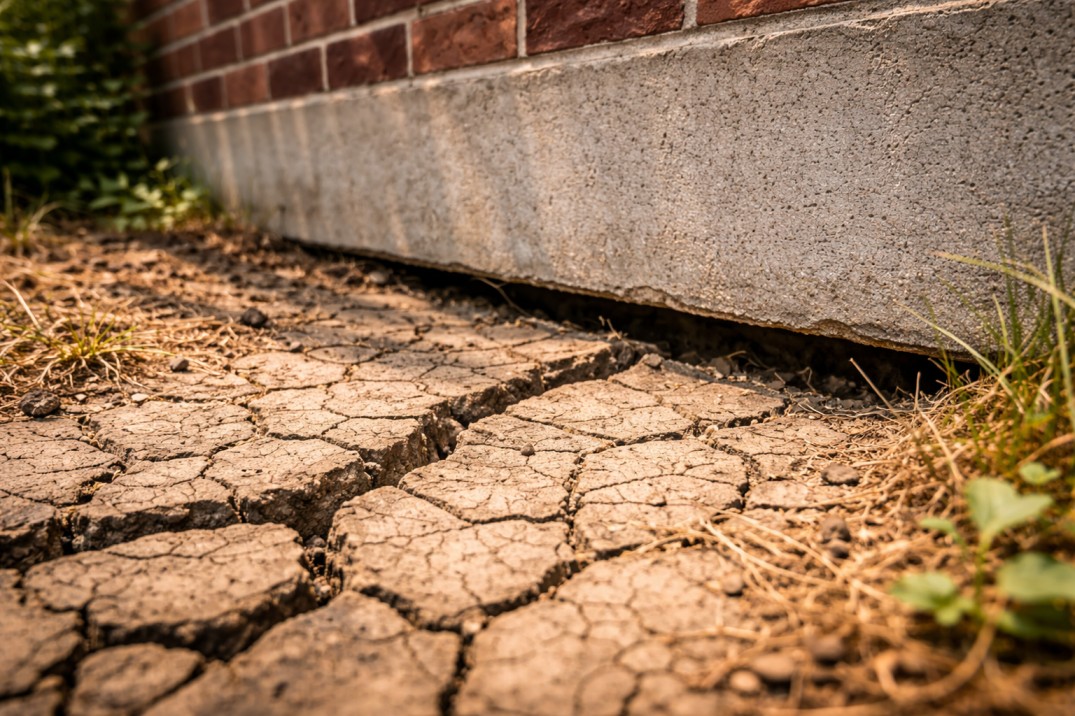
How Heat Damages Your Foundation
During hot, dry periods, clay-rich New England soil dehydrates and contracts significantly.
Foundation settlement shrinking soil pulls away from walls, removing support and causing the foundation to sink or shift unevenly
Structural cracks uneven settling leads to cracks in concrete or masonry, which can show up as sloping floors, sticking doors, or cracked drywall
Risk to older buildings in neighborhoods like Back Bay, prolonged drought can threaten the wooden piles supporting older structures if groundwater drops low enough to expose them to air
How Summer Rain Damages Your Foundation
When significant rain follows a dry spell, the parched soil absorbs water rapidly and swells creating a serious force against your foundation walls.
Hydrostatic pressure expanding, water-saturated soil pushes against foundation walls, causing them to crack, bow inward, or leak
Water intrusion cracks formed during dry periods become entry points for water, leading to basement flooding and mold growth
Soil erosion heavy downpours wash away soil around the foundation, leaving it unsupported on one or more sides
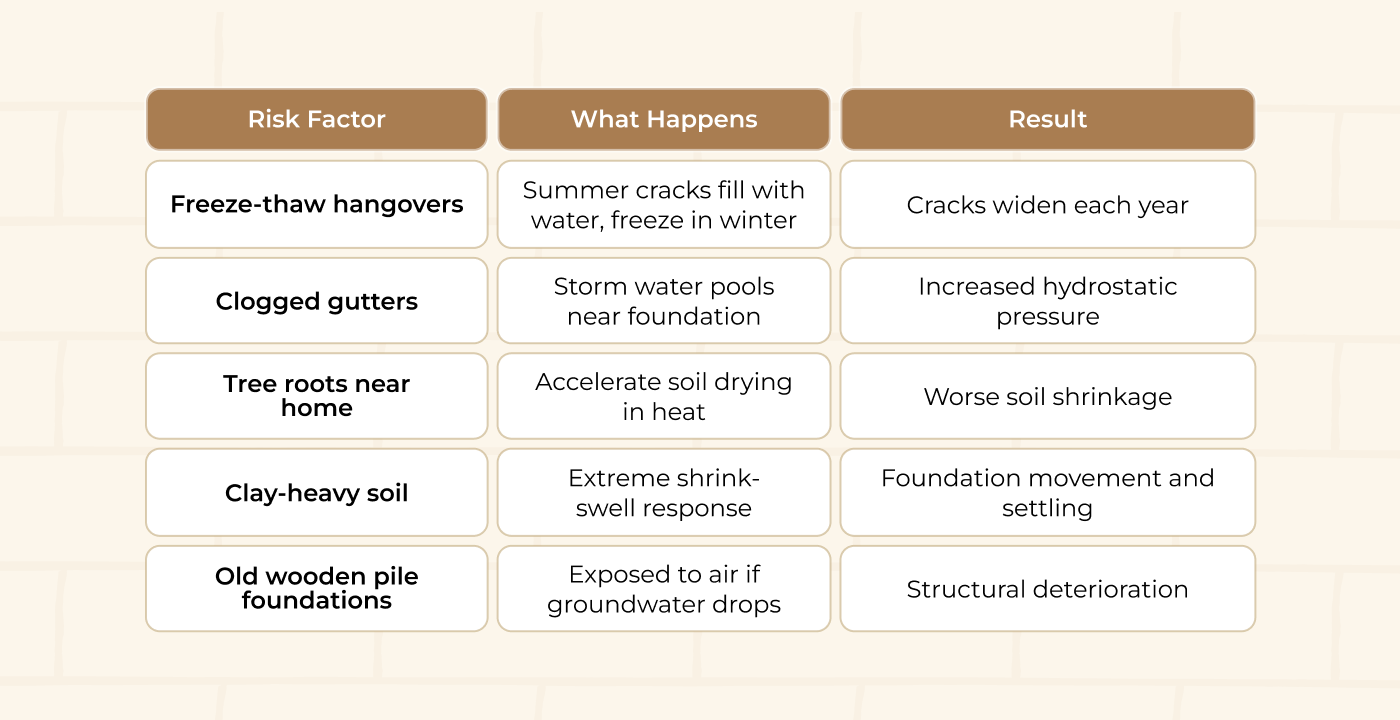
Boston-Specific Risks to Watch For
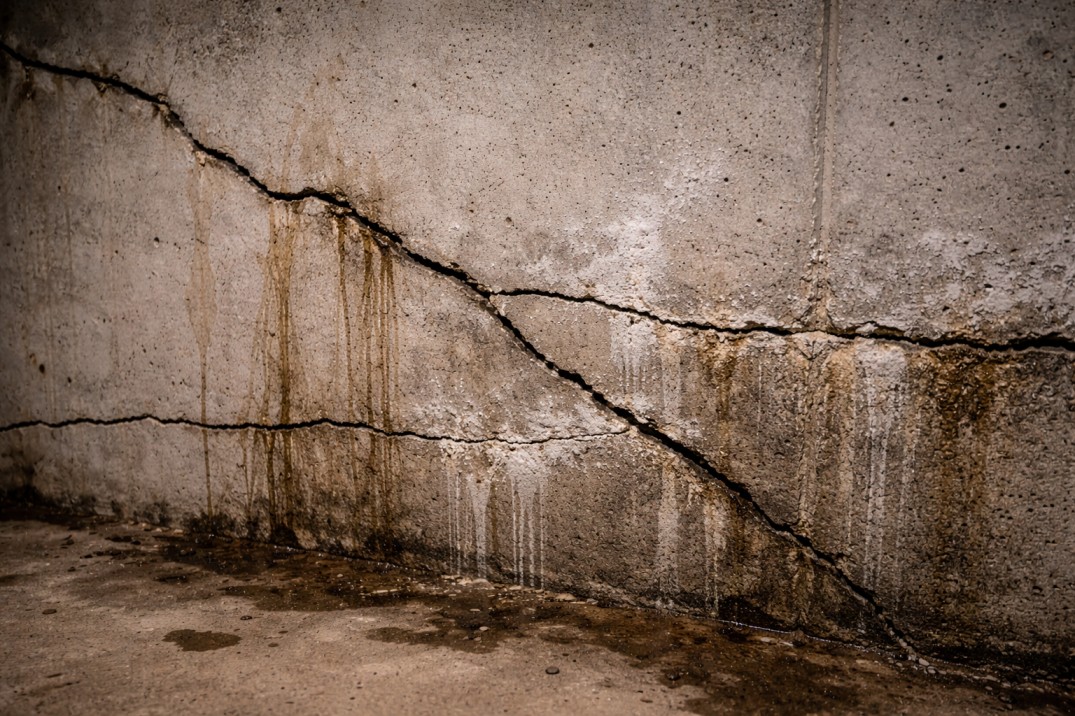
Warning Signs Your Foundation Has Summer Damage
Inspect your foundation and interior regularly especially after heavy rain:
Diagonal cracks in foundation walls or interior drywall
Doors or windows sticking that previously opened smoothly
Bowing or leaning basement walls
Water seepage or damp spots in the basement after rain
Uneven or sloping floors
Gaps between walls and ceiling or floor
Pro tip: A crack wider than a quarter-inch, or any horizontal crack in a basement wall, should be evaluated by a foundation professional immediately.
4 Proactive Steps to Protect Your Foundation This Summer
1. Keep soil moisture consistent During hot, dry spells, use a soaker hose placed 1-2 feet from the foundation to prevent soil from drying out and pulling away.
2. Clean gutters and extend downspouts Ensure downspouts direct water at least 5-10 feet away from the foundation. Clogged gutters dump concentrated water right at your foundation walls.
3. Check your grading The ground around your home should slope away from the foundation. Flat or inward-sloping ground allows water to pool and increase hydrostatic pressure.
4. Monitor and document cracks Take photos of any existing cracks. After each heavy rain, check if they've grown. New diagonal cracks or sudden changes in doors and windows are red flags.
Don't Wait for Cracks to Spread
Summer foundation damage in Boston is progressive small cracks become structural problems, and structural problems become costly rebuilds. A professional inspection after a dry spell or heavy rain season gives you an accurate picture of what's happening and what needs to be addressed now.
Kings Masonry & Construction provides professional foundation crack repair and waterproofing solutions across Boston, Brookline, Newton, and surrounding Greater Boston communities. If you noticed any of the signs above, get a free on-site estimate before the damage spreads.
Frequently Asked Questions
How do I know if my foundation has summer damage?
Look for diagonal cracks in walls, sticking doors or windows, bowing basement walls, water seepage after rain, and uneven floors. Any of these after a hot or rainy stretch warrants a professional inspection.
Is foundation cracking normal in Boston homes?
Hairline cracks from normal settling are common, especially in older homes. But cracks that are diagonal, horizontal, wider than a quarter-inch, or growing over time are not normal and need professional evaluation.
What is hydrostatic pressure and why does it matter?
Hydrostatic pressure is the force that water-saturated soil exerts against foundation walls. In Boston's summer rain cycles, this pressure builds rapidly and is one of the leading causes of basement wall cracking and bowing.
Can I waterproof my foundation myself?
Surface sealants are available for minor moisture control, but they don't address the underlying pressure or structural issues. Professional waterproofing including drainage systems and proper grading is needed for lasting results in New England's climate.
Should I repair foundation cracks before winter?
Absolutely. Cracks that form in summer fill with water in fall, which then freezes and expands in winter widening the damage significantly. Summer and early fall are the ideal windows for repair.