

French Drain Installation in Boston: What It Is, Cost & When You Need One | Kings Masonry
Water pooling in your yard, moisture seeping through basement walls, or soil that never fully dries out after rain these are not just nuisances. They are signs that water is accumulating where it shouldn't, and in Boston's climate, that accumulation causes progressive damage to your foundation, landscaping, and home structure.
A French drain is one of the most effective solutions when installed correctly for your specific situation.
What Is a French Drain?
A French drain is a subsurface drainage system that redirects groundwater and surface water away from a specific area before it can cause damage. It consists of a perforated pipe surrounded by clean gravel, installed in a sloped trench that channels water toward a safe discharge point away from your foundation, yard, or basement.
The name comes from Henry Flagg French, a 19th-century American farmer and judge who popularized the technique in his 1859 agricultural drainage guide not from France.
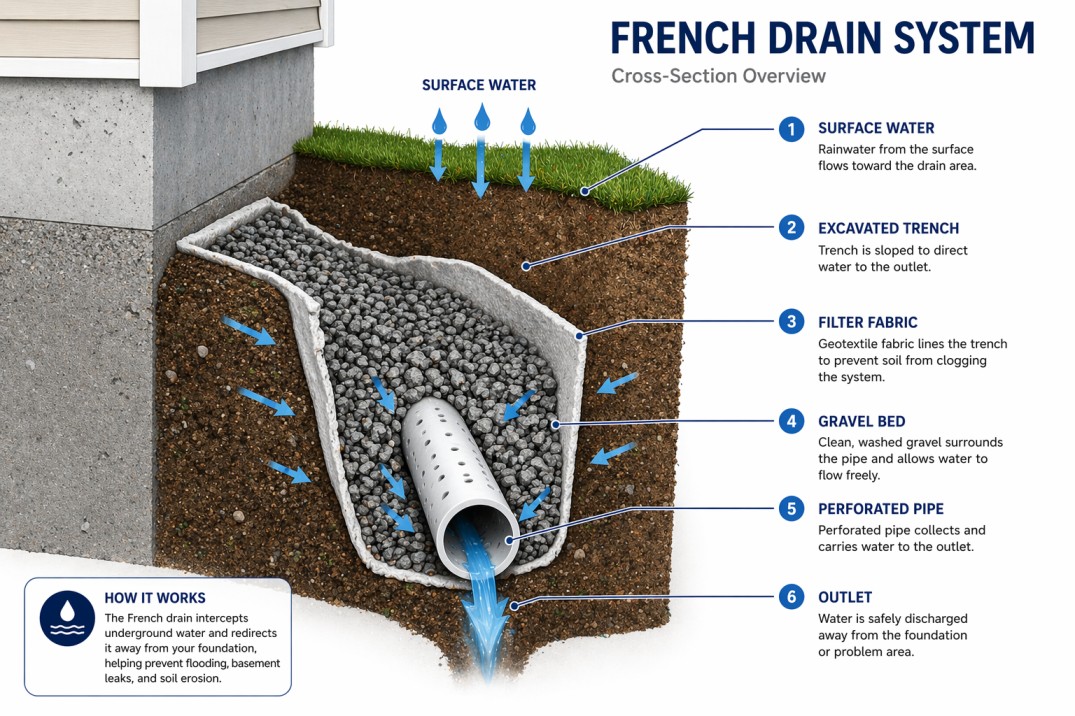
How it works:
Water enters the gravel bed through surface percolation or groundwater movement
The gravel filters out soil particles and directs water toward the perforated pipe
Water flows through the pipe, following the slope of the trench
Water discharges safely away from the problem area to a storm drain, daylight outlet, or dry well
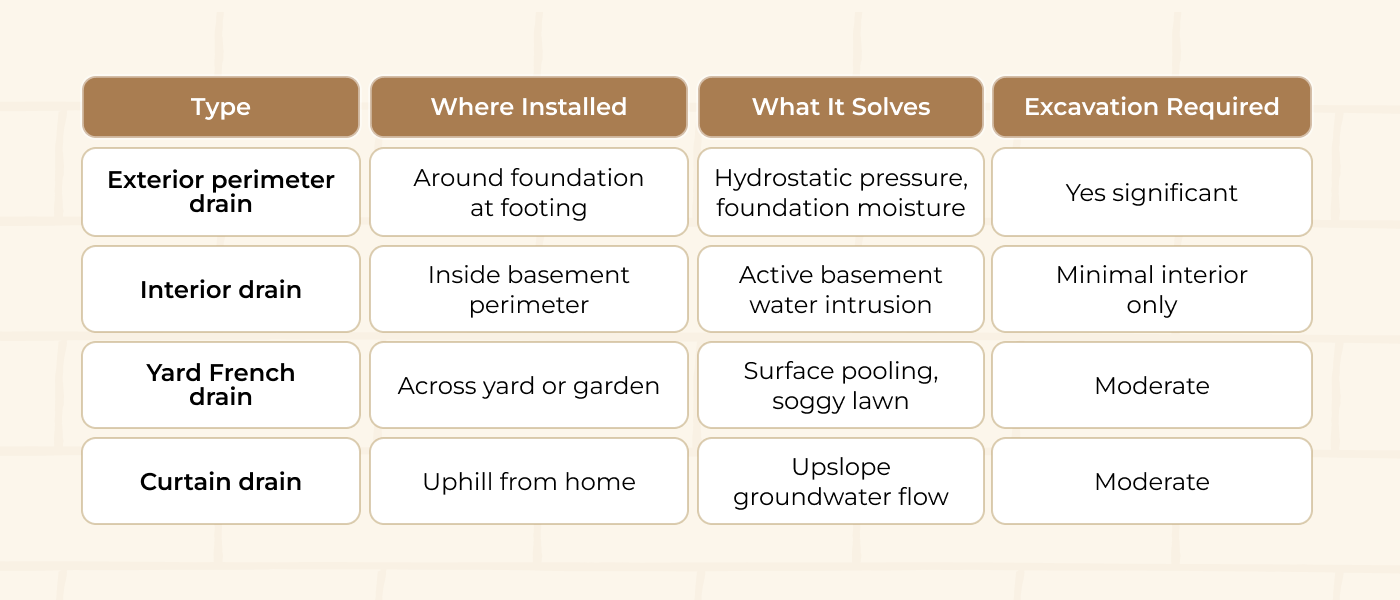
Types of French Drain Systems
Exterior French Drain (Perimeter Drain)
Installed around the exterior perimeter of the foundation at footing level. Intercepts groundwater before it can build hydrostatic pressure against foundation walls.
Best for: Homes with chronic basement moisture, bowing foundation walls, or water intrusion through foundation cracks.
Interior French Drain
Installed inside the basement along the base of the foundation walls. Does not stop water from reaching the wall instead, it collects water that has entered and directs it to a sump pump for removal.
Best for: Homes where exterior excavation is not feasible, or as a supplemental system in high water table conditions.
Yard French Drain
Installed across a yard or garden area to intercept surface water and subsurface flow before it pools or reaches the foundation.
Best for: Yards with chronic pooling, soggy areas that don't dry out, or properties where surface water flows toward the home.
Curtain Drain
A variation of the yard French drain installed uphill from the home to intercept groundwater flowing downslope before it reaches the foundation.
Best for: Homes on sloped lots where uphill groundwater consistently creates moisture problems near the foundation.
French Drain System Comparison
Signs You Need a French Drain in Boston
In your yard:
Water pools after rain and takes more than 24 hours to drain
Consistently soggy or muddy areas that never fully dry
Soil erosion channels forming after heavy rain
Dead or stressed grass in areas that stay wet
Near your foundation:
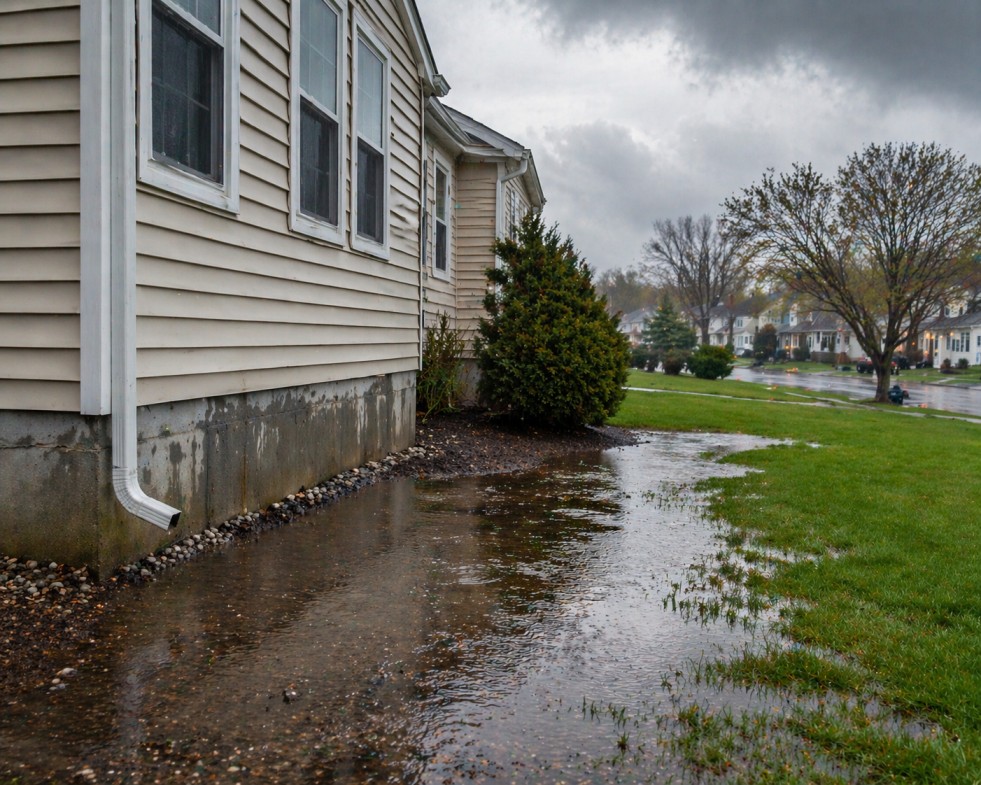
Water pooling against the foundation after rain
Soil that stays saturated within 2–3 feet of the home
Efflorescence or moisture staining on exterior foundation walls
Downspout water not dispersing away from the home
In your basement:
Water seeping through foundation walls or floor joints after rain
Musty smell or persistent dampness
Efflorescence on basement walls
Sump pump running constantly or failing to keep up
French Drain Installation Process
Step 1 Site Assessment A drainage contractor evaluates the problem area, identifies water sources and flow direction, determines the appropriate drain type and discharge point, and calculates the required slope a minimum of 1% grade (1 inch of drop per 8 feet) for effective drainage.
Step 2 Excavation A trench is dug to the required depth typically 18–24 inches for yard drains, and at footing level (4–6 feet) for exterior foundation drains. Width is typically 12–24 inches depending on expected water volume.
Step 3 Filter Fabric Installation A permeable landscape fabric is laid in the trench to prevent soil migration into the gravel bed the primary cause of French drain silting and failure over time.
Step 4 Gravel and Pipe Installation A layer of clean crushed stone is placed in the trench, the perforated pipe is laid with perforations facing down, and additional gravel is packed around and above the pipe. The gravel bed typically extends 3–6 inches above the pipe.
Step 5 Fabric Wrap and Backfill The filter fabric is folded over the top of the gravel bed before backfilling creating a complete envelope that keeps soil particles out of the drainage system. Topsoil and sod are restored over the trench.
Step 6 Discharge Point The pipe terminates at a safe discharge location a storm drain connection, a daylight outlet on a slope, or a dry well at sufficient distance from the foundation.
How Long Does a French Drain Last in Boston?
A properly installed French drain with correct filter fabric and clean gravel typically lasts 10–15 years before the gravel bed begins to silt up enough to reduce effectiveness. Key factors affecting lifespan:
Filter fabric quality proper fabric installation is the most important longevity factor
Gravel size and cleanliness undersized or dirty gravel silts up faster
Soil type clay-heavy Boston soils migrate into drainage systems faster than sandy soils
Maintenance periodic flushing of the pipe extends system life significantly
Annual inspection and periodic pipe flushing are recommended maintenance for any French drain in Greater Boston.
Solve the Water Problem Before It Solves Your Foundation
Standing water, chronic basement moisture, and saturated soil near your foundation are not seasonal inconveniences they are active damage in progress. Every summer storm that deposits water against your foundation without an effective drainage path is another cycle of hydrostatic pressure, soil movement, and moisture infiltration.
A correctly installed French drain eliminates the water source before it reaches your foundation protecting your basement, your masonry, and your home's structural integrity for years.
Kings Masonry & Construction provides professional French drain installation and drainage solutions across. Get a free on-site drainage assessment and find out which system is right for your property.
FAQ
How long does French drain installation take?
A yard French drain typically takes 1–2 days. An exterior foundation perimeter drain takes 3–7 days depending on foundation size and excavation depth. Interior basement drain installation takes 1–3 days.
Will a French drain solve my wet basement?
A French drain addresses water that reaches the foundation from the exterior either as surface runoff or groundwater. If your basement moisture is caused by condensation or interior humidity rather than water intrusion, a French drain will not resolve it. A professional drainage assessment identifies the water source and confirms whether a French drain is the appropriate solution.
Does a French drain need a sump pump?
Exterior and yard French drains discharge by gravity to a daylight outlet or storm connection no pump required. Interior basement French drains discharge into a sump pit, which requires a sump pump for removal. In high water table conditions, even exterior systems may benefit from a sump pump as a backup.
How do I know if my existing French drain has failed?
Recurring pooling in areas the drain was installed to protect, slow clearing of water at drain inlets, and basement moisture returning after a previously dry period are all indicators of French drain failure. A contractor can flush the pipe to confirm blockage or collapse.
What is the difference between a French drain and a curtain drain?
Both use perforated pipe in a gravel trench the difference is placement and purpose. A French drain is installed at or near the foundation to intercept water at the problem point. A curtain drain is installed uphill from the home to intercept groundwater before it flows downslope toward the foundation. Curtain drains are the appropriate solution when uphill groundwater flow is the primary moisture source.