
Foundation Crack Repair: How to Identify, Assess, and Fix Cracks Before They Spread
A thin line runs down your basement wall. Maybe you noticed it last winter. Maybe it appeared after a heavy rain. Either way, you are staring at it now, wondering: is this normal settling, or is my foundation failing?
Here is the truth. Every concrete foundation develops cracks over time. Some are cosmetic. Others signal serious structural damage that worsens with every freeze-thaw cycle Boston throws at your home. The difference between a $300 fix and a $15,000 emergency comes down to one thing: how quickly you act.
This guide covers everything you need to know about foundation crack repair how to identify the type of crack you are dealing with, which repair methods actually work, what it costs in the Boston area, and when to call a professional.
Types of Foundation Cracks and What They Mean
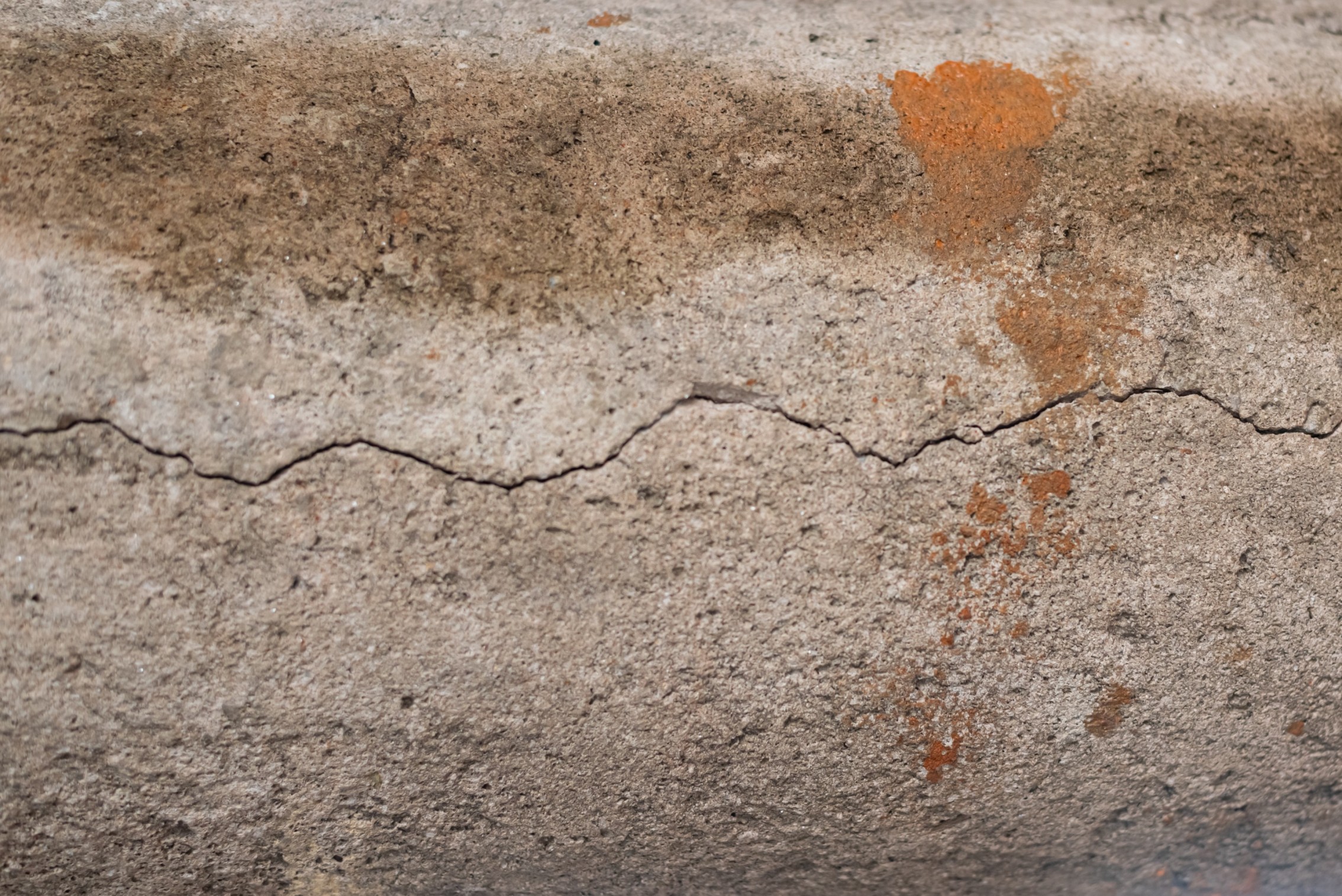
It is essential to distinguish whether your home is suffering from simple cosmetic brick damage vs structural risks before choosing a solution. Not all foundation cracks are created equal. The direction, width, and location of a crack tell you exactly what is happening beneath your home. Before you grab a tube of caulk, learn what you are looking at.
Vertical Cracks
Vertical cracks run straight up and down or within 30 degrees of vertical. They are the most common type found in poured concrete foundations. In most cases, vertical cracks result from the natural curing and shrinkage of concrete during the first few years after construction. They typically appear near the center of a wall or around window openings.
Severity: Low to moderate. Most vertical cracks under 1/8 inch wide are cosmetic. However, if water is seeping through, you need concrete crack repair to prevent moisture damage and mold growth.
Horizontal Cracks
Horizontal cracks are the ones that should get your attention immediately. These cracks run sideways across your foundation wall and indicate lateral pressure usually from hydrostatic water pressure or soil expansion pushing against the exterior. In Boston's clay-heavy soil, this is extremely common after wet seasons.
Severity: High. Horizontal cracks, especially those in block foundations, suggest the wall is bowing inward. Left untreated, the wall can eventually buckle. This is not a DIY situation.
Diagonal (Stair-Step) Cracks
Diagonal cracks appear at roughly 45-degree angles. In block or brick foundations, they follow the mortar joints in a stair-step pattern. These cracks indicate differential settlement one section of your foundation is sinking faster than another.
Severity: Moderate to high. The wider the crack and the more it changes over time, the more urgent the repair. If you see stair-step cracks in your brick or block foundation, schedule an inspection.
Structural vs. Non-Structural Cracks
Use this quick-reference table to assess what you are dealing with:
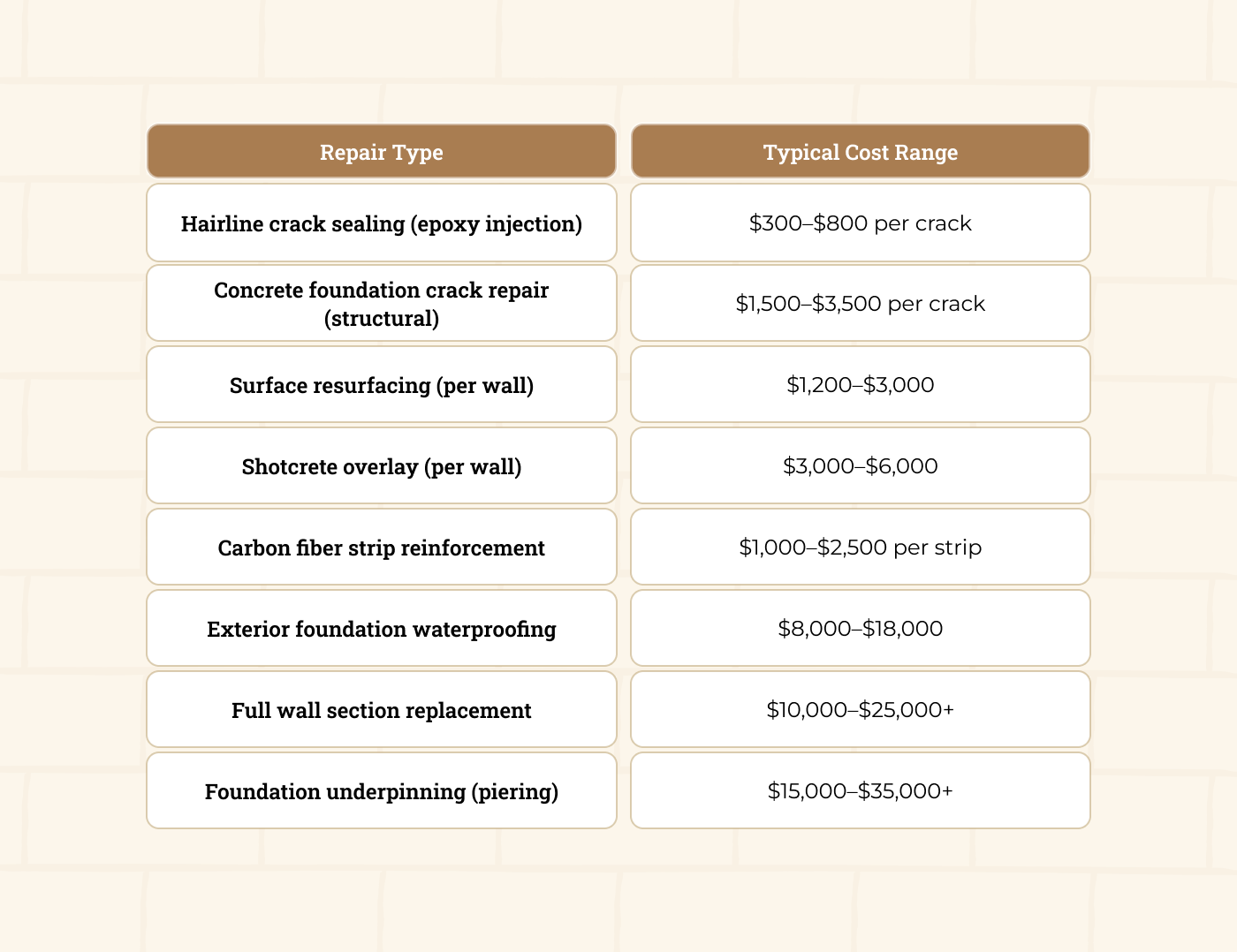
Rule of thumb: Any crack wider than 1/4 inch, any horizontal crack, or any crack that is actively growing needs professional evaluation. Monitor smaller cracks by marking their endpoints with a pencil and checking monthly.
How Serious Are Foundation Cracks?
The short answer: it depends on the type, but you should never ignore them.
A hairline vertical crack in a 20-year-old poured concrete basement is probably just cosmetic. A horizontal crack in a block foundation with visible bowing is a structural emergency. Most situations fall somewhere between these two extremes.
Signs a Crack Needs Immediate Attention
Watch for these warning signs alongside foundation cracks:
Water seepage through the crack, especially during rain or snowmelt
The crack is widening over weeks or months
Doors and windows are sticking or not closing properly
Floors are uneven or sloping in new areas
Gaps appear between walls and ceilings or walls and floors
The wall is visibly bowing inward (use a straight edge to check)
How to Repair Concrete Foundation Crumbling
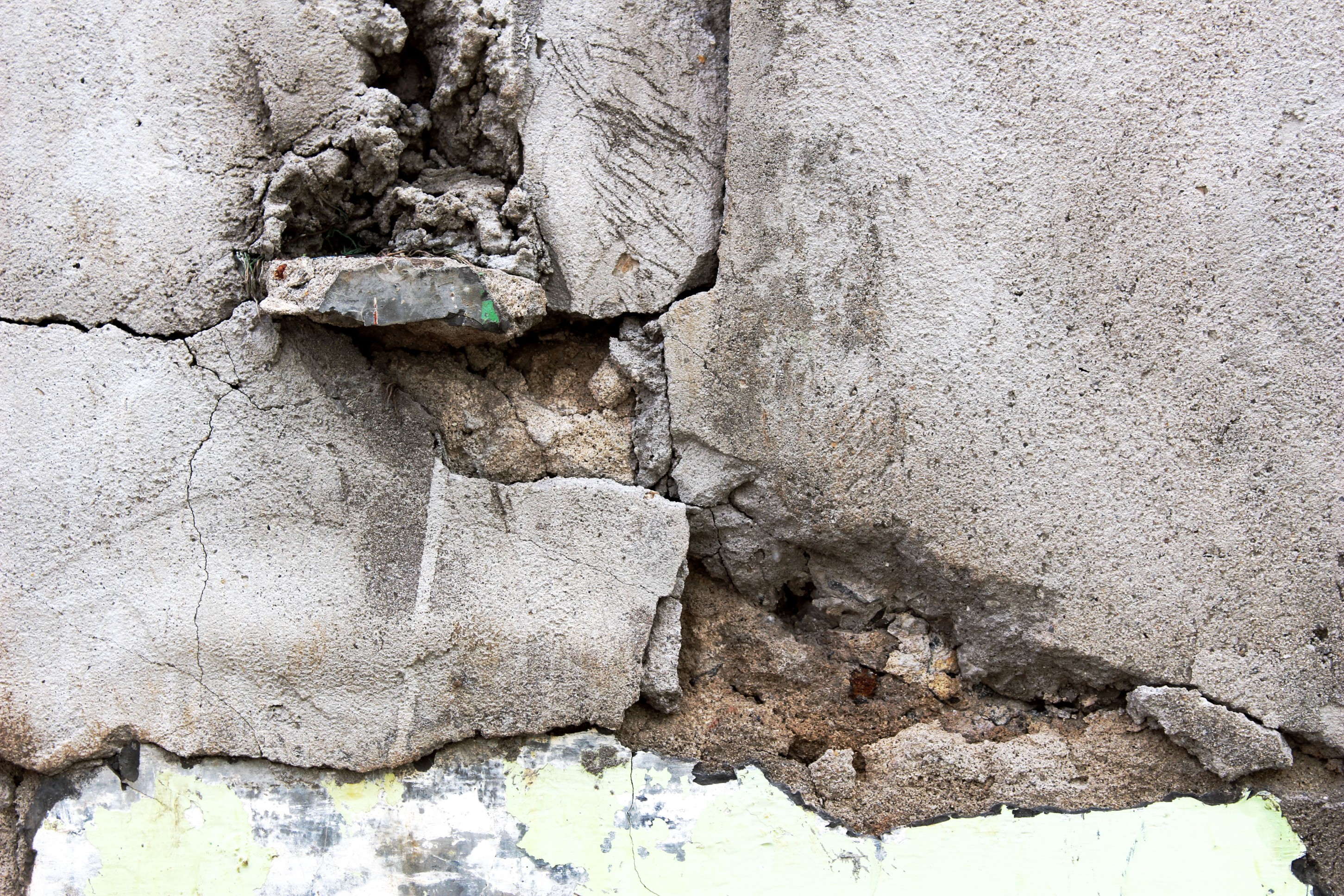
Crumbling concrete also called spalling is different from cracking. It happens when moisture penetrates the concrete surface, freezes, and breaks apart the material layer by layer. This is extremely common in older Boston-area foundations that were built before modern waterproofing standards.
To address crumbling concrete foundations:
Remove all loose, deteriorated concrete down to solid material using a chisel and hammer
Clean the area thoroughly with a wire brush and remove all dust and debris
Apply a bonding agent to help new material adhere to old concrete
Patch with hydraulic cement or a polymer-modified repair mortar designed for structural applications
Seal the exterior to prevent future moisture intrusion
For foundations with widespread crumbling, surface patching is a temporary measure. You likely need professional concrete foundation crack repair that addresses the root cause typically poor drainage or missing waterproofing.
Foundation Crack Repair Methods: From DIY to Professional
The right repair method depends on the crack type, severity, and whether water is actively entering. Here is a breakdown from simplest to most involved.
DIY Methods (For Minor, Non-Structural Cracks)
Epoxy Crack Injection
Epoxy injection is the gold standard for sealing non-structural cracks in poured concrete walls. The process involves injecting a two-part epoxy resin into the crack under low pressure. The epoxy bonds the concrete together, restoring much of the wall's original strength and creating a waterproof seal.
Best for: Vertical cracks under 1/4 inch wide in poured concrete that are not actively leaking.
Cost: $30 to $80 for a DIY kit. Professional epoxy injection runs $300 to $800 per crack.
Polyurethane Foam Injection
Polyurethane foam is flexible and expands to fill the full depth of a crack. Unlike rigid epoxy, it can accommodate minor foundation movement without re-cracking. It is the better choice when the primary goal is stopping water infiltration rather than structural bonding.
Best for: Active water leaks through vertical cracks.
Cost: $25 to $60 for a DIY kit. Professional application costs $250 to $600 per crack.
Surface Sealants and Patching Compounds
Hydraulic cement, masonry caulk, and surface patching compounds are the most affordable option. They work well for cosmetic repairs on non-structural cracks but do not penetrate the full depth of the crack. These are temporary fixes that may need reapplication.
Best for: Hairline surface cracks with no water intrusion.
Cost: $10 to $30 for materials.
Professional Repair Methods (For Structural Issues)
Carbon Fiber Reinforcement Strips
For bowing or cracked walls that need reinforcement without excavation, carbon fiber strips are bonded to the interior wall surface with high-strength epoxy. They are ten times stronger than steel by weight, do not corrode, and add virtually no thickness to the wall. Cost: $400 to $800 per strip. A typical wall requires 4 to 8 strips, totaling $1,600 to $6,400.
Wall Anchors and Bracing
When a wall has bowed more than 2 inches, wall anchors can stabilize and sometimes gradually straighten it. Steel plates are installed on the interior wall and connected by rods to anchor plates buried in stable soil outside the foundation.
Best for: Moderate to severe bowing in basement walls.
Cost: $3,000 to $8,000 per wall, depending on severity and access.
Underpinning and Piering
For foundations experiencing active settlement, steel piers or helical piers are driven down to stable bedrock or load-bearing soil. The foundation is then lifted and stabilized. This is the most involved and expensive method but addresses the root cause of settlement-related cracks.
Best for: Diagonal and stair-step cracks caused by differential settlement.
Cost: $1,000 to $3,000 per pier. Most homes require 6 to 12 piers, totaling $6,000 to $36,000.
Does Homeowners Insurance Cover Foundation Repair?
This is one of the most common questions homeowners ask, and the answer is frustrating: usually, no.
Standard homeowners insurance policies cover sudden and accidental damage a burst pipe that undermines your foundation, a vehicle impact, or damage from a covered natural disaster. They do not cover damage from:
Normal settling and shrinkage
Poor construction or design flaws
Gradual water damage or poor drainage
Deferred maintenance
Earth movement (earthquakes, sinkholes) unless you carry a separate rider
Does Homeowners Insurance Cover Brick Repair?
Brick foundation and wall repair follows the same rules. If a storm knocks a tree into your brick foundation wall and cracks it, insurance will likely cover it. If mortar joints have deteriorated over 30 years and bricks are crumbling due to moisture infiltration, that falls under maintenance and insurance will not pay.
How to Maximize Your Coverage
Document everything. Take photos with timestamps before and after any damage. Keep records of foundation inspections.
File claims promptly. Insurers can deny claims if you wait too long after discovering damage.
Get a professional inspection report. A-1 foundation crack repair companies and structural engineers can provide documentation that distinguishes sudden damage from gradual deterioration, which may help your claim.
Review your policy annually. Ask your agent about endorsements for water backup, foundation coverage, or earth movement if you are in a high-risk area.
Invest in prevention. Proper grading, gutter maintenance, and foundation waterproofing reduce the risk of damage that insurance would not cover anyway.
Foundation Crack Repair Costs in Boston
Foundation repair costs vary widely based on the type of damage, the repair method, and your home's specific conditions.
What Drives Cost Up
Several factors make Boston-area foundation repair more expensive than national averages:
Soil conditions. Boston's mix of clay, fill, and glacial till creates unpredictable settlement patterns.
Frost depth. Massachusetts requires foundations to extend at least 48 inches below grade, meaning deeper (and more expensive) repairs.
Access limitations. Dense urban lots in neighborhoods like Dorchester, Southie, and Charlestown limit equipment access and increase labor time.
Age of housing stock. Many Boston homes have rubble stone or unreinforced block foundations that require specialized repair techniques.
Permitting. Structural foundation work in Boston requires permits and engineering reports, adding $500 to $2,000 to project costs.
When Is Foundation Crack Repair Worth the Investment?
Always. The cost of concrete foundation crack repair is a fraction of what you will pay if the problem advances. A $500 crack injection today can prevent a $15,000 wall stabilization project two years from now. Foundation damage also reduces your home's resale value by 10 to 15 percent in Boston's market, that can mean tens of thousands of dollars. If you're in the Newton area specifically, our guide on foundation crack repair in Boston and Newton, MA covers what local homeowners need to know about resale impact and repair options.
Don't Wait Get Your Foundation Inspected Today
Foundation cracks do not fix themselves. Water finds its way in. Soil pressure does not let up. Freeze-thaw cycles in Massachusetts widen every gap, every winter, without exception.
The best time to address a foundation crack was when it first appeared. The second best time is now.
Kings Masonry & Construction provides professional foundation crack repair, structural assessments, and complete concrete foundation repair throughout the greater Boston area. Our team has repaired hundreds of foundations across Boston, Cambridge, Somerville, and the surrounding communities. We know the soil. We know the building codes. We know what works.
Here is what to do next:
Take photos of every crack you can see inside and outside your foundation
Measure the width using a ruler or credit card (a credit card is about 1/32 inch thick)
Click here to schedule your free foundation inspection today.
Get expert answers from a team that specializes in professional foundation repair every single day. We are currently offering a free foundation consultation to help Boston homeowners protect their property. Contact us today to schedule your no-obligation inspection and secure your home’s future.
Frequently Asked Questions (FAQ)
1. Are all foundation cracks dangerous?
Not necessarily. Most vertical hairline cracks are caused by the natural "settling" or shrinking of concrete as it cures. However, horizontal cracks or cracks wider than 1/4 inch are serious red flags that indicate structural pressure and should be inspected by a professional immediately.
2. Can I just use caulk to fix a foundation crack?
While you can use DIY sealants for cosmetic touch-ups, they are not a permanent solution. Store-bought caulk only sits on the surface. Professional epoxy or polyurethane injections penetrate the entire depth of the wall, creating a structural bond and a waterproof seal that won't peel away when the ground shifts.
3. How much does it cost to fix a foundation crack in Boston?
The cost depends on the severity. A simple professional crack injection typically ranges from $350 to $800. However, if the crack is structural and requires carbon fiber reinforcement or underpinning, costs can range from $2,000 to over $10,000. Early intervention is the best way to keep costs low.
4. Will a foundation crack lead to a wet basement?
In Boston's climate, yes. Even if a crack isn't leaking now, the pressure from rain and melting snow (hydrostatic pressure) will eventually force water through the gap. Once water enters, it can lead to mold, mildew, and damage to finished basement walls.
5. Does the "freeze-thaw cycle" really affect my foundation?
Absolutely. Boston experiences dozens of freeze-thaw cycles every winter. When water gets into a small crack and freezes, it expands by about 9%. This expansion acts like a wedge, slowly prying the crack wider year after year until a minor issue becomes a major structural failure.