
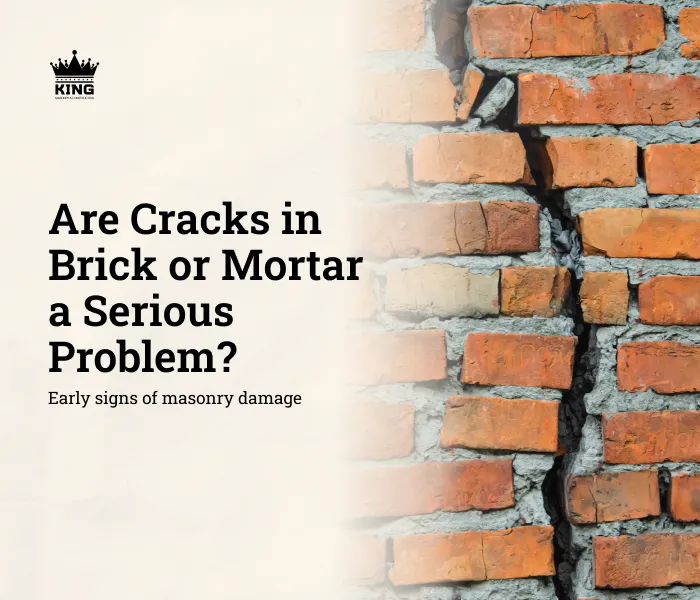
Are Cracks in Brick or Mortar a Serious Problem?
Discovering cracks in brick on your home can be unsettling. You might wonder: Is this a cosmetic issue I can ignore, or a sign of serious structural damage? The truth is, not all cracks in brick are created equal. Some are harmless surface blemishes, while others signal problems that need immediate professional attention.
This guide will help you understand what causes cracks in brick, when to worry about cracks in brick, and what your repair options are.
What Causes Cracks in Brick and Mortar?

Understanding the root cause of cracks in brick is the first step toward knowing how to address them. Here are the most common culprits:
Thermal Expansion and Contraction
Brick and mortar expand when heated and contract when cooled. Over years of temperature fluctuations, this constant movement can weaken the bond between materials, leading to cracks in brick walls. This is especially common in climates with extreme seasonal changes.
Foundation Settlement
Homes naturally settle over time, particularly in the first few years after construction. Uneven settling can create stress on brick walls, causing cracks in brick or mortar to form. While minor settling is normal, excessive movement indicates a more serious foundation issue.
Poor Mortar Quality
Old mortar deteriorates with age. If your home was built decades ago, the original mortar may have become weak and crumbly. Modern mortar formulations are stronger and more flexible than older versions, so deteriorating old mortar is a common reason for new cracks in brick to develop.
Water Damage and Freeze-Thaw Cycles
Water infiltrates through existing cracks in brick or porous mortar joints. When temperatures drop, this water freezes and expands, putting pressure on the brick and mortar. This freeze-thaw cycle repeats seasonally, gradually widening cracks in brick walls and eroding mortar.
Structural Loading
Changes to your home's structure removing a load-bearing wall, adding a second story, or even heavy snow accumulation can shift weight distribution and create stress cracks in brick walls.
Age and Weathering Simply put, brick and mortar don't last forever. Both materials gradually degrade from sun exposure, rain, wind, and pollution. Over 50+ years, visible cracking becomes increasingly common in brick walls.
Cosmetic vs. Structural Cracks — How to Tell the Difference
Not all cracks in brick warrant the same level of concern. Learning to identify the difference between cosmetic and structural damage is essential for knowing when to worry about cracks in brick.
Cosmetic Cracks
Hairline width (less than 1/8 inch)
Confined to mortar joints, not the brick itself
Isolated single cracks or small clusters
Appear only on the exterior surface
Show no signs of progressive growth
No water leakage or interior damage
These cracks in brick are primarily aesthetic concerns. They don't affect your home's structural integrity but may need sealing to prevent water infiltration.
Structural Cracks
Width of 1/4 inch or wider
Extend through brick units themselves, not just mortar
Form diagonal, stair-step, or horizontal patterns
Multiple cracks occurring across a wall
Visible on both interior and exterior sides
Growing visibly over weeks or months
Accompanied by water stains, efflorescence (white powder), or interior damage
These cracks in brick indicate stress on your home's structure and require professional evaluation and repair.
Location Matters Crack patterns tell a story about when to worry about cracks in brick:
Vertical cracks near corners: Often result from settling—monitor but not always urgent
Diagonal cracks: Typically indicate structural stress from uneven settlement or load shift—evaluate professionally
Horizontal cracks: Most concerning; may indicate foundation failure or excessive hydrostatic pressure—needs immediate professional assessment
Cracks around windows and doors: Common due to concentrated stress; severity depends on width and progression
When You Should Worry: Red Flags and Warning Signs
Knowing when to worry about cracks in brick is critical. Here are warning signs that brick wall crack repair is needed:
Cracks Are Growing Mark the ends of a crack with tape and check it monthly. If the crack extends beyond your marks, it's actively worsening. Progressive cracking in brick walls always warrants professional inspection.
Width Exceeds 1/4 Inch
Cracks wider than 1/4 inch are generally considered structural. This is a good threshold for calling in a professional inspector or structural engineer to assess cracks in brick.
Stair-Step or Diagonal Pattern
These patterns indicate stress concentrated in one area. They're more serious than straight vertical cracks in brick or mortar.
Interior Wall Damage
If you notice matching cracks, drywall damage, or plaster cracks on the inside of your home, this confirms the issue extends through the entire wall structure.
Water Infiltration
Dark stains, mold growth, or water appearing in your basement or crawlspace near cracked brick indicates water is penetrating through the wall. This needs prompt attention to prevent further damage.
Multiple Cracks Appearing Suddenly
If several new cracks in brick appear within a short time period, this suggests an underlying structural issue rather than normal wear.
Doors or Windows Sticking or Misaligning If doors or windows that previously operated smoothly now stick or won't close properly, this may indicate wall movement caused by foundation issues.
How to Repair Cracks in Brick Walls
Your brick wall crack repair options depend on the crack's severity, cause, and location. Here's what you need to know about how to repair cracks in brick walls:
DIY Solutions for Minor Cosmetic Cracks in Brick
For hairline cracks confined to mortar joints, homeowners can attempt repairs for how to repair cracks in brick walls:
Caulking Method:
Clean the crack with a wire brush and shop vacuum
Apply paintable exterior caulk designed for masonry
Smooth with a caulk tool or wet finger
Paint to match if desired
Mortar Repointing:
Mix masonry mortar (Type N or O, depending on existing mortar)
Chisel out cracked mortar to a depth of 2-3 inches
Dampen the joint with water
Pack new mortar firmly into the joint
Tool the mortar to match existing profiles
Allow 24-48 hours curing time
Professional Repairs for Structural Cracks in Brick
Cracks wider than 1/4 inch or showing structural signs require professional assessment. For brick wall crack repair at this level, options include:
Mortar Repointing (Professional): Contractors use specialized equipment and high-quality mortar formulated to match your home's original composition. This professional brick wall crack repair prevents further damage and water infiltration.
Brick Replacement: If individual bricks are cracked or severely damaged, damaged bricks can be carefully removed and replaced as part of comprehensive brick wall crack repair.
Foundation Repair: If cracks in brick are caused by foundation settlement or structural failure, addressing the underlying foundation issue is essential. This may involve underpinning, helical piers, or other stabilization methods for serious brick wall crack repair.
Hydraulic Cement or Epoxy Injection: For actively leaking cracks in brick, professionals may inject specialized sealants to stop water infiltration and stabilize the crack.
When to Call Kings Masonry Construction
Contact Kings Masonry Construction or a licensed structural engineer if you notice any of these warning signs:
Cracks in brick wider than 1/4 inch
Cracks that are actively growing or expanding
Multiple cracks appearing in the same area
Water seeping through masonry walls or visible water stains
Cracks running in diagonal or horizontal patterns (especially concerning)
Interior damage like crumbling mortar or loose bricks
A professional inspection from Kings Masonry Construction provides clarity on whether repairs are cosmetic or urgent. Early assessment prevents small issues from becoming expensive structural problems.
Prevention: Stop Cracks Before They Start
The best approach to brick wall crack repair is prevention. Here's how to protect your home:
Manage Water
Clean gutters and downspouts regularly
Ensure proper drainage away from foundation
Install or repair grading to slope away from the house
Consider adding sump pumps or French drains in problem areas
Maintain Mortar Joints
Have brick inspected every 5-10 years
Repoint deteriorating mortar before cracks in brick develop
Use mortar compatible with your home's original composition
Address Foundation Issues Early
Monitor for signs of foundation movement
Ensure proper soil stability and drainage around foundation
Have periodic professional foundation inspections if settling is detected
Protect Against Freeze-Thaw
Seal existing minor cracks to prevent water infiltration
In cold climates, consider hydrophobic sealers on brick
Maintain proper ventilation to reduce moisture
Monitor and Document
Take photos of brick annually
Watch for new cracks or changes in existing ones
Keep records of when cracks first appeared
Note any changes in doors, windows, or interior conditions
Should You Repair Now or Wait?
Your decision depends on crack characteristics:
Repair Immediately:
Cracks in brick wider than 1/4 inch
Growing cracks in brick or mortar
Water infiltration present
Diagonal or horizontal patterns
Multiple cracks suggesting structural issues
Monitor and Plan:
Hairline cosmetic cracks in brick
Isolated cracks with no growth
No water damage
No interior signs of stress
Cosmetic Repair (When Ready):
Hairline mortar joint cracks
Surface-only damage
Purely aesthetic concerns
Conclusion
Not every crack in brick is a crisis, but not every crack is harmless either. By understanding what you're looking at, you can make informed decisions about whether professional brick wall crack repair is needed or whether you can safely monitor the situation. When in doubt, a professional inspection is a smart investment that can prevent costly damage later. Understanding when to worry about cracks in brick and how to repair cracks in brick walls will help you maintain your home's integrity for years to come.