Commercial Building Waterproofing Services in MA
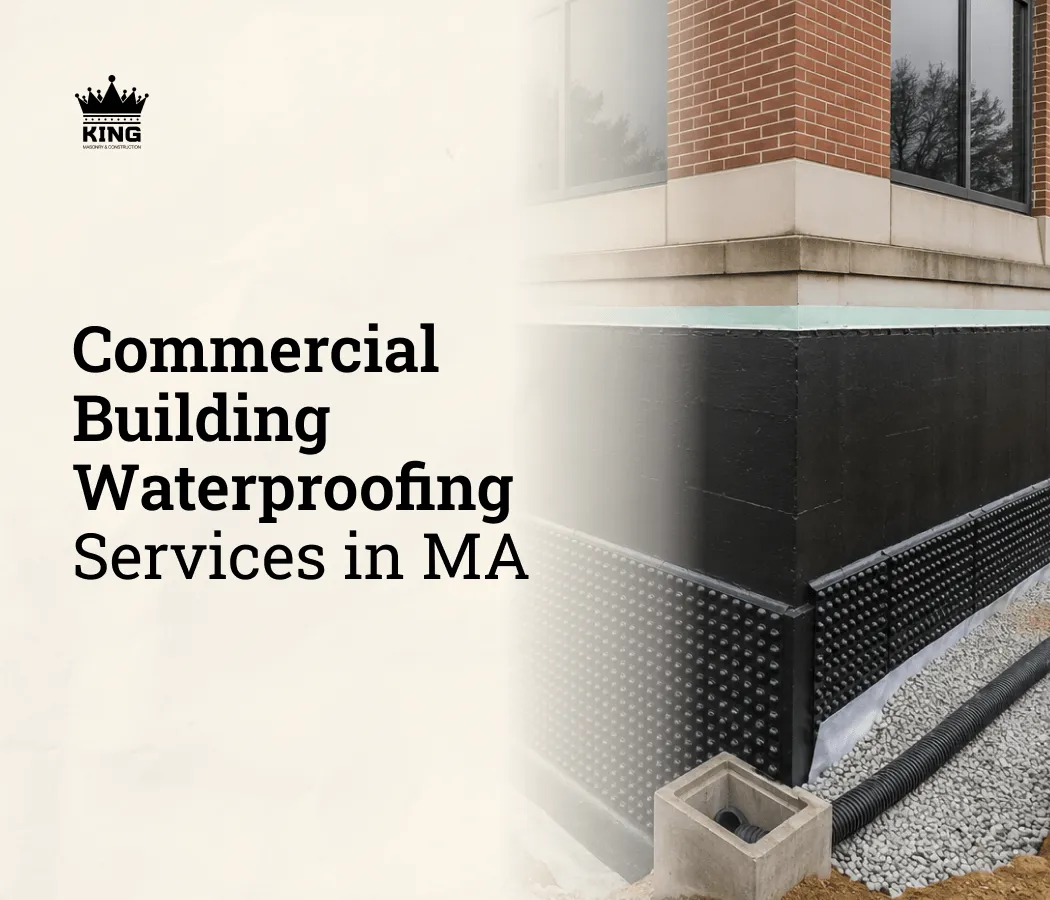
Commercial building waterproofing in Massachusetts includes below-grade foundation systems, exterior masonry protection, roof membranes, plaza and balcony decks, mechanical equipment areas, joint sealants, and specialty waterproofing applications.
Commercial waterproofing costs vary significantly depending on building size, system complexity, accessibility, material specifications, and tenant coordination requirements. Targeted repairs generally require a smaller investment than comprehensive building envelope restoration, while specialized installations may involve substantial engineering, equipment, and project management costs.
For commercial property owners and managers, understanding the waterproofing process involves more than comparing contractor prices.
Warranty coverage, tenant disruption, scheduling, material compatibility, and the ability to develop comparable contractor proposals are equally important.
This guide explains commercial waterproofing services across Greater Boston, the South Shore, and the South Coast, including the available systems, cost considerations, contractor selection criteria, and project management decisions that influence long-term performance.
Commercial Waterproofing Services in Massachusetts: Cost Reference
Service Category | Cost Considerations | Common Applications |
|---|---|---|
Below-grade foundation waterproofing (exterior) | Excavation, foundation access, membrane materials, and drainage requirements | New construction and foundation perimeter restoration |
Below-grade foundation waterproofing (interior) | Interior access, drainage modifications, and existing building conditions | Retrofit projects where exterior excavation is impractical |
Exterior masonry repointing | Masonry condition, mortar compatibility, access, and restoration requirements | Brick and stone facade maintenance |
Penetrating masonry sealers | Surface preparation, masonry type, product selection, and application conditions | Moisture protection for suitable masonry surfaces |
Roof membrane waterproofing | Roof dimensions, membrane specification, insulation, and installation complexity | Commercial flat and low-slope roofs |
Built-up and modified bitumen roofing | Material layers, installation method, preparation, and labor requirements | Commercial roofing applications requiring durable membrane assemblies |
Fluid-applied roof waterproofing | Surface preparation, coating requirements, and existing membrane condition | Complex roof geometries and suitable restoration projects |
Plaza and balcony deck waterproofing | Membrane protection, drainage, demolition, and surface restoration | Elevated occupied surfaces over interior spaces |
Expansion and control joint sealants | Joint preparation, movement requirements, sealant compatibility, and accessibility | Building envelope joints and material transitions |
Below-grade vault waterproofing | Restricted access, groundwater conditions, specialized materials, and engineering | Mechanical vaults, parking levels, and underground structures |
Commercial waterproofing prices can change considerably based on building height, equipment access, scaffolding requirements, tenant operations, and material specifications.
High-rise buildings, historic properties, and projects involving difficult access or extensive restoration may require more specialized labor and equipment than conventional commercial waterproofing work.
A site-specific assessment and detailed written scope are essential for accurate budgeting.
Types of Commercial Waterproofing Services
Commercial buildings experience water intrusion through different building components, and each requires an appropriate waterproofing strategy.
The following services address common vulnerabilities in commercial structures.
Below-Grade Foundation Waterproofing
Below-grade waterproofing protects foundation walls and other underground building components from groundwater intrusion.
In new commercial construction, exterior waterproofing systems are commonly incorporated into the foundation design.
Depending on the project specifications, materials may include:
Polymer-modified asphalt waterproofing membranes
Fluid-applied polyurethane systems
Sodium bentonite waterproofing panels
Pre-applied sheet membranes
Self-adhered waterproofing membranes
Drainage boards and protection materials
The correct system depends on groundwater conditions, structural design, substrate preparation, and applicable construction requirements.
Product specifications should reference appropriate manufacturer requirements and relevant industry standards.
Exterior vs. Interior Foundation Waterproofing
For existing commercial buildings, deciding between exterior and interior waterproofing depends on accessibility, water intrusion conditions, tenant operations, and budget.
Exterior waterproofing typically involves excavating alongside the foundation, preparing the wall surface, applying waterproofing materials, and installing suitable drainage components.
Interior waterproofing may involve negative-side waterproofing, drainage systems, crack treatment, and water collection measures when exterior excavation is impractical.
These approaches manage water differently, and the appropriate choice depends on the actual conditions.
For a detailed comparison, read our guide to interior versus exterior basement waterproofing.
Cost considerations: Excavation requirements, groundwater pressure, foundation depth, building access, drainage design, and restoration work.
Exterior Masonry Envelope Waterproofing
Commercial brick, stone, and concrete masonry walls can develop water intrusion problems through deteriorated mortar joints, damaged masonry, and vulnerable connections around openings.
Common maintenance and restoration services include:
Selective masonry repointing
Replacement of deteriorated brick
Repair of spalled masonry
Sealant replacement
Window perimeter waterproofing
Expansion joint maintenance
Application of compatible penetrating masonry sealers
Masonry Repointing and Restoration
Repointing involves removing deteriorated mortar from existing joints and replacing it with a compatible mortar.
The correct mortar specification depends on the masonry materials and the condition of the structure.
Historic commercial buildings in Boston, Brookline, and Newton may contain softer masonry materials that require special attention.
Using mortar that is too strong or incompatible with existing brick can contribute to cracking and surface deterioration.
Historic masonry restoration should use materials selected according to the properties of the original construction.
Penetrating Masonry Sealers
Penetrating sealers may reduce water absorption in suitable masonry surfaces without forming a conventional surface coating.
Common product families include silane- and siloxane-based treatments.
However, sealers should not be used as a substitute for repairing deteriorated mortar, damaged masonry, or defective flashing.
The masonry should be evaluated and necessary repairs completed before applying a water-repellent treatment.
Cost considerations: Facade condition, access equipment, masonry preparation, historic material compatibility, and sealant specifications.
Roof Waterproofing Systems
Roof membranes are a major component of commercial building waterproofing.
When a roofing system fails, water intrusion can affect insulation, ceilings, electrical equipment, interior finishes, and tenant operations.
Commercial roofing systems in Massachusetts include several material categories.
TPO Roofing
Thermoplastic polyolefin, commonly known as TPO, is used on commercial flat and low-slope roofs.
TPO membranes typically use heat-welded seams and may be installed using different attachment methods.
The appropriate assembly depends on the building design, insulation requirements, roof configuration, and manufacturer specifications.
EPDM Roofing
Ethylene propylene diene monomer, or EPDM, is a synthetic rubber roofing membrane with an established history in commercial roofing.
EPDM may be installed using fully adhered, mechanically attached, or other approved systems.
Proper seam detailing, flashing, and installation practices are essential for long-term performance.
PVC Roofing
PVC roof membranes are commonly selected for applications where chemical resistance and heat-welded seams are important.
These systems may be suitable for certain restaurants, industrial properties, and commercial buildings with specialized roof exposure.
Material suitability should be evaluated according to the actual roof conditions and manufacturer requirements.
Modified Bitumen Roofing
Modified bitumen is an asphalt-based roofing material commonly installed using torch-applied, self-adhered, or other approved methods.
It is used in commercial roofing applications where durability and appropriate membrane detailing are important.
Installation methods should be selected with attention to building conditions and fire safety requirements.
Fluid-Applied Roof Systems
Fluid-applied waterproofing systems may use silicone, polyurethane, acrylic, or other coating materials.
These products can be useful for restoration projects and roofs with complicated shapes or numerous penetrations.
However, coating suitability depends on the condition of the existing roofing system.
Not every damaged roof can be restored effectively with a coating.
Built-Up Roofing
Built-up roofing uses layered roofing materials to create a waterproof assembly.
It is common in portions of the existing commercial building inventory, although other membrane systems are frequently selected for new construction.
Existing built-up roofs may require targeted repairs, restoration, or replacement depending on their condition.
Choosing a Commercial Roof Waterproofing Contractor
Commercial roof waterproofing requires familiarity with membrane compatibility, flashing details, insulation, drainage, and building envelope transitions.
For specialized roofing applications, property owners should look for contractors with appropriate manufacturer training and experience on comparable commercial projects.
Cost considerations: Roof dimensions, existing membrane condition, insulation, removal requirements, system specifications, equipment access, and warranty requirements.
Plaza, Balcony, and Podium Deck Waterproofing
Elevated occupied surfaces above interior spaces create particularly demanding waterproofing conditions.
Common examples include:
Plazas above parking garages
Commercial balconies
Podium decks
Rooftop terraces
Elevated pedestrian areas
Landscaped decks
Outdoor amenity spaces
Unlike exposed roof membranes, plaza waterproofing materials are often installed beneath concrete, pavers, landscaping, or other protective surfaces.
This makes future inspection and repair more complicated.
Common Plaza Waterproofing Systems
Depending on the project design, systems may include:
Hot-applied rubberized asphalt
Cold-applied polyurethane
Reinforced sheet membranes
Modified bitumen systems
Protection boards
Drainage layers
Root barriers for landscaped assemblies
Material compatibility and drainage design are especially important.
Why Plaza Waterproofing Can Be Expensive
When waterproofing beneath an occupied deck fails, contractors may need to remove the overlying surface before accessing the damaged membrane.
That can involve demolition of pavers, concrete toppings, planting materials, and drainage components.
After waterproofing repairs are completed, the surface assembly must be restored.
Because repairs can be disruptive and expensive, high-quality materials and proper installation are important considerations during the initial project.
Cost considerations: Deck construction, overburden removal, membrane accessibility, drainage requirements, restoration, and disruption to building operations.
Mechanical Equipment and Penetration Areas
Mechanical equipment and building penetrations are common locations for water intrusion.
Vulnerable areas include:
HVAC equipment curbs
Plumbing penetrations
Electrical conduits
Antenna supports
Roof-mounted equipment
Flashing connections
Pitch pans
Sealant joints
These locations should be inspected during routine building maintenance.
Waterproofing During Equipment Replacement
Replacing rooftop mechanical equipment can disturb existing waterproofing materials.
When equipment is removed or installed, the surrounding membrane and flashing may need modification or replacement.
A common project coordination problem occurs when mechanical equipment is replaced without fully addressing the associated waterproofing details.
Commercial property managers should ensure that roofing and waterproofing responsibilities are clearly assigned before equipment replacement begins.
Cost considerations: Equipment configuration, penetration details, existing membrane condition, and coordination with mechanical contractors.
Commercial Joint Sealants
Expansion joints, control joints, windows, doors, and material transitions rely on properly designed sealants to help prevent water intrusion.
Sealants are exposed to sunlight, temperature changes, weathering, and building movement.
Over time, these conditions can cause deterioration.
Common Commercial Sealant Applications
Expansion joints
Control joints
Window perimeters
Door perimeters
Curtain wall connections
Concrete panel joints
Masonry transitions
Roof-to-wall connections
Sealant Selection and Installation
Commercial sealant systems should be selected according to expected joint movement, substrate compatibility, and environmental exposure.
Common materials include silicone and polyurethane sealants.
Proper installation may require:
Removal of failed sealant
Joint cleaning
Suitable backer rod installation
Primer application when specified
Correct joint geometry
Compatible sealant selection
Appropriate curing conditions
Joint preparation and material compatibility can be as important as the sealant product itself.
Cost considerations: Joint accessibility, removal of existing sealant, joint preparation, movement requirements, and material specifications.
Specialty Commercial Waterproofing Applications
Some commercial waterproofing projects require materials and installation methods beyond conventional foundation, roofing, or masonry work.
Specialty applications include:
Swimming pools
Water features and fountains
Atrium skylights
Planter boxes
Underground mechanical vaults
Parking decks
Historic structures
Specialized industrial facilities
These projects can involve unusual exposure conditions, chemical compatibility requirements, difficult access, or complex drainage systems.
Why Specialized Experience Matters
A waterproofing system suitable for a commercial foundation may not be appropriate for a swimming pool, fountain, or occupied parking deck.
Material chemistry, water pressure, movement, and intended use can differ significantly.
Property managers should hire contractors with demonstrated experience in the specific application rather than assuming that general waterproofing experience covers every type of project.
Cost considerations: Specialized materials, engineering requirements, access, substrate preparation, testing, and installation complexity.
Roof Waterproofing in Detail
Commercial roof waterproofing deserves special attention because roofing systems represent a major maintenance and capital planning responsibility for property owners.
New Installation vs. Roof Restoration
An aging commercial roof does not always require complete replacement.
In some cases, a fluid-applied restoration system can extend the usable life of an existing membrane.
Roof restoration may be appropriate when:
The existing membrane remains structurally sound
There are no widespread seam failures
Significant punctures or deterioration are absent
The underlying insulation is suitable for restoration
The existing system is compatible with the proposed coating
The manufacturer approves the restoration approach
However, a roof with extensive moisture damage, deteriorated insulation, or widespread membrane failure may require replacement.
The decision should be based on a detailed roof condition assessment rather than age alone.
Commercial Roofing Warranty Structure
Commercial roofing warranties vary significantly in what they cover.
Understanding warranty terms is important when comparing roofing proposals.
Material-only warranties generally focus on qualifying defects in the roofing material itself.
No Dollar Limit warranties, often referred to as NDL warranties, are manufacturer system warranties that may provide broader coverage for qualifying roof system failures.
The exact protection depends on the warranty agreement, including its exclusions, repair obligations, and coverage limits.
NDL warranty eligibility may require installation by a manufacturer-approved contractor using specified materials and accessories.
Property managers should review actual warranty documentation rather than relying only on the warranty name or advertised duration.
Roof Insulation and Energy Requirements
Commercial roof projects may also involve insulation improvements.
Massachusetts energy requirements can influence the insulation specifications for new roofs and certain reroofing projects.
When an older roof is being replaced, the project may need to address insulation performance as part of the new assembly.
The insulation portion of the work can represent a significant project expense.
Property owners should confirm applicable requirements during the design and permitting process.
Selecting a Roof Waterproofing Contractor
When searching for "roof waterproofing near me," commercial property owners should evaluate experience and qualifications rather than simply choosing the lowest estimate.
Useful considerations include:
Experience with the proposed membrane system
Manufacturer-approved installer status where applicable
Familiarity with NRCA and SPRI guidance
Experience with comparable commercial buildings
Knowledge of Massachusetts weather conditions
Clear warranty documentation
Appropriate insurance coverage
Detailed written installation specifications
Freeze-thaw conditions, snow accumulation, wind exposure, and roof drainage can all influence material selection and installation practices in Massachusetts.
Commercial Waterproofing Support
For commercial waterproofing projects involving masonry envelopes, foundations, drainage, plaza decks, or below-grade structures, Kings Masonry & Construction provides commercial services across Greater Boston, the South Shore, and the South Coast.
Our team works with commercial property owners, property managers, owner's representatives, and general contractors on project assessments and waterproofing-related construction scopes.
The Property Manager's Decision Framework
Commercial waterproofing projects involve additional management responsibilities beyond choosing materials and scheduling installation.
Property managers must consider long-term maintenance, tenant disruption, warranty protection, project documentation, and procurement requirements.
Evaluate Lifecycle Cost, Not Just Initial Price
The lowest initial construction price is not always the most economical choice.
A more expensive waterproofing system may provide better long-term value if it requires fewer repairs, has suitable durability, and reduces future disruption.
Lifecycle cost analysis should consider:
Initial installation expenses
Expected service life
Maintenance requirements
Future repair costs
Replacement complexity
Tenant disruption
Warranty coverage
Potential damage caused by system failure
A system that is inexpensive to install but difficult to maintain or replace may create greater costs over the building's ownership period.
Plan Around Tenant Operations
Commercial waterproofing projects can affect tenants and normal building operations.
Potential disruptions include:
Construction noise
Dust and debris
Scaffolding
Equipment staging
Parking restrictions
Plaza closures
Restricted entrances
Access to mechanical areas
Temporary interruption of building services
Contractors should provide a schedule that accounts for occupied spaces and operational requirements.
Phased construction may help reduce disruption, particularly in office, retail, hospitality, and mixed-use properties.
Property managers should coordinate schedules with tenant representatives and building operations teams before major work begins.
Review Warranty Terms and the Issuing Company
Warranty duration alone does not establish the value of the protection offered.
Property managers should consider:
Whether the warranty comes from the manufacturer or contractor
What materials and labor are covered
Whether consequential damage is excluded
Required inspection or maintenance procedures
Transferability
Claim procedures
Coverage exclusions
Whether the issuing company is likely to remain available to honor the warranty
Manufacturer-backed system warranties and contractor workmanship warranties may provide different types of protection.
Both should be reviewed carefully.
Maintain Documentation for Insurance and Financing
Commercial property owners may need waterproofing documentation for insurance renewals, refinancing, property transactions, or capital planning.
Useful records include:
Inspection reports
Before-and-after photographs
Project specifications
Material submittals
Approved drawings
Installation records
Warranty documents
Maintenance recommendations
Final inspection reports
As-built documentation where applicable
Good documentation can support future maintenance decisions and help demonstrate that appropriate work was completed.
Structure RFPs for Comparable Bids
A Request for Proposal, or RFP, should clearly describe the work contractors are expected to price.
Vague requests such as "waterproof the roof" can result in proposals based on very different assumptions.
A detailed RFP should identify:
Project location and building conditions
Existing waterproofing problems
Required scope of work
Proposed material system
Installation method
Substrate preparation
Insulation requirements
Flashing and accessory details
Warranty requirements
Insurance and bonding requirements
Construction scheduling restrictions
Tenant coordination expectations
Documentation requirements
Proposal submission instructions
Pre-bid walkthroughs and opportunities for contractor questions can help reduce differences in assumptions.
How to Evaluate Waterproofing Bids
When contractor bids vary significantly, the cause may be differences in scope rather than pricing alone.
Before selecting a contractor, compare:
Materials specified
Surface preparation
Demolition and disposal
Waterproofing installation methods
Drainage provisions
Warranty coverage
Excluded services
Restoration requirements
Project schedule
Quality control procedures
Do not automatically select the lowest bid without understanding what is included.
A properly structured comparison should identify differences in scope, qualifications, and long-term value.
Commercial vs. Residential Waterproofing
Commercial waterproofing and residential waterproofing share many materials and technical principles.
However, project requirements, procurement processes, warranties, and coordination responsibilities can differ considerably.
Commercial Waterproofing Applications
Commercial waterproofing may involve:
Office buildings
Retail properties
Industrial facilities
Multifamily residential buildings
Mixed-use developments
Condominium common areas
Parking garages
Commercial plazas
Large occupied properties
These projects may require specification-driven bidding, engineering coordination, manufacturer-approved installation, and detailed project management.
Residential Waterproofing Applications
Residential waterproofing typically involves individual homes and smaller projects.
Common services include:
Basement waterproofing
Foundation crack repair
Crawl space moisture control
Exterior drainage
Sump pump installation
Foundation waterproofing
Homeowners often work directly with contractors through site inspections and written estimates rather than formal RFP processes.
When Residential Projects Require Commercial-Level Planning
Some residential properties involve waterproofing requirements similar to commercial construction.
Examples include:
Multifamily Properties
Larger residential buildings may require more extensive coordination, access management, and building-wide waterproofing systems.
Elevated Decks Over Interior Spaces
Balconies and decks above occupied rooms require carefully designed waterproofing assemblies.
Condominium and HOA Properties
Common-area waterproofing may require association approvals, reserve planning, and coordinated maintenance.
Specialty Roofing Systems
Flat and low-slope roofing membranes may require commercial roofing methods even on residential properties.
Engineered Waterproofing Work
Projects involving structural modifications or complex systems may require engineering documentation and more formal contractor coordination.
For individual homeowners, our residential basement waterproofing service overview and basement waterproofing cost guide for Boston provide additional information.
How to Choose a Commercial Waterproofing Contractor
Commercial property owners should evaluate contractor qualifications, project management capabilities, technical experience, and financial protection before awarding work.
Licensing and Bonding
Contractor licensing requirements depend on the work being performed and applicable Massachusetts or municipal rules.
Certain construction activities may require appropriate Construction Supervisor License credentials or other qualifications.
Bonding requirements may also apply depending on the contract and project.
Before awarding a project, confirm that the contractor holds the qualifications necessary for the proposed work.
Manufacturer Certifications
For manufacturer-specified waterproofing systems, approved-installer status may be important.
Some warranty programs require installation by a contractor approved or certified by the manufacturer.
Major commercial roofing and waterproofing manufacturers include Carlisle, Sika, Firestone-branded roofing systems, GAF, and Tremco.
Property managers should confirm the contractor's current authorization directly through the relevant manufacturer where required.
Insurance Coverage
Commercial waterproofing projects should have insurance coverage appropriate to the scope and risks involved.
Relevant coverage may include:
General liability insurance
Workers' compensation
Commercial automobile insurance
Umbrella or excess liability insurance
Builder's risk coverage where applicable
Insurance requirements should be established based on project size, building occupancy, contractual obligations, and exposure.
Request current insurance certificates before work begins.
Experience With Comparable Commercial Projects
Contractors should demonstrate relevant experience with projects similar to the proposed work.
Consider:
Building type
Waterproofing system
Project complexity
Tenant occupancy
Equipment access
Historic construction conditions
Coordination with other trades
A contractor with extensive residential experience may not necessarily have the project management resources required for a complicated commercial installation.
Project Management Capabilities
Commercial waterproofing often requires coordination beyond the field installation crew.
A qualified contractor should be able to explain how they manage:
Project scheduling
Material procurement
Site supervision
Quality control
Tenant communication
Change orders
Safety procedures
Permits and inspections
Coordination with other contractors
Project closeout documentation
The management approach should match the complexity of the project.
Local Presence and Regional Experience
Massachusetts climate conditions and building construction practices create specific waterproofing challenges.
Contractors familiar with the region may have experience addressing:
Freeze-thaw deterioration
Snow and ice exposure
Coastal moisture
Historic masonry
High groundwater levels
Tight urban sites
Existing building restoration
Local experience can be particularly valuable when working on older commercial properties.
Foundation Waterproofing Expertise
Foundation waterproofing contractors should understand the soil and groundwater conditions affecting the specific property.
Coastal areas along the South Shore and South Coast may present different challenges from inland areas or older Boston neighborhoods with bedrock and restricted excavation access.
For below-grade structural and waterproofing concerns, review our foundation repair and waterproofing services.
What Drives Commercial Waterproofing Pricing?
Commercial waterproofing costs are influenced by more than the type of membrane or coating being installed.
Site conditions, operating restrictions, construction logistics, and project management requirements can significantly affect the total budget.
Building Access
Access requirements can influence labor and equipment costs.
Commercial waterproofing work may require:
Scaffolding
Swing stages
Boom lifts
Cranes
Temporary platforms
Specialized material handling
Restricted-access work procedures
Tall buildings, narrow streets, and complicated facades often require more extensive access planning.
Tenant Coordination
Waterproofing work in occupied buildings may require additional scheduling and operational measures.
Contractors may need to perform certain activities outside regular business hours, restrict access to occupied areas, or coordinate temporary changes in tenant operations.
These requirements can increase labor and management costs.
Site Logistics
Urban projects in Boston and Brookline may involve:
Limited staging areas
Parking restrictions
Restricted delivery windows
Limited material storage
Street occupancy requirements
Coordination with neighboring properties
Difficult waste removal
These conditions should be evaluated during project planning.
Disposal and Hazardous Material Requirements
Older commercial buildings may contain materials that require specialized handling or abatement.
Examples can include asbestos-containing materials, lead-based coatings, or other regulated construction materials.
If hazardous materials are suspected, appropriate testing and professional evaluation may be required before demolition or removal.
Disposal and abatement responsibilities should be clearly identified in the contract.
Bonding and Insurance
Performance bonds, payment bonds, and additional insurance requirements can influence project pricing.
The appropriate level of protection depends on project risk, ownership requirements, financing arrangements, and contractual obligations.
Scheduling Constraints
Weather, building occupancy, lease requirements, and construction deadlines can affect the installation schedule.
Compressed schedules may require additional labor, specialized coordination, or alternative installation methods.
Waterproofing materials also have temperature, moisture, and curing requirements that can influence when work can be performed.
Design, Engineering, and Construction Administration
A comprehensive waterproofing budget may need to account for services beyond installation.
These may include:
Condition assessments
Architectural or engineering design
Waterproofing specifications
Construction administration
Quality assurance inspections
Testing
Permits
Contingency allowances
Closeout documentation
Warranty registration
These costs should be considered when developing the full project budget.
Request a Commercial Waterproofing Consultation
Commercial waterproofing requires a solution suited to the building's construction, water intrusion conditions, access requirements, and operational needs.
Kings Masonry & Construction works with commercial property owners and managers across Greater Boston, the South Shore, and the South Coast.
Our commercial services include assessments and construction scopes involving foundations, masonry, drainage, and waterproofing-related restoration.
We can discuss site conditions, evaluate relevant concerns, and provide written proposals for appropriate projects.
Request a Commercial Waterproofing Consultation
Commercial services across Greater Boston, the South Shore, and the South Coast.
Serving Boston, Brookline, Newton, Dedham, Braintree, Hingham, Weymouth, Plymouth, New Bedford, Brockton, and surrounding Massachusetts communities.
Frequently Asked Questions
What Does Commercial Building Waterproofing Cost in Massachusetts?
Commercial waterproofing costs in Massachusetts vary depending on building size, the waterproofing system, structural conditions, and project complexity.
Targeted repairs are generally less expensive than comprehensive foundation, roof, or building envelope restoration.
Below-grade waterproofing costs depend on excavation and drainage requirements.
Masonry waterproofing involves surface preparation, mortar repairs, sealants, and access.
Roof membrane costs depend on materials, insulation, removal requirements, and installation methods.
Plaza waterproofing can involve extensive demolition and restoration when the membrane is buried beneath occupied surfaces.
A detailed building assessment and written scope are necessary to establish an accurate project estimate.
How Long Do Commercial Roof Waterproofing Systems Last?
The lifespan of commercial roof waterproofing systems depends on membrane materials, installation quality, environmental exposure, maintenance, and roof design.
TPO, EPDM, PVC, modified bitumen, built-up roofing, and fluid-applied systems have different performance characteristics.
Manufacturer warranties provide information about qualifying coverage but do not automatically guarantee that a roof will remain problem-free throughout the warranty period.
Regular inspections, appropriate maintenance, proper drainage, and timely repairs can help extend system performance.
For aging roofs, restoration may be appropriate when the existing materials remain suitable and the proposed system is compatible.
What's the Difference Between Commercial Waterproofing Services and Home Waterproofing Services?
Commercial waterproofing typically involves more complex project specifications, contractor coordination, warranty requirements, and procurement procedures.
Commercial projects may require RFP bidding, manufacturer-approved installation, engineering oversight, bonding, and tenant coordination.
Home waterproofing services commonly involve basement waterproofing, drainage, foundation crack repair, and crawl space moisture control.
Residential projects generally use a more direct contractor estimating process.
However, large multifamily buildings, condominium properties, and specialty residential structures may require commercial-style waterproofing planning.
How Do I Write an RFP for Waterproofing Services That Returns Comparable Bids?
A well-prepared waterproofing RFP should clearly define the expected work and technical requirements.
Include the proposed waterproofing system, approved materials, installation methods, substrate preparation, insulation specifications, flashing details, drainage requirements, and warranty expectations.
The RFP should also address insurance, bonding, scheduling, tenant coordination, quality control, and documentation requirements.
Pre-bid site walkthroughs can help contractors understand existing conditions.
A structured question-and-answer process can help ensure bidders prepare proposals using consistent information.
Clear specifications make it easier to compare bids and identify differences in pricing and scope.
Do I Need Separate Contractors for Foundation, Roof, and Plaza Waterproofing?
Different waterproofing applications require different areas of expertise.
Commercial roof membrane work is commonly performed by roofing contractors experienced with the specified system.
Below-grade foundation waterproofing may involve excavation, drainage, and structural masonry expertise.
Plaza and balcony waterproofing requires specialized knowledge of membranes installed beneath occupied surfaces and protective materials.
Some commercial contractors can manage several waterproofing disciplines, while others specialize in particular systems.
The appropriate contracting arrangement depends on project complexity, contractor qualifications, and the scope of work.
How Do I Evaluate Waterproofing Companies Near Me for a Commercial Project?
Start by verifying qualifications relevant to the proposed waterproofing work.
Review applicable licensing, manufacturer certifications, insurance, and bonding requirements.
Ask for examples of comparable commercial projects and references from property owners or managers.
Evaluate the contractor's ability to manage scheduling, tenant operations, safety, material procurement, and documentation.
Local experience with Massachusetts weather conditions and building types can also be valuable.
A detailed written proposal should explain the recommended system, installation requirements, warranty coverage, and exclusions.
What Warranty Terms Should I Look for in Commercial Roof Waterproofing Services?
Commercial roofing warranty evaluation should focus on the type of coverage, the issuing company, and the specific terms.
Material-only warranties generally address qualifying material defects.
Manufacturer system warranties, including certain NDL programs, may offer broader coverage depending on their conditions and exclusions.
Some warranties require manufacturer-approved installers, specified materials, and documented inspections.
Contractor workmanship warranties may provide separate protection for installation-related defects.
Property owners should review the warranty documentation carefully and clarify maintenance obligations, exclusions, transfer provisions, and claim procedures before awarding the project.