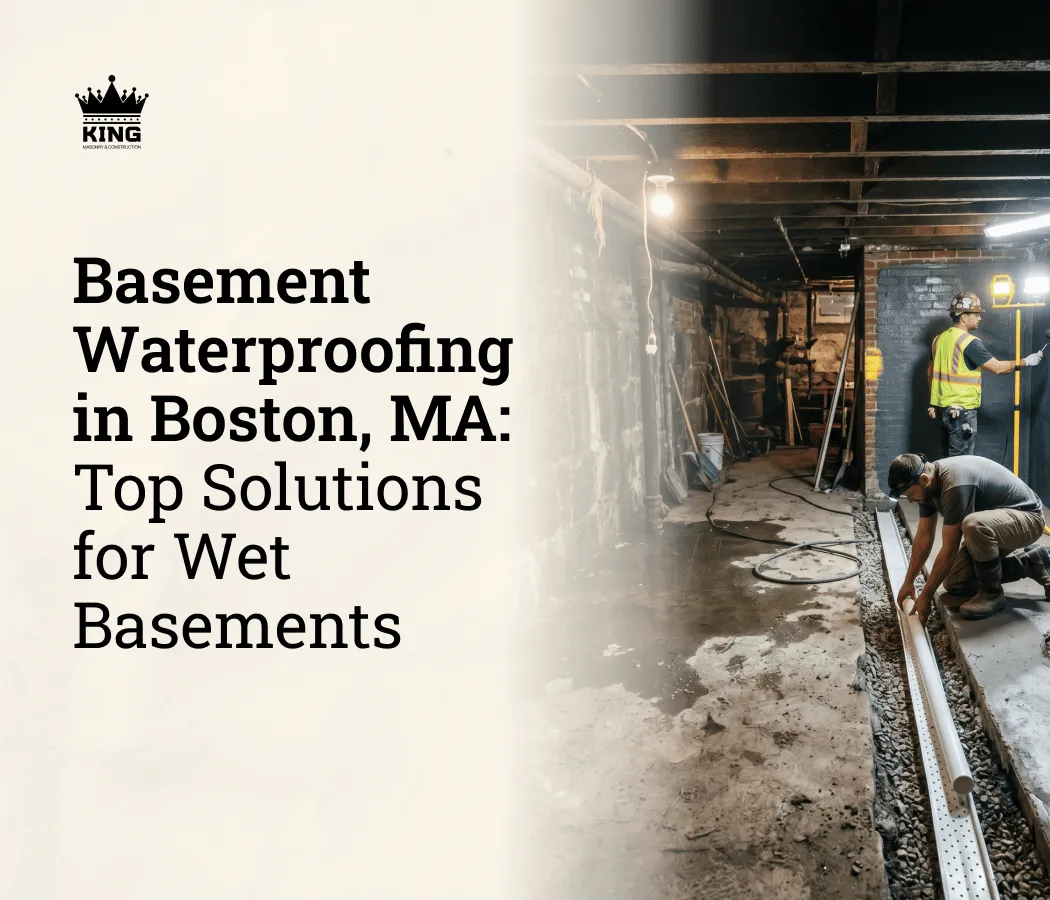
Basement Waterproofing in Boston, MA: Top Solutions for Wet Basements
If you own a home in Boston, a wet basement is one of the most common — and costly — problems you'll face. Between the region's heavy rainfall, harsh winters, and aging housing stock, basement waterproofing isn't a luxury; it's a necessity. Water intrusion can damage your foundation, create mold, and significantly reduce your home's value.
This guide covers everything Boston homeowners need to know: the warning signs of a wet basement, the most effective wet basement solutions, how the waterproofing process works, and what to expect when you hire basement waterproofing specialists near you.
Important: Basement water problems rarely fix themselves. A small seep today becomes a cracked wall next season. The earlier you act, the lower your repair costs — and the safer your home.
Key Takeaways
Boston's clay-heavy soil and freeze-thaw cycles make basement water intrusion more common — and more damaging — than in most U.S. cities.
Interior drainage systems with a sump pump are the most cost-effective solution for the majority of Boston homes.
Early signs like efflorescence, musty odors, and hairline cracks often appear months before visible water — don't ignore them.
Basement water damage repair (mold, structural drying, crack sealing) should be completed before any waterproofing system is installed.
Always verify Massachusetts licensing, ask for written warranties of + years, and get at least two quotes before hiring a contractor.
Summer is the best time to waterproof — but spring inspections catch problems before the next storm season hits.
Why Boston Basements Are Especially Vulnerable
Boston's geography and climate create the perfect storm for basement water intrusion. Most homes in the city and surrounding areas — Cambridge, Somerville, Brookline, Newton, Quincy — sit on dense clay soils that retain moisture instead of draining it away. Add to that the freeze-thaw cycles of a New England winter, and you have hydrostatic pressure building against your foundation walls year-round.
Older homes, many of which were built before modern waterproofing standards existed, are particularly at risk. If your home was built before , there's a good chance your foundation has no waterproofing membrane at all.
"In my experience working on Boston basements, the homes that suffer the most are the ones where owners spotted a small seep and assumed it would dry out on its own. Boston's freeze-thaw cycles don't forgive that. Every winter, that crack gets a little wider."
— Jonathan Odriscoll, Waterproofing Specialist, Kings Masonry
Common causes of wet basements in Boston:
Clay-heavy soil retaining groundwater against foundation walls
Hydrostatic pressure from snowmelt and spring rain
Cracked or porous concrete and masonry foundation walls
Inadequate or failed exterior drainage and grading
Failed or absent sump pump systems
Deteriorated window wells and basement windows
Poor guttering directing water toward the house
Warning Signs You Need Basement Waterproofing
Not every water problem announces itself with standing water. Many of the most serious issues start subtly. Watch for these signs — and if you notice more than one, it's time to call a basement waterproofing specialist.
Efflorescence (white chalky residue) — mineral deposits left behind as water passes through concrete, a reliable early sign of water intrusion.
Musty odor or visible mold — mold thrives in damp basements and is a direct health hazard for your household.
Cracks in foundation walls or floor — horizontal cracks especially indicate structural pressure from water-saturated soil.
Peeling paint or damp walls — paint blistering off concrete walls is a strong indicator of moisture pushing through from outside.
Standing water or puddles after rain — if water pools on your basement floor, your drainage system has already failed.
Bowing or inward-leaning walls — this indicates serious hydrostatic pressure and requires immediate attention from a structural specialist.
Rust stains on floor or walls — rust from rebar inside your concrete walls means water has penetrated deep into the structure.
Top Basement Waterproofing Solutions for Boston Homes
When searching for basement waterproofing near me, you'll quickly find that not all solutions are equal — and not every method suits every home. Here's a breakdown of the most effective approaches used by basement waterproofing specialists in Boston, MA. At Kings Masonry, we offer all of these services and recommend the right combination based on a free on-site inspection — not a one-size-fits-all package.
Interior Drainage System (French Drain)
A perimeter drainage channel installed beneath your basement floor collects water before it accumulates and routes it to a sump pump. This is the most common and reliable solution for Boston homes with ongoing water intrusion.
Sump Pump Installation & Replacement
A sump pump is the backbone of most interior waterproofing systems. Battery backup units are critical in Boston, where nor'easters can knock out power during the heaviest rainfall events.
Exterior Waterproofing Membrane
The most comprehensive solution. Excavating around the foundation and applying a waterproof membrane stops water at the source. Best for homes with severe intrusion or those undergoing major renovation.
Foundation Crack Injection
Epoxy or polyurethane foam injected directly into cracks seals them from the inside. Ideal for isolated cracks that are the sole source of water entry. Not a standalone fix for systemic drainage problems.
Interior Wall Waterproofing
Crystalline waterproofing compounds and vapor barriers applied to interior walls reduce moisture migration. Best used as a complement to drainage systems, not a substitute.
Exterior Grading & Drainage Correction
Correcting the slope of soil around your home so water drains away from the foundation is one of the most cost-effective preventive measures available — and often overlooked.
Boston-specific note: Due to the prevalence of older stone and brick foundations throughout neighborhoods like South End, Charlestown, and Jamaica Plain, many homes require a combination approach — typically interior drainage plus crack sealing — rather than a single method.
What to Expect: The Waterproofing Process
When you hire basement waterproofing specialists in Boston, MA, the process typically follows these steps — from first call to dry basement.
"The inspection step is where most of the value is. I've walked into basements where the homeowner was ready to spend $ on excavation — and a proper assessment showed an interior drainage system would fully solve the problem at a third of the cost."
— Jonathan Odriscoll, Waterproofing Specialist, Kings Masonry
Free Inspection & Assessment
A specialist visits your home to identify the source and severity of water intrusion, assess foundation integrity, and review drainage conditions inside and outside.
Customized Solution Proposal
Based on the inspection, you'll receive a written proposal outlining the recommended system, materials, timeline, and warranty. Get at least two estimates before deciding.
Basement Preparation
Your contractor will clear the work area. For interior drainage, this means jack-hammering a perimeter channel in the floor. Exterior work requires excavation around the home.
System Installation
Drainage channels, sump pit, pump, discharge line, and any wall treatments are installed. Most interior systems are completed in one to two days.
Final Inspection & Warranty
Reputable basement waterproofing specialists provide a written warranty on both labor and materials — typically to years for full interior systems.
Basement Waterproofing Cost in Boston, MA
Costs vary based on the size of the basement, severity of water intrusion, and the method chosen. Below is a general guide for what Boston homeowners should expect to budget.
Note: These are estimates for the greater Boston area. Final pricing depends on basement square footage, soil conditions, and scope of work. Always request a written quote before signing a contract.
How to Choose the Right Basement Waterproofing Specialist Near You
When you search for basement waterproofing near me, you'll find no shortage of contractors in the Boston area. Here's how to separate reliable specialists from those you should avoid.
What to look for:
Licensed and insured in Massachusetts — verify with the State Board of Building Regulations
Specific experience with Boston-area soil conditions and older housing stock
Written warranties of at least years on both labor and materials
Documented reviews on Google, BBB, or Angi from local homeowners
Clear, itemized written estimates — no verbal-only quotes
No high-pressure same-day tactics or unusually low bids
Red flags to avoid:
Contractors who recommend exterior excavation without first exploring interior options
No physical business address or Massachusetts contractor license number
Requests for full payment upfront
Warranties limited to products only, not labor
Pro tip: Reputable basement waterproofing specialists will never pressure you to sign at the inspection appointment. Take time to compare at least two to three quotes before committing.
Basement Water Damage Repair: Beyond Waterproofing
If water has already entered your basement, basement water damage repair may be necessary before waterproofing can begin. Water damage can affect structural components, flooring, walls, and HVAC systems housed in the basement. Here's what a damage repair process typically includes:
Mold remediation — complete removal of mold-affected materials and treatment of affected surfaces
Structural drying — industrial dehumidifiers and air movers to fully dry framing and concrete
Foundation crack repair — sealing existing cracks before any drainage system is installed
Drywall and insulation replacement — water-damaged materials must be removed to prevent ongoing mold growth
Floor restoration or replacement — concrete grinding, sealing, or replacement of damaged flooring
Many contractors offering basement waterproofing in Boston, MA also handle damage repair as part of a full-service package. At Kings Masonry, we provide damage assessment alongside every waterproofing quote — so nothing gets missed before work begins.
Frequently Asked Questions
How long does basement waterproofing take?
Most interior waterproofing systems are installed in one to two days for an average Boston basement. Exterior excavation projects take longer — typically three to five days depending on the scope.
Does basement waterproofing add value to my home?
Yes. A dry, professionally waterproofed basement is a selling point in the Boston market. It also prevents the kind of structural damage that can significantly lower a home's appraised value during inspection.
Is interior or exterior waterproofing better?
Interior waterproofing manages water that enters the basement — it's less disruptive and more affordable. Exterior waterproofing stops water at the foundation wall, but requires excavation. Most Boston homeowners get better ROI from a quality interior system with a battery-backup sump pump.
Does homeowners insurance cover basement water damage?
Standard homeowners insurance in Massachusetts typically does not cover flood damage or gradual seepage. Sudden events like a burst pipe may be covered. Review your policy carefully and consider a separate flood insurance rider if your neighborhood is in a flood zone.
What is the best time of year for basement waterproofing in Boston?
Summer is ideal — dry conditions allow for proper membrane curing and faster installation. That said, waterproofing can be performed year-round, and spring (when water problems become most visible) is when most Boston homeowners book inspections.
How do I find basement waterproofing specialists near me in Boston?
Search for licensed contractors with verified reviews in your specific neighborhood. Look for specialists who understand Boston's older housing stock and clay-heavy soil conditions — local experience matters significantly in this type of work.
Is Your Boston Basement Ready for the Next Storm?
Get a free inspection from a trusted local basement waterproofing specialist and stop water damage before it starts.