
Repointing Brick Cost in Massachusetts (2026 Guide)
Massachusetts has some of the oldest residential brick stock in the country. Triple-deckers in Dorchester, brick-front Colonials in Newton, federal-era homes in Plymouth, and harbor-side cottages in New Bedford all share one thing: mortar joints that eventually fail. When that happens, repointing is the fix, and the first question every homeowner asks is what it will cost.
This guide breaks down 2026 repointing prices for Massachusetts, with specific numbers for chimneys, walls, and full-house projects, plus the regional factors that push Boston-area pricing above the national average.
Quick Answer: What Repointing Brick Costs in 2026
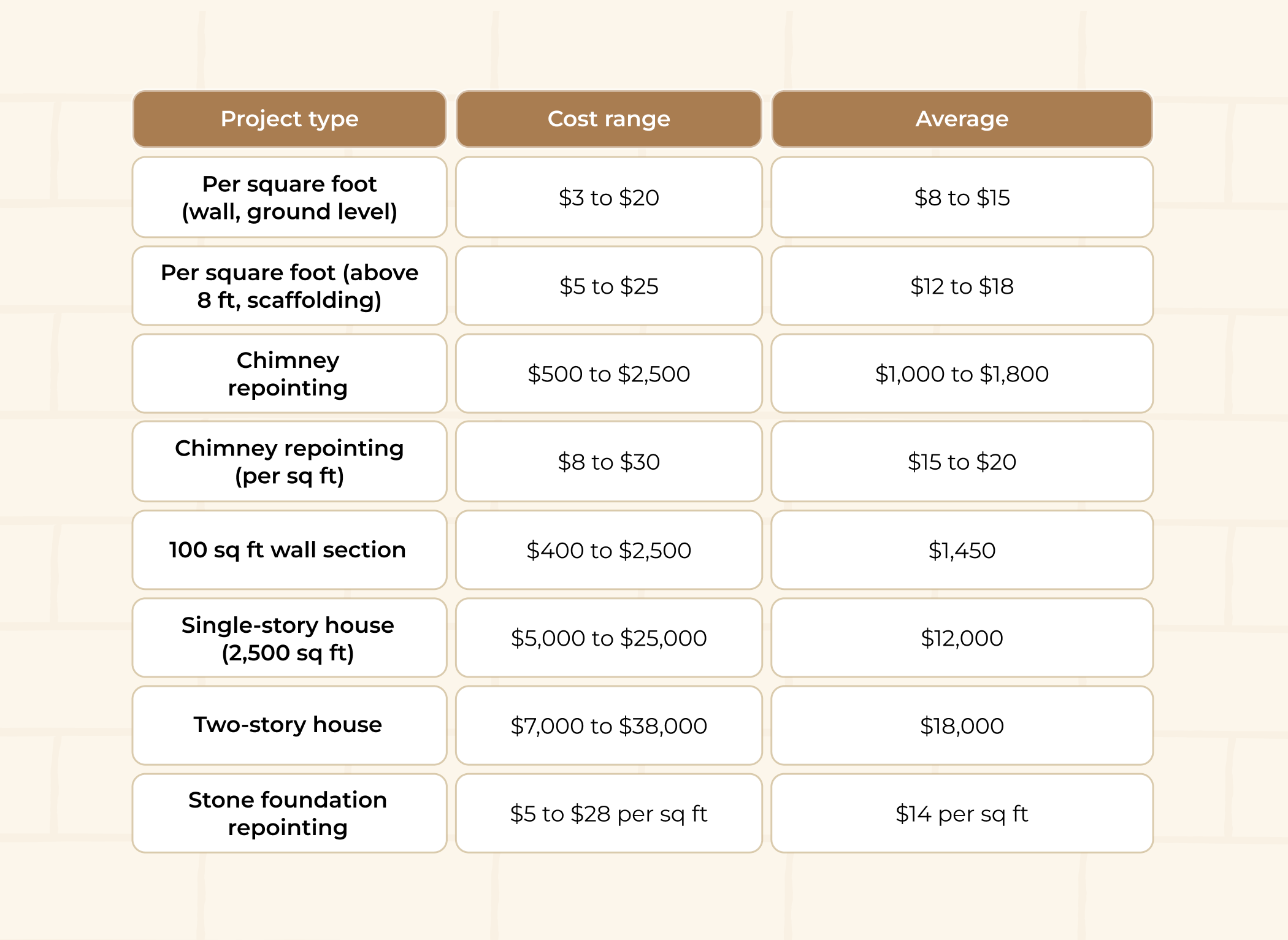
Repointing brick costs $3 to $20 per square foot in 2026, with most Massachusetts homeowners paying $8 to $15 per square foot for residential work. A standard 100-square-foot section runs $400 to $2,500. A typical Boston-area chimney repointing project costs $500 to $2,500, while repointing a full two-story brick house ranges from $7,000 to $38,000 depending on size, accessibility, and mortar condition.
Boston-specific pricing tends to land at the higher end of the national range because of older masonry, lime mortar requirements on historic homes, and significant freeze-thaw damage that often requires deeper joint removal.
Source: HomeGuide, HomeAdvisor, and Angi 2026 cost data.
Repointing Cost at a Glance
For homeowners weighing the related question of whether their mortar damage warrants full repointing or a smaller fix, our comparison of repointing vs crack injection walks through when each approach makes sense.
Cost by Project Type in Massachusetts
Chimney Repointing Cost
Chimney repointing is the most common repointing job in Greater Boston. Suffolk County homeowners typically pay between $520 and $4,052 for brick repair work, with most single-flue chimney repointing projects falling between $1,000 and $2,000.
Pricing variables on chimneys:
Height and roof pitch. A one-story home with an easily accessible stack costs less than a three-story Victorian with steep slate roofing.
Number of flues. Single-flue chimneys are quicker than double or triple-flue stacks.
Mortar damage depth. Surface erosion is straightforward. Joints that have eroded a full inch or more take longer to grind and pack.
Crown condition. A failing crown often gets repaired during the same mobilization, which adds $300 to $1,000.
Worth knowing: chimney work above 8 feet typically adds 20 to 40 percent to the per-square-foot rate because of scaffolding setup. If your chimney shows signs of crumbling chimney mortar, a site inspection is the only way to get a reliable quote.
Source: HomeGuide 2026; Manta Boston cost data 2025.
Wall Repointing Cost
For free-standing walls or sections of a building facade, expect $3 to $20 per square foot at ground level. A 100-square-foot section averages $1,450 in the Boston market.
Cost drivers for wall repointing:
Joint width. Wider joints take more mortar and more pointing time. Narrow joints under 3/8 inch require more careful tooling.
Accessibility. Tight side-yard access in a Cambridge or Somerville two-family adds setup time.
Decorative bond patterns. Flemish bond, header courses, and rowlock details slow the work.
Historic mortar matching. Pre-1920s walls usually require lime-based mortar, which costs more and requires expertise.
Full House Repointing Cost
Repointing an entire brick house in Massachusetts is a major project. A typical 2,500-square-foot single-story home costs $5,000 to $25,000. A two-story home with the same footprint runs $7,000 to $38,000 because of scaffolding, height, and additional wall area.
Most homeowners do not need to repoint the entire house at once. Spot repointing on the worst-affected elevation, usually the north or west face that takes the most weather, can extend the rest of the wall's life by another decade. Catching the issue early matters, which is why understanding critical masonry damage signs is useful before scheduling any quote.
Stone Foundation Repointing Cost
A lot of older Massachusetts homes sit on rubble stone foundations. Repointing a stone foundation costs $5 to $28 per square foot. Damp basement conditions, irregular stone faces, and the need for lime-based mortar push these projects to the upper end of the range.
Source: HomeGuide 2026.
What Drives Repointing Brick Cost
Cost is rarely just about square footage. The following factors explain why two quotes for the same wall can differ by thousands of dollars.
Labor
Labor accounts for 80 to 90 percent of total repointing cost. Massachusetts masons typically bill $50 to $100 per hour, with Boston-area rates skewing higher. A crew of two to three masons doing a 100-square-foot section will usually take one to two days, including setup, grinding, pointing, tooling, and cleanup.
Mortar Type
Mortar specification is one of the most important and most overlooked cost drivers.
Type N mortar. The standard mix for above-grade residential brick. Mid-range cost.
Type S mortar. Higher compressive strength. Used for load-bearing walls and chimneys exposed to weather.
Type O and lime mortar. Required for historic brick (pre-1920s) and softer brick types. More expensive and requires experienced craftsmen.
Custom color-matched mortar. Required when you want the repaired joints to disappear visually. Adds 10 to 20 percent.
Using the wrong mortar on historic Boston brick is a serious problem. Modern Portland cement is harder than the original brick, which causes the brick face to spall and crumble at the joint edges. If the home is historic or you suspect the original mortar is lime-based, ask the mason to do a mortar analysis before quoting.
Accessibility and Height
Anything above 8 feet adds 20 to 40 percent because of scaffolding or lift equipment. Chimneys on steep roofs can add another 25 percent on top of that. Limited yard access, fenced perimeters, or proximity to power lines also raise the price.
Brick Condition
Repointing assumes the brick is sound and only the mortar needs replacement. If brick units are spalled, cracked, or missing, those need to be cut out and replaced. Individual brick replacement adds $20 to $40 per brick for minor work and $50 to $100 per brick for severely damaged units. Reading the difference between brick vs mortar damage is useful before getting bids, because it changes the scope.
Season and Demand
Repointing requires temperatures above 40 degrees Fahrenheit for mortar to cure properly, which compresses the working season in Massachusetts to roughly April through October. Late spring and early fall are peak demand periods, and quotes can run 10 to 15 percent higher during those windows.
Repointing vs Tuckpointing Cost
The terms get used interchangeably, but they describe different work. Tuckpointing is technically a decorative two-tone finish where a color-matched mortar gets a thin contrasting fillet line for visual effect. Repointing is the structural process of removing failed mortar and packing in fresh mortar.
Repointing: $3 to $20 per square foot. Tuckpointing: $5 to $25 per square foot.
In practice, most Massachusetts contractors use the words interchangeably, and the work being quoted is almost always repointing. Worth checking what is actually included before signing. For a deeper comparison, our breakdown of tuckpointing vs repointing covers the technical and visual differences in detail.
Source: HomeGuide 2026.
When Do You Need Repointing
Mortar joints in Massachusetts brick typically last 25 to 30 years before they need attention. Signs that your home is due:
Mortar that can be scraped out with a screwdriver
Visible cracks along joint lines
Sandy debris collecting at the base of the wall
White efflorescence staining on the brick face
Cracked or crumbling joints around the chimney
Hairline cracks running through brick faces
These early indicators matter. Deferring repointing until the damage is dramatic often pushes the project into structural territory, where the cost can multiply five or ten times. The same logic applies when watching for cracks in brick or mortar: the small ones tell you more about the future cost than the obvious ones.
Hidden and Add-On Costs to Plan For
A few line items frequently appear on Massachusetts repointing quotes that homeowners do not anticipate.
Permits. $50 to $300 in most Boston-area municipalities. Historic districts often require an extra design review.
Mortar analysis. $200 to $500 for historic homes where the original mortar composition needs lab testing.
Scaffolding rental. $200 to $600 for projects requiring formal scaffold staging.
Waterproofing or sealing. $150 to $350 to apply a breathable masonry sealer after repointing.
Chimney crown or cap repair. $300 to $1,500 if discovered during chimney repointing.
Brick replacement. $20 to $100 per brick depending on damage.
Lead paint testing. Required on pre-1978 homes for any work that disturbs painted surfaces.
Dust and debris management. Some contractors include this. Others charge $50 to $200 separately.
A more complete view of how to budget for these is in our guide on how to avoid hidden costs in masonry projects.
Why Boston-Area Repointing Costs Run Higher Than National Averages
Three regional factors push Massachusetts pricing toward the upper end of national cost ranges:
Older housing stock. A large share of homes in Boston, Cambridge, Brookline, Newton, and Plymouth predate 1920. Lime-based mortar work commands a premium because fewer masons specialize in it.
Freeze-thaw damage. Boston winters cycle through freeze-thaw conditions 50 to 60 times per year. Joints deteriorate deeper than in southern markets, which means more grinding and more material per square foot.
Labor market. Skilled masonry labor in Greater Boston carries higher wage expectations than in many other US metros.
The result: a Boston repointing project often costs 15 to 30 percent more per square foot than the same work in a Sun Belt market. For more context on what is happening below the surface of these failures, the breakdown of causes of masonry deterioration explains the mechanics.
DIY vs Hiring a Professional
DIY repointing looks straightforward online. It is not. Mortar mix ratios, joint preparation depth, brick-to-mortar compatibility, and tooling profile all affect both appearance and structural performance. The most common failures we see on DIY work:
Mortar that is too hard, causing brick face spalling within two winters
Insufficient joint depth, causing the new mortar to pop out
Smeared mortar on the brick face that cannot be removed cleanly
Incorrect color or texture matching that looks worse than the original damage
For a single chimney joint or a small section of garden wall, careful DIY is possible. For anything visible from the street, anything structural, or anything on a pre-1920s building, professional work is the right call. The volume of common repointing mistakes we get called to fix on second-attempt jobs is a fair warning.
How to Get an Accurate Repointing Quote
Three steps that consistently produce more reliable quotes:
Walk the property with the mason. A driveway-glance estimate is not a real quote. The mason needs to inspect joint depth, mortar composition, brick condition, and access.
Ask what mortar type they propose. A contractor who cannot tell you Type N versus Type O, or who has never heard of lime mortar on a pre-1920s house, is the wrong fit.
Get the scope in writing. Square footage, joint depth, mortar specification, brick replacement allowance, debris removal, and warranty terms should all appear in the proposal.
Three quotes is usually enough to spot outliers. The cheapest bid is rarely the best value when repointing is supposed to last 25 to 30 years.
Frequently Asked Questions
How much does it cost to repoint a brick chimney in Massachusetts?
Chimney repointing in Massachusetts costs $500 to $2,500 for most residential projects, with the average falling between $1,000 and $1,800. Chimneys above one story or with multiple flues fall at the higher end of the range.
How often does brick need to be repointed?
Brick mortar joints in Massachusetts typically need repointing every 25 to 30 years. Coastal homes in Hingham, Cohasset, Marshfield, and the South Shore towns may need it sooner due to salt air exposure. Chimneys often need attention every 20 to 25 years because of direct weather exposure.
Is repointing covered by homeowners insurance?
Standard homeowners insurance does not cover repointing because mortar deterioration is considered routine maintenance. Insurance may cover repointing if the damage was caused by a sudden covered event, such as a tree falling on the wall or a chimney damaged in a storm.
Can you repoint brick in winter in Massachusetts?
Repointing requires temperatures above 40 degrees Fahrenheit for mortar to cure properly, which generally limits the season to April through October in Massachusetts. Some emergency or interior chimney repointing work can be done in winter with heated enclosures, but at a 20 to 30 percent premium.
How long does repointing last?
A properly executed repointing job lasts 25 to 30 years on most residential walls and 20 to 25 years on exposed chimneys. Using the wrong mortar type, especially modern Portland cement on historic brick, can cause failure within 5 to 10 years.
Does repointing increase home value?
Yes. Repointing protects the structure from water intrusion, prevents brick spalling, and visibly improves curb appeal. It is one of the higher-ROI exterior projects on older Massachusetts homes, especially for resale in historically valued neighborhoods.
Get a Repointing Quote in Massachusetts
Kings Masonry & Construction provides repointing and mortar repair across the South Shore, Greater Boston, and the SouthCoast, including Hingham, Brookline, Newton, Dedham, Plymouth, New Bedford, and surrounding towns. Our crews work on everything from historic chimneys requiring lime-based mortar to full-house repointing on modern construction.
For a property-specific quote with mortar type, square footage, and scope of work documented in writing, contact us to schedule an on-site inspection.