
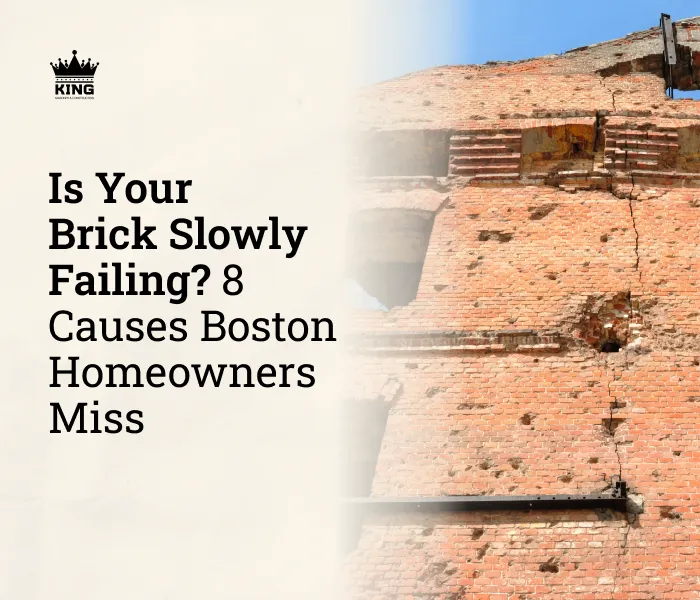
8 Common Causes of Masonry Deterioration & Prevention Tips
Your chimney looks fine. Your brick walls seem solid. But somewhere behind that surface, water is moving through a hairline crack that opened last winter and this winter, it will be wider.
Masonry deterioration doesn't announce itself dramatically. It starts with a chalky white streak, a mortar joint that crumbles at the touch, a crack that wasn't there last spring. The homeowners who call earliest spend the least. Here's what to look for before it becomes obvious.
Common Warning Signs
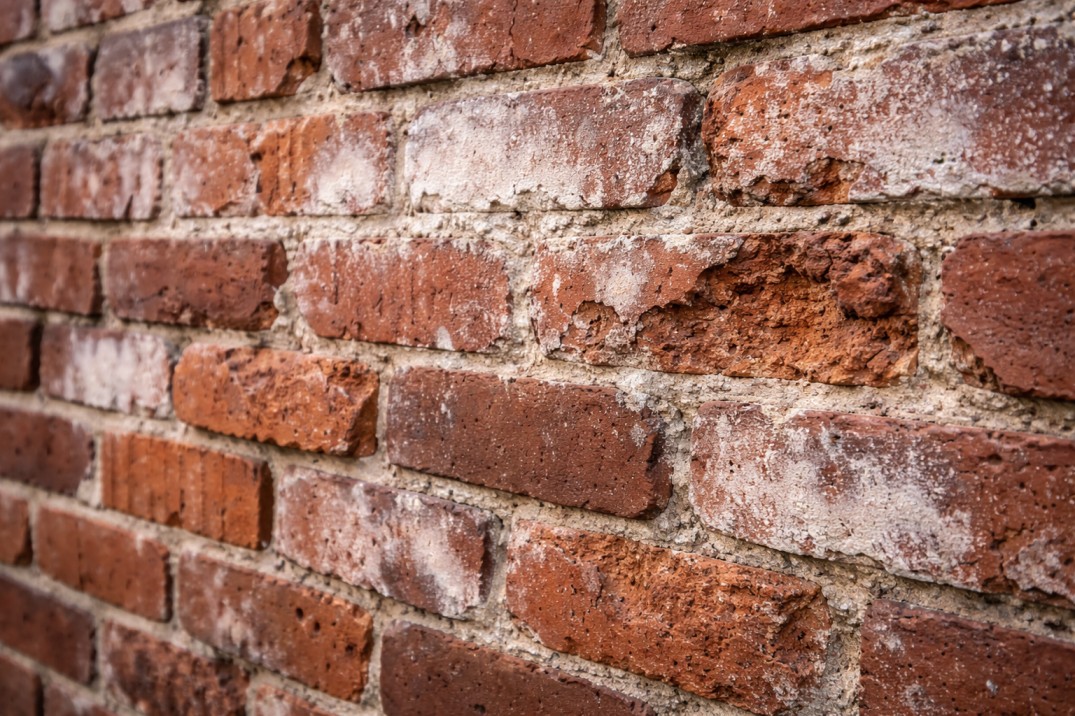
Efflorescence chalky white deposits on brick. Water is actively moving through your masonry right now
Spalling brick faces chipping or flaking. Moisture froze inside the brick and broke it from the inside out
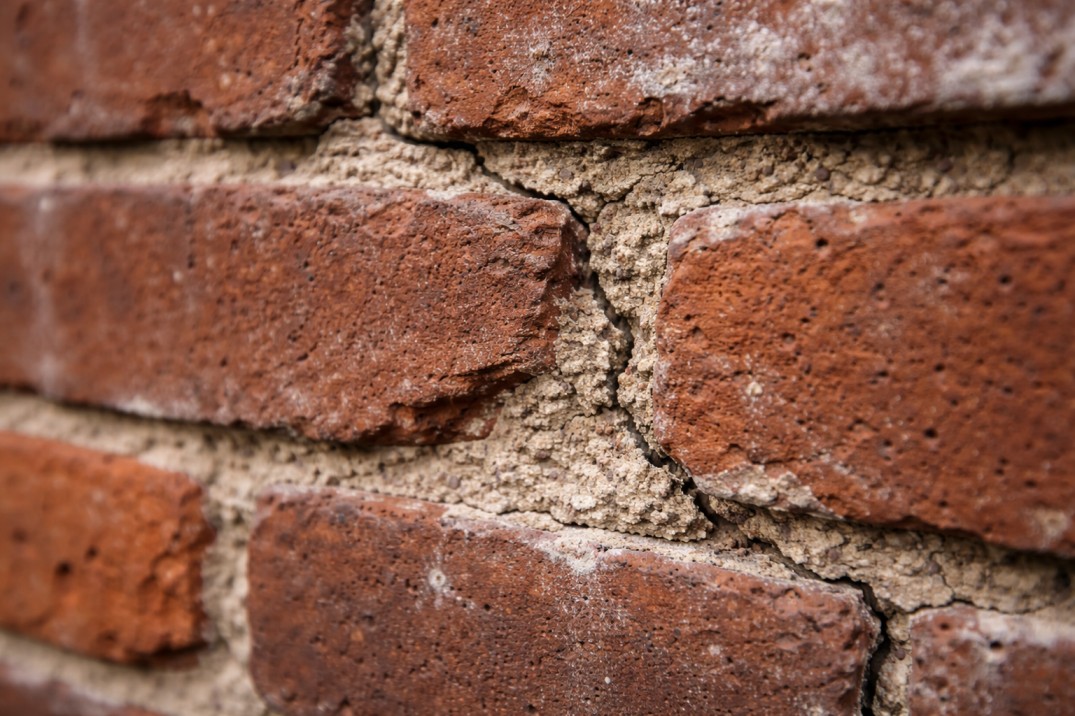
Crumbling mortar joints receded more than ¼ inch below the brick face. Water now has a direct path inward
Stair-step cracks diagonal cracks following mortar joints. Your foundation has moved
Horizontal cracks water-saturated soil is pushing against your foundation wall
Bowing or bulging walls requires professional evaluation immediately
Loose or displaced bricks the bond has failed. Weather and gravity will do the rest
If you recognized your home in two or more of these, the right time to act was last season. The second best time is today.
Cause #1 Water Infiltration and Freeze-Thaw Cycles
Water is the single most destructive force acting on Boston masonry. Brick and mortar are porous they absorb water through surfaces, mortar joints, and cracks. In Boston's climate, with over 43 inches of annual rainfall and 130+ freeze-thaw cycles per year, that absorbed water freezes, expands by 9%, and contracts again. Each cycle widens existing cracks and creates new ones.
How to stop it: Repoint all mortar joints first, then apply a breathable siloxane-based penetrating sealer. Address drainage clean gutters, extend downspouts at least 6 feet from the foundation, and correct grading that slopes toward the building. Avoid film-forming sealers from hardware stores they trap moisture inside the wall.
Cause #2 Salt Damage and Efflorescence
De-icing salt dissolves into porous brick and mortar. As water evaporates, salt crystallizes inside the masonry pores generating expansion pressure that fractures material from within.
Efflorescence (white deposits) is a symptom, not the problem. Heavy, persistent efflorescence means water is consistently traveling through your masonry.
How to stop it: Identify and eliminate the water source. Avoid de-icing salt near masonry use sand or calcium magnesium acetate instead. Clean existing efflorescence before applying any sealer.
Cause #3 Improper Repairs and Wrong Mortar
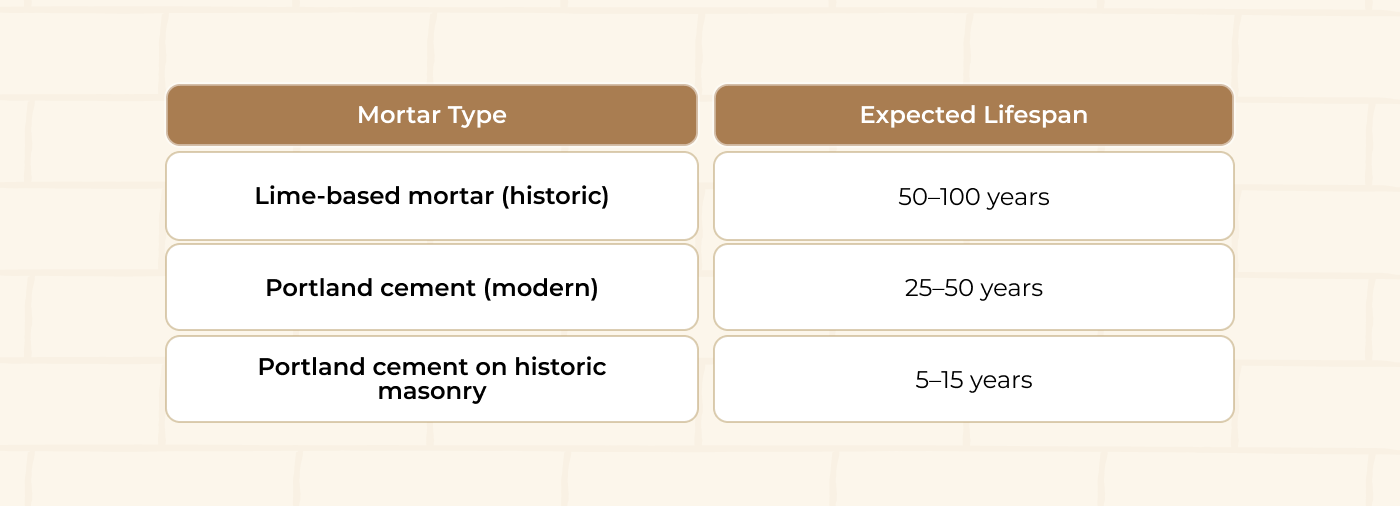
This is one of the most preventable and most common causes of deterioration in Boston. Most pre-1950 Boston homes used lime-based mortar: soft, flexible, and breathable. When contractors repoint with modern Portland cement harder and less breathable the stress that mortar used to absorb transfers directly into the brick face. The result: spalling that cannot be undone.
Mortar lifespan comparison:
How to stop it: Never repoint historic masonry with Portland cement. Always use a soft lime-based mortar matched to the original.
Cause #4 Poor Drainage and Structural Settling
Water that can't drain accumulates against foundation walls and applies sustained hydrostatic pressure. Minor foundation settling is normal in Boston's older housing stock what turns it into damage is the combination of movement and water infiltration.
Crack patterns to watch:
Stair-step cracks differential settling
Vertical cracks wall being pulled apart
Horizontal cracks lateral pressure from soil or water
Bowing or bulging immediate professional evaluation required
How to stop it: Clean gutters twice yearly, extend downspouts 6+ feet from foundation, correct grading, and install a French drain if needed.
Cause #5 Environmental Factors and Air Pollution
Boston's urban environment exposes masonry to vehicle emissions and atmospheric pollution that form mild acids slowly dissolving calcium compounds in brick and mortar. Acid-weakened masonry absorbs more water, loses mortar integrity faster, and spalls more readily under freeze-thaw cycling.
Bottom line: Controlling water infiltration remains the single highest-impact action a Boston homeowner can take pollution accelerates damage but rarely acts alone.
Cause #6 Biological Growth
Moss, lichen, algae, and ivy retain moisture against masonry, extend freeze-thaw vulnerability, and physically penetrate mortar joints. Ivy is the most damaging its adhesive roots penetrate joints directly, and removal of mature ivy frequently pulls mortar and brick faces off the wall.
How to stop it: Cut ivy at the base and let it die before removal. Treat moss and lichen with a masonry-safe biocide before mechanical removal. Maintain 12 inches of clearance between all vegetation and masonry surfaces.
Cause #7 Rust Jacking
When embedded steel lintels, ties, or anchors corrode inside masonry walls, rust expands to up to seven times the original volume enough to crack and displace surrounding brick. By the time you see the damage, the steel has typically been corroding for years.
Warning signs:
Horizontal cracking directly above window or door openings
Brick displacement above openings
Rust staining on the brick face
How to stop it: Don't ignore horizontal cracks above openings. Lintel replacement is the only definitive repair the corroded steel must be removed before surrounding masonry is rebuilt.
Cause #8 Neglected Maintenance
Every other cause on this list progresses faster without regular inspection. A hairline crack becomes a water entry point. A water entry point through a Boston winter becomes a spalled brick face. At each stage, repair costs multiply often by a factor of five to ten.
How often should masonry be inspected?
Every 3–5 years for well-maintained Boston homes
Annually for pre-1940 homes, properties with previous water damage, or buildings with known foundation movement
Homeowner walk-around: twice yearly once in spring after the final thaw, once in fall before the first frost.
Prevention Summary
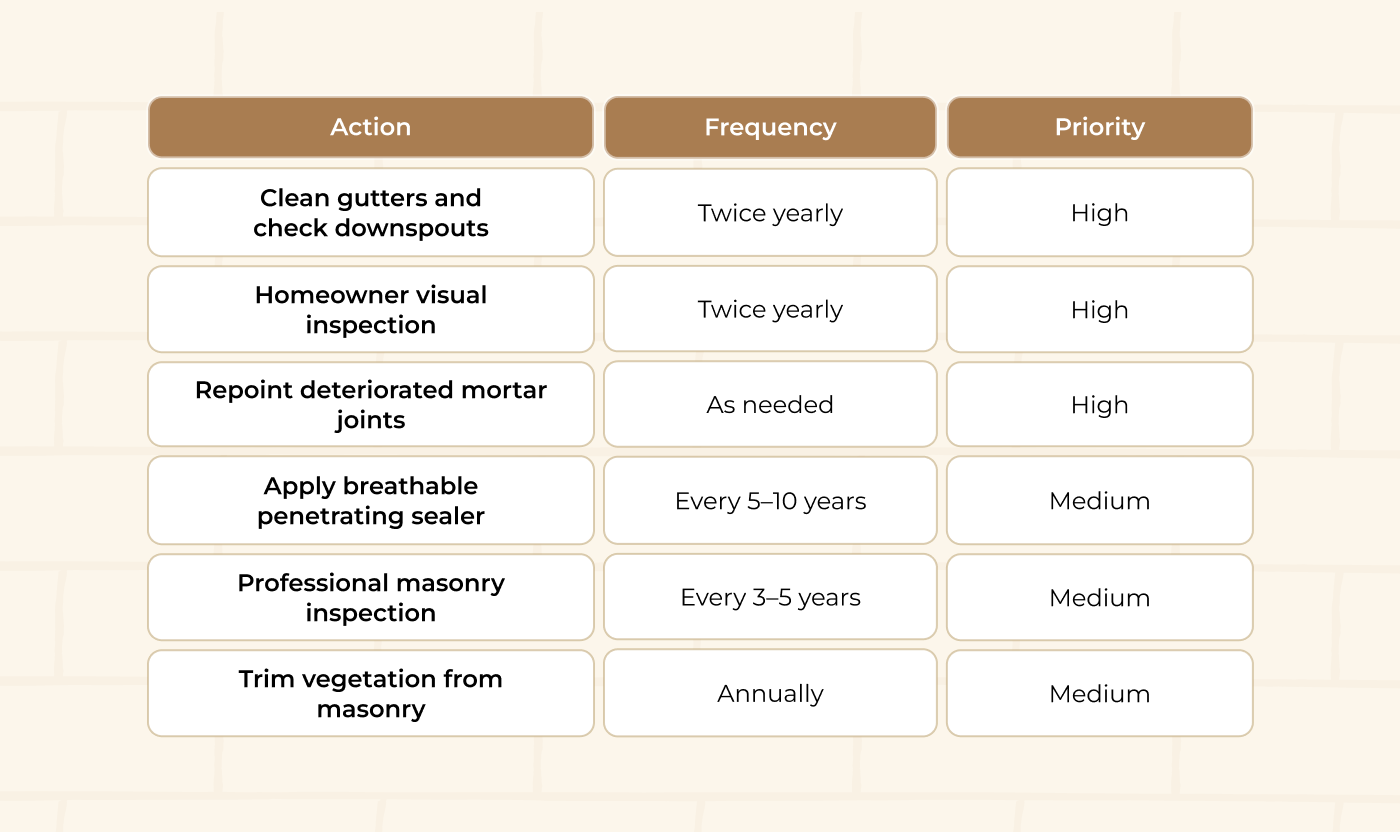
How Long Does Masonry Last?
A well-maintained brick wall can last 100–500 years. Some of Boston's oldest brick structures are approaching 300 years and remain structurally sound. What limits lifespan in practice is maintenance specifically mortar joint upkeep and water management.
Signs Your Masonry Needs Immediate Professional Attention
Don't wait for your next scheduled inspection if you see:
Horizontal cracks in a foundation or retaining wall
Bowing, bulging, or leaning masonry
Brick displacement above window or door openings
Active water entry into the basement after rain
Any crack that has visibly widened since you first noticed it
Kings Masonry & Construction provides professionalmasonry repair and restoration acrossBoston,Brookline,Newton, and surroundingGreater Boston communities. Schedule a free on-site estimate today.