Crumbling Chimney Mortar | Causes & Repair Guide | Kings Masonry Boston
Crumbling chimney mortar is one of the most common and most ignored masonry problems in Boston homes. What starts as a minor cosmetic issue becomes a structural and water damage problem faster than most homeowners expect, especially after a New England winter.
Here's what causes chimney mortar to deteriorate, how to spot it early, and when repair becomes urgent.
Is It Normal for Chimney Mortar to Crumble?
Some mortar deterioration over decades is expected mortar is designed to be the sacrificial element in a masonry system, wearing before the surrounding brick does. But actively crumbling, receding, or falling-out mortar is not normal maintenance wear. It's a warning sign that water has been working through your chimney and the freeze-thaw cycle has accelerated the damage.
In Boston's climate, chimneys face more freeze-thaw stress than almost anywhere else in the country. Annual inspection is the baseline not a luxury.
What Causes Chimney Mortar to Crumble?
1. Freeze-Thaw Cycling
Boston experiences 130+ freeze-thaw cycles per year. Water absorbed into mortar joints freezes, expands by 9%, and contracts again with each cycle gradually breaking mortar apart from the inside out. This is the single most common cause of chimney mortar deterioration in New England.
2. Water Infiltration
A missing chimney cap, cracked crown, or failed flashing allows water to enter the chimney directly. Once inside, water saturates the mortar and accelerates deterioration particularly during freeze-thaw seasons.
3. Wrong Mortar Used in Previous Repairs
This is more common than most homeowners realize. Historic Boston chimneys were built with soft lime-based mortar. When a previous contractor repointed using hard Portland cement, the mismatch causes the surrounding brick to crack and spall rather than the mortar absorbing the stress.
4. Age and Natural Weathering
Properly matched lime mortar has a lifespan of 50-100 years. Portland cement mortar lasts 25–50 years under ideal conditions and significantly less on historic masonry. Most Boston chimneys have not been repointed since they were built.
5. Acid Rain and Pollution
Boston's urban environment exposes chimneys to atmospheric acids that slowly dissolve calcium compounds in mortar. Over decades, this softens the mortar surface and accelerates all other deterioration mechanisms.
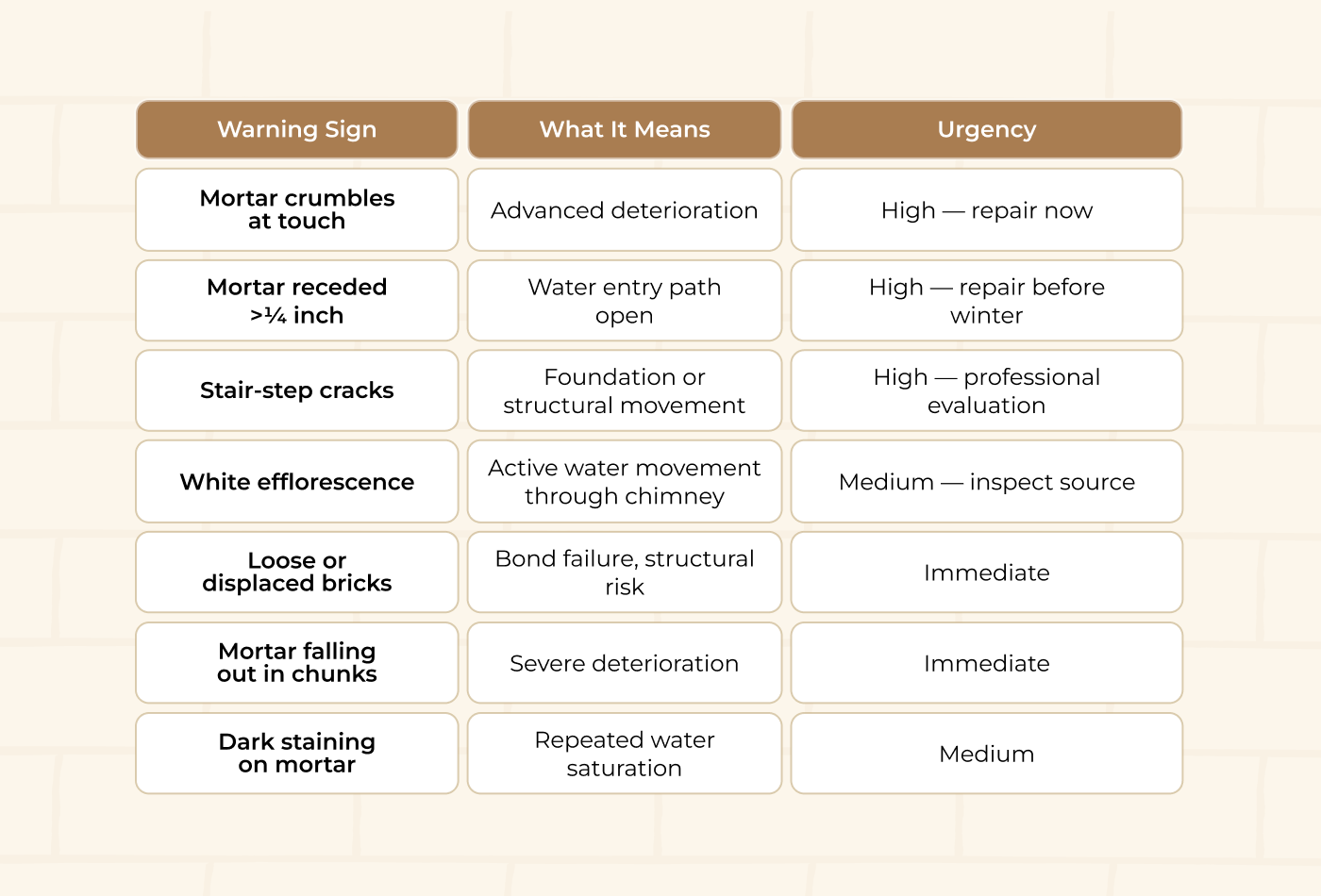
Signs Your Chimney Mortar Needs Repair
How to Fix Crumbling Chimney Mortar
Chimney Repointing (Tuckpointing)
Repointing is the standard repair for deteriorated chimney mortar. The process involves:
Removing damaged mortar to a minimum depth of ¾ inch using an angle grinder or oscillating tool
Cleaning the joint thoroughly to remove all loose material and dust
Dampening surrounding masonry to prevent rapid moisture loss from fresh mortar
Packing new mortar in layers, matched to the original in composition and hardness
Tooling the joint to match the existing profile typically concave or weather-struck to shed water
Critical for Boston homes: The mortar mix must be matched to your chimney's existing material. Lime-based mortar for pre-1950 construction never Portland cement on historic masonry.
When Repointing Is Not Enough
If bricks are loose, displaced, or spalling significantly, repointing alone won't solve the problem. Structural chimney repair including brick replacement and potential rebuilding of upper sections may be required. A professional inspection identifies which approach is needed before work begins.
Chimney Repointing vs. Tuckpointing: What's the Difference?
Both terms refer to mortar joint repair, but they're used differently:
Repointing removing deteriorated mortar and replacing it with new mortar matched to the original
Tuckpointing a finishing technique where two contrasting colors of mortar are used to create the appearance of very fine joints, common in historic masonry restoration
For structural repair purposes, repointing is the correct term. Tuckpointing is primarily an aesthetic finish applied after repointing is complete.
How to Prevent Chimney Mortar Deterioration
Annual inspection catch deterioration before water infiltration begins
Chimney cap keep rain, animals, and debris out of the flue
Crown maintenance seal crown cracks immediately; a sound crown sheds water away from the entire chimney top
Breathable penetrating sealer applied after repointing, reduces water absorption without trapping moisture
Correct mortar type insist on lime-compatible mortar for any historic Boston chimney
Flashing maintenance ensure the seal at the roofline is intact every season
When to Repair Chimney Mortar in Boston
Summer is the ideal window warm, dry conditions allow fresh mortar to cure fully before fall moisture and winter freeze-thaw cycles arrive. A repointing job done in summer lasts significantly longer than one done in October or November when temperatures are borderline.
Pro tip: If your chimney hasn't been inspected or repointed in more than 10 years, schedule a summer inspection regardless of visible symptoms. Mortar deterioration often progresses internally before it's obvious from the ground.
For a full picture of what's happening to your chimney, read our summer chimney inspection checklist before scheduling any repair work.
Don't Let One Boston Winter Make It Worse
Crumbling chimney mortar doesn't stabilize on its own. Every freeze-thaw cycle pushes the damage further what's repointing work today becomes brick replacement work next year. Summer is your window to fix it properly, cure it fully, and go into winter with a structurally sound chimney.
Kings Masonry & Construction provides professional chimney repointing and mortar repair across Boston, Brookline, Newton, and surrounding Greater Boston communities. Get a free on-site estimate before the summer window closes.
FAQ
How long does chimney repointing last in Boston?
Properly done repointing with the correct lime-based mortar typically lasts 20–30 years in Boston's climate. Portland cement repointing on historic masonry can fail in as little as 5–10 years and causes additional brick damage in the process.
Can I repoint my chimney myself?
Basic repointing is technically possible as a DIY project on accessible areas, but chimney repointing presents significant height and safety risks, and the mortar matching requirement for Boston's historic chimneys makes incorrect product selection likely. Professional repointing is strongly recommended for any chimney work.
How do I know if my chimney needs repointing or rebuilding?
Repointing is appropriate when the bricks are structurally sound but mortar joints are deteriorated. Rebuilding is needed when bricks are loose, displaced, or severely spalled, or when the chimney shows structural movement. A professional inspection determines which approach is correct.
Does chimney repointing require a permit in Boston?
Minor repointing work typically does not require a permit in Boston. Structural chimney repairs, rebuilds, or work that affects the roofline may require permits depending on the scope. A licensed contractor will advise on permit requirements for your specific project.
What is the best mortar for chimney repointing in Boston?
For pre-1950 Boston homes, a soft Type N or Type O lime-based mortar matched to the original is correct. For newer construction, Type S Portland-lime blend is standard. Never use straight Portland cement on historic masonry it is harder than the surrounding brick and causes spalling.