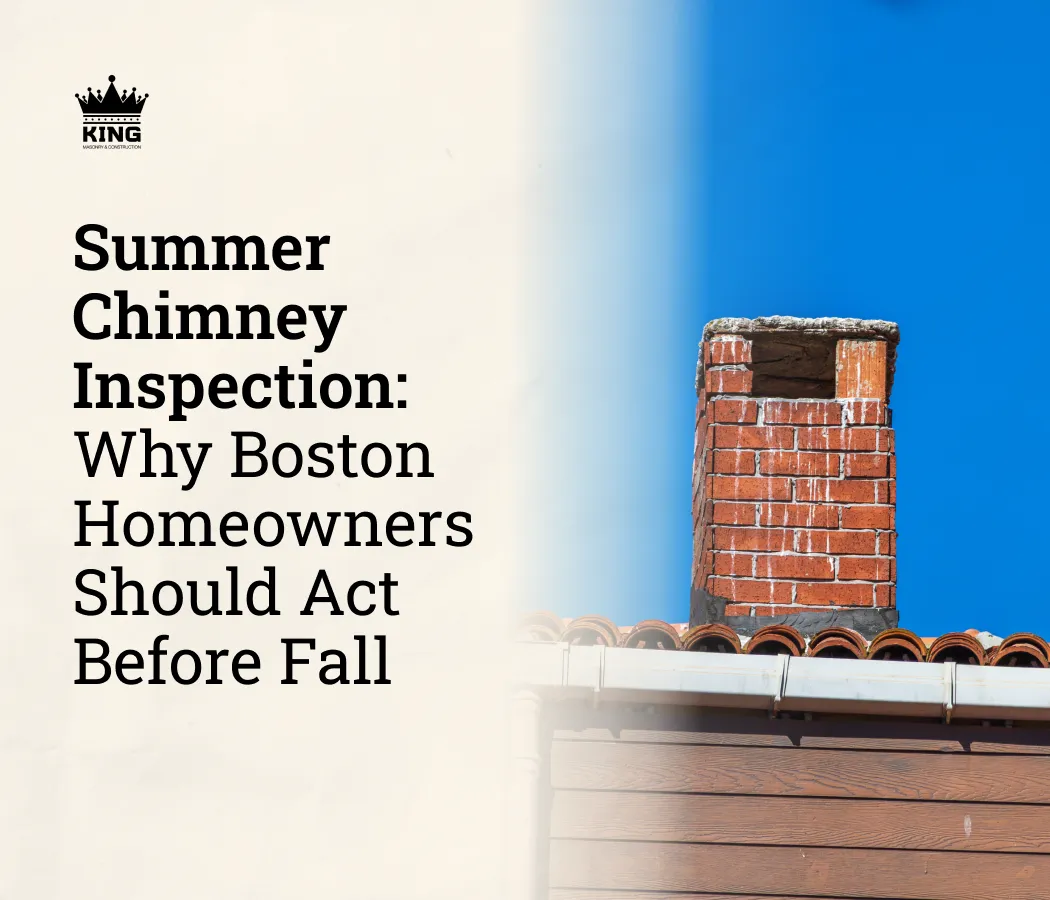
Summer Chimney Inspection in Boston: What to Check Before Fall
Most Boston homeowners only think about their chimney when they're ready to light the first fire of the season. By then, it's too late to catch the damage that built up over winter and too close to cold weather to fix it properly.
Summer is the ideal window for chimney inspection and repair. Here's why it matters and exactly what a professional inspection covers.
Why Summer Is the Best Time for Chimney Inspection in Boston
Boston winters are hard on chimneys. Freeze-thaw cycling cracks mortar, water infiltrates through gaps, and flashing shifts under ice and snow. By the time spring arrives, most of that damage is already done.
Summer gives you:
Warm, dry conditions for mortar repairs to cure properly
Enough lead time to complete repairs before heating season begins
Better contractor availability than the fall rush in October and November
Full visibility no snow or ice obscuring the chimney exterior
Waiting until fall means competing with every other homeowner who also waited and risking repairs that can't cure before the first frost.
What a Summer Chimney Inspection Covers
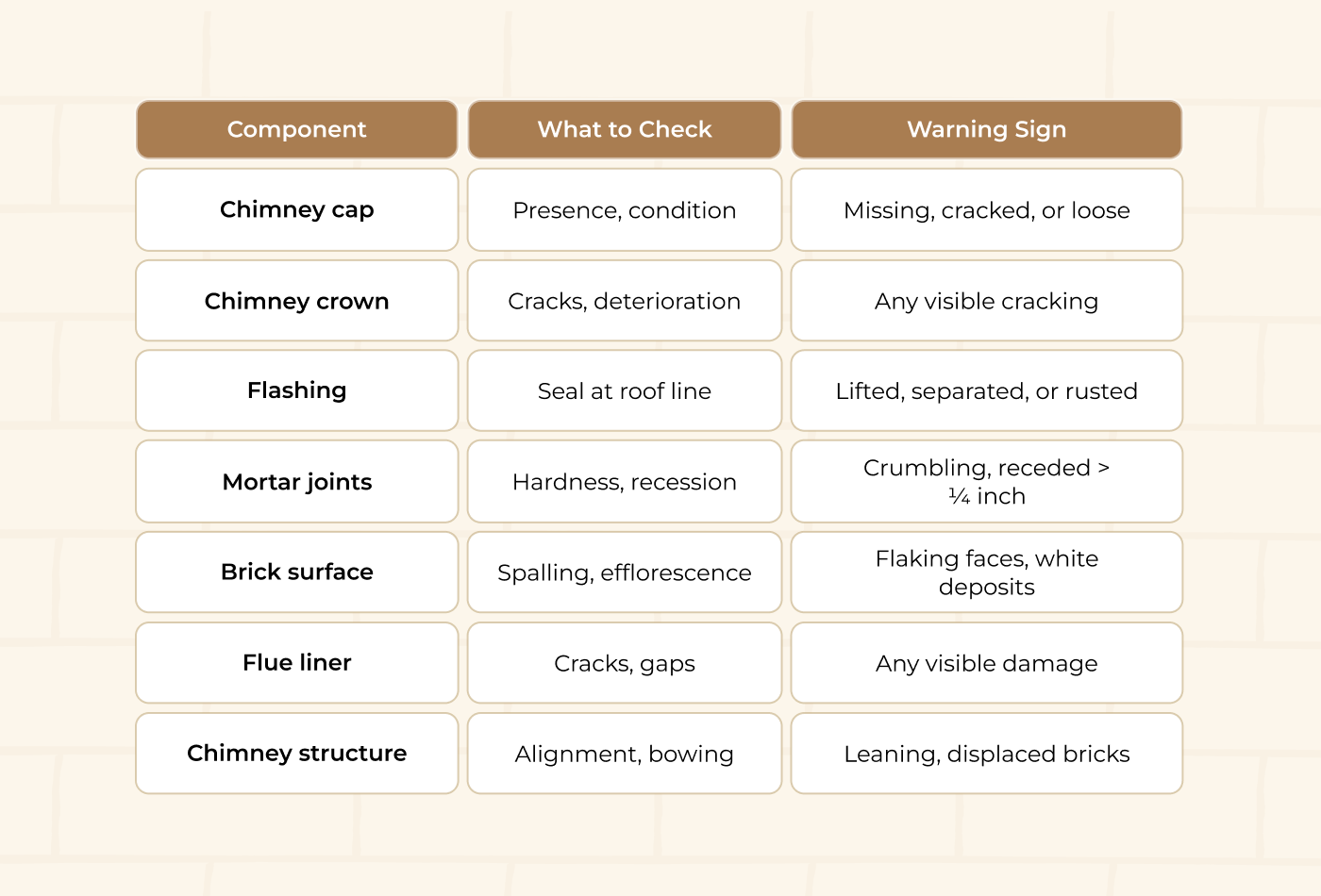
A thorough chimney inspection in Boston should cover every component of the system not just the visible brickwork.
1. Chimney Cap and Crown
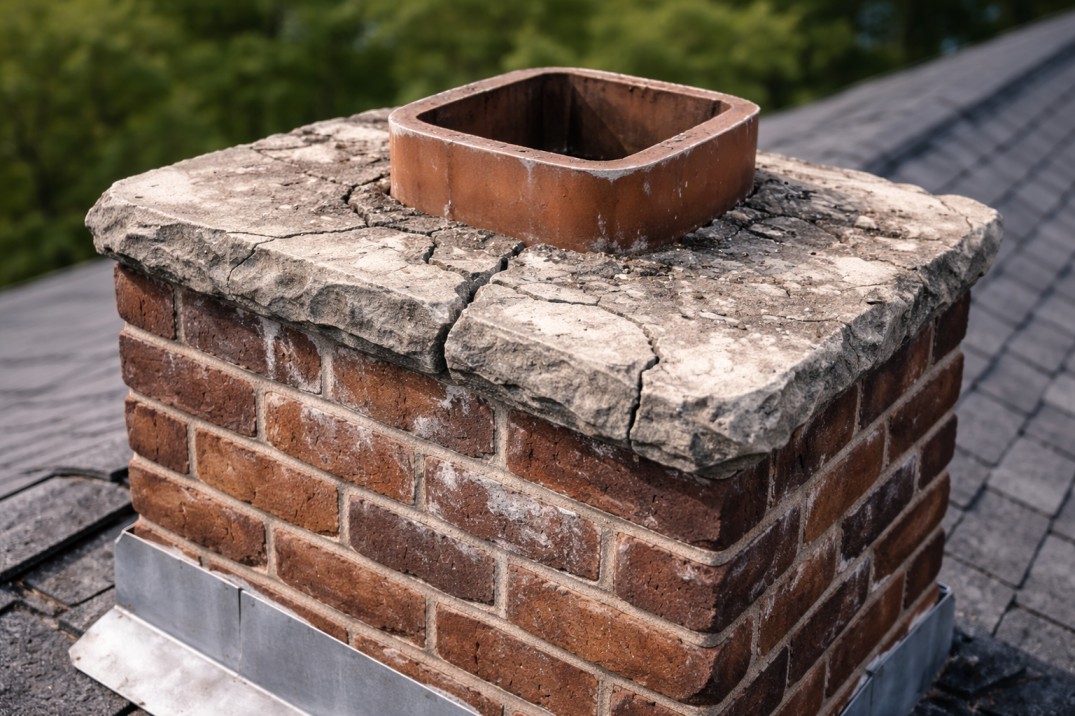
The cap keeps rain, animals, and debris out of the flue. The crown is the concrete or mortar layer at the very top that seals the chimney structure. Both are exposed to the harshest weather and deteriorate fastest.
Missing or cracked chimney cap → water enters the flue directly
Crown cracks → water infiltrates the masonry from the top down
2. Flashing Inspection
Flashing is the metal seal where the chimney meets the roof. Failed flashing is one of the most common sources of water damage in Boston homes and one of the most overlooked.
Lifted, cracked, or separated flashing allows water to run behind the chimney and into the roof structure
Summer inspection allows flashing to be resealed or replaced before fall rain season
3. Mortar Joint Condition
Winter freeze-thaw cycling deteriorates mortar faster than any other factor in Boston's climate. During inspection, every mortar joint should be evaluated for:
Crumbling or receding mortar
Stair-step cracks indicating structural movement
Gaps where water can enter and freeze again next winter
4. Brick and Masonry Condition
Spalling bricks - faces flaking or popping off due to water freezing inside the brick
Efflorescence -white deposits indicating active water movement through the masonry
Bowing or displacement -structural warning signs requiring immediate attention
5. Flue Liner Inspection
The flue liner protects the surrounding masonry from heat and combustion gases. Cracks in the liner are a fire and carbon monoxide risk not a cosmetic issue
Summer Chimney Inspection Checklist
Don't wait for the annual inspection if you notice:
White staining on the chimney exterior or interior walls near the fireplace
Water in the firebox after rain
Crumbling mortar visible from the ground
Displaced or missing bricks anywhere on the chimney
Rust staining around the flashing line
Musty smell from the fireplace during summer months
Any of these signals active water damage that is progressing right now.
Don't Wait Until October
By the time most Boston homeowners call about chimney repairs, contractors are booked weeks out and temperatures are dropping. Mortar repairs need consistent warmth to cure a job done in September is borderline; one done in October is a gamble.
Kings Masonry & Construction provides professional chimney inspection and repair across Boston, Brookline, Newton, and surrounding. Book your free summer inspection while the calendar is still open.
Request Your Free Estimate
FAQ
Can I inspect my chimney myself?
A basic ground-level visual check is something any homeowner can do look for missing caps, visible cracks, and efflorescence. However, a proper inspection requires getting on the roof, evaluating flashing seals, and assessing flue liner condition from inside work that requires professional tools and experience.
Do I need a chimney inspection if I don't use my fireplace?
Yes. An unused chimney still collects water, deteriorates from freeze-thaw cycling, and can develop structural issues that affect the surrounding roof and wall structure. Annual inspection is recommended regardless of usage.
How long does chimney repointing last in Boston?
Properly done repointing with the correct lime-based mortar matched to your chimney's existing material typically lasts 20–30 years in Boston's climate. Using the wrong mortar type particularly Portland cement on historic masonry can fail in as little as 5-10 years and cause additional brick damage.
What is chimney waterproofing and do I need it?
Chimney waterproofing involves applying a breathable penetrating sealer to the masonry exterior after repointing is complete. It reduces water absorption without trapping moisture inside important for Boston's older brick chimneys. It's recommended as a follow-up to any repointing work.
What is the difference between chimney cleaning and chimney inspection?
Cleaning removes creosote buildup from the flue important for fire safety. Inspection evaluates the structural and waterproofing condition of the entire chimney system. Both are needed, but they address different risks. A summer inspection focused on masonry condition is separate from and in addition to annual cleaning.
What happens if chimney problems are ignored until winter?
Cracks filled with water in fall freeze and expand in winter widening damage significantly each season. A minor repointing job caught in summer can become a partial chimney rebuild if left through another Boston winter.