
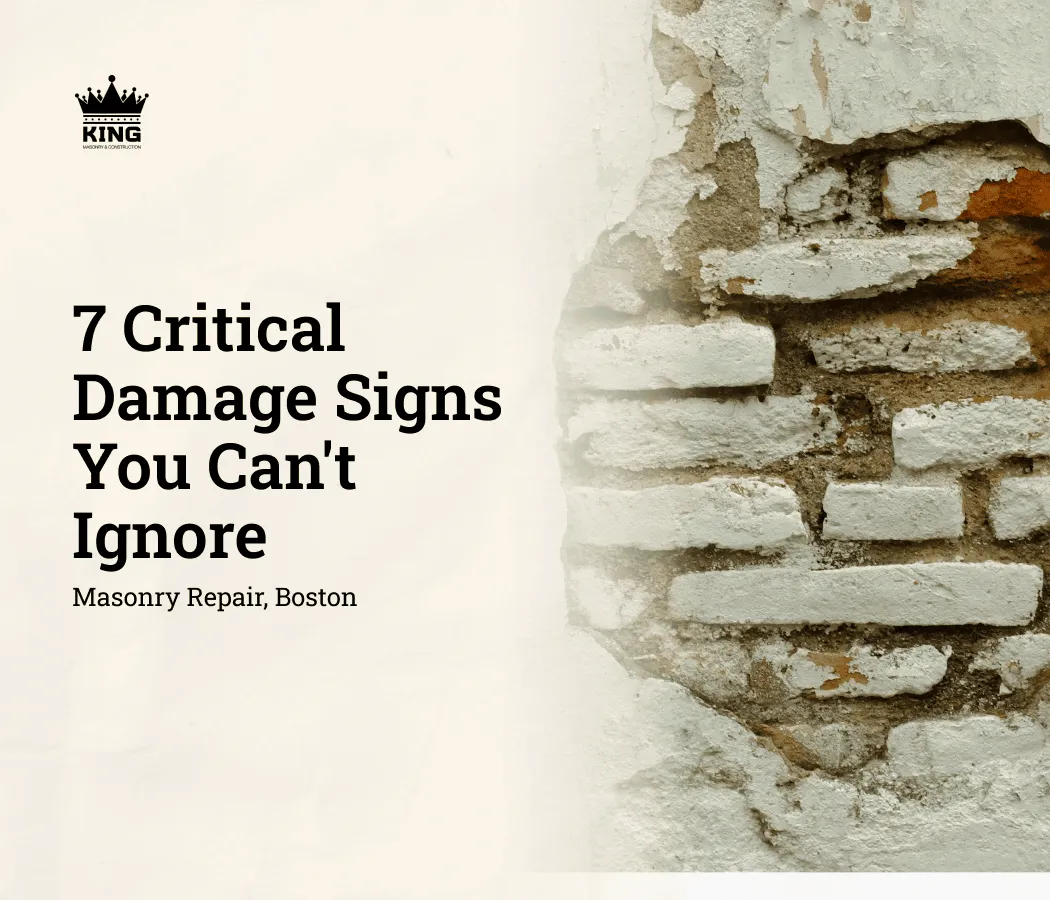
7 Critical Damage Signs You Can't Ignore: Boston Masonry Repair
Most masonry problems don't announce themselves with a loud crash. They start quietly a small crack in the mortar, a damp spot that appears after rain, or a single loose brick. These early warning signs are easy to dismiss, especially when you're managing a busy household or multiple properties.
But in Boston's climate, small masonry issues rarely stay small. Freeze-thaw cycles, heavy rainfall, and age turn minor damage into structural headaches faster than most property owners expect. Knowing when you need professional masonry services can be the difference between a straightforward fix and a major renovation.
This guide breaks down the most common damage signs, explains what causes them, and helps you determine when professional intervention is necessary.
1. Cracks in Brick or Mortar Joints
Cracks are the most visible sign something is wrong, but not all cracks mean the same thing.

Hairline Cracks in Mortar
These thin cracks usually appear in the mortar joints between bricks. They're often caused by:
Natural settling of the building
Temperature fluctuations
Minor ground movement
What to do: Small hairline cracks can often be sealed during routine maintenance, but they should be monitored. If they widen or multiply, you need professional attention before water starts penetrating.
Stair-Step Cracks
These diagonal cracks follow the mortar pattern and often indicate foundation movement or settling issues.
What to do: Stair-step cracks are a warning sign of potential structural problems. A professional should assess whether the foundation needs stabilization before repairing the visible cracks.
Vertical or Horizontal Cracks Through Bricks
When cracks cut straight through bricks rather than following mortar lines, it usually points to:
Excessive pressure on the wall
Severe settling
Structural overload
What to do: These cracks typically require immediate professional evaluation. Delaying repairs can lead to wall failure or collapse. When damage reaches this level, it calls for proper structural repair — see our overview of brick, stone, and structural masonry work for what that involves.
2. Spalling or Flaking Bricks
Spalling happens when the surface of a brick begins to peel, pop off, or crumble. In Boston, this is almost always caused by moisture infiltration combined with freeze-thaw cycles.

How Spalling Develops
Water enters the brick through cracks or damaged mortar. When temperatures drop, the water freezes and expands, causing the brick surface to fracture and break away.
Warning Signs of Spalling
Small pieces of brick on the ground near walls
Rough, pitted brick surfaces
Bricks that look powdery or crumbling
Entire brick faces falling off
What to do: Spalling rarely stops on its own. Once it starts, it usually spreads. Early intervention from experienced contractors can replace damaged bricks before the problem affects structural integrity.
3. White Powdery Residue (Efflorescence)
Efflorescence appears as white, chalky deposits on brick surfaces. It's caused by water moving through the masonry and leaving behind salt deposits as it evaporates.
What Efflorescence Tells You
While efflorescence itself isn't structurally dangerous, it's a clear sign that:
Water is penetrating the wall
Drainage around the building may be inadequate
Mortar joints may be compromised
Why It Matters in Boston
Boston's wet climate makes efflorescence common, but persistent or heavy deposits indicate ongoing moisture problems that need to be addressed.
What to do: Identify and fix the water source. This might involve repointing mortar joints, improving drainage systems, or applying appropriate sealers. Ignoring it can lead to more serious water damage.
4. Loose or Missing Mortar
Mortar is designed to be softer than brick so it absorbs movement and protects the structural integrity of the wall. Over time, especially in older Boston buildings, mortar deteriorates.

Signs Your Mortar Is Failing
Mortar that crumbles when touched
Gaps or voids in mortar joints
Mortar that appears sandy or powdery
Visible separation between brick and mortar
The Repointing Solution
Repointing involves removing deteriorated mortar and replacing it with fresh material that matches the original composition. This is one of the most common masonry repair services, particularly for historic properties.
What to do: Don't wait until bricks start falling out. Repointing is much more affordable and less disruptive when done proactively. Contact us for repointing in Boston, MA.
5. Water Stains or Dampness Inside
If you see water stains, damp spots, or mold on interior walls adjacent to exterior masonry, you have a moisture penetration problem.
Common Causes
Cracked or missing mortar allowing water entry
Failed chimney flashing
Inadequate drainage around the foundation
Damaged brick surfaces
Clogged or improperly installed gutters
Why Interior Dampness Is Urgent
Water inside walls can:
Cause mold and health issues
Damage interior finishes and insulation
Weaken structural components
Lead to extensive repair costs if ignored
What to do: Trace the water source immediately. This usually requires professional diagnosis to identify entry points and implement lasting solutions.
6. Bulging or Bowing Walls
A wall that appears to bow outward or bulge is a serious structural concern.

This happens when:
Water infiltration causes freeze-thaw damage behind the brick veneer
Foundation movement pushes the wall out of alignment
Wall ties or structural supports have failed
Excessive weight or lateral pressure affects the wall
How to Spot Bulging
Stand at an angle to the wall and look along its length. Even slight bulges are noticeable when viewed from the side.
What to do: Bulging walls are an emergency. They can collapse without warning. Contact a structural masonry specialist immediately for assessment.
7. Gaps Between Masonry and Other Building Elements
Separation between brick walls and adjacent structures like windows, doors, chimneys, or rooflines indicates movement that shouldn't be ignored.
What Gaps Mean
The building is settling unevenly
Thermal expansion is causing separation
Foundation problems are developing
Structural connections have failed
What to do: Small gaps can often be sealed, but widening gaps require professional evaluation to determine the underlying cause and appropriate repair solution.
When Professional Masonry Services Are Non-Negotiable
Some situations always require professional help:
Immediate Professional Attention Needed
Any crack wider than 1/4 inch
Bulging or leaning walls
Loose bricks or stones
Active water leaks through masonry
Visible structural movement
Chimney damage or instability
Can Wait (But Shouldn't Be Ignored)
Small hairline cracks in mortar
Early signs of efflorescence
Minor mortar deterioration in isolated areas
Even "minor" issues benefit from professional inspection. What looks small on the surface may indicate larger problems developing behind the wall.
The Real Cost of Delaying Repairs
Property owners often postpone necessary masonry work, assuming the problem will stay manageable. Here's what actually happens:
How Small Problems Escalate
Year 1: A few hairline cracks in mortar joints
Year 2: Water penetrates, causing efflorescence and minor spalling
Year 3: Freeze-thaw cycles worsen spalling, mortar deteriorates further
Year 4: Interior water damage appears, structural integrity compromised
Year 5: Major restoration needed, costs 5-10x the original repair estimate
Boston's Climate Accelerates Damage
The combination of:
Heavy winter precipitation
Frequent freeze-thaw cycles
Humid summers
Coastal salt exposure (in some areas)
...means masonry damage progresses faster in Boston than in many other climates.
DIY vs. Professional Repairs
When DIY Might Work
Cleaning minor efflorescence
Applying masonry sealer to sound surfaces
Basic inspection and monitoring
Keeping drainage systems clear
When You Need a Professional
Any structural crack or movement
Repointing mortar (matching composition is critical)
Brick replacement
Water intrusion diagnosis
Chimney repairs
Historic building restoration
Foundation or structural issues
Improper masonry work can make problems worse, especially if the wrong materials are used or structural issues are missed.
Prevention: Reducing Future Repair Needs
Regular maintenance significantly extends the life of masonry and reduces emergency repairs.
Annual Inspection Checklist
Walk around the entire building examining brick and mortar
Check for new cracks or changes in existing ones
Look for efflorescence, staining, or moisture signs
Inspect chimney condition and flashing
Verify gutters and downspouts drain properly
Ensure drainage slopes away from the foundation
Maintenance Actions
Repoint small mortar areas before they spread
Keep vegetation away from masonry walls
Address drainage issues promptly
Clean gutters and downspouts regularly
Never use high-pressure washing on old masonry
What to Expect from Professional Masonry Services
Understanding the professional repair process helps you know what to expect and ask the right questions.
Initial Assessment
A qualified contractor will:
Inspect all visible masonry surfaces
Identify damage patterns and underlying causes
Test mortar composition (especially for historic buildings)
Assess structural concerns
Provide a detailed estimate
Repair Process
Depending on the issue, professional masonry work typically includes:
Careful removal of damaged materials
Preparation of surfaces
Installation of matching materials
Addressing water infiltration sources
Final inspection and cleanup
Timeline Considerations
Most repairs take 1-5 days depending on scope, but factors like:
Weather conditions
Material curing requirements
Extent of hidden damage discovered during work
...can affect the timeline.
Questions to Ask Your Contractor
Before hiring, make sure the contractor can answer:
About Experience
How long have you worked on Boston-area properties?
Do you have experience with [historic/residential/commercial] buildings?
Can you provide references for similar repair work?
About the Project
What's causing this specific damage?
What materials will you use and why?
How will you address the root cause, not just symptoms?
What's the expected timeline?
What warranty or guarantee do you offer?
About Credentials
Are you licensed and insured?
Are you familiar with Boston building codes?
Do you carry workers' compensation insurance?
Clear, detailed answers indicate a professional who understands masonry repair Boston work properly.
Final Thoughts
Masonry damage doesn't fix itself. In Boston's climate, it gets worse—often faster than property owners expect. The seven warning signs covered in this guide all point to one truth: early action prevents bigger problems.
Whether you manage a historic brownstone in Back Bay, a triple-decker in Dorchester, or a commercial building downtown, regular inspection and timely professional masonry services protect your investment and avoid emergency situations.
When you spot cracks, water damage, or any of the other signs discussed here, don't wait. A professional assessment costs far less than emergency structural repairs, and the peace of mind is worth it.
Boston's buildings are built to last, but only when the masonry is properly maintained. Pay attention to the warning signs, act when problems are small, and work with experienced professionals who understand local conditions and building requirements.
Your masonry is telling you a story. The question is whether you're listening before it becomes a crisis.