
Repointing vs Crack Injection: Which One Do You Need?
When cracks start appearing in your brickwork or foundation, the first question most homeowners ask is: "What kind of repair do I actually need?" The answer depends on where the damage is, what caused it, and how severe it is.
Two of the most commonly recommended solutions are repointing brickwork and crack injection repair and while they may seem similar, they serve very different purposes. Choosing the wrong one won't just waste your money; it can leave the underlying problem unsolved and lead to bigger damage down the line.
This guide breaks down both methods, explains when each one applies, and helps you make the right call for your property.
What Is Repointing Brickwork?
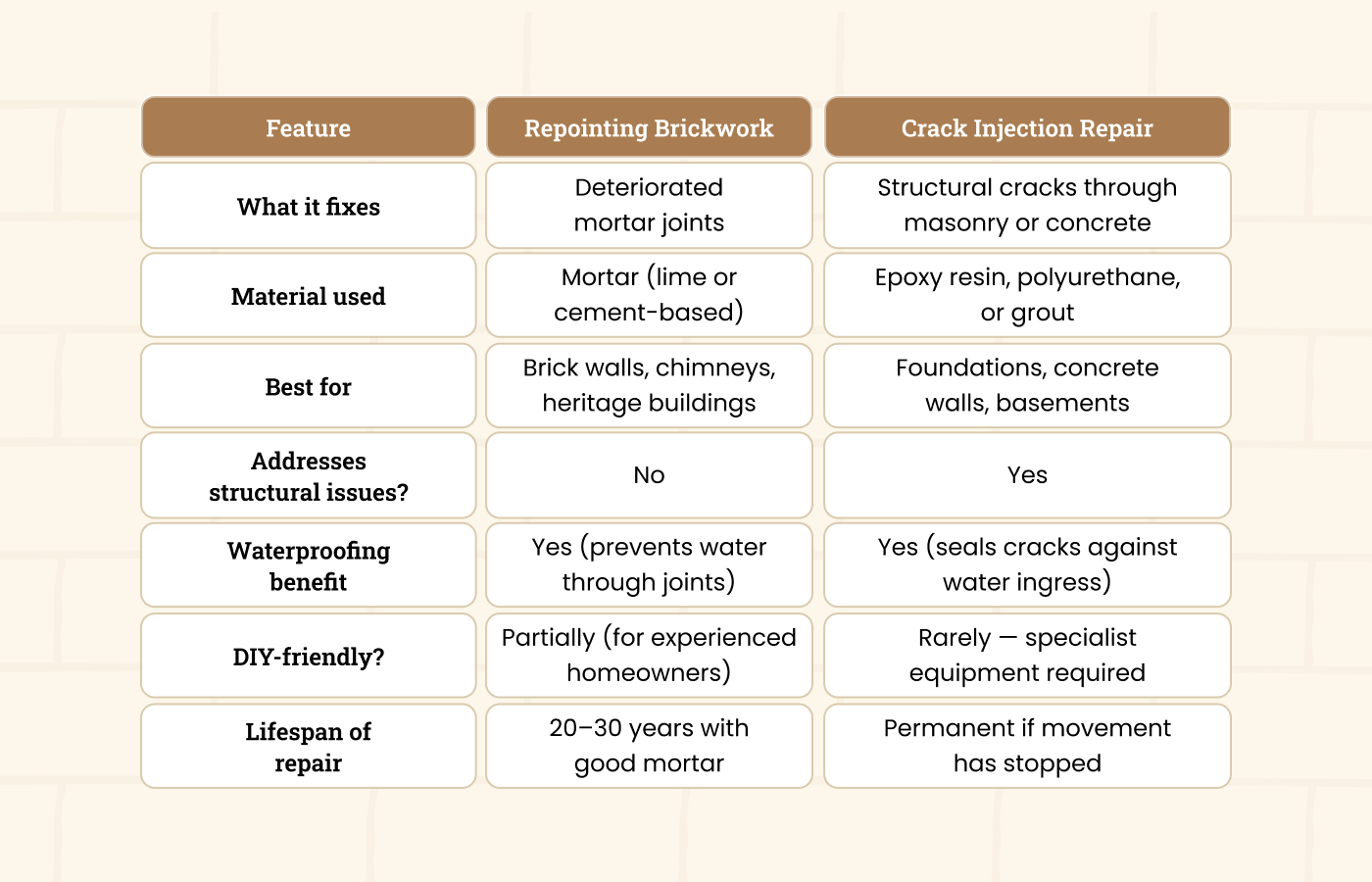
Repointing also called tuckpointing is the process of removing old, deteriorated mortar from the joints between bricks and replacing it with fresh mortar. Over time, mortar naturally breaks down due to weathering, freeze-thaw cycles, moisture infiltration, and age. When this happens, the joints become hollow, crumbly, or visibly recessed.
Repointing brickwork is the right solution when:
The mortar between bricks is crumbling, cracked, or missing
You can visibly see gaps or voids in the joints
Water is entering the wall through deteriorated joints
The brickwork is more than 20–30 years old and hasn't been maintained
You want to restore the structural integrity and weatherproofing of a brick wall
Repointing addresses the mortar joints specifically — it does not repair the bricks themselves or fix structural movement in the wall. It's a surface-level but highly effective maintenance repair that protects the wall from moisture ingress.
Signs You Need Repointing
Soft, powdery, or hollow mortar when you run your finger over the joints
Visible recessing (mortar sitting more than 6mm below the brick face)
Efflorescence (white salt deposits) on brick faces caused by water penetrating joints
Damp patches on interior walls adjacent to brickwork
Moss or vegetation growing in the joints
What Is Crack Injection Repair?
Crack injection repair is a structural repair technique used to fill and seal cracks in concrete, masonry, or foundations. A specialist material typically epoxy resin, polyurethane foam, or cementitious grout is injected under pressure directly into the crack, bonding the two sides together and restoring structural integrity.
Unlike repointing, crack injection doesn't just address surface joints it fills the crack through its entire depth, making it suitable for structural repairs.
Crack injection repair is the right solution when:
You have visible cracks running through concrete or block foundation walls
Cracks are caused by structural movement, settlement, or hydrostatic pressure
Water is actively entering a basement or foundation through cracks
You need to restore the load-bearing capacity of a cracked structure
Cracks are wider than 0.2mm or showing signs of ongoing movement
Common Applications for Crack Injection
Basement wall cracks leaking water
Foundation cracks caused by soil settlement or shrinkage
Cracks in concrete retaining walls
Structural cracks in rendered or block walls
Post-tension slab cracks in commercial buildings
How to Know Which Repair You Need
Ask Yourself These Questions
1. Where is the crack or damage?
If it's in the mortar joints between bricks → You likely need repointing
If it's a crack running through the brick, block, or concrete itself → You likely need crack injection
2. Is there active water ingress or structural movement?
If water is seeping through a foundation or basement wall → Crack injection is needed
If water is entering through open mortar joints → Repointing is the solution
3. How old is the structure?
Older brick buildings (pre-1980s) often need repointing as routine maintenance
Newer buildings showing foundation cracks may need injection due to settlement issues
4. Is the crack getting worse?
A static crack through concrete → likely suitable for crack injection
An ongoing crack indicating active movement → specialist structural assessment needed before either repair
Can You Need Both Repointing and Crack Injection?
Yes and this is more common than you might think. A building might have weathered mortar joints throughout the brickwork (requiring repointing) and a structural crack in a foundation wall (requiring crack injection). These are separate problems that coexist in older or poorly maintained structures.
In many cases, a professional mason or structural repair contractor will assess the full scope of damage and recommend a combined approach.
Choosing the Right Contractor
Whether you need repointing brickwork or crack injection repair, it's important to work with a specialist who:
Has specific experience with the type of repair needed
Uses appropriate materials (lime mortar for heritage buildings; structural epoxy for foundation repairs)
Provides a written assessment and warranty
Can identify whether underlying causes like drainage issues or ground movement need to be addressed first
A good contractor won't just fix the symptom. They'll diagnose the cause.
Final Thoughts
The debate of repointing vs crack injection really comes down to understanding what type of damage you're dealing with. Repointing brickwork is the go-to solution for aging or weathered mortar joints across brick walls, chimneys, and facades. Crack injection repair is the right choice when you're dealing with structural cracks in concrete or masonry that require deep, bonded repair.
When in doubt, get a professional assessment before committing to either repair. Choosing the wrong method or delaying action can turn a manageable maintenance issue into a costly structural problem.
If you're seeing cracks in your property, don't wait. Contact a qualified masonry or structural repair specialist to assess the damage and recommend the right solution for your situation.