
Basement Window
Replacement in Boston, MA
Old, cracked, or leaking basement windows are a leading source of water infiltration, heat loss, and security risk in Boston homes. We replace every type of basement window — from glass block to egress — with weathertight, code-compliant installations built to last.




15+ Years
Replacing and installing basement windows across Boston and Greater Massachusetts
700+
Basement window replacement and egress installation projects completed in Greater Boston
100%
Satisfaction commitment — every installation is weathertight before we leave
Failing Basement Windows Don't Get Better on Their Own
Cracked frames, broken seals, and corroded sills worsen with every freeze-thaw cycle. Water infiltration that starts at a window can spread to the surrounding foundation wall. Get your free assessment today.
Your Basement Windows Do More Than Let in Light
Basement windows in Boston's older housing stock are often original installations — decades old, single-pane, and set into deteriorating frames that have long since lost their seal against water and cold air.
When they fail, the consequences go well beyond a drafty basement.
Water entering around a failed basement window travels along the foundation wall and into the basement floor-wall joint, accelerating mold growth and foundation deterioration. In winter, a broken seal means significant heat loss and the risk of frozen pipes near the exterior wall.
Our licensed specialists assess, remove, and replace basement windows with the right unit for each opening — properly flashed, sealed, and finished to perform for decades in New England's climate.
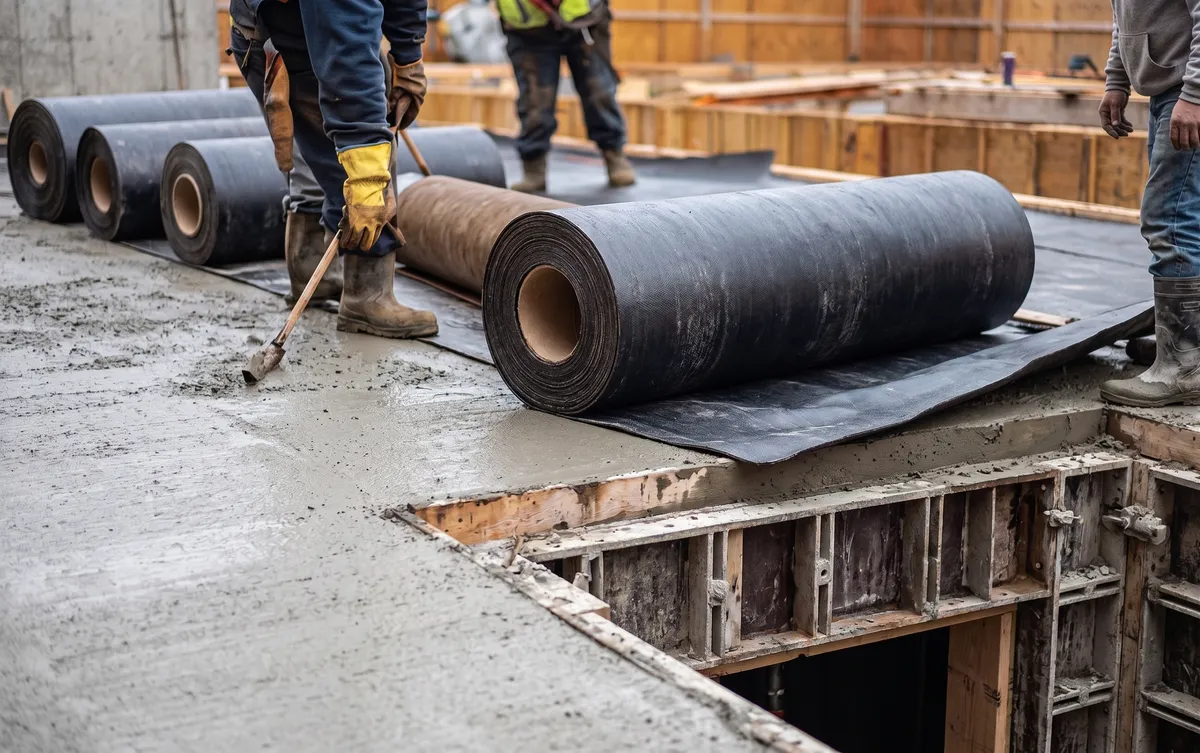
Not sure which of your basement windows need replacing — or what type you need?
Our specialists will assess every basement window opening — frame condition, sill integrity, waterproofing, and code compliance — and give you a clear picture of what needs to be done, at no cost to you.
We work on Boston's oldest housing stock every day and know exactly how each era of window installation ages in New England's climate. We'll give you straight answers and an honest recommendation.
Water Infiltration
Failed window frames and sills are a direct pathway for rainwater and snowmelt into the basement wall and floor.
Energy Loss
Single-pane or broken-seal basement windows allow significant heat loss in winter, directly raising your heating costs.
Code & Safety Violations
Finished basement spaces require egress windows by code. Non-compliant windows can void permits and complicate home sales.
Mold & Air Quality
Chronic moisture from leaking windows creates ideal conditions for mold growth inside basement walls and framing.
Complete Basement Window Services in Boston, MA
From single window replacement to full egress installation and window well construction, we handle every aspect
of basement window work for Boston homeowners.

Basement Window Replacement
Full removal of old windows and frames with weathertight installation of new vinyl, aluminum, or steel replacement units — properly flashed and sealed against New England weather.

Egress Window Installation
Code-compliant egress window cutting, framing, and installation for finished basements — meeting IRC minimum opening dimensions for emergency escape and rescue access.

Glass Block Windows
Installation of glass block window units in existing openings — providing superior security, waterproofing, and light transmission while eliminating the failure points of traditional frames.

Frame & Sill Repair
Repair or replacement of deteriorated wood, steel, or masonry window frames and sills before new window installation to ensure a solid, weatherproof substrate.

Window Well Installation
Steel or polycarbonate window well installation with proper drainage and gravel base — bringing light into below-grade windows while directing water away from the opening.
Window Well Waterproofing
Drainage board, gravel pack, and drain tile installation in existing window wells that are collecting water and directing it against the foundation wall.
Waterproofing & Sealing
Hydraulic cement, waterproof membrane, and sealant application around window openings and sill plates — stopping water infiltration at the frame-to-foundation interface.
Opening Enlargement
Concrete cutting and masonry work to enlarge existing basement window openings to accommodate larger replacement units or egress-compliant windows.
Signs Your Basement Windows Need Replacing
Basement windows fail gradually — and Boston homeowners often don't notice until significant water damage has already occurred. Here's what to look for.
1. Water Stains or Dampness Below the Window
Discoloration, efflorescence, or dampness on the foundation wall directly beneath a basement window almost always indicates water is tracking in through the frame or sill.
2. Visible Rust on Steel Frames
Rusted steel window frames have lost their structural integrity and water barrier. Rust staining on the surrounding concrete indicates long-term moisture penetration through the frame.
3. Condensation Between Glass Panes
Fogging or condensation between the panes of a double-glazed basement window means the insulating seal has failed — the window is no longer providing thermal or moisture protection.
4. Cracked or Crumbling Frames
Wood frames that are soft, cracked, or crumbling around the edges have lost their weather seal. Masonry surrounds with cracks allow water to bypass even an intact window unit.
5. Drafts or Cold Air Near the Window
Noticeable cold air infiltration around a basement window in winter is a sign of a failed frame seal — and a warning that the same gap is allowing moisture in during rain and snowmelt.
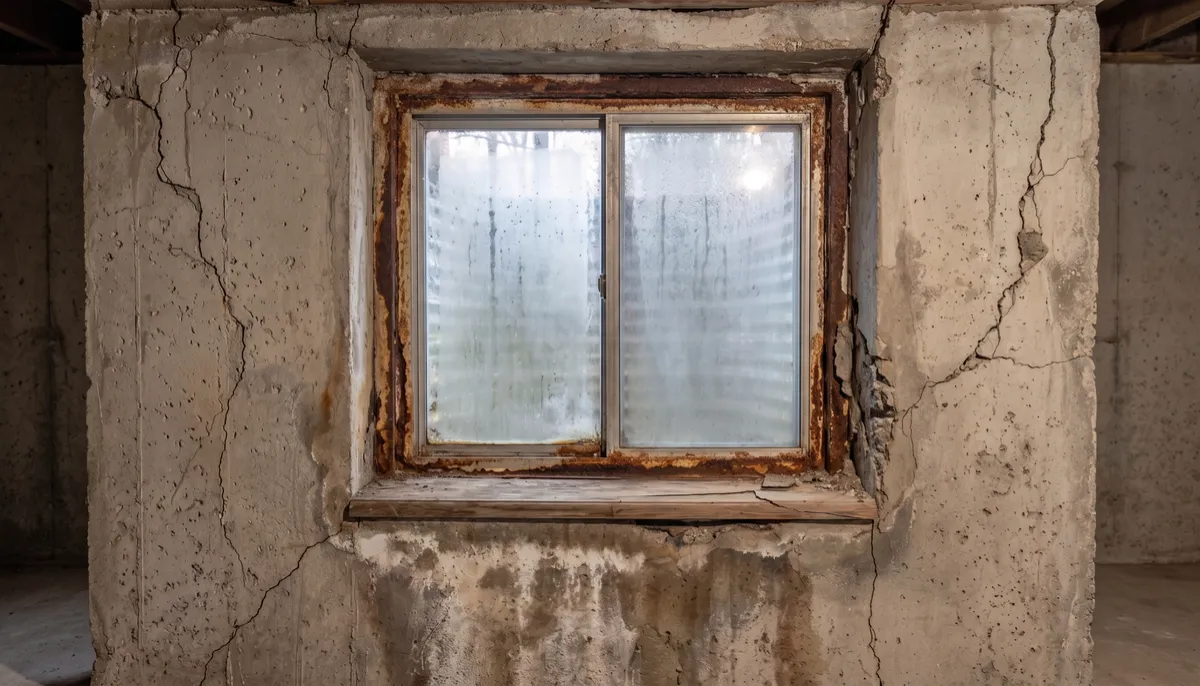
Boston winters are hard on basement windows
Every freeze-thaw cycle forces water deeper into cracked frames and failing seals, expanding the damage with each temperature swing. What's a manageable replacement today can become a full foundation repair project after another winter of water infiltration.

Water infiltrating at windows reaches the floor-wall joint within one season
Mold behind basement walls can establish within 24–48 hours of moisture exposure
Non-egress windows in finished basements can prevent home sale or fail inspection
Window well flooding can push water under the footing in saturated soil conditions
6. Window Well Flooding
A window well that fills with water during heavy rain is directing that water directly against your window and foundation wall. Without proper drainage, this accelerates window and foundation failure.
Basement Window Types & What They're Right For
The right window depends on the opening size, the use of the basement space, and your waterproofing priorities.
Here's how the main types compare for Boston homes.
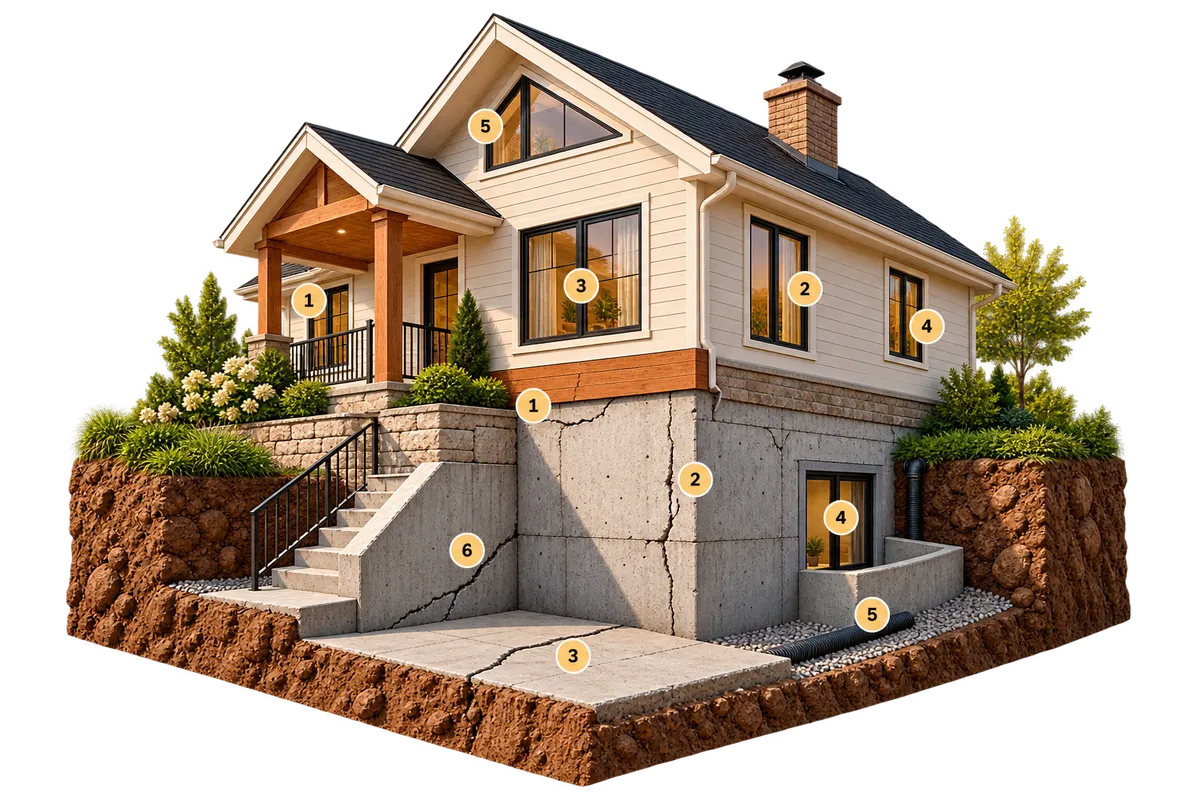
1
Hopper Windows
Hinged at the bottom and opening inward at the top, hopper windows are the standard replacement for original basement window openings. They provide ventilation, fit existing rough openings, and are available in vinyl and aluminum for New England's climate.
Most Common Replacement
2
Egress Windows
Required by the International Residential Code for any sleeping room in a finished basement, egress windows must meet minimum opening width, height, and net clear area requirements. Installation requires cutting the foundation wall to enlarge the opening — a job that requires permits and professional execution.
Code Required for Bedrooms
3
Glass Block Windows
Mortar-set glass block units eliminate the frame and seal failure points of traditional windows entirely. They are the most waterproof and secure option for basement openings where ventilation is not required, and a popular choice for Boston homes with chronic window leaks.
Best for Waterproofing
4
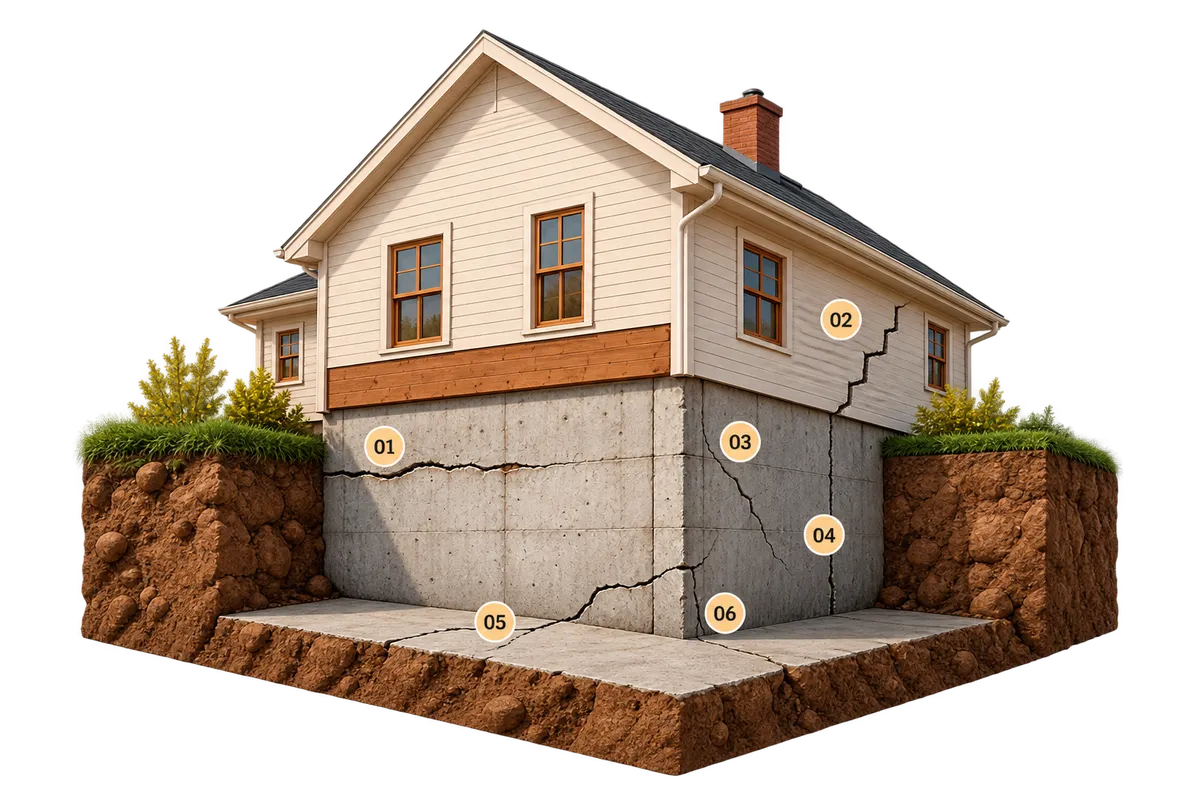
Sliding Windows
Horizontally sliding windows suit wider basement openings where a hopper's inward swing is inconvenient. Available in vinyl frames with insulated glazing, they provide ventilation and a clean look for finished basement spaces without requiring an opening enlargement.
Good for Wider Openings
5
Awning Windows
Hinged at the top and opening outward, awning windows allow ventilation even during light rain without water entering the opening. A strong choice for basement rooms where weather protection and airflow are both priorities, often used alongside egress windows in finished spaces.
Ventilation + Weather Protection
6
Fixed / Picture Windows
Non-opening fixed windows maximize light and provide a clean aesthetic for finished basement spaces. Without moving parts or operable seals, they are highly reliable from a waterproofing standpoint — and can be paired with a separate egress window to meet code in sleeping rooms.
Best for Light & Reliability
Our Basement Window Replacement Process
A proper basement window replacement isn't just swapping the unit — it means assessing the frame, sill, and surrounding masonry, and waterproofing the entire opening so the new window stays dry for decades.
1
Free Assessment
A specialist visits to inspect every basement window — frame condition, sill integrity, waterproofing, well drainage, and code compliance — at no charge.
2
Window & Opening Evaluation
We measure the rough opening, assess the surrounding masonry, and determine the right window type and any opening modification needed for a proper fit.
3
Custom Replacement Plan
A detailed, transparent proposal covering the recommended window type, waterproofing scope, timeline, and total cost — with no surprises at the invoice.
4
Expert Installation
Old windows and deteriorated framing are removed; the new unit is installed, flashed, sealed, and waterproofed by our licensed crew using commercial-grade materials.
5
Final Inspection
A thorough walkthrough confirms every window is weathertight, sealed, and operating correctly before we consider the installation complete.
Why Boston Homeowners Trust Us
with Their Basement Windows
Basement window replacement in Boston's older housing stock requires more than ordering
a unit and dropping it in. Here's why homeowners across Greater Boston choose us.

Deep Local Knowledge
We work on Boston's triple-deckers, colonials, and Victorians daily. We know how each era of foundation construction affects window opening dimensions, frame material, and the right waterproofing approach for Boston's specific climate.

Commercial-Grade Materials
We install windows with frames and glazing specified for New England's climate — not builder-grade units that fail within a few winters. Every installation uses commercial waterproofing membrane and flashing, not caulk alone.

Honest Assessments
If two of your four basement windows are fine and only two need replacing, that's exactly what we'll tell you. We recommend what's needed — nothing more — and our reputation is built on that honesty.

Backed by Warranties
Our window installations come with comprehensive warranties covering both the product and the installation. We stand behind our work through Boston's harshest winters.

Fast, Efficient Service
Most basement window replacements are completed in a single day. We work efficiently and leave the job site clean — with no gaping open openings left overnight.

Licensed & Insured
Every technician is licensed, background-checked, and fully insured. Egress installations are permitted and inspected where required, protecting both your safety and your home's resale value.
Masonry Services Across Greater Boston & the South Coast
We work with homeowners and businesses throughout Greater Boston, the South Shore, Plymouth County, and the South Coast. Select your town below to see masonry, chimney, foundation, and drainage services specific to your area.
Greater Boston Metro
South Shore
Brockton & Surrounding Towns
Plymouth County
Don't see your town listed? We likely still cover your area, contact us for a free estimate.
Request a Free QuoteRelated Waterproofing & Foundation Services
Basement window replacement often goes hand-in-hand with broader waterproofing and foundation work. We handle it all — no need to coordinate multiple contractors.

Masonry Services
- Tuckpointing & Repointing
- Brick & Block Repair
- Concrete Sill & Lintel Repair
- Mortar Joint Repair
- Concrete Resurfacing

Structural & Exterior
- Window Well Installation & Drainage
- Crawl Space Encapsulation
- Exterior Grading & Drainage
- Chimney Waterproofing & Repair

Foundation Services
- Foundation Crack Repair
- Foundation Wall Stabilization
- Foundation Inspection & Assessment
- Underpinning & Piering
- Foundation Waterproofing

Waterproofing Services
- Basement Waterproofing & Drainage
- Bulkhead Waterproofing & Repair
- Sump Pump Installation & Service
- Interior & Exterior Drainage Systems
- Waterproof Coatings & Sealants
STILL NOT SURE?
Frequently Asked Questions
Answers to the most common questions Boston homeowners ask about basement window replacement and egress installation.
Do I need a permit to replace my basement windows in Boston?
For a straight like-for-like replacement of an existing basement window in the same opening, a permit is generally not required in most Boston-area municipalities. However, if you are cutting a new opening, enlarging an existing opening, or installing an egress window in a finished basement bedroom, a building permit is required. We handle permit applications for all work that requires them, ensuring your installation is compliant and your home's records reflect the work properly.
How much does basement window replacement cost in Boston?
Standard like-for-like hopper or glass block window replacement typically ranges from $400–$900 per window, including removal, waterproofing, and installation. Window well installation adds $600–$1,500 depending on size and drainage work required. Egress window installation — which includes foundation cutting, framing, the window unit, and window well — typically ranges from $3,500–$7,500 per opening depending on wall thickness and existing conditions. Call us at (857) 249-5127 for a free on-site estimate specific to your home.
What is an egress window and do I need one?
An egress window is a window large enough for a person to escape through — or for a firefighter to enter — in an emergency. The International Residential Code requires at least one egress window in every basement sleeping room. Minimum requirements include a net clear opening of 5.7 square feet, a minimum clear height of 24 inches, and a minimum clear width of 20 inches. If you have a finished bedroom in your basement without an egress window, it is a code violation that can affect your homeowner's insurance, your ability to sell the home, and most importantly, your family's safety.
Are glass block windows better for waterproofing than standard windows?
For non-ventilated openings, glass block is the most waterproof option available. Because there is no frame, no operable hardware, and no seal that can compress or fail, glass block windows eliminate the primary failure points that cause traditional basement windows to leak. They are also significantly more resistant to forced entry. The trade-off is that glass block units do not open for ventilation. For openings where airflow is important, a quality vinyl hopper with proper flashing and waterproof membrane around the frame is the right choice.
How long does basement window replacement take?
Standard basement window replacement — removing the old unit and installing the new one with proper flashing and waterproofing — typically takes two to four hours per window. Replacing multiple windows in a single home is usually completed in one day. Egress window installation, which requires concrete cutting, framing, and window well construction, typically takes one to two days per opening. We leave no openings exposed overnight under any circumstances.
My window well is always full of water. What can be done?
A window well that consistently fills with water has a drainage problem — and that water is being directed against your window and foundation wall with every rain event. The solution depends on the severity: in many cases, excavating the well, installing a gravel base and drain tile connected to a discharge point or sump, and re-setting the well resolves the issue permanently. In more severe cases, the drain tile ties into the interior drainage system. We assess the grading, soil conditions, and current well configuration to determine the right fix for your specific situation.
Schedule Your Free Basement Window Assessment Today
Don't let failing basement windows put your foundation — and your basement — at risk this winter. Get a free, honest evaluation from Boston's trusted window replacement specialists.





Skilled in brick, stone, and chimney work, we deliver durable, high-quality masonry services that keep Boston homes safe, strong, and looking their best.
Skilled in brick, stone, and chimney work, we deliver durable, high-quality masonry services that keep Boston homes safe, strong, and looking their best.