
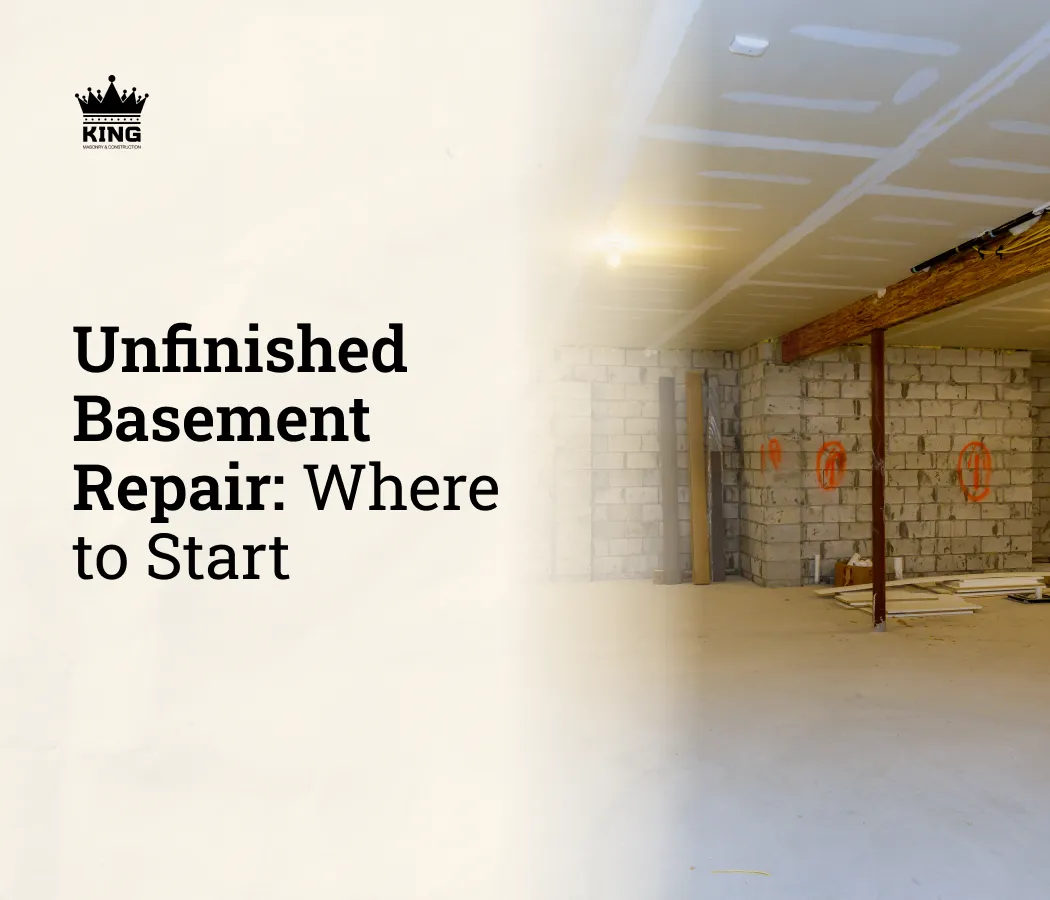
Unfinished Basement Repair: Where to Start
An unfinished basement often gets treated as storage space and little else, which means problems can go unnoticed for years. Cracks, moisture, and minor structural shifts that would be immediately obvious in a finished living space are easy to overlook behind stacked boxes and unused furniture.
If you're planning to address issues in an unfinished basement whether because you noticed a problem or you're preparing the space for a future renovation knowing where to start makes the process far less overwhelming.
Step One: Assess the Structural Condition
Before addressing moisture or cosmetic issues, walk the full perimeter of the basement and check the foundation walls for cracks, bowing, or leaning. Structural issues should always be identified and addressed first, since moisture control and finishing work built on top of an unresolved structural problem will not hold up long term.
What Qualifies as a Structural Concern
Not every mark on a foundation wall is cause for alarm. Focus on cracks wider than a pencil, cracks that are actively growing, horizontal cracking, or any visible bowing or leaning. These are different from small, stable hairline cracks that many older basements have without further issue.
Checking Support Posts and Beams
While you're assessing the walls, look at the support posts and main beam running through the basement. Rust at the base of steel posts, visible sagging in the beam, or posts that are no longer plumb are signs worth flagging alongside any foundation wall concerns, since they affect the same structural system.
Step Two: Identify Moisture Sources
Check for Active Water Intrusion
Look for damp patches, efflorescence, standing water after rain, or a persistent musty smell. Identifying whether moisture is coming through the walls, the floor slab, or around window wells helps determine the right drainage solution.
Evaluate Exterior Grading and Gutters
Many basement moisture issues start above ground. Confirm that gutters direct water away from the foundation and that the soil grade slopes away from the house rather than toward it.
Document Conditions Before You Start
Before any repair begins, take dated photos of cracks, damp areas, and any visible efflorescence. This creates a useful baseline to compare against later, helps a contractor understand how conditions have changed over time, and can be valuable documentation if you ever need to reference the original condition of the space for insurance or resale purposes.
Step Three: Prioritize Repairs in the Right Order
A practical sequence is: address structural concerns first, then correct drainage and moisture sources, and only then consider any finishing or flooring work. Skipping ahead to finishing before drainage is resolved is one of the most common — and most expensive — mistakes homeowners make.
When to Bring in a Professional Assessment
If you notice any structural warning signs, active leaks, or you're unsure whether an issue is cosmetic or serious, a professional walkthrough gives you an accurate starting point. This is especially useful before investing in any finishing work, since it confirms the space is a sound foundation to build on — literally.
Common Mistakes to Avoid During Unfinished Basement Repair
Finishing Before the Foundation Is Sound
One of the most frequent and costly mistakes is moving straight to framing, insulation, or flooring before confirming the foundation and drainage are in good shape. Once walls and finishes are in place, a hidden structural or moisture issue becomes far more expensive to diagnose and repair, since it now involves demolition of finished work as well.
Skipping Ventilation Planning
Basements naturally hold more humidity than above-grade spaces, and repair work that doesn't account for ventilation can leave a space prone to condensation even after structural and drainage issues are resolved. Planning for adequate airflow, whether through mechanical ventilation or a dehumidification system, is worth factoring in early rather than as an afterthought.
Planning for Future Use of the Space
Even if you're not ready to fully finish the basement, it helps to make repair decisions with future use in mind. If there's a chance you'll eventually convert the space into a living area, home office, or rental unit, addressing structural and moisture issues now — with that future use in mind — can save you from redoing preparatory work later. This might mean choosing a drainage system compatible with future flooring, or reinforcing areas that would need to support additional framing down the line. This kind of planning also matters if a walkout conversion is part of the longer-term vision for the space, since that decision affects how the foundation wall is treated now.
It's also worth thinking about electrical and plumbing rough-in locations if a future renovation is likely, since running new lines is far easier before walls and finishes are in place. Discussing your longer-term plans with whoever handles the structural and drainage work — even if finishing is years away — lets them make repair decisions that won't need to be undone or worked around later.
For related guidance, take a look at our foundation and basement services page.
Frequently Asked Questions
What's the first thing I should check in an unfinished basement?
Start with the foundation walls and floor for cracks, bowing, or shifting before addressing anything else. Structural issues need to be identified first, since they affect how any moisture control or finishing work should be planned.
Is it normal for an unfinished basement to smell musty?
A persistent musty smell usually points to trapped moisture or early mold growth, and it is not something to ignore. It often indicates a drainage or ventilation issue worth investigating even if no visible water is present.
Should I fix moisture problems before finishing my basement?
Yes, always. Finishing a basement before resolving moisture sources traps humidity behind new walls and flooring, often leading to mold and damage that is far more costly to fix once materials are in place.
How do I know if a basement crack is worth addressing right away?
Cracks that are actively leaking, wider than a pencil, or connected to bowing or shifting walls should be addressed sooner rather than later. Stable, hairline cracks with no water intrusion are generally lower priority.
Can I address basement drainage myself?
Simple exterior fixes like extending downspouts or improving grading are reasonable DIY tasks. Interior drainage systems, sump pump installation, and anything tied to structural repair are best handled by a professional.