
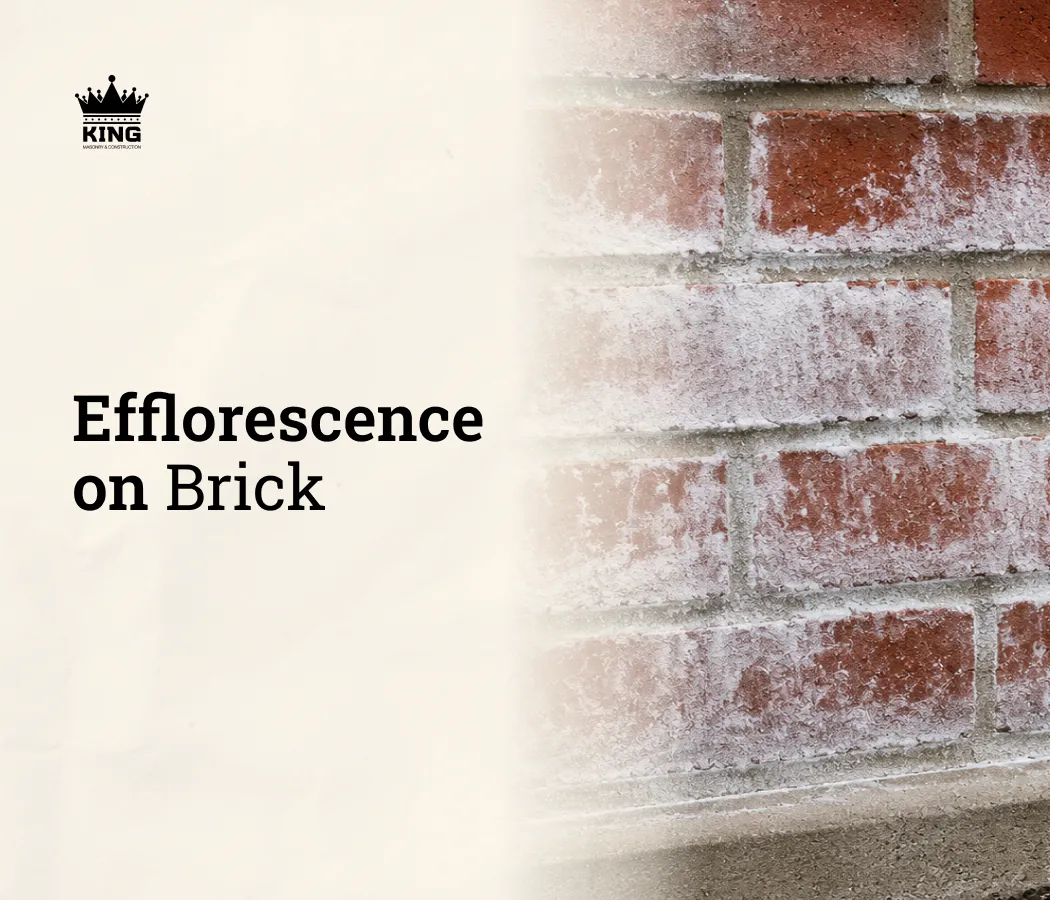
Efflorescence on Brick: What Causes White Salt Deposits and How to Remove Them
If you've noticed a chalky white powder creeping across your Boston brownstone, your Brookline brick steps, or the exterior walls of your Newton home, you're not alone — and you're not imagining things. That white, hazy coating is called efflorescence, and it's one of the most common masonry complaints we hear from homeowners across Greater Boston.
The good news: efflorescence is almost never a structural emergency. The less good news: if you ignore what's causing it, those harmless-looking white deposits can signal moisture problems that will eventually damage your brickwork from the inside out.
In this guide, we'll walk you through exactly what efflorescence is, why it's so common in Massachusetts's climate, how to remove it safely, and — most importantly — how to stop it from coming back.
What Is Efflorescence? (And Why Does It Look So Alarming?)
Efflorescence is the white, powdery or crystalline deposit that appears on the surface of brick, concrete, mortar, and other masonry materials. The word comes from the French effleurer — "to flower out" — and that's exactly what it looks like: a bloom of salt crystals pushing through your brickwork.
Here's the simple science behind it: All masonry materials naturally contain water-soluble salts — calcium sulfate, sodium sulfate, potassium carbonate, and others. When water infiltrates your brickwork (from rain, snow melt, groundwater, or condensation), it dissolves these salts and carries them toward the surface through tiny pores and capillary channels. As the water reaches the surface and evaporates, the salts are left behind as a white residue.
Three conditions must exist simultaneously for efflorescence to occur:
Soluble salts must be present in the masonry materials or surrounding soil
Moisture must be present to dissolve and transport those salts
A pathway must exist for the salt-laden water to migrate to the surface
Remove any one of these three factors, and efflorescence cannot form. That's the key to both removal and long-term prevention.
Why Is Efflorescence So Common in Boston, Brookline, and Newton?
Massachusetts's climate is particularly harsh on masonry — and that's not an exaggeration. Here's why Greater Boston homeowners see efflorescence more frequently than homeowners in milder climates:
Freeze-thaw cycles. Brookline alone experiences 30+ freeze-thaw cycles per year. Each cycle forces water deeper into brick and mortar as it expands by approximately 9% upon freezing. This constant expansion and contraction opens micro-cracks and channels that allow moisture — and the salts it carries — to migrate more freely through your masonry.
High annual rainfall. The Boston metro area receives about 47 inches of rain per year, well above the national average. That's 47 inches of opportunity for moisture to penetrate improperly sealed or aging brickwork.
Aging building stock. Many homes in Boston's South End, Brookline's Pill Hill, and Newton's historic neighborhoods were built in the late 1800s and early 1900s using soft, high-porosity bricks and lime mortar. These older materials absorb water far more readily than modern masonry products.
Winter road salt. De-icing salt used on sidewalks and driveways in Massachusetts winters is a significant external salt source. When this salt-laden water splashes onto or seeps into your brickwork, it dramatically increases the concentration of soluble salts available to effloresce.
Clay-heavy soils. Much of Greater Boston sits on glacial clay soils that retain groundwater for extended periods, creating sustained hydrostatic pressure against basement and foundation walls — a primary driver of efflorescence on below-grade masonry.
Types of Efflorescence: Not All White Deposits Are the Same
Understanding what type of efflorescence you have helps determine the right treatment approach.
Primary efflorescence appears on newly constructed or recently repointed masonry, typically within the first weeks or months. It's caused by salts migrating from fresh mortar or new bricks during the initial drying and curing process. This type is usually temporary — it often diminishes and disappears on its own as the masonry dries out fully.
Secondary efflorescence appears on older masonry and is driven by ongoing moisture infiltration. It recurs seasonally — intensifying in wet winters and early spring in New England, then fading in the heat of summer, only to return again. Secondary efflorescence is the more serious type because it indicates a persistent moisture problem that won't resolve without intervention.
Cryptoefflorescence (also called sub-florescence) is the most damaging form. Rather than appearing on the surface, the salts crystallize just beneath the surface of the brick, creating internal pressure that causes spalling — the flaking and crumbling of the brick face. If you see what looks like efflorescence combined with brick surfaces that are flaking, pitting, or crumbling, you may be dealing with cryptoefflorescence and should call a masonry contractor promptly.
Green or yellow staining is a less common form caused by vanadium salts in certain clay bricks. It requires a different treatment than standard white efflorescence and should not be treated with the same acidic cleaners.
Is Efflorescence Harmful to Your Masonry?
This is the question every Boston homeowner asks. The honest answer: efflorescence itself is cosmetic, but what causes it may not be.
The white deposits themselves do not damage brick or mortar. They are chemically inert once crystallized and pose no structural threat on their own. Many cases of primary efflorescence on new construction resolve naturally within one to two years as the masonry weathers and the available soluble salts are gradually depleted.
However, efflorescence is always a symptom of moisture movement through your masonry. And moisture is the enemy of brick. Over time, repeated moisture infiltration causes:
Mortar joint erosion — the binding material between bricks gradually washes away, weakening the structural integrity of the wall
Brick spalling — freeze-thaw cycles combined with moisture cause the brick face to chip, crack, and fall away
Mold and mildew growth in affected wall cavities
Water intrusion into interior living spaces, particularly in basement and below-grade walls
Rust staining from corroding metal ties or reinforcement within cavity walls
So while you don't need to call a structural engineer the moment you spot white powder on your front steps, you shouldn't ignore recurring or spreading efflorescence either. Use it as the warning sign it is.
How to Remove Efflorescence from Brick: Step-by-Step
Method 1: Dry Brushing (For Light, Surface Deposits)
For mild or recently formed efflorescence, dry brushing is often sufficient. Use a stiff-bristled natural fiber brush (not a wire brush, which can scratch and damage brick surfaces) to scrub the affected area when the masonry is completely dry. Brush away as much of the crystalline deposit as possible, then use a vacuum or compressed air to remove the loosened material.
Important: Never dry brush efflorescence in a way that pushes material back into the brick pores. Always brush outward and away from the surface.
Method 2: Water Washing (For Moderate Deposits)
A garden hose with a moderate spray — not a pressure washer — can help dissolve and rinse away efflorescence deposits. Work from the top of the affected area downward and allow the masonry to dry thoroughly before assessing results.
Caution: Never use a high-pressure washer on historic or older brick. The force can damage soft brick faces, erode mortar joints, and actually drive moisture deeper into the wall, worsening the underlying problem.
Method 3: Dilute Acid Washing (For Stubborn or Recurring Deposits)
For persistent efflorescence that doesn't respond to dry brushing or water washing, a dilute acid solution is the standard professional treatment. White vinegar (acetic acid) works for mild cases. For heavier deposits, a solution of muriatic acid (hydrochloric acid) diluted to approximately 1 part acid to 10–12 parts water is effective.
Step-by-step acid wash process:
Pre-wet the masonry thoroughly before applying any acid solution. This prevents the acid from being absorbed too deeply and causing additional damage.
Apply the dilute solution to the affected area using a natural bristle brush, working in small sections.
Allow it to dwell for 3–5 minutes — you'll see mild fizzing as the acid reacts with the calcium salts.
Scrub gently with a stiff brush, then rinse thoroughly with clean water, again working top to bottom.
Neutralize with a dilute baking soda solution (1 cup per gallon of water) applied to the rinsed area. Rinse again.
Allow to dry completely — at least 48–72 hours in dry weather — before assessing whether a second treatment is needed.
Safety precautions: Always wear chemical-resistant gloves, eye protection, and work in a well-ventilated area. Protect surrounding plants, metal surfaces, and non-masonry materials from acid contact.
What NOT to Do When Treating Efflorescence
Do not apply sealers or waterproof coatings over efflorescence. Sealing moisture inside the wall will accelerate spalling and cryptoefflorescence.
Do not use wire brushes on historic or soft brick — they cause permanent surface damage.
Do not use undiluted muriatic acid — it will etch and permanently discolor brick.
Do not treat efflorescence during freezing temperatures or when rain is forecast within 48 hours.
How to Prevent Efflorescence from Returning
Removing existing efflorescence is only half the job. If you don't address the underlying moisture pathways, it will return — often worse than before.
Repoint deteriorated mortar joints. In Greater Boston's historic housing stock, aging and eroded mortar joints are the single most common entry point for moisture in brick walls. Brick repointing with appropriately matched mortar — critically important for pre-1900 soft brick buildings, which require lime-based mortar rather than modern Portland cement — seals these pathways and dramatically reduces moisture infiltration.
Improve drainage around the foundation. Ensure that grading slopes away from your foundation at a minimum of 6 inches over the first 10 feet. Clear gutters and downspouts regularly and extend downspouts at least 4–6 feet from the foundation. Poor drainage is a leading driver of efflorescence in Boston and Brookline basement walls. If drainage issues are persistent, our foundation repair and basement waterproofing services can help address the root cause.
Apply a breathable masonry water repellent. A silane-siloxane penetrating sealer — not a film-forming sealer — can dramatically reduce the amount of moisture that enters brick while still allowing the masonry to breathe and release internal moisture vapor. Our masonry waterproofing solutions are particularly effective for above-grade exterior walls in New England's wet climate.
Ensure proper flashing and coping. Horizontal surfaces like parapet caps, sill courses, and chimney crowns are primary moisture entry points. Damaged or missing flashing allows water to pool and penetrate brick walls from above — a common cause of efflorescence in Boston's older rowhouses and triple-deckers.
Address interior moisture sources. Condensation from HVAC systems, leaking pipes, or inadequate vapor barriers in basements and crawl spaces can create internal moisture that drives efflorescence from the inside out. If you're seeing efflorescence on interior basement walls, moisture management on the inside of the structure is as important as waterproofing on the outside.
When to Call a Professional Masonry Contractor
Most surface efflorescence on above-grade walls can be addressed by a diligent homeowner. However, call a professional masonry contractor when:
Efflorescence is recurring despite cleaning — this signals an unresolved moisture pathway that requires professional diagnosis
You see brick spalling or crumbling alongside the white deposits — this indicates cryptoefflorescence or freeze-thaw damage requiring repair
Efflorescence appears on basement or foundation walls — below-grade moisture problems are complex and often involve hydrostatic pressure, waterproofing system failures, or drainage issues
The affected area is large (more than a few square feet) or spreading rapidly
Your home is a historic property — pre-1900 soft brick and lime mortar buildings require specialized knowledge and materials; using the wrong products can cause irreversible damage
At Kings Masonry & Construction, we've spent years restoring Boston's historic brickwork, repointing Brookline's Victorian facades, and solving persistent moisture and efflorescence problems in Newton's older homes. We understand the specific challenges of New England masonry and the unique requirements of Greater Boston's historic building stock. Learn more about our masonry repair services.
Ready to Solve Your Efflorescence Problem for Good?
If you're seeing persistent white deposits on your Boston, Brookline, or Newton brick walls — especially if they keep coming back after cleaning — it's time to get to the root cause.
Kings Masonry & Construction provides free masonry inspections across Greater Boston. Our experienced team will identify exactly where moisture is entering your brickwork, recommend the right treatment approach for your specific masonry type, and give you a clear plan to stop efflorescence from returning.
Call us today at (857) 249-5127 or contact us online for your free estimate. Same-day estimates available for emergency repairs.
Frequently Asked Questions About Efflorescence
Is efflorescence dangerous to my health?
No. Efflorescence is calcium carbonate and other mineral salts — chemically inert and non-toxic. It poses no health risk.
Will efflorescence go away on its own?
Primary efflorescence on new construction often fades naturally within 1–2 years as the masonry weathers and available salts are depleted. Secondary efflorescence on older buildings driven by ongoing moisture infiltration will not resolve without addressing the underlying moisture problem.
Can I paint over efflorescence?
No. Paint will not adhere well to salt-covered surfaces, and the moisture driving the efflorescence will eventually cause the paint to peel and blister. Always remove efflorescence and address the moisture source before painting masonry.
Why does efflorescence come back after I clean it?
Because the salts inside the masonry have not been depleted — only the surface deposits were removed. As long as moisture continues to move through the brick and mortar, it will continue to carry salts to the surface. Preventing recurrence requires addressing the moisture source, not just cleaning the surface.
What is the white stuff on my brick chimney?
Chimney efflorescence is extremely common in Greater Boston because chimneys are fully exposed to precipitation, prone to mortar joint deterioration, and subject to internal moisture from flue condensation. The treatment approach is the same as for wall efflorescence, but chimney work should always be performed by a professional due to the height and safety risks involved.