Chimney Sweep Cost in Boston, MA: 2026 Price Guide
Most homeowners in Boston pay between $200 and $450 for a standard chimney sweep in 2026. The price depends on how dirty the flue is, how tall the chimney is, the type of fuel burned, and whether the visit includes a full inspection. This guide breaks down what you should expect to pay, what drives the cost up, and when scheduling a sweep is worth the money.
What Is a Chimney Sweep and What Does It Cost?
A chimney sweep is a professional cleaning of the flue, smoke chamber, damper, and firebox to remove creosote, soot, and debris. In Boston and the surrounding South Shore towns, a standard residential chimney sweep costs $200 to $450 in 2026. Open masonry fireplaces sit at the lower end. Wood stoves and pellet stoves run higher because of tighter clearances and more buildup.
A sweep is a cleaning job, not a repair job. If the technician spots damage during the visit, you may need a separate appointment for chimney repair services.
Average Chimney Sweep Cost by Type
Pricing varies by what is being cleaned and how the system is built. The ranges below reflect quotes pulled from Boston-area homeowners in spring 2026.
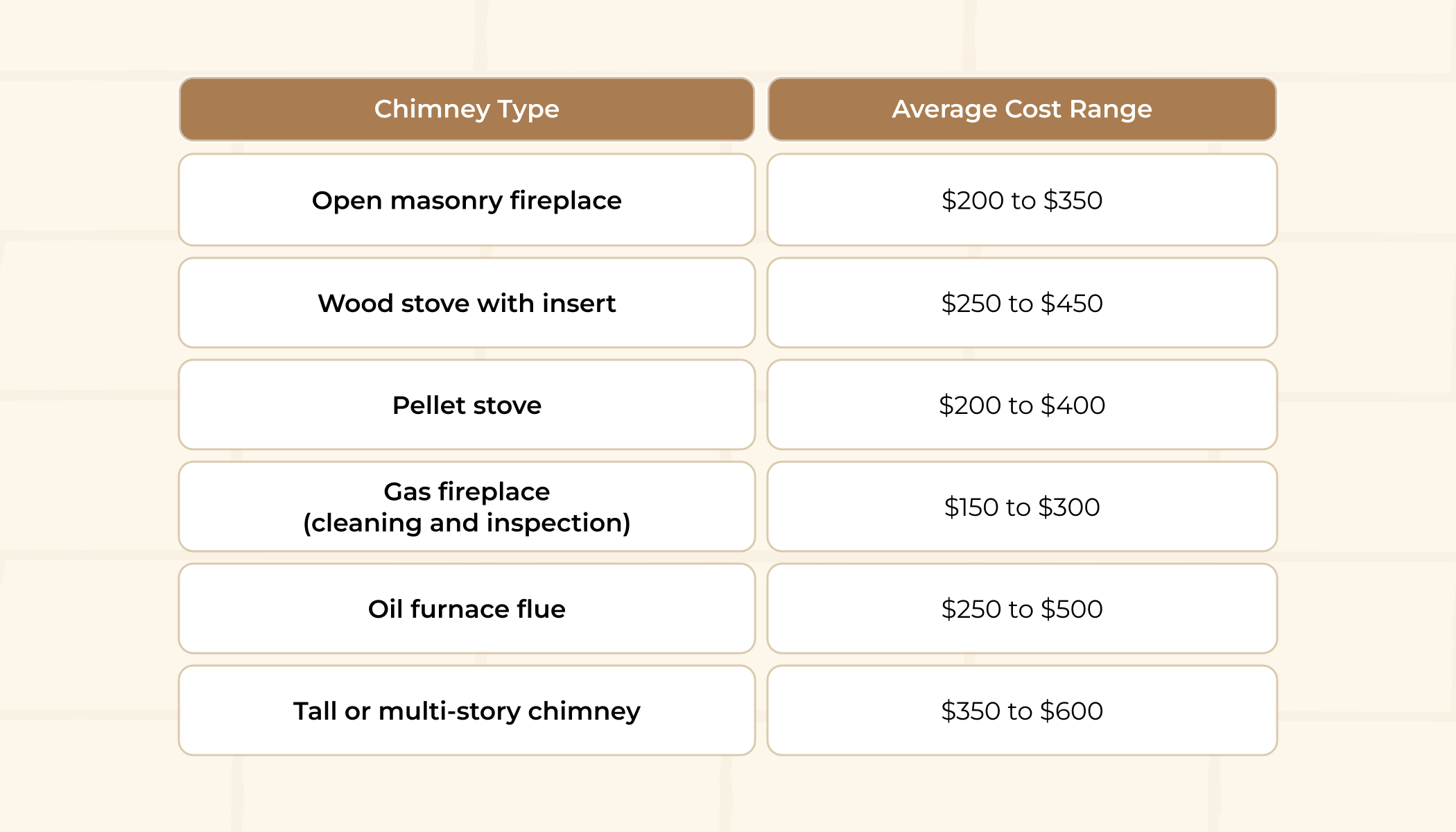
These prices typically include a basic visual inspection. A full Level 2 inspection with a camera scan adds $100 to $250.
What Is Included in a Standard Chimney Sweep?
A standard sweep in the Boston area usually covers:
Drop cloths and dust containment around the firebox
Mechanical cleaning of the flue, smoke chamber, and smoke shelf
Removal of creosote, soot, and loose debris
Inspection of the damper and firebox interior
A Level 1 visual inspection of accessible components
A written report flagging any damage or safety concerns
Most chimney sweep visits include a Level 1 inspection. If you are not sure how often you need a chimney inspection, the NFPA standard is once a year.
What Drives Chimney Sweep Cost Up
Several conditions push a sweep above the base rate.
Creosote level. Stage 1 creosote (light soot) is included in the base price. Stage 2 (flaky, hard buildup) adds $75 to $150. Stage 3 (glazed creosote) often requires chemical treatment or rotary tools and can add $200 to $600.
Chimney height and access. Three-story homes, steep roofs, and chimneys without easy roof access raise the price by $50 to $200.
Animal nests and blockages. Removing bird nests, raccoons, or leaves adds $100 to $300.
Frequency of use. Chimneys swept every year stay close to the base rate. Chimneys ignored for five or more years often need two visits and cost double.
Camera inspection. Required after a chimney fire, before a real estate sale, or when damage is suspected. Adds $100 to $250.
Heavy creosote, animal nests, or common chimney problems like blockage and draft issues all push the bill higher than a standard cleaning.
How Often Should a Chimney Be Swept?
The National Fire Protection Association recommends an annual inspection for every chimney, fireplace, and vent. Sweeping frequency depends on use.
Wood-burning fireplaces used more than three times a week: once a year, sometimes twice
Wood stoves: once a year minimum, often after every cord of wood burned
Gas fireplaces: every two years if performance stays normal
Pellet stoves: once a year or after every ton of pellets
Oil flues: once a year before the heating season
Skipping years compounds cost. A chimney swept annually for $250 a year is far cheaper than a $900 cleaning after five years of neglect, followed by repair work for damage that built up in the meantime.
Hidden Costs Sweeps Often Uncover
A sweep is also a diagnostic visit. Most technicians flag problems they cannot fix during a cleaning. The most common findings in Boston-area homes:
Water staining inside the firebox. If the sweep finds staining inside the firebox, the underlying cause is usually water damage in chimneys, and you will need flashing or crown work on top of the cleaning fee.
Soft or sandy mortar joints. Soft, sandy joints are a separate repair. Crumbling chimney mortar is not fixed by sweeping and needs repointing before the next heating season.
Damaged cap, crown, or flashing. Sweeps will flag damaged caps and flashing during the visit. Replacing chimney crown, cap, and flashing is the most common upsell after a cleaning.
Cracked flue tiles. If a Level 2 camera inspection shows a cracked chimney flue risk, the chimney should not be used until it is relined, regardless of how recently it was swept.
These findings are not the sweep upselling. They are safety issues that affect insurance coverage and homeowner liability.
Chimney Sweep Cost vs. Long-Term Savings
A $300 annual sweep prevents three categories of expense:
Chimney fires. Glazed creosote ignites at low temperatures. A chimney fire averages $7,000 to $30,000 in damage and may not be covered if the system was not maintained.
Carbon monoxide exposure. A blocked flue forces combustion gases back into the home.
Structural repairs. Water and acid byproducts that build up without cleaning eat away mortar and flue liners. Regular chimney maintenance keeps sweep costs predictable and prevents the expensive surprises homeowners face after skipping years of service.
Why Boston Sweeps Cost More Than the National Average
The national average for a chimney sweep is $250. Boston runs $50 to $150 higher for three reasons.
Labor rates. Skilled trade rates in Greater Boston are 20 to 30 percent above national averages.
Access challenges. Parking permits, narrow streets in Brookline and Newton, and tight rooflines on triple-deckers slow down crews.
Historic construction. Older homes in Hingham, Plymouth, and Boston proper often have unlined chimneys, oversized flues, or multiple fireplaces on one stack. These need more time and care.
Homeowners working with masonry contractors in Boston should expect higher labor rates than rural MA averages because of access, parking, and historic chimney construction.
How to Get an Honest Chimney Sweep Quote
Ask three questions before booking.
What level of inspection is included? Level 1 should be standard. Level 2 costs extra and is needed for real estate sales, after a chimney fire, or when changing the fuel source.
Is the technician CSIA certified? The Chimney Safety Institute of America certification is the industry standard.
What does the written report include? A good sweep leaves you with photos, a damage list, and clear recommendations, not a verbal sales pitch.
Get the quote in writing before the technician arrives. A trustworthy company will give a price range upfront and only revise after seeing the chimney.
FAQ
How long does a chimney sweep take?
A standard cleaning takes 45 to 90 minutes. Heavily soiled chimneys or full Level 2 inspections can run two to three hours.
Is chimney sweeping messy?
Professional sweeps use HEPA vacuums and drop cloths. A clean job leaves no soot in the room.
Can I sweep my own chimney?
DIY sweeping is possible for straight, single-story flues, but you lose the inspection value. Most homeowners cannot identify cracked tiles, failing crowns, or early creosote glazing.
When is the best time to book a sweep?
Late spring through early fall. Prices and wait times spike from October through January.
Does homeowners insurance cover chimney damage?
Most policies cover sudden damage, not damage from neglect. Annual sweep records help support claims.
Ready to book a chimney sweep or inspection in Boston or the South Shore? Contact Kings Masonry and Construction for a written quote before the heating season fills up.