

How to Extend the Life of Your Boston Chimney This Summer
A well-built brick chimney can last 100 years or more. Most Boston chimneys don't reach that potential not because of inferior materials, but because of deferred maintenance that allows small, fixable problems to compound into structural failures.
Summer is the single best window to inspect, repair, and protect your chimney before another Boston winter adds more damage. Here's exactly what to do and why it matters.
Why Summer Is the Right Time for Chimney Maintenance in Boston
Boston winters are relentless on masonry. Freeze-thaw cycling cracks mortar, water infiltrates through gaps, and flashing shifts under ice and snow load. By spring, that damage is done c and summer is your opportunity to address it before the next cycle begins.
Why summer specifically:
Warm, dry conditions allow mortar repairs to cure fully
Maximum lead time before fall rain and winter frost
Full visibility no snow or ice concealing damage
Better contractor scheduling than the October rush
Repairs bond stronger in warm temperatures
A chimney maintained every summer lasts significantly longer and costs far less over its lifetime than one addressed only when problems become obvious.
How Long Does a Chimney Last in Boston?
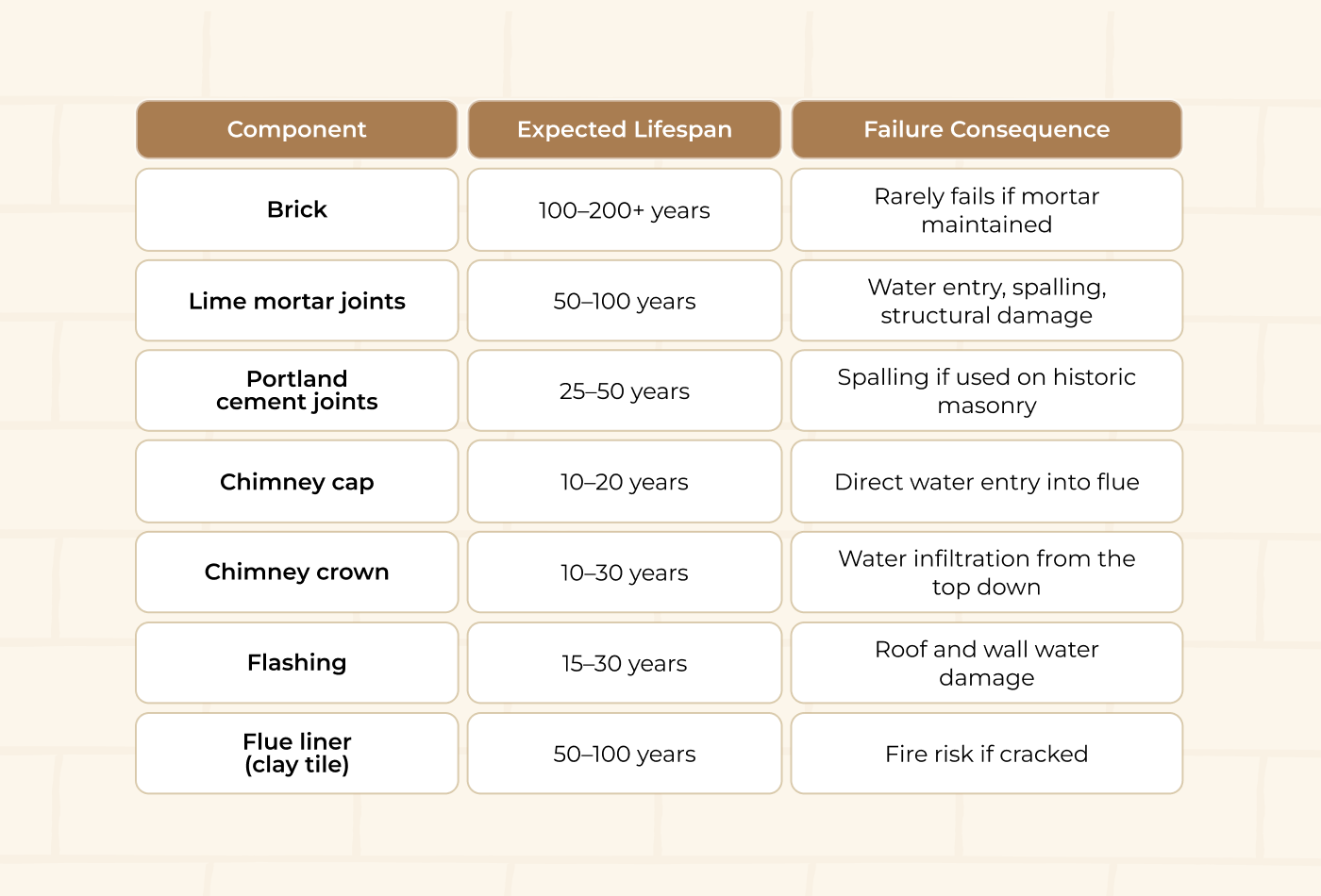
A properly maintained masonry chimney can last 50-100+ years. What determines actual lifespan is not the brick brick is extraordinarily durable but the mortar joints, the flashing, the crown, and the cap. These are the components that fail first and allow water to destroy everything behind them.
Component lifespan guide:
6 Chimney Maintenance Steps to Do This Summer
1. Inspect and Replace the Chimney Cap
The chimney cap is the first line of defense it keeps rain, animals, and debris out of the flue. A missing or cracked cap allows water to enter the flue directly, saturating surrounding masonry from the inside out.
Check for:
Missing cap entirely
Cracked or broken cap housing
Mesh screen damaged or corroded allows animal entry
Cap that has shifted or is no longer seated properly
Replacing a chimney cap is one of the most cost-effective chimney maintenance steps available. A quality stainless steel cap lasts 20+ years and prevents water damage that costs many times more to repair. For a full overview of what can go wrong when a cap is missing, see our guide on water in chimney damage.
2. Inspect and Repair the Chimney Crown
The crown is the concrete or mortar layer at the very top of the chimney structure it seals the gap between the flue liner and the outer brick and slopes water away from the chimney body. Crowns crack from freeze-thaw cycling and direct exposure to weather.
Check for:
Visible cracks across the crown surface
Separation between the crown and the flue liner
Crumbling edges where the crown meets the outer brick
Minor crown cracks can be sealed with a flexible crown sealant in summer. Significantly deteriorated crowns require rebuilding before the next winter.
3. Check and Reseal Flashing
Flashing is the metal seal at the roof-chimney junction. It is one of the most common sources of water damage in Boston homes and one of the most overlooked during routine maintenance.
Check for:
Lifted or separated flashing at any point around the chimney base
Rust or corrosion on metal flashing components
Gaps between flashing and chimney masonry
Gaps between flashing and roofing material
Reflashing or resealing during summer allows sealants to cure properly before fall rain season arrives.
4. Inspect Mortar Joints and Schedule Repointing
Mortar joint condition is the single most important factor in chimney longevity. Deteriorated joints allow water to penetrate the masonry, accelerate freeze-thaw damage, and undermine the structural integrity of the entire chimney. Our tuckpointing vs. repointing guide explains the difference and which method your chimney needs.
Check for:
Mortar that crumbles when touched
Mortar receded more than ¼ inch below the brick face
Stair-step cracks following joint lines diagonally
Dark staining indicating repeated water saturation
Summer repointing with correctly matched mortar lime-based for Boston's pre-1950 chimneys cures fully and provides maximum protection before winter. Read more about common repointing mistakes to know what to watch for when hiring a contractor.
5. Apply Chimney Waterproofing Sealer
After repointing and crown repair are complete, applying a breathable penetrating sealer to the chimney exterior significantly reduces water absorption without trapping moisture inside the masonry.
Important: Only breathable, siloxane-based penetrating sealers are appropriate for Boston's historic brick chimneys. Film-forming sealers trap moisture inside the wall in a Boston winter, that trapped moisture freezes, expands, and causes the spalling the sealer was meant to prevent.
Chimney waterproofing sealer should be reapplied every 5–10 years as part of routine maintenance.
6. Inspect the Flue Liner
The flue liner protects surrounding masonry from heat and combustion gases. Cracked or damaged liners are both a structural and a fire safety risk.
Check for:
Visible cracks or gaps in clay tile liner sections
Deteriorated mortar between liner sections
Spalled or collapsed liner pieces in the firebox
Flue liner inspection requires a professional with appropriate equipment a camera inspection is the standard method. Any crack in a flue liner should be addressed before the heating season begins.
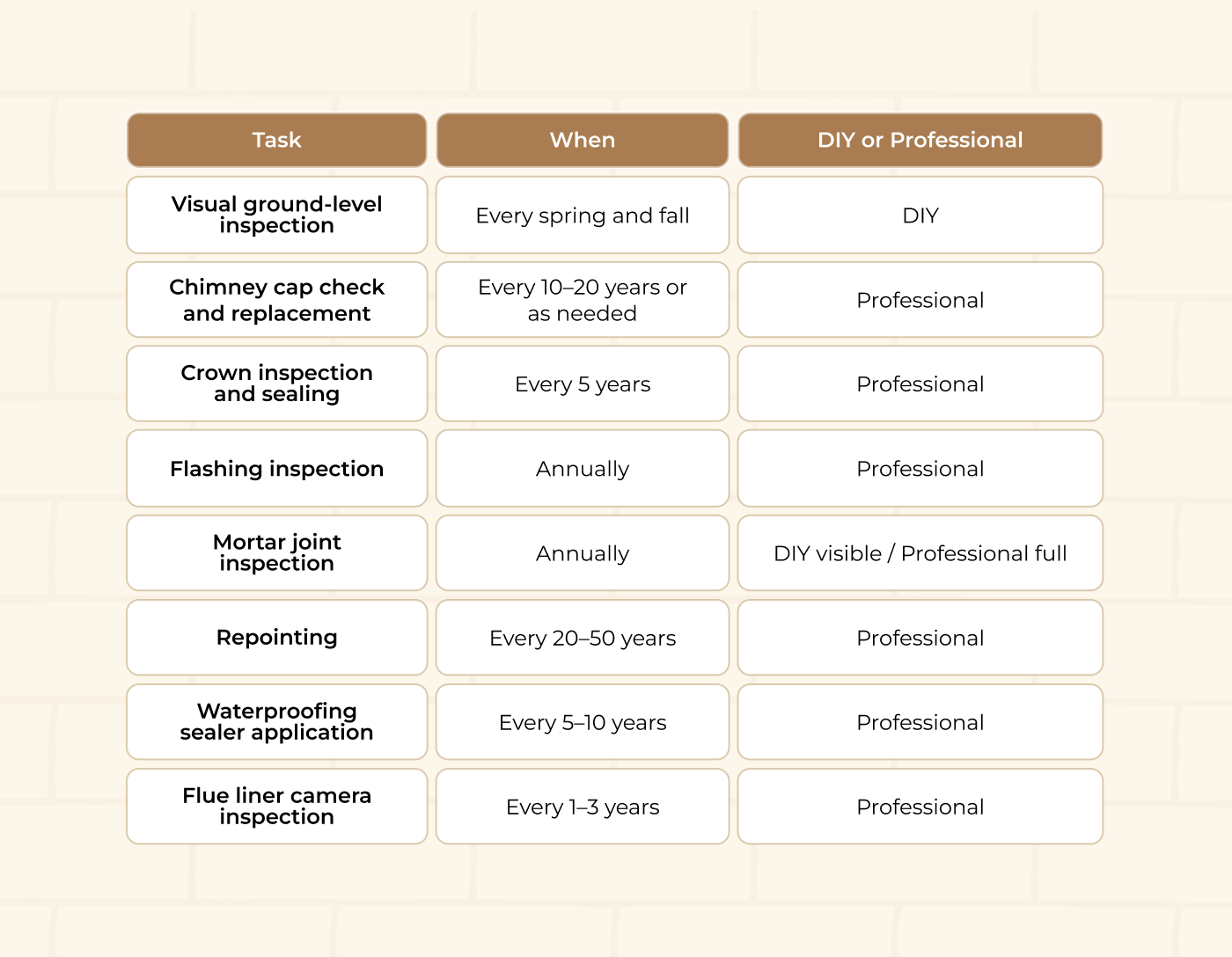
Chimney Maintenance Checklist
Common Chimney Problems That Shorten Lifespan
Missing chimney cap the single most preventable cause of accelerated chimney deterioration. Water entering the flue saturates masonry from the inside, where it does maximum damage with minimum visibility.
Wrong mortar in previous repairs Portland cement repointing on a historic Boston chimney transfers structural stress into the brick rather than the joint, causing spalling that is expensive to reverse.
Ignored flashing water running behind failed flashing damages the roof structure, attic framing, and interior walls damage that extends well beyond the chimney itself.
Deferred repointing every season of delay allows more water into deteriorated joints, turning a repointing job into a partial chimney rebuild.
Maintain This Summer, Protect This Winter
The chimneys that last 100 years in Boston are not exceptional they are maintained. Caps replaced when they fail, mortar repointed before joints deteriorate past ¾ inch, flashing resealed before water finds its way behind it. Each individual task is straightforward and affordable. Together, they add decades to a chimney's functional life.
Kings Masonry & Construction provides professional chimney maintenance, inspection, and repair. Schedule your free summer chimney assessment before contractor calendars fill.
FAQ
Is chimney maintenance required by law in Boston?
There is no municipal requirement mandating routine chimney maintenance for residential properties in Boston. However, if you have a wood-burning fireplace, the National Fire Protection Association recommends annual inspection and cleaning and your homeowner's insurance policy may require evidence of maintenance in the event of a chimney-related claim.
What happens if I don't maintain my chimney?
Deteriorated mortar allows water infiltration that accelerates freeze-thaw damage each winter. Failed flashing allows water into the roof structure. A missing cap allows water and animals into the flue. Each unmaintained component creates conditions that damage the others turning manageable maintenance costs into major structural repair bills within a few seasons.
How do I know if my chimney needs immediate repair vs. routine maintenance?
Immediate repair is needed for: visible bowing or displacement of bricks, horizontal cracks in the chimney structure, water in the firebox after rain, active water intrusion into the attic or walls near the chimney, and any crack wider than ¼ inch that is visibly growing. Routine maintenance covers: repointing before joints reach critical deterioration, cap and crown sealing, flashing resealing, and sealer reapplication on schedule.
What is the most important chimney maintenance task?
Keeping mortar joints sound is the single highest-impact maintenance action. Deteriorated mortar is the primary entry point for water and water is the primary cause of every other form of chimney damage in Boston's climate.
How often should a chimney be maintained in Boston?
A professional inspection annually, with homeowner visual checks every spring and fall. Repointing every 20–50 years depending on mortar condition. Sealer reapplication every 5–10 years. Cap and crown assessment every 5 years. Boston's climate justifies more frequent inspection than the national average.