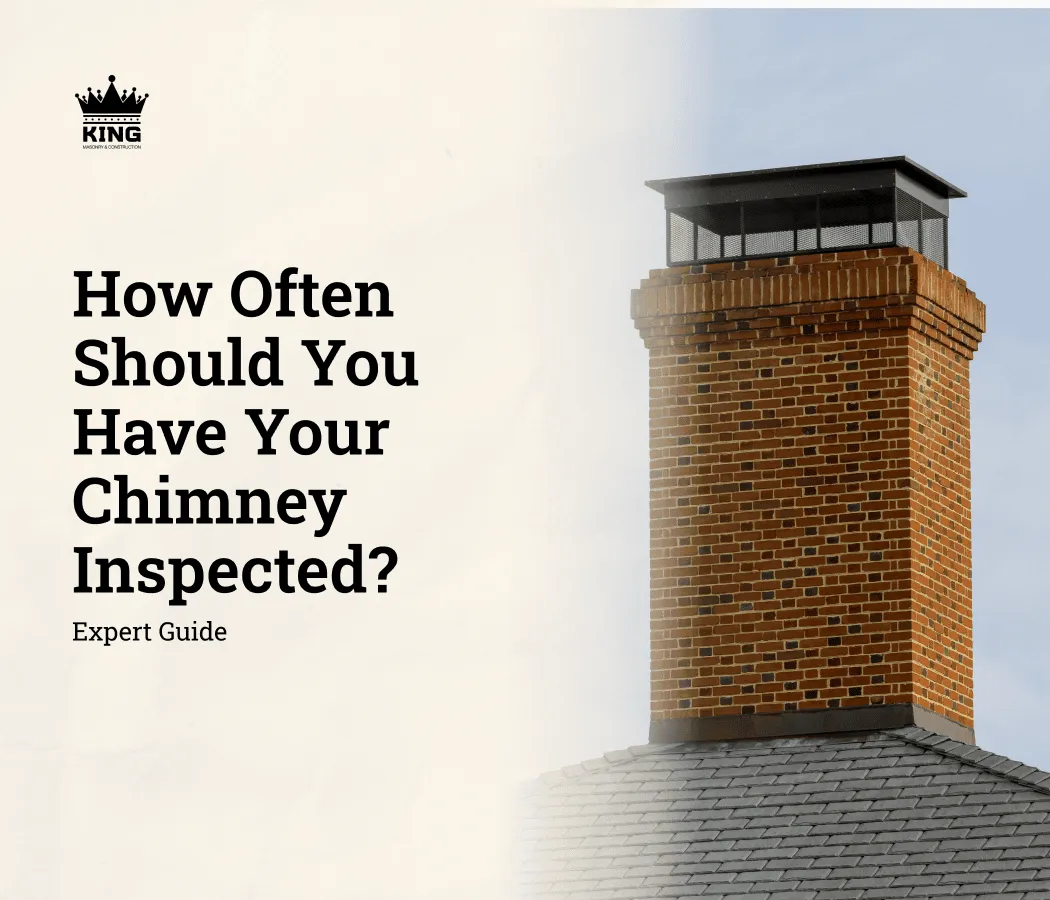
How Often Should You Have Your Chimney Inspected? Expert Guide
The short answer: at least once a year. The National Fire Protection Association (NFPA) recommends an annual chimney inspection regardless of how often you use your fireplace. But the right frequency depends on your usage, fuel type, and the age of your home. Here's what you need to know.
Chimney Inspection Frequency
NFPA 211 is clear that every chimney should be inspected annually. Even if you haven't lit a fire all season, moisture damage, animal nests, and structural settling can create hidden hazards.
Not all inspections are the same. There are three levels of chimney inspection. Level 1 is a routine visual check of accessible components, the firebox, damper, and exterior crown. Level 2 adds a video camera scan of the flue interior and is standard during home sales or after a weather event. Level 3 involves partial demolition to access concealed areas and is only necessary when serious structural damage is suspected.

For most homeowners, an annual Level 1 inspection is all you need.
When You Might Need More Frequent Inspections
Once a year is the baseline, but some situations call for more. If you burn wood daily through the winter, consider inspecting and cleaning twice a year. Heavy use means faster creosote buildup, which is the leading cause of chimney fires.
Older homes with aging masonry or unlined flues are also at higher risk. The same goes for any chimney that's been through a fire, earthquake, or severe storm. And if you're switching fuel types, say, converting from wood-burning to gas, you need a Level 2 chimney inspection before making the change.
A qualified chimney inspection services provider can assess your specific setup and recommend the right schedule.
Warning Signs You Need an Inspection Now
Don't wait for your annual appointment if you notice any of these.
White staining on exterior bricks called efflorescence signals moisture penetrating the masonry. A strong odor coming from the fireplace, especially in warmer months, often means creosote or mold buildup inside the flue. Visible cracks in the flue liner or firebox are a serious structural concern that needs immediate attention.

If smoke backs up into your room when the damper is open, something is blocking the proper draft, possibly a damaged liner, an obstruction, or a failing cap. Dark, shiny buildup inside the flue is creosote, and it's highly flammable. Pieces of mortar or flue tile dropping into the firebox mean the chimney is deteriorating from the inside.
Any of these signs means it's time to act. Search for a chimney inspection near me and get a professional out before the next time you light a fire.
How Kings Masonry Inspects Your Chimney
When you book a chimney inspection with Kings Masonry, here's exactly what our team does step by step.

Step 1: Exterior Assessment. We start outside. Our technician examines the chimney crown, cap, and flashing for cracks, deterioration, or gaps that could allow water intrusion. We also check the masonry for signs of spalling, efflorescence, or shifting.
Step 2: Firebox and Damper Check. Moving inside, we inspect the firebox walls and floor for cracks, damaged mortar joints, or heat erosion. The damper is tested for proper operation; it should open and close smoothly with a tight seal.
Step 3: Flue Liner Inspection. We examine the flue liner for cracks, gaps, or creosote buildup. For Level 2 inspections, we use a specialized video camera to scan the full length of the flue interior, catching problems that aren't visible to the naked eye.
Step 4: Ventilation and Draft Testing. Our team checks that the chimney draws properly and that no obstructions, bird nests, debris, or collapsed liner sections are blocking airflow.
Step 5: Detailed Report. After the inspection, you receive a written report with photos documenting everything we found. We walk you through the findings, explain what needs attention now versus what can be monitored, and answer every question you have.
Every inspection from Kings Masonry is thorough, transparent, and honest, no surprises, no pressure.
Why Homeowners Trust Kings Masonry
Kings Masonry brings certified expertise and years of hands-on experience to every chimney inspection. Our technicians are trained to spot problems early before they become expensive emergencies. We don't upsell, we don't pressure, and we don't cut corners.
Need a chimney inspection near me? Kings Masonry serves in Boston, Newton and surroundings with fast scheduling and same-week availability. Contact us to book your inspection today.
Keep Your Chimney Safe
An annual chimney inspection is one of the simplest things you can do to protect your home and family. It catches small problems before they turn into major repairs or worse, a chimney fire or carbon monoxide leak. Inspect once a year at minimum, more often if you're a heavy user, and immediately if you spot warning signs. Your chimney keeps your family warm. A regular inspection keeps your family safe.