
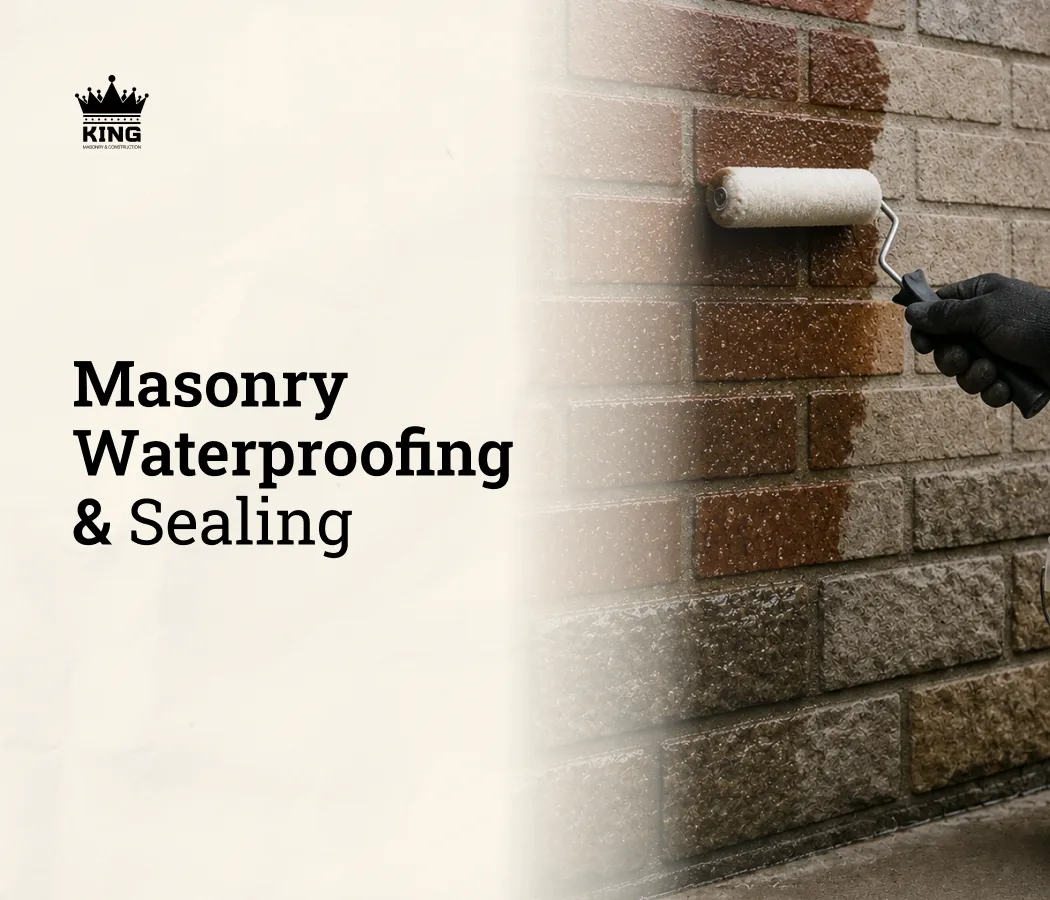
Masonry Waterproofing & Sealing: Protect Your Basement | Boston MA
Water and masonry have been in conflict for as long as buildings have existed — and nowhere is that conflict more intense than in Greater Boston. Between 30+ annual freeze-thaw cycles, 47 inches of yearly rainfall, glacial clay soils, and tens of thousands of homes built before modern basement sealing and waterproofing even existed, Massachusetts homeowners face some of the most demanding moisture conditions in the country.
A damp basement is more than an inconvenience. Unchecked water infiltration causes mold growth, deteriorates structural framing, drives efflorescence and brick spalling, and undermines your foundation's integrity. In Boston's competitive real estate market, a wet basement can reduce an offer by $10,000–$30,000 or kill a deal entirely.
The good news: basement water problems are solvable. But the right solution depends entirely on correctly diagnosing where the water is coming from.
Why Boston Basements Leak: Understanding the Root Causes
1. Hydrostatic Pressure
When the water table rises after heavy rain or spring snowmelt, saturated soil exerts enormous pressure against your foundation walls and floor. Boston's clay-heavy glacial soils are particularly prone to this — clay retains water rather than draining it quickly. Neighborhoods in Brookline, Newton, and Back Bay see especially persistent hydrostatic pressure issues. If you're noticing water at the base of your walls, our Foundation and Basement services can help identify the source and recommend the right fix.
2. Lateral Soil Moisture
Even when the water table isn't rising, moisture in soil adjacent to your foundation migrates inward through capillary action. Old, porous brick and rubble stone foundations — common in pre-1930 Greater Boston homes — are highly susceptible. You'll recognize this by damp patches that appear on walls after rainfall, white efflorescence deposits, and a persistent musty smell even without visible standing water.
3. Surface Water and Poor Drainage
Sometimes the problem isn't sophisticated at all: water is simply draining toward your foundation rather than away from it. Clogged gutters, downspouts terminating too close to the building, or improper grading can overwhelm even a well-waterproofed foundation. In Boston's densely developed neighborhoods, poor surface drainage is a remarkably common contributor to basement moisture problems. Learn more about how Boston's summer weather impacts your home's drainage in our post on how summer heat affects your home's drainage system.
The 5 Basement Sealing and Waterproofing Methods
Method 1: Exterior Waterproofing (Positive-Side)
Excavating soil around the foundation down to the footing, applying a waterproof membrane to the exterior wall face, and backfilling with free-draining gravel. This addresses moisture at its source — before it ever reaches your foundation wall.
Best for: New construction, severe hydrostatic pressure, situations where interior solutions have repeatedly failed.
Method 2: Interior Drainage Systems (Negative-Side)
Installing a perimeter drainage channel at the base of interior basement walls, connecting it to a sump pit, and installing a sump pump that automatically discharges water away from the foundation. Rather than stopping water from entering, interior drainage systems intercept it and direct it to the sump pump before it can flood the floor.
Best for: Hydrostatic pressure problems, poured concrete and block foundations, situations where exterior excavation isn't practical.
Boston cost: $8,000–$15,000 for a full perimeter system with sump pump — by far the most common waterproofing solution installed in Greater Boston. Before the next heavy rain hits, read our guide on basement waterproofing in Boston to understand what's at risk and when to act.
Method 3: Interior Wall Coatings and Sealers
Applying waterproof coatings, crystalline waterproofing compounds, hydraulic cement, or penetrating sealers directly to the interior face of basement walls. Crystalline compounds penetrate concrete and react with moisture to form insoluble crystals that fill pores and micro-cracks.
Best for: Capillary moisture through walls, minor seepage, historic brick and stone foundations where breathability is important.
Important: Film-forming coatings should never be applied to the interior of pre-1900 brick and stone foundations. Trapping moisture inside these walls causes accelerated spalling and mortar deterioration. Use breathable penetrating sealers instead. Our masonry services team can advise on the right product for your specific foundation type.
Method 4: Exterior Masonry Sealers and Water Repellents
Applying penetrating silane-siloxane sealers to exterior masonry surfaces above grade. These chemically bond with the masonry and cause water to bead and run off rather than being absorbed — without changing the appearance of the masonry or trapping internal moisture.
Best for: Above-grade brick and stone walls, chimney crowns, parapet walls, prevention of efflorescence and freeze-thaw spalling.
Boston cost: $1,500–$4,000 depending on wall area. An excellent preventive measure for Boston's brick-clad homes, but does not address below-grade infiltration or hydrostatic pressure. Note that masonry must be clean and properly repointed before sealer application — deteriorated mortar joints must be addressed first.
Method 5: Drainage Correction and Grading
Correcting the grading around your foundation, extending downspouts, and improving site drainage to direct surface water away from the building. A properly graded yard slopes away from the foundation at a minimum of 1 inch per foot for the first 6–10 feet.
Best for: Surface drainage failures, first-step correction before investing in more expensive systems.
Boston cost: $500–$3,000. Before spending $15,000 on an interior drainage system, it's worth assessing whether correcting surface drainage could resolve the problem at a fraction of the cost. See our drainage and waterproofing services for a full overview of what we offer.
How to Choose the Right Solution
Many Boston-area homes need a combination of approaches. Here is a practical framework:
Water enters at the floor-wall joint or floods the floor → Interior drainage system with sump pump. Also read our post on is your foundation leaking? Here's what waterproofing actually fixes for a deeper breakdown.
Walls are damp or show efflorescence but no active flooding → Start with drainage correction, then penetrating sealers and repointing.
Walls are visibly bowing or leaning inward → This is a structural emergency. Read our guide on bowing basement wall repair in Boston immediately and call a professional.
Older brick or stone foundation → Never apply film-forming coatings to the interior; use breathable penetrating sealers on the exterior and correct surface drainage. Our masonry team specializes in historic Boston foundations.
New construction or major renovation → Exterior waterproofing is the gold standard.
Brookline, Newton, or Back Bay near low-lying areas → Assume hydrostatic pressure is a factor; a sump pump system is strongly recommended.
If you've noticed cracks forming alongside moisture issues, our post on concrete foundation cracks — small problem or serious damage? can help you evaluate the severity before calling for an inspection.
Warning Signs Your Basement Needs Professional Waterproofing
Don't wait until you have standing water. Address the problem at these early warning signs:
White or gray efflorescence deposits on basement walls
Persistent musty smell even when no water is visible
Damp patches on walls after heavy rain
Peeling paint or wallboard in the basement
Mold or mildew growth on walls, framing, or stored items
Cracks in the foundation wall — especially horizontal cracks or cracks that are widening
Bowing or leaning foundation walls
Water stains at the base of walls indicating past flooding
Any of these signs warrants a professional inspection. The earlier a moisture problem is identified and addressed, the less expensive the repair. We serve homeowners across our Greater Boston service area, including Boston, Brookline, Newton, Dedham, Braintree, and dozens of surrounding communities.
Ready to Protect Your Boston Basement?
Kings Masonry & Construction provides basement sealing and waterproofing consultations throughout Boston, Brookline, Newton, and the wider Greater Boston area. Our team will correctly diagnose your moisture source and recommend the most cost-effective solution for your specific foundation type — no upselling, no unnecessary work.
Contact us today or call (857) 249-5127 for your free on-site estimate.
Frequently Asked Questions About Basement Sealing and Waterproofing in Massachusetts
How much does basement waterproofing cost in Boston? Drainage correction and grading: $500–$3,000. Interior drainage system with sump pump: $8,000–$15,000. Exterior excavation and waterproofing: $15,000–$40,000+. Penetrating exterior sealers: $1,500–$4,000.
Does basement waterproofing increase home value? Yes — significantly. A professionally waterproofed basement is a major selling point in Greater Boston's real estate market. Active water infiltration can reduce an offer by $10,000–$30,000 and is a common deal-breaker for buyers with FHA or VA financing.
How long does interior waterproofing last? A properly installed interior drainage system should last 20–30 years with routine maintenance. Sump pump motors typically need replacement every 7–10 years.
Can I waterproof my basement myself? Minor surface treatments — applying penetrating sealers to above-grade exterior walls, correcting grading, extending downspouts — are reasonable DIY projects. Interior drainage systems and any below-grade waterproofing should be handled by a professional. Our residential waterproofing team is available for consultations across Greater Boston.
Is a damp smell always a water problem? Not always — it could be condensation. Tape a square of plastic sheeting to the wall for 24–48 hours. If moisture forms on the room side, it's condensation. If on the wall side, water is infiltrating through the wall.