
Basement Waterproofing Boston: Protect Your Home Before Summer Storms
Boston summers are not gentle. Intense rainstorms, flash flooding, and the lingering effects of winter freeze-thaw damage combine to make summer one of the highest-risk seasons for basement water intrusion. By the time water is coming through your walls, the damage is already happening.
Waterproofing before storm season not after is what separates a dry basement from a flooded one.
Why Summer Storms Are a Serious Threat to Boston Basements
New England summer storms arrive fast and drop heavy rainfall in short periods. Soil that dried and cracked during heat waves absorbs water rapidly and expands pushing saturated soil hard against foundation walls. Cracks that formed over winter become entry points for every summer downpour.
The result: water in your basement that wasn't there last year, appearing after storms that never caused problems before.
5 Signs Your Basement Needs Waterproofing Now
Water stains or damp patches on walls or floor after rain
Efflorescence white chalky deposits indicating water moving through your foundation
Musty smell persistent dampness even when it hasn't rained recently
Visible cracks in foundation walls, especially horizontal ones
Rust stains around floor drains or wall anchors a sign of long-term moisture exposure
If you noticed any of these after last winter or spring, summer storms will make them significantly worse.
Basement Waterproofing Methods: What Works in Boston
1. Interior Waterproofing
Interior systems manage water that has already entered the basement directing it to a drain before it causes damage.
Interior drainage channels installed along the base of foundation walls collect and redirect water
Sump pump installation removes collected water automatically essential for Boston homes in low-lying areas or with high water tables
Wall sealants breathable, penetrating sealers applied to interior walls reduce moisture migration through the foundation
2. Exterior Waterproofing
Exterior waterproofing stops water before it reaches the foundation wall the most effective long-term solution.
Excavation and membrane application a waterproof membrane applied to the exterior foundation wall blocks water at the source
Exterior French drain a perforated pipe installed around the foundation perimeter redirects groundwater away before it builds pressure against the wall
Foundation cracks that allow water infiltration often require attention before waterproofing is applied. For a detailed breakdown of crack types and repair options, see our guide on Foundation Crack Repair: How to Identify, Assess, and Fix Cracks Before They Spread.
Grading correction soil sloped away from the foundation prevents water from pooling at the base
3. Crack Injection and Sealing
Existing cracks in foundation walls are direct water entry points. Polyurethane or epoxy injection seals cracks from the inside, stopping active leaks and preventing further water infiltration.
If summer heat and rain have already caused visible cracking in your foundation, our guide on How Boston's Summer Rain and Heat Damage Your Foundation explains what's happening beneath the surface and what to do next.
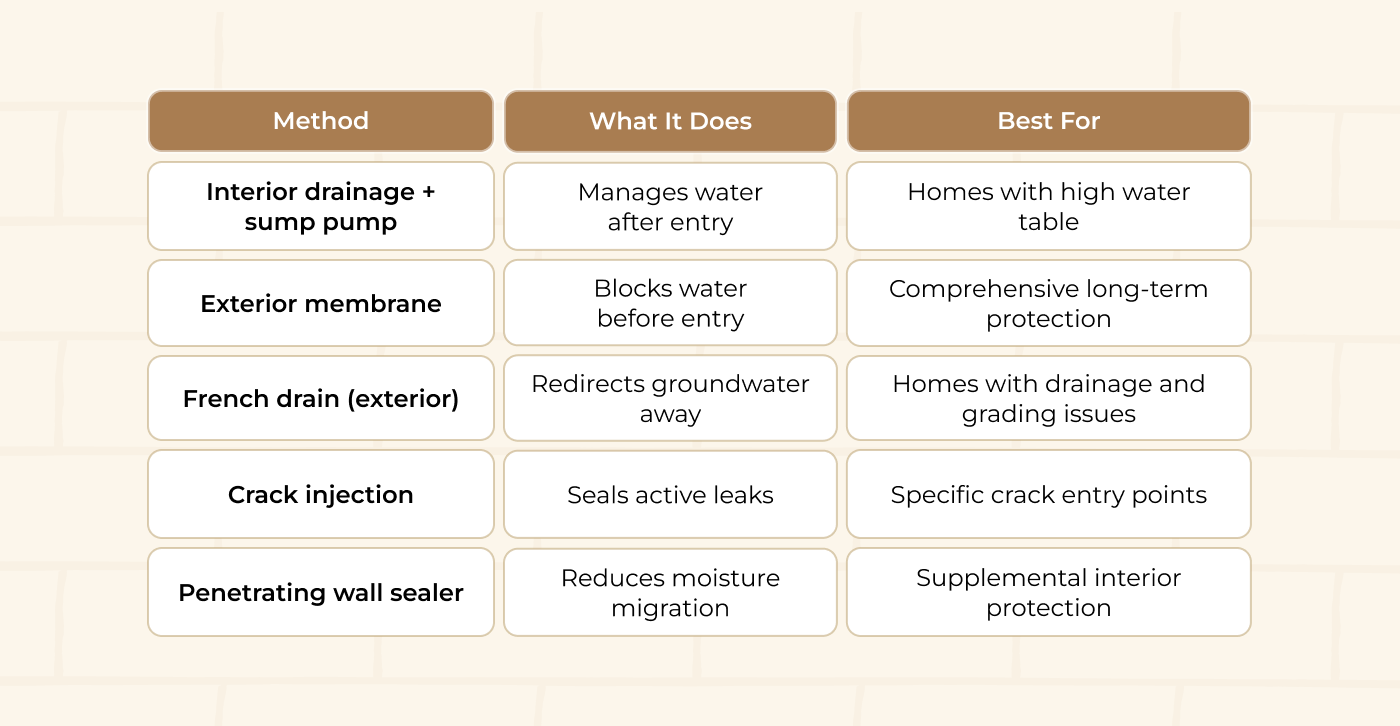
Waterproofing Method Comparison
When Should You Waterproof Your Basement?
The best time is before a problem becomes an emergency. Specifically:
Early summer after winter damage is visible but before storm season peaks
After any basement flooding event water that entered once will enter again through the same path
Before selling basement water damage is one of the most common deal-breakers in Boston home inspections
After foundation crack repair waterproofing seals and protects repaired areas from future infiltration
Summer is ideal because warm, dry conditions allow membranes, sealers, and injection materials to cure properly. Waterproofing applied in cold or wet conditions cures poorly and fails faster. The same timing logic applies to exterior work — our guide on why summer is the best time for foundation waterproofing explains why the season matters so much for lasting results.
How to Keep Water Out of Your Basement During Heavy Rain
Even without full waterproofing, these steps reduce risk significantly:
1. Clean gutters and extend downspouts Gutters clogged with spring debris dump concentrated water directly against your foundation. Downspouts should terminate at least 6-10 feet from the building.
2. Check and correct grading Soil around your foundation should slope away from the building at least 6 inches of drop over the first 10 feet. Flat or inward-sloping ground channels every rainstorm directly at your foundation walls.
3. Test your sump pump before storm season Pour water into the sump pit and confirm the pump activates. A failed sump pump during a summer storm is one of the most common causes of Boston basement flooding.
4. Seal visible cracks Any crack in the foundation wall is a water entry point. Seal them before storm season not during it.
5. Install a window well cover Basement windows below grade are a frequent flood entry point. Proper window well covers and drainage prevent water from pooling and entering.
Don't Wait for the First Storm
Every summer storm that hits before your basement is waterproofed is a test your foundation may not pass. Water damage compounds one flood event leads to mold, structural deterioration, and repair costs that far exceed what waterproofing would have cost upfront.
Kings Masonry & Construction provides professional basement waterproofing and foundation repair across Boston, Brookline, Newton, and surrounding Greater Boston communities. Get a free on-site estimate before storm season peaks.
FAQ
Does basement waterproofing increase home value in Boston?
Yes particularly in Boston's competitive real estate market. A dry, waterproofed basement removes one of the most common inspection red flags and can be marketed as finished or usable space, directly increasing appraised value.
Can I waterproof my basement myself?
Surface sealers are available at hardware stores and can reduce minor moisture migration. However, active leaks, recurring flooding, and structural cracks require professional diagnosis and repair. DIY sealers applied over active water problems typically fail within one to two seasons.
Is a sump pump necessary if I waterproof my basement?
In most Boston homes, yes. Even with exterior waterproofing, a sump pump provides a critical backup for high water table conditions and extreme storm events. It's considered a standard component of any complete basement waterproofing system.
How long does basement waterproofing take?
Interior drainage system installation typically takes 1-3 days. Exterior excavation and membrane application takes 3-5 days depending on foundation size. Crack injection is usually completed in a single visit.
What is the easiest way to waterproof a basement?
For minor moisture issues, interior penetrating sealers applied to clean, dry walls provide a first line of defense. For active leaks or recurring flooding, crack injection combined with an interior drainage system and sump pump is the most reliable solution that doesn't require exterior excavation.