
Foundation Waterproofing: Why Summer Is the Best Time to Act | Kings Masonry
Foundation waterproofing is one of those projects most Boston homeowners schedule reactively after water appears in the basement, after a crack widens over winter, after a storm causes flooding. By that point, the damage has already progressed further than it needed to.
Summer is the proactive window. Here's why timing matters and what foundation waterproofing in Boston actually involves.
Why Summer Is Ideal for Foundation Waterproofing
Foundation waterproofing is not a project that can be done in any season. The materials, methods, and ground conditions all depend on temperature and moisture and Boston summers provide the most favorable combination of both.
Why summer works:
Dry soil conditions allow exterior excavation without mud and instability
Warm temperatures ensure membranes, sealers, and injection materials cure fully
Maximum lead time before fall rain season and winter freeze-thaw cycles
Visible damage from winter is fresh and fully assessable before soil re-saturates
Contractor availability is better in summer than the fall rush
Waterproofing applied in cold or wet conditions cures poorly, bonds weakly, and fails faster. A membrane installed in July lasts significantly longer than one installed in October.
What Foundation Waterproofing Actually Covers
Foundation waterproofing is not a single product or single method it's a system of overlapping protections designed to stop water from reaching your foundation walls and basement interior.
Exterior Foundation Waterproofing
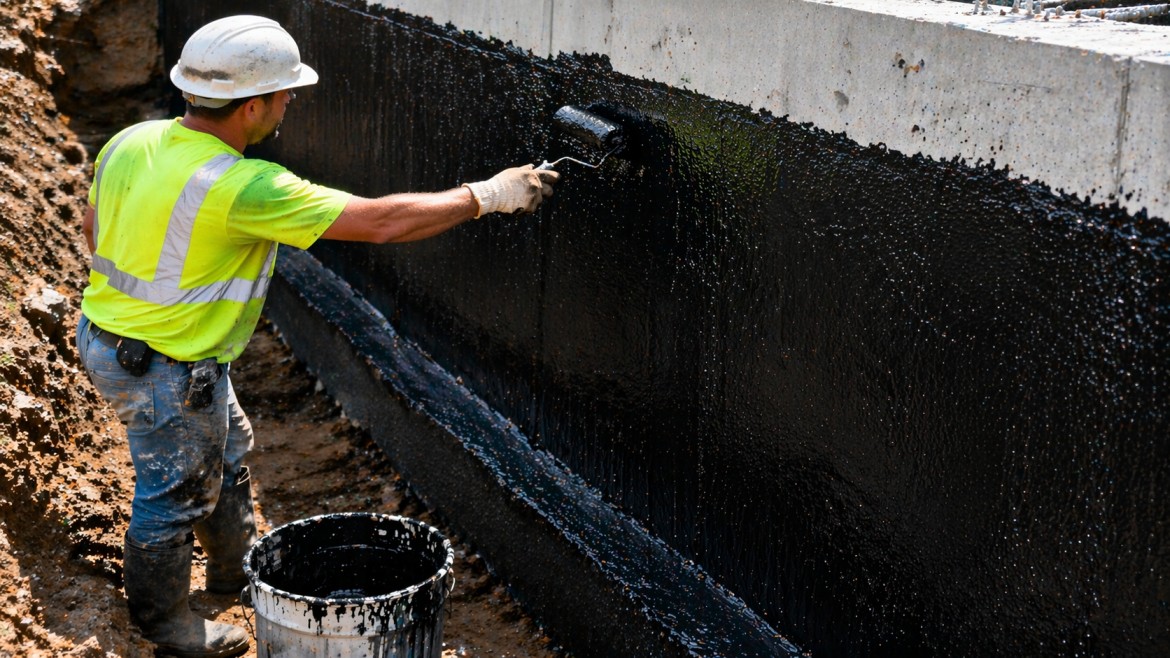
The most comprehensive and long-lasting approach. Involves excavating around the foundation perimeter, applying a waterproof membrane directly to the exterior foundation wall, installing a drainage board to direct water downward, and laying a perimeter French drain at the footing level to redirect groundwater away.
Best for: Best for: Homes with active water intrusion, significant foundation cracks, or chronic basement moisture that interior methods haven't resolved.
Interior Waterproofing Systems
Interior systems manage water that has already entered directing it to a sump pump before it can cause damage. Includes interior drainage channels installed along the base of foundation walls and a sump pump system that removes collected water automatically.
Best for: Homes where exterior excavation is not feasible, or as a supplemental system alongside exterior waterproofing.
Foundation Crack Injection
Polyurethane or epoxy injection seals active cracks from the inside stopping water entry at specific points without requiring excavation. Fast, targeted, and effective for isolated crack leaks. Learn more about when to use crack injection vs. repointing.
Best for: Specific crack entry points in otherwise sound foundations.
Exterior Foundation Sealing
A breathable, siloxane-based penetrating sealer applied to above-grade foundation walls reduces water absorption without trapping moisture. Applied after repointing and crack repair as a final protective layer.
Best for: Above-grade masonry foundations as a maintenance measure, not a solution for active basement leaks.
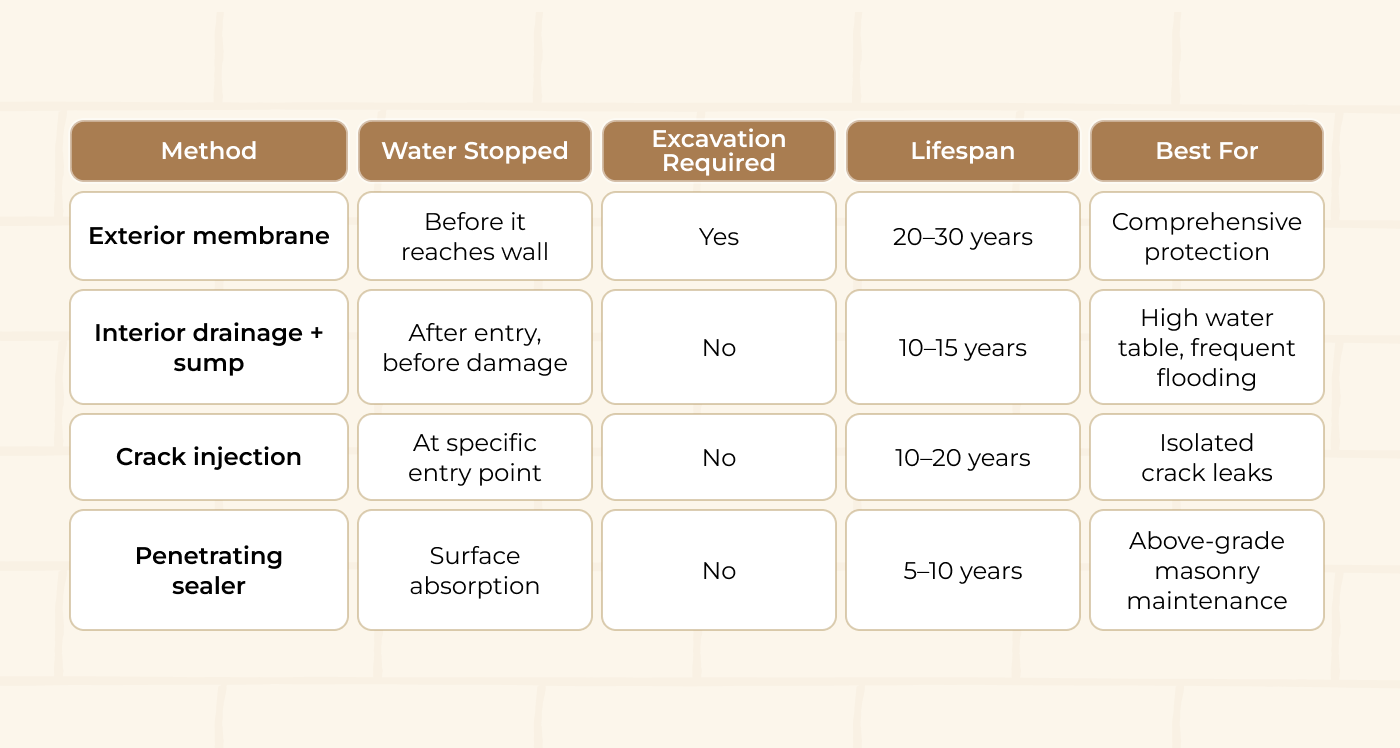
Waterproofing Method Comparison
Signs Your Foundation Needs Waterproofing This Summer
Don't wait for standing water in your basement. These earlier signs indicate waterproofing is needed:
Efflorescence on basement walls white deposits from water moving through the foundation
Damp or wet patches on walls or floor after rain even minor moisture indicates active infiltration
Musty smell in the basement persistent dampness even in dry periods
Horizontal cracks in foundation walls lateral soil pressure requiring immediate evaluation
Stair-step cracks in masonry foundations differential settling with water infiltration
Rust staining around floor drains or wall anchors long-term moisture exposure
Peeling paint or efflorescence on interior foundation walls moisture vapor pushing through
Any one of these observed after winter is a signal to act before the next storm season.
How Summer Heat Makes Foundation Waterproofing More Urgent
Boston summers create conditions that directly accelerate foundation water damage even before rain arrives.
During heat waves, soil dries out and pulls away from foundation walls opening gaps that didn't exist in spring. When intense summer rain follows, that same soil rapidly absorbs water and expands, pushing saturated soil hard against the foundation. Water enters through every gap, crack, and failed joint simultaneously.
A foundation with no waterproofing protection goes through this cycle every summer. Each cycle pushes damage further. Waterproofing installed before the cycle begins breaks the pattern stopping water before it reaches the wall regardless of what the soil is doing outside.
Foundation Waterproofing Process: What to Expect
Step 1 Professional Inspection A thorough assessment of the foundation interior and exterior identifies active water entry points, crack patterns, drainage conditions, and the appropriate waterproofing method for your specific situation.
Step 2 Crack Repair and Repointing All existing cracks and deteriorated mortar joints are repaired before any waterproofing is applied. Applying waterproofing over unrepaired cracks is ineffective water finds its way through regardless.
Step 3 Waterproofing Application Depending on the method selected, this involves excavation and membrane application, interior drainage channel installation, crack injection, or sealer application or a combination of methods for comprehensive protection.
Step 4 Drainage Integration Waterproofing works best when paired with proper drainage a perimeter French drain at footing level, corrected grading, and functioning gutters and downspouts. Water that drains away from the foundation cannot pressure-test your waterproofing.
Step 5 Final Inspection and Backfill For exterior systems, the excavation is inspected, drainage layer verified, and soil carefully backfilled and graded away from the foundation.
Don't Wait for the Basement to Flood
Foundation waterproofing done reactively after flooding, after significant crack widening, after mold appears always costs more than waterproofing done proactively. Water that reaches your basement doesn't just stay there: it damages framing, promotes mold growth, deteriorates the foundation itself, and creates conditions that compound season after season.
Summer is the window. The soil is workable, the materials cure properly, and you have maximum time before the next stress cycle begins.
Kings Masonry & Construction provides professional foundation waterproofing and drainage solutions .Schedule your free on-site assessment this summer before the fall rush begins.
FAQ
How long does foundation waterproofing take?
Crack injection is typically completed in one visit. Interior drainage system installation takes 1–3 days. Full exterior waterproofing with excavation takes 3–7 days depending on foundation perimeter size and site conditions.
Is foundation waterproofing covered by homeowner's insurance?
Standard policies generally do not cover waterproofing as a preventive measure or gradual deterioration. Sudden, specific damage events may be covered depending on your policy. Flood damage from groundwater intrusion typically requires separate flood insurance. Review your coverage specifics with your insurer before assuming coverage.
Do I need both interior and exterior waterproofing?
For most Boston homes, one well-installed system is sufficient. Exterior waterproofing is the more comprehensive solution. Interior systems are appropriate where excavation isn't feasible. In severe cases significant water table issues, recurring flooding despite exterior waterproofing combining both systems provides maximum protection.
How do I maintain my foundation waterproofing after installation?
Test sump pumps annually before storm season. Keep gutters clear and downspouts directed away from the foundation. Maintain proper grading around the home. Have exterior membranes and drainage systems inspected every 5 years. Annual visual inspection of the basement interior after heavy rain identifies any new infiltration points early.
Does foundation waterproofing increase home value in Boston?
Yes particularly in Boston's competitive real estate market. A waterproofed foundation removes one of the most common inspection red flags, prevents the mold and structural issues that reduce appraisal values, and is a documented improvement that buyers recognize. Homes with chronic basement moisture sell for less and take longer to sell.