
Is Your Foundation Leaking? Here's What Waterproofing Actually Fixes
Water in the basement is one of the most common problems Boston homeowners deal with and one of the most misunderstood. Foundation and basement waterproofing gets discussed loosely, and many homeowners end up with the wrong solution for their specific problem. This guide explains what foundation and basement waterproofing actually does, what it doesn't fix, and how to choose the right approach for your home.
Why Boston Foundations Leak
Before choosing a foundation and basement waterproofing solution, it helps to understand why the problem exists in the first place.
Most foundation leaks in the Boston area come down to:
Hydrostatic pressure water-saturated soil presses against the foundation walls from the outside. After heavy rain or snowmelt, that pressure forces water through any crack, joint, or porous section of the wall
Freeze-thaw cycles water that enters a small crack freezes and expands in winter, widening the crack and allowing more water in the next time it rains
Poor surface drainage gutters that deposit water too close to the foundation, or grading that slopes toward the house, directs water straight to the base of the foundation
Aging foundation materials older Boston homes with stone, brick, or early poured concrete foundations become increasingly porous over time as mortar and material degrade
Understanding which of these is driving your problem determines which foundation and basement waterproofing approach will actually work.
What Foundation and Basement Waterproofing Actually Fixes
Foundation and basement waterproofing is effective at solving specific problems. Here's what it genuinely addresses:
Water Seeping Through Porous Walls
Concrete and masonry are not naturally watertight. Over time especially under hydrostatic pressure water migrates through the material itself rather than through visible cracks. Interior and exterior foundation and basement waterproofing membranes and coatings directly address this.
Water Entering Through Cracks and Joints
Cracks in the foundation wall, the cove joint (where the wall meets the floor), and cold joints in poured concrete are common entry points. Crack injection and drainage systems intercept water at these points before it reaches the interior.
Chronic Dampness and Efflorescence
That white powdery residue on basement walls efflorescence is a sign that water is moving through the masonry and depositing mineral salts on the surface. Foundation and basement waterproofing stops the moisture movement that causes it.
Groundwater Intrusion
In areas with a high water table which includes parts of Boston near the Charles River and other low-lying neighborhoods groundwater can rise and enter the basement regardless of surface conditions. An interior drainage system with a sump pump manages this directly.
What Foundation and Basement Waterproofing Does NOT Fix
This is where many homeowners get misled. Foundation and basement waterproofing is not a structural repair.
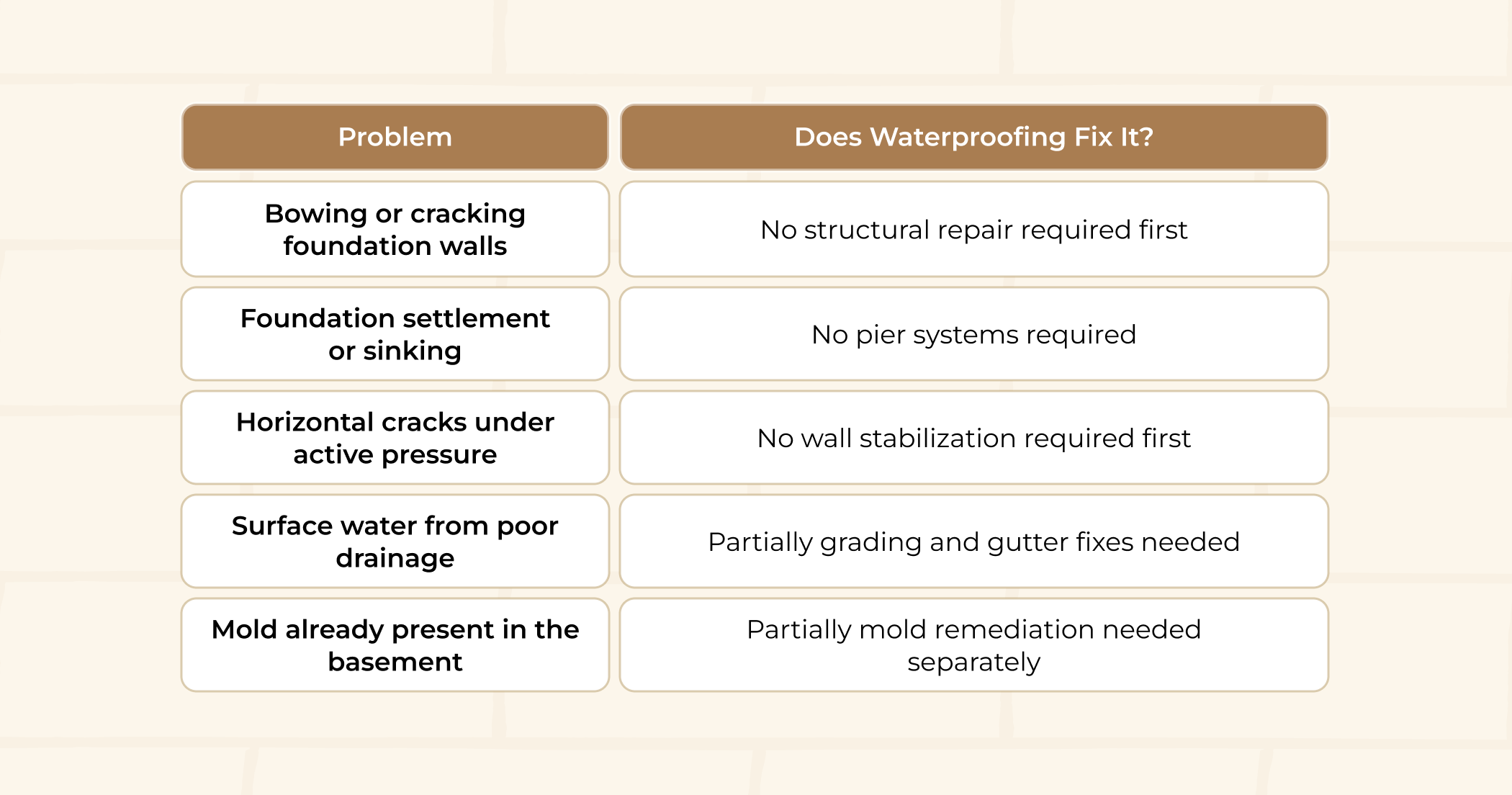
If the foundation wall is bowing inward or showing horizontal cracks, that's a structural problem that must be repaired before foundation and basement waterproofing is applied. Waterproofing over an unstable wall doesn't protect the wall it just hides the problem temporarily.
For structural foundation issues, read our Basement Foundation Repair Guide.
Foundation and Basement Waterproofing Methods: Which One Is Right for You?
There is no single foundation and basement waterproofing solution that works for every situation. The right method depends on where the water is coming from and the condition of the foundation.
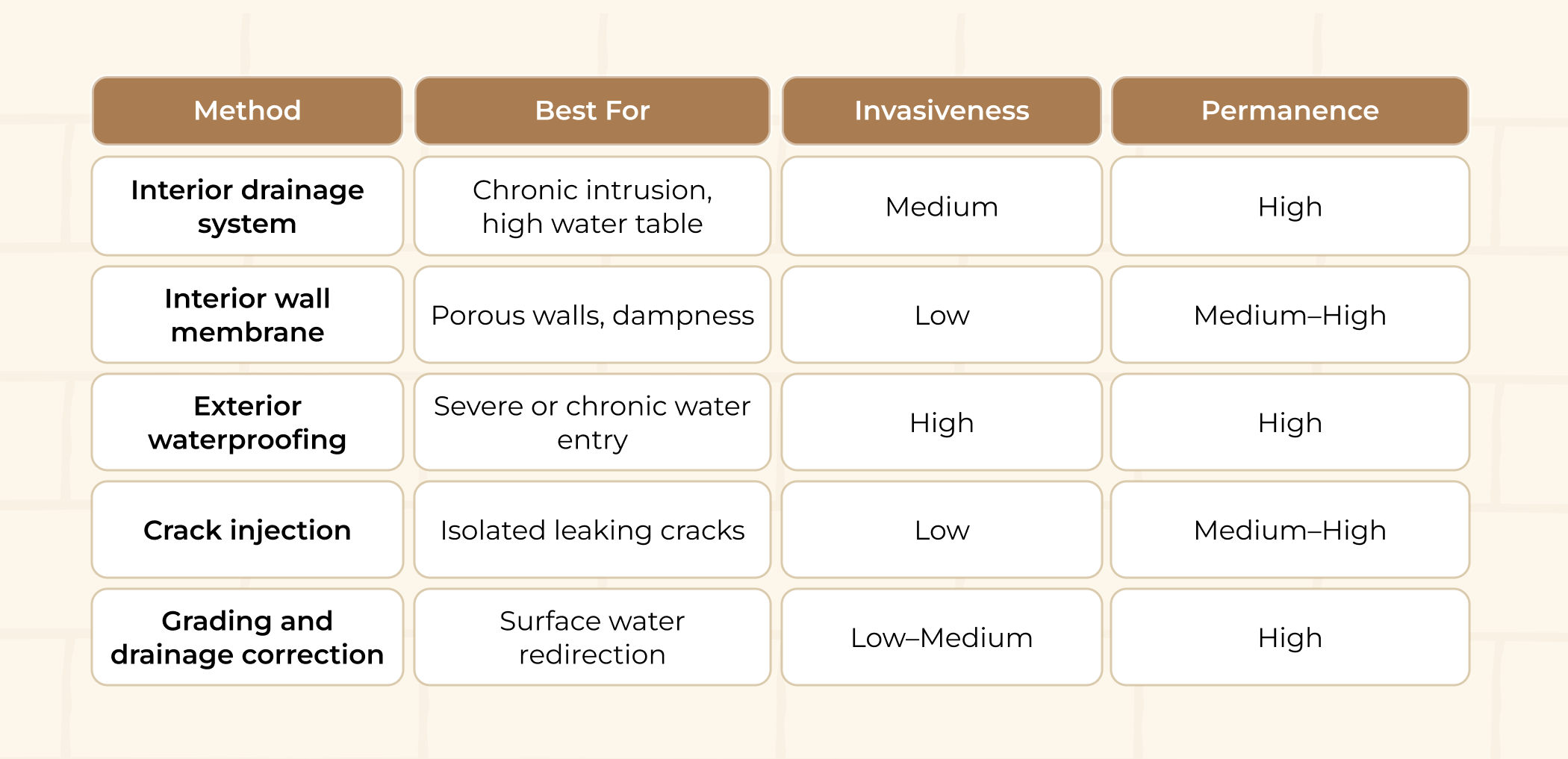
Interior Drainage System (French Drain + Sump Pump)
Best for: Chronic water intrusion, high water table, water entering through the cove joint
A channel is cut around the perimeter of the basement floor, a perforated drain pipe is installed, and the system directs water to a sump pit where a pump removes it. This doesn't stop water from entering the wall it intercepts it before it floods the floor. This is one of the most reliable foundation and basement waterproofing solutions for Boston basements with persistent water problems, particularly in neighborhoods prone to groundwater issues.
Interior Wall Waterproofing Membrane
Best for: Water seeping through porous walls, dampness and efflorescence
A waterproof membrane or coating is applied directly to the interior face of the foundation wall. This creates a barrier that prevents moisture from passing through. It's less invasive than exterior work and effective for walls that are structurally sound but porous. Sealing the masonry surface itself is a related step in keeping water out our guide on masonry waterproofing and sealing covers how it protects your basement.
Exterior Waterproofing
Best for: Severe or chronic water intrusion, new construction, full perimeter protection
The most comprehensive foundation and basement waterproofing solution. The soil around the foundation perimeter is excavated, a waterproof membrane is applied to the exterior face of the wall, drainage board is installed, and a French drain redirects water away from the structure. Exterior waterproofing addresses the problem at its source before water ever contacts the foundation. It's the most invasive option but also the most permanent. For more on drainage solutions that work alongside exterior waterproofing, see our Drainage and Waterproofing Services.
Crack Injection
Best for: Isolated cracks allowing water entry, non-structural vertical cracks
Epoxy or polyurethane foam is injected directly into the crack under pressure. Polyurethane expands to fill the void and stops water immediately. Epoxy creates a structural bond and restores wall integrity. The right material depends on whether the crack is actively leaking and whether structural repair is also needed.
Exterior Grading and Drainage Correction
Best for: Water intrusion caused by surface drainage directed toward the foundation
Sometimes the fix isn't the foundation at all it's the grade of the soil around the home or the discharge point of the gutters. Regrading the soil so it slopes away from the foundation and extending downspouts can significantly reduce hydrostatic pressure before it ever reaches the wall.
Foundation and Basement Waterproofing Methods at a Glance
Signs Your Foundation Needs Waterproofing
Watch for these warning signs that indicate you may need foundation and basement waterproofing:
Water on the basement floor after rain or snowmelt
Damp or musty smell in the basement even when it hasn't rained recently
White efflorescence on the foundation walls
Visible water stains or tide marks on the lower portion of the walls
Mold or mildew on walls, floor, or stored items
Rust stains from metal objects sitting on the floor
If any of these have been present for more than one season, the problem is unlikely to improve on its own. Boston's climate means the conditions driving the intrusion rain, snowmelt, frozen ground return every year.
For a complete overview of what summer storms do to Boston basements, read our Basement Waterproofing Boston Guide.
Stop Managing the Water Fix the Source
A leaking foundation doesn't improve with time. Every season that passes without addressing it allows water to do more damage to the structure, the interior finishes, and the air quality of the home.
Kings Masonry & Construction provides expert foundation and basement waterproofing across Boston, Hingham, Newton, and surrounding Massachusetts communities. We assess the full picture where the water is coming from, what's allowing it in, and which solution will actually solve it and give you a clear, honest recommendation.
Call us for a free assessment: (857) 249-5127
Frequently Asked Questions
Does foundation and basement waterproofing fix foundation cracks?
It depends on the crack. Crack injection directly repairs isolated leaking cracks. Interior membranes and exterior foundation and basement waterproofing prevent water from passing through porous material and minor surface cracks. However, structural cracks particularly horizontal cracks or those with displacement require structural repair before waterproofing is applied.
How long does foundation and basement waterproofing last?
Exterior waterproofing with a quality membrane typically lasts 20–30 years or more. Interior drainage systems last indefinitely with proper sump pump maintenance. Interior coatings and crack injections last 10–20 years depending on the product and conditions.
Can I waterproof a foundation from the inside only?
Interior foundation and basement waterproofing is effective for many situations and avoids the disruption of excavation. However, for severe cases where water is actively saturating the exterior of the foundation, interior-only solutions manage the water after it enters rather than preventing it from reaching the wall. A professional assessment determines whether interior work is sufficient.
Will foundation and basement waterproofing remove mold from my basement?
Foundation and basement waterproofing stops the moisture that causes mold to grow, but it doesn't remove mold that's already present. If mold is visible, remediation should be completed before or alongside waterproofing work.
Do you offer foundation and basement waterproofing in Boston?
Yes. Kings Masonry & Construction provides full foundation and basement waterproofing assessment and installation across Boston and surrounding communities. Call (857) 249-5127 to schedule an on-site evaluation.