

How Summer Heat Affects Your Home's Drainage System in Boston
Most Boston homeowners think about drainage during heavy rain not during a heat wave. But summer heat quietly damages drainage systems in ways that only become obvious when the next storm hits and water goes exactly where it shouldn't.
Here's what heat actually does to your drainage system and how to protect your home before the damage compounds.
How Heat Damages Drainage Systems
1. Soil Shrinkage and Pipe Shifting
During prolonged heat, clay-rich New England soil dries out and contracts significantly. As soil shrinks away from drainage pipes, it removes the stable support those pipes depend on. Unsupported pipes shift, sag, or separate at joints creating blockages, leaks, and misdirected water flow.
When heavy summer rain follows a dry spell, that same soil rapidly expands pushing against pipes from the opposite direction. This repeated shrink-swell cycle is one of the most common causes of drainage pipe damage in Greater Boston.
2. Pipe Expansion and Joint Stress
Heat causes drainage pipe materials to expand. In systems with rigid joints or older brittle pipes, this thermal expansion creates stress at connection points. Over multiple summers, joints crack, separate, or develop slow leaks that erode surrounding soil and undermine the drainage system's structural base.
3. Dry Soil and Altered Water Flow
When soil is severely compacted and dry from summer heat, it loses its ability to absorb rainfall gradually. Instead of percolating into the ground, water sheets across the surface overwhelming drainage channels, eroding soil, and pooling in areas that previously drained without issue.
This is why many Boston homeowners experience yard flooding and pooling after the first major summer storm even when their drainage system was functioning fine in spring.
4. Vegetation and Root Activity
Summer heat accelerates plant growth and root growth. Tree and shrub roots actively seek water sources during dry periods, making drainage pipes a prime target. Root intrusion into drainage pipes causes blockages, pipe deformation, and eventual failure if left unaddressed.
5. Erosion from Intense Summer Storms
When heat waves end with intense thunderstorms, concentrated rainfall hits dry, compacted soil that can't absorb water fast enough. The resulting runoff erodes soil around drainage channels, undermines pipe bedding, and washes away gravel from French drain systems significantly reducing drainage capacity.
Warning Signs Your Drainage System Has Summer Damage
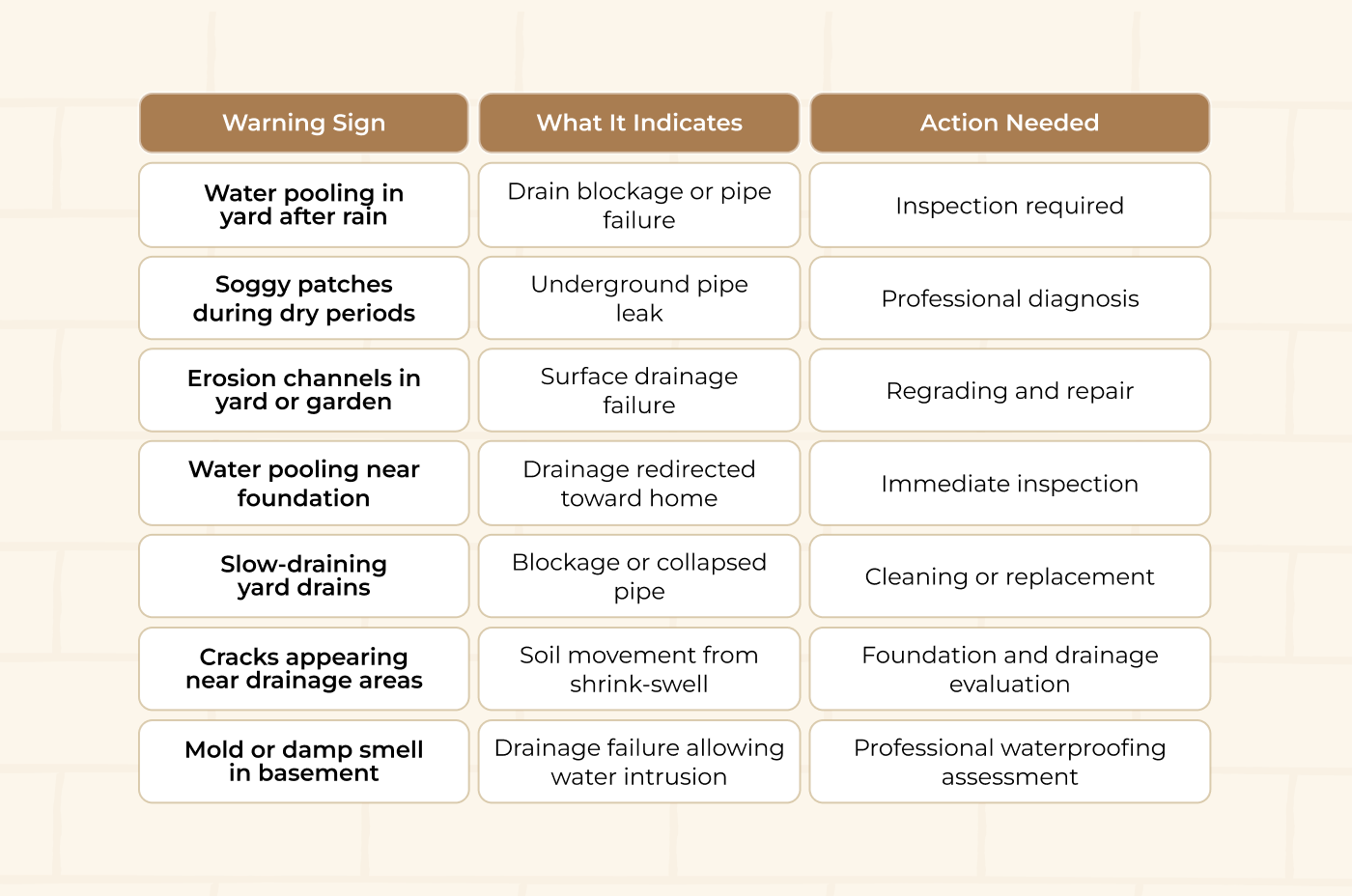
Most Common Summer Drainage Problems in Boston
Foundation Drainage Failure
The drainage systems around Boston foundations French drains, gravel beds, and perimeter channels are designed to redirect groundwater away from foundation walls. When soil shrinkage disconnects pipes or erosion displaces gravel, water that was previously redirected begins accumulating against the foundation. The result shows up as basement moisture, efflorescence, or active water intrusion after summer storms. If you're also seeing cracks in your foundation walls, read our guide on how summer destroys your foundation.
Yard Drainage Backup
Surface drains, channel drains, and catch basins collect organic debris throughout spring and early summer. By mid-summer, partially blocked drains combined with intense storm runoff cause yard flooding that the system was originally designed to prevent.
French Drain Deterioration
French drains rely on clean gravel surrounding a perforated pipe. Over time and particularly after hot, dry summers followed by intense rain fine soil particles migrate into the gravel bed and reduce its drainage capacity. A French drain that has silted up provides little to no effective drainage, regardless of the pipe's condition.
How to Protect Your Drainage System This Summer
1. Clear all drain openings before storm season Remove debris from surface drains, channel drains, and downspout extensions before the first major summer storm. A blocked drain during an intense Boston thunderstorm backs water up directly toward your foundation.
2. Inspect downspout termination points Downspouts should direct water at least 6-10 feet from the foundation. Check that extensions haven't shifted, separated, or become buried during spring landscaping. A disconnected downspout extension deposits concentrated roof runoff at the worst possible location.
3. Check grading around the foundation Soil that has settled or shifted during freeze-thaw cycling may now slope toward rather than away from the foundation. Check that the ground drops at least 6 inches over the first 10 feet around your home.
4. Inspect visible drainage pipes for joint separation Where drainage pipes are accessible at drain outlets, cleanouts, or where they exit the foundation check for visible separation, offset joints, or cracking. These are signs that thermal movement or soil shifting has compromised the system.
5. Monitor for new pooling after each storm Water pooling in areas that previously drained well is one of the earliest indicators of a drainage problem. Document new pooling with photos and note how long it takes to drain this information helps a contractor diagnose the issue accurately.
How Heat Affects Plumbing vs. Exterior Drainage
It's worth distinguishing between interior plumbing and exterior drainage systems heat affects them differently.
Interior plumbing pipes are protected from temperature extremes by the building structure. Exterior drainage systems yard drains, French drains, foundation perimeter drainage, and downspout extensions are fully exposed to Boston's summer heat, soil movement, and storm intensity. This makes exterior drainage significantly more vulnerable to summer damage than interior plumbing.
Summer Is the Right Time to Repair Drainage
Drainage repairs regrading, French drain cleaning or replacement, pipe joint repair, and catch basin maintenance are all best done during dry summer conditions. Working in dry soil is faster, more accurate, and produces better results than attempting drainage work in wet fall conditions.
Kings Masonry & Construction provides professional drainage repair and waterproofing solutions across Boston, Brookline, Newton, and surrounding. Get a free on-site drainage assessment before the next storm season peaks.
FAQ
How long does a French drain last in Boston?
A properly installed French drain typically lasts 10–15 years before the gravel bed silts up enough to require cleaning or replacement. In areas with heavy clay soil or significant organic debris, the effective lifespan may be shorter. Annual inspection helps identify when cleaning is needed before full replacement becomes necessary.
Can I install yard drainage myself?
Basic surface grading corrections and downspout extensions are manageable DIY projects. French drain installation and foundation perimeter drainage require accurate slope calculation, proper pipe sizing, and correct gravel specification mistakes in any of these result in a drainage system that performs worse than no system at all. Professional installation is recommended for anything beyond surface-level corrections.
How do I know if my French drain is still working?
Pour a large volume of water into the drain inlet and observe how quickly it clears. A functioning French drain should move water within minutes. Slow clearing or standing water at the inlet indicates blockage or silting that needs attention. Persistent yard flooding in areas the drain was installed to protect is a reliable indicator of system failure.
Does homeowner's insurance cover drainage system damage in Boston?
Standard homeowner's insurance typically does not cover gradual drainage deterioration or maintenance-related failures. Sudden damage from specific events such as a tree root collapse may be covered depending on your policy. Flood damage from inadequate drainage is generally not covered without a separate flood insurance policy. Review your policy specifics with your insurer.
How does summer heat affect drainage pipes?
Heat causes pipe materials to expand and surrounding soil to shrink. This combination stresses pipe joints, shifts pipe alignment, and can separate connections that were previously secure. In Boston's clay-heavy soil, the effect is amplified by the significant shrink-swell response of the ground.