
Foundation Services
in Boston, MA
Your home's foundation is its most critical structural component. We diagnose, repair, and protect foundations across Greater Boston — stopping damage before it becomes a structural emergency.




15+ Years
Repairing and protecting foundations across Boston and Greater Massachusetts
600+
Foundation repair and inspection projects completed in the Boston area
100%
Satisfaction commitment — we don't leave until the job is done right
Foundation Issues Don't Resolve Themselves
Cracks widen, walls bow, and settling worsens with every freeze-thaw cycle. Early intervention costs a fraction of full structural repair. Get your free assessment today.
Your Foundation Supports
Everything Above It
Boston's aging housing stock, heavy clay soils, and severe freeze-thaw cycles create uniquely challenging conditions for foundations. From colonial-era stone foundations to mid-century concrete block, every type faces stress over time.
When a foundation fails, it doesn't just affect walls and floors — it compromises the entire structure, your family's safety, and your home's value. Foundation problems caught early are far less expensive and disruptive to fix than those left to worsen.
Our licensed foundation specialists provide honest assessments and lasting repairs — not temporary patches.
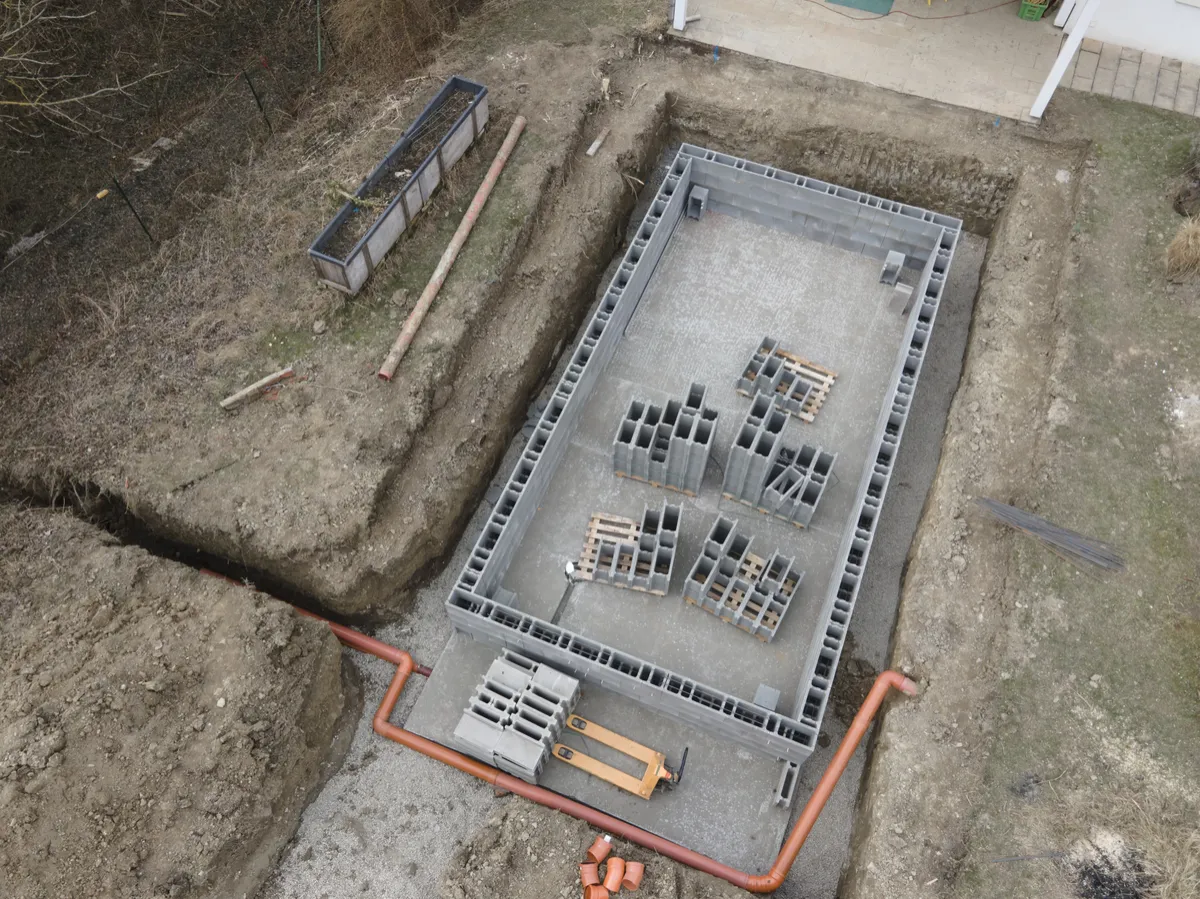
Not sure how serious your foundation issue is?
Our licensed foundation specialists will assess your home's foundation, identify all problem areas, and give you a straightforward evaluation — at absolutely no cost to you.
We work on Boston's older housing stock every day. We know what to look for, and we'll give you honest answers about what needs to be done.
Structural Collapse Risk
Severe foundation failure can compromise load-bearing walls and the entire home structure.
Water Intrusion
Foundation cracks are the primary entry point for basement moisture and flooding.
Decreased Home Value
Foundation issues are among the most significant red flags in home inspections and sales.
Escalating Costs
Every season without repair allows damage to compound — increasing repair costs substantially.
Complete Foundation Services in Boston, MA
From hairline crack repairs to full structural reinforcement, we offer a comprehensive range of foundation
services tailored to Boston's soil conditions and housing types.

Foundation Inspection
Thorough visual and structural assessment of your foundation to identify cracks, settlement, bowing, and moisture entry points.

Foundation Crack Repair
Epoxy injection and polyurethane foam crack repair that restores structural integrity and permanently seals water entry points.

Structural Reinforcement
Carbon fiber straps, steel I-beams, and wall anchors that stabilize and reinforce bowing or leaning foundation walls.

Wall Stabilization
Basement wall stabilization systems that stop inward movement and prevent further structural deterioration in block or poured concrete walls.

Underpinning & Piering
Push piers and helical piers installed deep into stable soil to lift and permanently support settling foundations.
Foundation Waterproofing
Exterior membranes and drainage board systems applied directly to foundation walls to prevent water infiltration at the source.
Foundation Rebuilding
Complete or partial foundation rebuilding for severely deteriorated stone, brick, or concrete block foundations common in older Boston homes.
Preventive Protection
Sealant coatings, drainage improvements, and grading corrections that protect your foundation from future moisture and settlement issues.
Signs Your Foundation Needs Professional Attention
Foundation problems rarely announce themselves dramatically — they show up as subtle clues that are easy to dismiss. Here's what Boston homeowners should watch for.
1. Cracks in Foundation Walls or Floor
Horizontal, stair-step, or diagonal cracks in concrete or masonry walls, or cracks in the basement floor slab, often indicate structural movement or settlement.
2. Bowing or Leaning Walls
Foundation walls that curve inward under soil pressure require immediate attention — the longer this goes unaddressed, the more expensive the repair.
3. Sticking Doors & Windows
Doors or windows that suddenly stick, jam, or no longer close properly can indicate foundation settlement causing the frame to shift out of square.
4. Uneven or Sloping Floors
Floors that feel springy, bounce, or slope noticeably in one direction suggest differential foundation settlement beneath.
5. Gaps Around Windows, Doors & Trim
Visible gaps appearing between walls and window or door frames, or between trim and ceilings, are often a sign of structural movement.
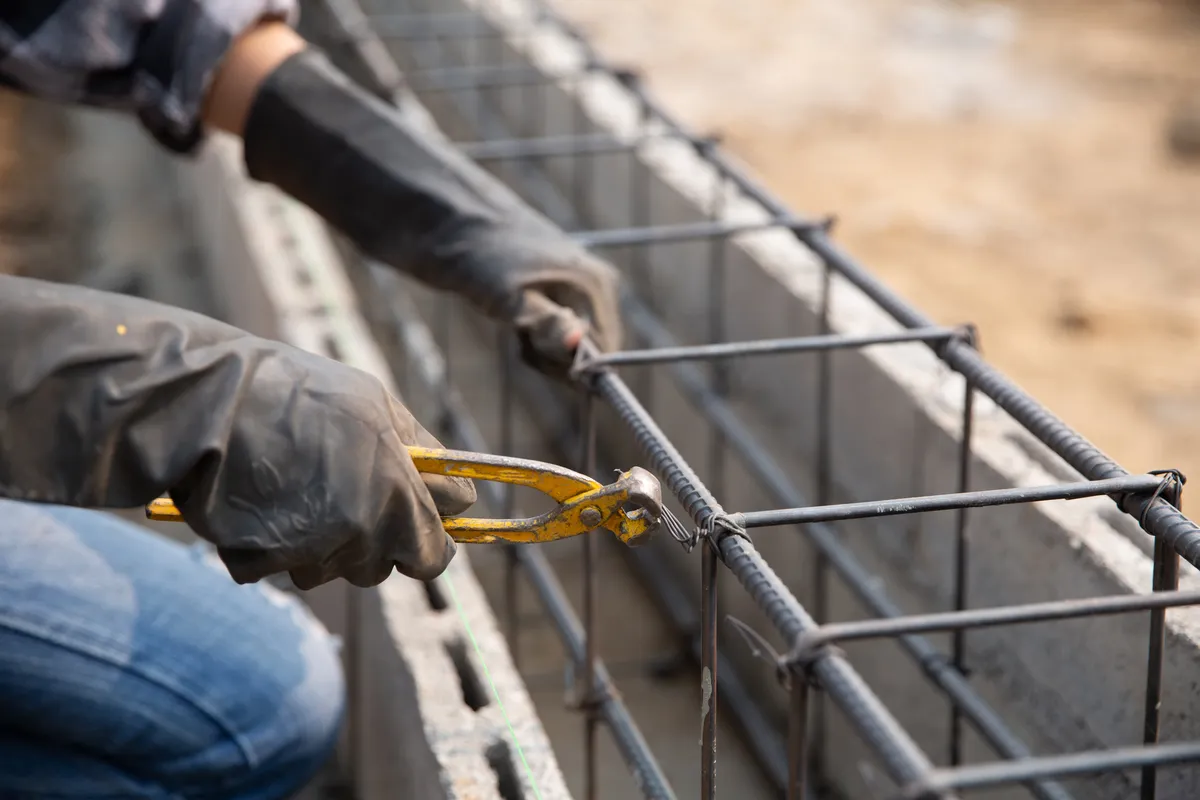
Foundation problems get worse every season
Boston's winters are especially hard on foundations. Each freeze-thaw cycle forces water deeper into existing cracks, expanding them further. What's repairable today may require full reconstruction next year.

Horizontal cracks can become structural emergencies within one winter
Bowing walls risk collapse if soil pressure is not relieved
Foundation repair costs can triple if left untreated for 2+ years
Foundation issues can prevent home sale or reduce offers significantly
6. Water Seeping Through Foundation
Water entering through foundation wall cracks or at the floor-wall joint is a sign of both a structural and waterproofing issue that needs addressing.
Signs Your Foundation Needs
Professional Attention
Foundation problems rarely announce themselves dramatically — they show up as subtle clues
that are easy to dismiss. Here's what Boston homeowners should watch for.
1
Horizontal Cracks
Run parallel to the ground across basement or foundation walls. Almost always caused by lateral soil pressure and hydrostatic force pushing inward. These are the most structurally serious type of crack and indicate wall bowing or failure.
High Severity — Act Immediately
2
Stair-Step Cracks
Follow the mortar joints in a stair-step pattern in brick or concrete block walls. Typically caused by differential settlement — one section of the foundation sinking faster than another. Common in Boston's older masonry homes.
Medium Severity — Repair Soon
3
Diagonal Cracks
Run at a 45° angle, often wider at one end. Usually caused by differential settlement or soil shrinkage. The wider the crack, the more movement has occurred. Diagonal cracks near corners or openings are especially concerning.
Medium Severity — Repair Soon
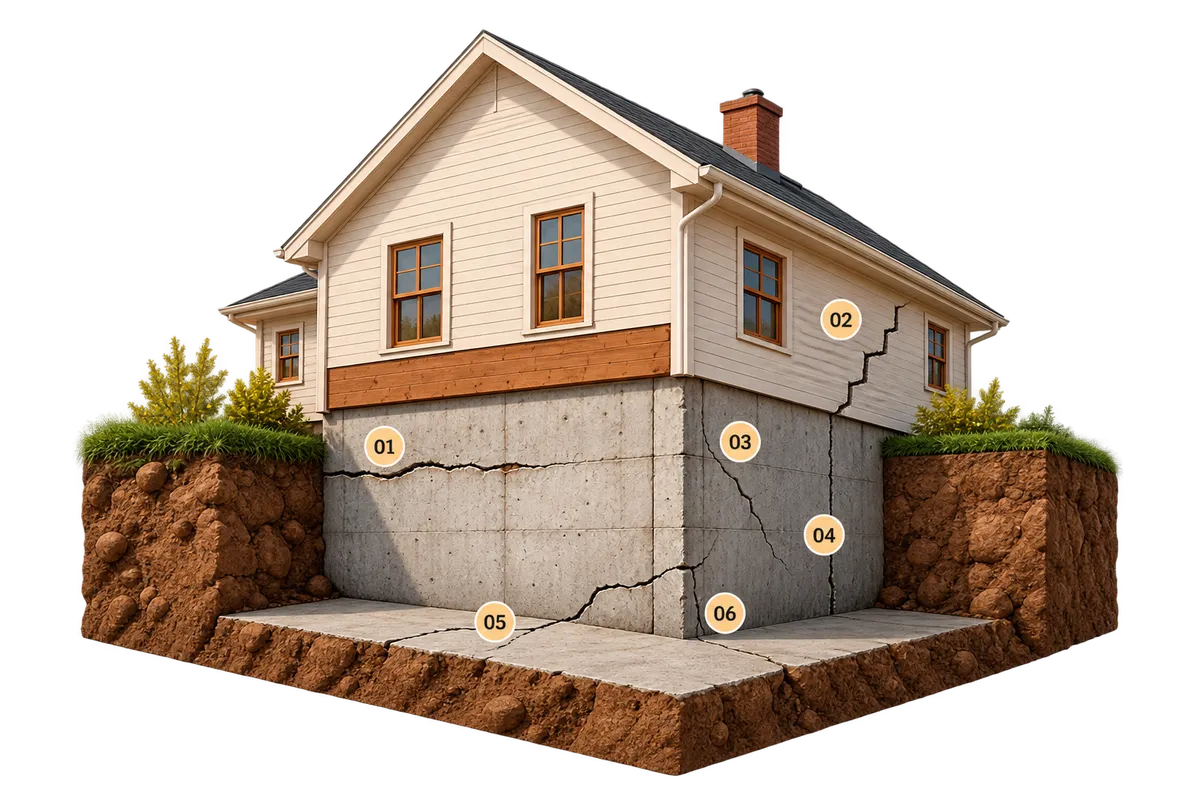
4
Vertical Cracks
Run straight up and down in poured concrete walls. Often result from normal concrete shrinkage during curing. While usually not structural, vertical cracks allow water infiltration and should be sealed to prevent moisture damage.
Lower Severity — Seal & Waterproof
5
Floor Cracks
Appearing in the concrete basement floor slab, these can result from soil settlement, heaving, or poor original installation. Wide floor cracks with displacement on one side indicate active settlement beneath the slab.
Medium Severity — Repair Soon
6
Corner Cracks
Originating at corners of windows, doors, or wall junctions, often caused by stress concentration. Can signal foundation movement or settlement near openings. Widening over time indicates active movement requiring reinforcement.
Medium Severity — Repair Soon
Our Foundation Repair Process
Every foundation repair starts with a thorough diagnosis. We never recommend a repair until we
fully understand the cause — so the fix actually lasts.
1
Free Inspection
A licensed foundation specialist visits your property to assess all visible and accessible areas of your foundation at no charge.
2
Root Cause Analysis
We identify whether the issue is settlement, hydrostatic pressure, soil movement, or structural stress — because the repair depends on the cause.
3
Custom Repair Plan
A detailed, transparent repair proposal outlining the recommended method, materials, timeline, and cost — with no hidden fees.
4
Expert Repair
Our licensed crew executes the repair using proven techniques and commercial-grade materials, with minimal disruption to your property.
5
Final Inspection
A comprehensive post-repair walkthrough ensures every aspect of the work meets our standards before we consider the job complete.
Why Boston Homeowners Trust
Us with Their Foundations
Foundation repair is not the place to cut corners or hire the cheapest
bidder. Here's why homeowners across Boston choose us.

Deep Local Knowledge
We work on Boston's unique housing stock daily — triple-deckers, Victorians, colonials, and mid-century homes. We understand how Boston's soil, frost depth, and building styles affect foundations specifically.

Commercial-Grade Materials
We use the same epoxy injection systems, carbon fiber reinforcement, and pier technology that structural engineers specify for commercial projects — not hardware store products.

Honest Assessments
We tell you what you actually need — not the most expensive option. If a crack only needs sealing, we say so. Our reputation is built on trust, not upselling.

Backed by Warranties
Our foundation repairs come with comprehensive warranties. We stand behind our work long after the crew packs up — giving you lasting confidence in your home's stability.

Fast, Efficient Service
We respond quickly to assessment requests and work efficiently on-site to minimize the time your home is under active repair — without ever rushing the quality of work.

Licensed & Insured
Every technician is licensed, background-checked, and fully insured. You can feel confident knowing your home is in professional, accountable hands from start to finish.
Masonry Services Across Greater Boston & the South Coast
We work with homeowners and businesses throughout Greater Boston, the South Shore, Plymouth County, and the South Coast. Select your town below to see masonry, chimney, foundation, and drainage services specific to your area.
Greater Boston Metro
South Shore
Brockton & Surrounding Towns
Plymouth County
Don't see your town listed? We likely still cover your area, contact us for a free estimate.
Request a Free QuoteRelated Waterproofing & Masonry Services
Foundation repair often goes hand-in-hand with waterproofing and masonry work. We handle it all under one roof — no need to coordinate multiple contractors.

Masonry Services
- Tuckpointing & Repointing
- Brick & Stone Repair
- Mortar Joint Repair
- Concrete Steps & Walkways
- Chimney Repair & Rebuilding

Chimney Services
- Chimney Crown, Cap & Flashing
- Chimney Tuckpointing
- Chimney Leak & Water Damage Repair
- Chimney Rebuilding

Structural Repairs
- Basement Structural Repair
- Wall Stabilization Systems
- Foundation Crack Reinforcement
- Waterproofing Inspections

Waterproofing Services
- Basement Waterproofing & Drainage
- Crawl Space Encapsulation
- Sump Pump Installation & Service
- Interior & Exterior Drainage Systems
- Waterproof Coatings & Sealants
STILL NOT SURE?
Frequently Asked Questions
Answers to the most common questions Boston homeowners ask about foundation repair and inspection.
How do I know if my foundation crack is serious?
The direction and width of a crack are the most telling indicators. Horizontal cracks are the most serious and require immediate attention. Stair-step and diagonal cracks typically indicate settlement and should be evaluated soon. Thin vertical cracks in poured concrete walls are often the result of normal shrinkage and may only need sealing. When in doubt, have a professional assess it — we offer free inspections throughout Boston.
How much does foundation repair cost in Boston?
Foundation repair costs vary widely based on the type, severity, and scope of the problem. Simple crack injections can start around $500–$1,500 per crack. Wall stabilization with carbon fiber straps typically ranges from $4,000–$10,000. Full underpinning with piers can range from $10,000–$30,000+ depending on the number of piers required. The best way to get an accurate estimate is through a free on-site assessment — call us at (857) 249-5127.
Can foundation cracks be permanently repaired?
Yes — when the root cause is addressed properly. Epoxy injection creates a bond stronger than the surrounding concrete. Carbon fiber reinforcement and wall anchors stop bowing walls from moving further. Pier systems stabilize settling foundations permanently by bearing on deep, stable soil. A proper repair addresses both the crack itself and the underlying cause to prevent recurrence.
Will foundation repair disrupt my home?
Most foundation repairs are minimally disruptive. Crack injections and carbon fiber straps are typically completed in one day with limited disruption. Interior drainage systems require breaking up a narrow section of basement floor along the perimeter, but your home remains livable throughout. Exterior work or underpinning requires excavation but is typically completed within a few days. We'll walk you through exactly what to expect before any work begins.
Does homeowners insurance cover foundation repair?
It depends on the cause. Foundation damage resulting from a sudden, accidental event (like a burst pipe or vehicle impact) is often covered. Damage from long-term settlement, poor drainage, or normal wear is typically excluded. Foundation damage caused by flooding is generally not covered by standard homeowners insurance but may be covered by separate flood insurance. We recommend reviewing your policy and consulting your insurer — we can provide detailed documentation to support your claim.
How long does foundation repair take?
Timelines vary by repair type. Crack injection repairs can be completed in a few hours to a single day. Carbon fiber wall reinforcement typically takes one to two days. Pier installation for foundation settlement generally takes two to four days. More extensive structural work or foundation rebuilding may take one to two weeks. We provide a clear timeline during the estimate process so you know exactly what to plan for.
Schedule Your Foundation Inspection Today
Don't wait for a small crack to become a structural emergency. Get a free, honest
assessment from Boston's trusted foundation repair specialists.





Skilled in brick, stone, and chimney work, we deliver durable, high-quality masonry services that keep Boston homes safe, strong, and looking their best.
Skilled in brick, stone, and chimney work, we deliver durable, high-quality masonry services that keep Boston homes safe, strong, and looking their best.