
Retaining Wall Repair: When to Fix vs. Rebuild
A retaining wall does quiet, constant work most homeowners never think about — holding back soil, managing grade changes, and keeping a slope or a section of yard from shifting toward the house. Because that work is mostly invisible day to day, problems often go unnoticed until a retaining wall is visibly leaning, cracking, or crumbling, at which point the question shifts from "is this fine?" to "how serious is this, and what does fixing it actually involve?"
This guide covers the common signs a retaining wall needs attention, what typically causes these problems in Massachusetts specifically, and how to think through the repair-versus-rebuild decision — whether your property falls within our service area or you're simply trying to understand what you're looking at before calling anyone.
What a Retaining Wall Is Actually Holding Back
A retaining wall isn't just a decorative border between two grade levels — it's a structural element resisting the ongoing lateral pressure of soil, and often water, pushing against it. That pressure increases significantly when soil becomes saturated, which is why so many retaining wall failures in New England trace back to drainage problems rather than the wall material itself. Understanding this distinction matters, because a wall that's failing due to trapped water behind it needs a different fix than one failing due to a foundation or footing issue.
Common Signs of Retaining Wall Problems
Leaning or Bulging
A retaining wall that has started to lean outward, or that bulges in the middle, is showing signs of active pressure it can no longer resist. This is one of the clearer indicators that the wall's structural capacity has been exceeded, whether from soil pressure, water buildup, or an inadequate original design.
Cracking
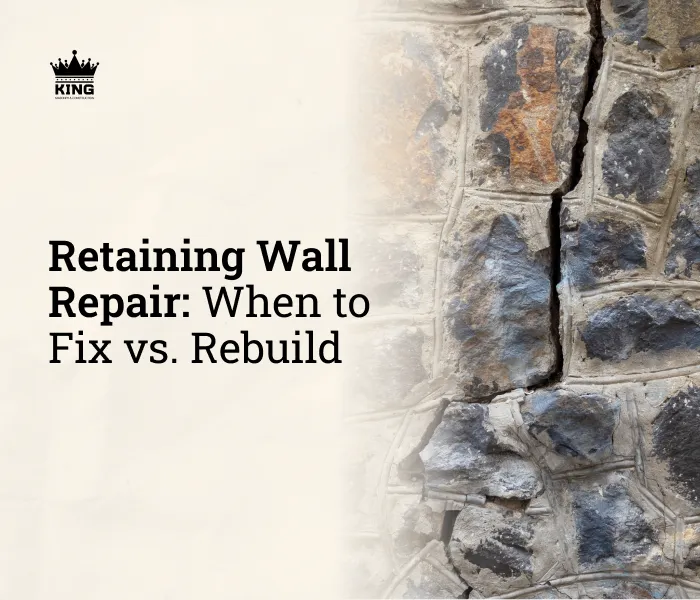
Cracks in a retaining wall — particularly cracks that are widening, running horizontally, or appearing near the base — often indicate the wall is under more stress than it was built to handle. Small vertical hairline cracks in mortar joints are more commonly a maintenance issue; wider or spreading cracks point to something more serious happening behind the wall.
Drainage Issues Behind the Wall
Water pooling at the base of a retaining wall, persistent damp staining, or visible efflorescence on the wall face are signs that water isn't draining properly from behind the structure. This is one of the most common root causes of retaining wall failure, since standing water dramatically increases the lateral pressure the wall has to resist.
Settling or Shifting Sections
If sections of a retaining wall have visibly settled, separated from each other, or shifted out of alignment, this usually indicates a footing or base problem rather than something that can be addressed at the surface.
What Typically Causes Retaining Wall Failure in Massachusetts
Freeze-Thaw Cycles
New England's freeze-thaw pattern is particularly hard on retaining walls. Water that gets into small cracks or joints expands as it freezes, gradually widening gaps and loosening mortar or stone over repeated winter cycles. A wall that looked stable in the fall can show noticeably more movement by spring after a hard winter.
Poor or Failed Drainage
Retaining walls are meant to be built with drainage in mind — typically gravel backfill and weep holes or a drainage pipe that lets water escape rather than build up behind the wall. When drainage wasn't installed correctly, or has become clogged with sediment over time, hydrostatic pressure builds up and pushes against the wall far beyond what it was designed to resist.
Inadequate Original Construction
Some retaining wall problems trace back to how the wall was originally built rather than anything that has changed since. Walls built without a proper footing, without adequate wall thickness for their height, or without any drainage system are more prone to failure regardless of soil or weather conditions, and often need a more substantial rebuild rather than a surface repair.
Root Intrusion
Tree and large shrub roots growing near a retaining wall can exert significant pressure over time, sometimes displacing stones or cracking mortar joints as the root system expands.
Repair vs. Rebuild: How to Think Through the Decision
Not every retaining wall issue requires a full rebuild. A wall with isolated mortar cracking, minor efflorescence, or a small section of loose stone can often be repaired in place, particularly if the underlying drainage is functioning correctly and the wall's overall structure is sound.
A full or partial rebuild becomes the more realistic option when a wall shows significant leaning or bulging across a large section, when the footing itself has failed, or when the original construction lacked proper drainage — since retrofitting drainage behind an intact wall is often more difficult and less reliable than rebuilding with it designed in from the start. A professional assessment is the most reliable way to know which category a given wall falls into, since the visible symptoms of a minor issue and a serious one can look surprisingly similar from the outside.
Materials Commonly Used in Retaining Wall Construction and Repair
Retaining walls are built from a range of materials, each with different strengths depending on the wall's height, the soil conditions, and the look a homeowner wants. Natural stone — either dry-stacked or mortared — remains a popular choice in Massachusetts for its durability and traditional New England appearance. Brick and concrete block are also common, particularly for shorter walls, while poured concrete is typically reserved for taller walls that need to resist significant lateral load. The right material depends heavily on the specific site conditions, which is part of why a wall that works well on one property isn't automatically the right approach for a similar-looking wall next door.
Why Drainage Deserves as Much Attention as the Wall Itself
It's worth repeating: most retaining wall failures are ultimately drainage failures. A wall repaired or rebuilt without addressing why water was accumulating behind it in the first place is likely to develop the same problem again, regardless of how well the visible masonry work is done. Proper drainage — gravel backfill, a perforated pipe system, and weep holes at appropriate intervals — is what allows a retaining wall to actually do its job over the long term rather than simply looking repaired in the short term.
Get Expert Help
Frequently Asked Questions
How do I know if my retaining wall needs to be repaired or completely rebuilt?
It depends on the extent and cause of the damage. Isolated cracking or minor settling with functioning drainage can often be repaired, while widespread leaning, footing failure, or a lack of proper drainage typically points toward a rebuild. A professional inspection is the most reliable way to determine which applies to your wall.
What causes a retaining wall to lean or bulge over time?
The most common cause is water pressure building up behind the wall due to inadequate or failed drainage, though freeze-thaw cycles, poor original construction, and root intrusion can also contribute.
Can I repair a cracked retaining wall myself?
Minor surface cracks in mortar joints are sometimes reasonable for a homeowner to patch, but cracks that are widening or connected to leaning or drainage issues indicate a structural problem that needs professional evaluation rather than a surface fix.
How long do retaining walls typically last?
This varies significantly based on material, drainage design, and local conditions, but a well-built retaining wall with proper drainage can last several decades, while one with drainage problems may show significant issues within just a few years.
Does homeowners insurance cover retaining wall repair?
This depends entirely on your specific policy and the cause of the damage. Gradual wear or drainage-related failure is typically not covered, while damage from a sudden, specific event may be treated differently. Reviewing your policy or speaking with your insurer is the most reliable way to know what applies to your situation.