
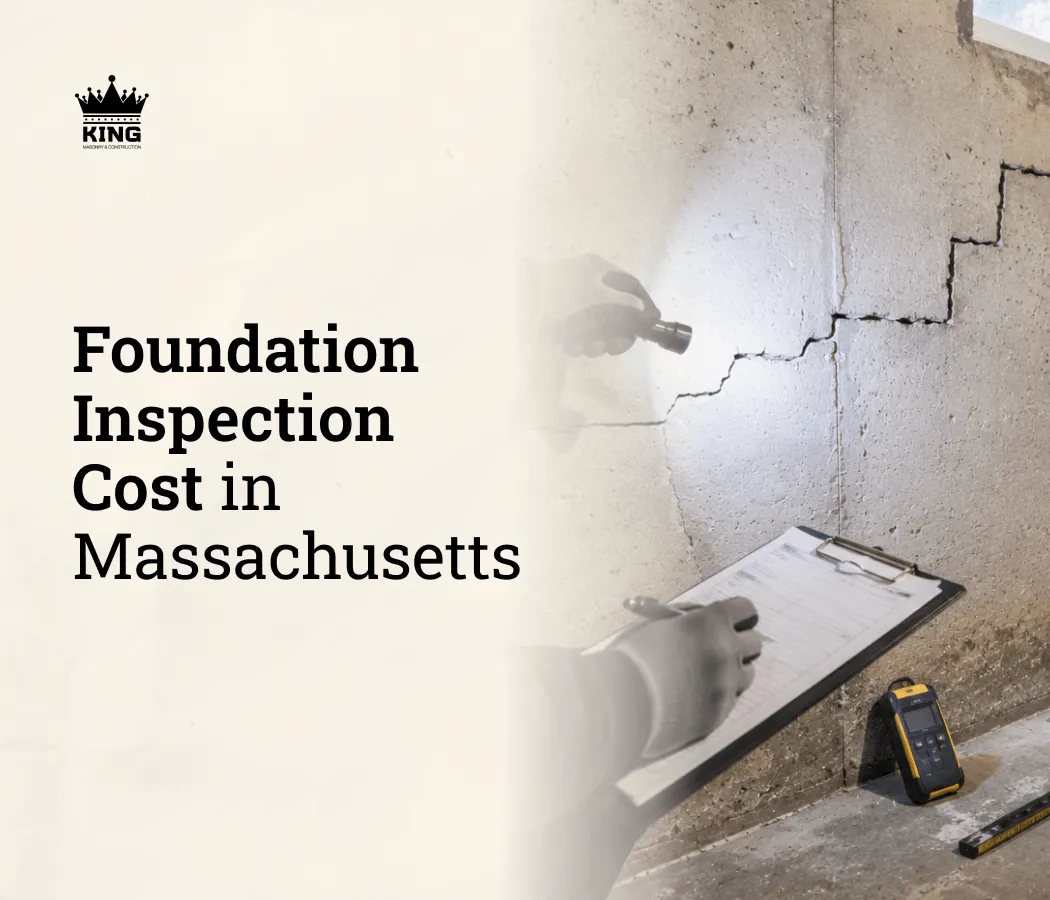
Foundation Inspection Cost in Massachusetts
Foundation inspection costs in Massachusetts depend on the type of evaluation, the qualifications of the professional performing it, and whether formal engineering documentation is required.
Many foundation contractors offer complimentary on-site evaluations as part of their repair estimating process. Independent structural engineers generally charge for professional assessments, written reports, and specialized testing.
The appropriate inspection depends on your situation. Homeowners with visible foundation cracks, minor water intrusion, or general repair concerns may begin with a contractor evaluation. However, insurance claims, real estate transactions, lender requirements, and significant structural concerns may call for an independent structural engineer's assessment.
This guide explains what a foundation inspection includes, when a free contractor evaluation may be sufficient, when a paid engineering inspection is appropriate, and how to find qualified foundation professionals across Greater Boston, the South Shore, and the South Coast.
Foundation Inspection Cost in Massachusetts: Quick Reference
Inspection Type | Cost Considerations | When You Need It |
|---|---|---|
Contractor foundation inspection | Often complimentary as part of the repair estimating process | Initial evaluation, visible damage, and repair estimates |
Pre-purchase home inspection | Generally included in the overall home inspection fee | Real estate transactions and general property assessments |
Structural engineer's assessment | Professional consultation fees typically apply | Independent opinions and ambiguous structural concerns |
Stamped engineer's report | Additional cost for formal documentation and engineering review | Permits, lender requirements, and certain insurance claims |
Specialized foundation evaluation | Higher cost due to equipment, testing, or additional professional services | Detailed settlement analysis, crack monitoring, and soil investigations |
Insurance-related foundation inspection | Depends on documentation and professional requirements | Evaluating foundation damage associated with an insurance claim |
Litigation or expert witness evaluation | Specialized professional fees and reporting requirements | Construction disputes, property damage claims, and legal proceedings |
The biggest factor affecting foundation inspection costs is often the level of documentation required.
A contractor's evaluation focuses on identifying visible issues and preparing a repair proposal.
A structural engineer may provide an independent assessment of the foundation's condition, evaluate structural concerns, and prepare formal documentation when required.
More specialized investigations may involve additional testing, monitoring, or engineering analysis.
What's Included in a Professional Foundation Inspection?
A thorough foundation inspection should evaluate the visible condition of the foundation and relevant areas of the building.
The exact scope depends on whether the inspection is being performed by a contractor, home inspector, or structural engineer.
Common areas of evaluation include the following.
Exterior Foundation Walls
An exterior inspection involves examining accessible foundation walls and the surrounding property.
The inspector may look for:
Visible foundation cracks
Wall displacement
Bulging or leaning masonry
Signs of settlement
Water staining
Deteriorated concrete or mortar
Separation between building components
Evidence of previous foundation repairs
Different foundation materials can develop different types of problems.
Historic brick foundations in Brookline, concrete block foundations in Dedham, and coastal properties along the South Coast may show different patterns of deterioration.
Understanding the construction type helps the inspector interpret the visible conditions.
Interior Basement or Crawl Space Walls
An interior inspection can reveal foundation problems that may not be visible from outside.
The inspector examines accessible basement or crawl space walls for cracking, movement, moisture damage, and deterioration.
Common findings may include:
Stair-step cracks in concrete block or brick
Horizontal cracks in poured concrete
Vertical foundation cracks
Efflorescence on masonry
Water staining
Bowing walls
Deteriorating mortar
Separation at construction joints
Crack patterns can provide clues about the forces affecting the structure, but they do not establish the underlying cause without further assessment.
For more information, read our guide to types of foundation cracks.
Floor Levelness and Settlement
Uneven floors may indicate foundation settlement, framing problems, or other structural conditions.
Depending on the purpose of the inspection, a professional may use leveling equipment to evaluate floor elevations and identify areas of concern.
The evaluation may include:
Sloping floors
Localized settlement
Changes in floor elevation
Uneven support conditions
Visible movement around structural connections
Not every uneven floor indicates foundation failure.
Older homes may have existing irregularities related to construction methods, framing deterioration, or historical settlement.
A qualified professional should evaluate whether the condition is stable or requires additional investigation.
Door and Window Operation
Foundation movement can sometimes affect how doors and windows function.
Warning signs may include:
Doors that no longer latch properly
Windows that become difficult to open or close
New gaps around door frames
Cracks near window openings
Separation between trim and surrounding walls
These symptoms can also result from ordinary building movement, humidity changes, or framing conditions.
An inspection helps determine whether they may be related to foundation movement.
Drainage and Grading Assessment
Water intrusion and drainage problems can contribute to foundation deterioration.
A comprehensive evaluation should consider conditions around the property that may direct water toward the building.
Relevant areas include:
Gutters and downspouts
Surface grading
Water accumulation near the foundation
Exterior drainage systems
Basement moisture
Foundation wall staining
Existing sump pump systems
Identifying drainage problems is important because structural repairs may not address the source of recurring moisture.
Basement or Crawl Space Floor
The inspector may examine the accessible basement or crawl space floor for signs of settlement, cracking, water intrusion, and deterioration.
Areas of concern may include:
Cracks in concrete slabs
Settlement near foundation walls
Water entry at floor-wall joints
Deteriorated support posts
Damaged foundation piers
Standing water
Moisture-related framing damage
The findings help determine whether additional inspection or repair work may be appropriate.
Written Findings and Photo Documentation
The documentation provided depends on the inspection service.
A contractor may prepare a written repair estimate that identifies visible conditions and proposed work.
A structural engineer may provide a more detailed professional assessment, including findings, recommendations, and formal documentation when included in the engagement.
Homeowners should ask what documentation will be provided before scheduling the inspection.
When You Actually Need a Foundation Inspection
Not every foundation crack indicates a serious structural problem.
However, certain conditions warrant professional evaluation, particularly when movement, water intrusion, or deterioration appears to be progressing.
Common Warning Signs
Horizontal Foundation Cracks
Horizontal cracks in concrete or masonry walls can be associated with lateral pressure, movement, or other structural conditions.
These cracks should be evaluated to determine their cause and significance.
Stair-Step Cracks
Stair-step cracks follow mortar joints in brick or concrete block walls.
They may develop because of settlement, structural movement, thermal effects, or other causes.
Learn more in our guide to stair-step cracks and foundation trouble.
Active Water Intrusion
Water entering through foundation cracks or joints may indicate waterproofing, drainage, or structural concerns.
The source of the moisture should be identified before selecting a repair method.
Sloping or Springy Floors
Floors that become noticeably uneven, bouncy, or unstable may indicate foundation movement or weakened structural framing.
Doors and Windows Becoming Difficult to Operate
Changes in door and window operation can sometimes accompany structural movement.
Gaps Between Building Components
New separation between trim, ceilings, siding, window frames, or adjoining masonry may indicate building movement.
Real Estate Transactions
Buyers and sellers may request foundation evaluations when visible concerns arise during a home inspection.
Insurance Claims
Foundation damage associated with an insurance claim may require professional documentation.
Conflicting Repair Recommendations
When contractors recommend substantially different repairs, an independent structural engineer can help clarify the condition and appropriate corrective approach.
For a broader explanation of warning signs, see our guide to common signs of foundation problems.
When Should You Schedule an Inspection?
Consider requesting an evaluation when foundation damage is new, appears to be worsening, or is accompanied by related symptoms such as water intrusion or changes in floor levelness.
Significant movement, visibly unstable walls, or other conditions suggesting an immediate structural hazard should be assessed promptly by an appropriately qualified professional.
Concerned About Your Foundation?
Kings Masonry & Construction provides on-site foundation evaluations across Greater Boston and the South Shore.
Our team can inspect accessible foundation areas, discuss visible concerns, and provide recommendations related to potential repair work.
If an independent structural engineering evaluation is needed, homeowners should arrange the appropriate professional assessment.
Free vs. Paid Foundation Inspections
A common question among Massachusetts homeowners is whether a complimentary contractor evaluation provides enough information or whether they should hire a structural engineer.
The answer depends on the purpose of the inspection.
Free Contractor Foundation Inspections
Many foundation contractors offer complimentary evaluations as part of their estimating process.
These appointments typically focus on assessing visible foundation concerns and determining whether repair services may be appropriate.
A contractor evaluation may include:
Visual inspection of accessible foundation walls
Review of visible cracks
Assessment of moisture concerns
Examination of relevant basement or crawl space conditions
Discussion of possible repair methods
A written estimate for recommended work
The scope varies by company.
Some contractors may provide photographs and detailed written findings, while others provide a repair proposal based on a visual assessment.
A contractor evaluation should not automatically be treated as equivalent to a structural engineering inspection.
Why Contractors Offer Free Evaluations
Contractors often provide complimentary assessments because the evaluation is part of their process for estimating potential repair work.
Homeowners can use these appointments to understand possible repair options and associated costs.
However, the contractor may have a commercial interest in the recommended work.
For significant structural concerns or expensive repairs, an independent professional opinion may provide additional reassurance.
Paid Structural Engineer Inspections
A structural engineer evaluates the foundation from an engineering perspective.
The scope may include structural observations, analysis of movement, review of building conditions, and recommendations regarding further investigation or repair.
Depending on the engagement, the engineer may provide a written report or stamped documentation.
A structural engineer's evaluation may be appropriate for:
Insurance Claims
Some claims require documentation from an independent qualified professional.
The exact requirements depend on the insurer, policy, and nature of the damage.
Real Estate Transactions
Buyers or sellers may request an engineer's opinion when a home inspection identifies potential structural concerns.
Lender Requirements
Mortgage lenders may request additional documentation when significant foundation issues are identified.
Permit Requirements
Certain structural repairs may require engineering drawings, calculations, or other documentation.
Conflicting Contractor Opinions
An independent engineer can help evaluate competing diagnoses and proposed repair methods.
Legal Disputes
Construction defect claims and property disputes may require formal expert evaluations.
Which Inspection Should You Choose?
For visible maintenance concerns or obtaining repair estimates, a contractor evaluation can be a useful starting point.
For substantial structural movement, unclear causes of damage, disputed findings, or formal documentation requirements, an independent structural engineer may be the more appropriate choice.
Homeowners should choose the inspection based on the information and professional documentation they actually need.
Foundation Repair Cost Planning Guide
Once foundation problems have been identified, homeowners often want to understand how much repairs may cost.
However, an accurate estimate requires assessment of the actual property.
Foundation repair costs vary according to the type of damage, foundation materials, soil conditions, repair method, and accessibility.
Common Foundation Problems and Repair Considerations
Foundation Concern | Possible Repair Approach | Main Cost Factors |
|---|---|---|
Hairline concrete cracks | Monitoring or appropriate crack treatment | Crack condition, accessibility, and repair requirements |
Active leaking cracks | Polyurethane injection or other waterproofing repairs | Water intrusion, crack condition, and drainage |
Bowing foundation walls | Engineered reinforcement, wall anchors, or other structural solutions | Wall condition, movement, and reinforcement design |
Settling foundation | Push piers, helical piers, or other stabilization methods | Soil conditions, structural loads, and access |
Historic fieldstone deterioration | Repointing, masonry repair, or structural reinforcement | Material compatibility and extent of deterioration |
Complex foundation problems | Combined structural, masonry, and drainage repairs | Multiple affected components and overall repair scope |
These are general examples rather than repair recommendations for a specific property.
A qualified professional should determine the cause of the problem before recommending corrective work.
Factors That Influence Foundation Repair Costs
Foundation Material
Poured concrete, concrete block, brick, and fieldstone foundations require different materials and repair methods.
Extent of Damage
Localized cracking generally involves less work than widespread settlement or extensive wall deterioration.
Soil Conditions
Unstable soils, groundwater, and difficult excavation conditions may affect repair design and installation.
Property Accessibility
Tight lots, finished basements, and limited equipment access can increase labor requirements.
Structural Requirements
Repairs involving significant movement may require engineered solutions or additional professional oversight.
Drainage and Waterproofing
If moisture contributed to the damage, addressing the water source may be an important part of the project.
How to Plan Your Foundation Repair Budget
Before committing to foundation repairs, request a written evaluation identifying the observed problems and proposed scope.
A useful estimate should explain the repair method, materials, labor, permits, exclusions, and any additional services that may be required.
For projects involving significant structural work, independent engineering advice may also be appropriate.
For more information about foundation repair methods and cost considerations, read our guide to foundation crack repair costs in Boston.
How to Find a Licensed Foundation Contractor Near You
Searching for "foundation contractors near me" or "foundation inspection near me" can return a wide range of service providers.
Before hiring a contractor, verify relevant qualifications, experience, insurance, and the proposed scope of work.
Massachusetts Construction Supervisor License
Certain structural foundation projects in Massachusetts require a contractor with the appropriate Construction Supervisor License, commonly called a CSL.
The applicable license requirements depend on the building and work being performed.
Ask the contractor about the license classification relevant to your project.
You can verify licensing information through the appropriate Massachusetts state resources.
Home Improvement Contractor Registration
Massachusetts residential contracting projects may also fall under Home Improvement Contractor registration requirements.
The applicability of these requirements depends on the nature of the work and the property.
Ask contractors to provide their registration details where applicable and verify them through official state records.
General Liability and Workers' Compensation Insurance
Contractors should carry insurance appropriate to their operations and the proposed project.
Request current proof of general liability coverage and applicable workers' compensation insurance.
Review the insurance documentation and confirm any additional coverage requirements before work begins.
Local References
Ask contractors about recently completed foundation projects in nearby Massachusetts communities.
Relevant experience may include:
Poured concrete foundation repairs
Concrete block wall reinforcement
Fieldstone masonry repairs
Foundation settlement stabilization
Basement waterproofing
Crawl space structural repairs
Examples of comparable work can help demonstrate whether the contractor has experience with your property's foundation type.
Knowledge of Regional Conditions
Massachusetts foundation problems vary with soil conditions, groundwater, construction methods, and property location.
A contractor familiar with Greater Boston, the South Shore, and the South Coast may have experience addressing common regional challenges.
However, familiarity with the area does not replace an inspection of the actual property.
Written and Itemized Scope of Work
A foundation repair estimate should clearly identify:
Observed foundation concerns
Recommended repairs
Materials
Labor
Permitting responsibilities
Engineering requirements
Warranty terms
Cleanup and restoration
Exclusions
Procedures for additional work
Clear documentation allows homeowners to compare proposals more effectively.
Kings Masonry & Construction provides foundation, basement, drainage, and masonry services throughout the region.
Visit our Massachusetts service area page to learn more about the communities we serve.
Red Flags in Foundation Inspection Reports
Whether you receive a contractor evaluation or an independent engineering report, review the findings carefully.
Some conditions deserve closer attention, while certain reporting practices may indicate that further clarification is needed.
Horizontal Foundation Cracks
Horizontal cracks in poured concrete or masonry walls can indicate lateral pressure, movement, or other structural concerns.
The inspector should evaluate the crack pattern, surrounding wall conditions, and possible contributing factors.
Read our guide to horizontal vs. vertical foundation cracks for additional information.
Stair-Step Cracking
Stair-step cracks in brick or concrete block walls can be associated with differential movement.
However, crack patterns alone do not establish the cause.
The evaluation should consider foundation movement, moisture exposure, construction conditions, and related symptoms.
Sloping Floors
Uneven floors may result from foundation settlement, weakened framing, or historical building conditions.
The report should explain whether the observed conditions indicate an active problem or require further monitoring.
Cracks Around Corners and Openings
Cracks near windows, doors, and building corners may develop where structural stresses are concentrated.
These patterns can warrant additional assessment, particularly when accompanied by other signs of movement.
Monitoring Recommendations Without Clear Instructions
If an inspection report recommends monitoring, it should explain what conditions should be observed.
Useful guidance may include:
Which cracks or areas require monitoring
What changes to watch for
How findings should be documented
When follow-up evaluation is appropriate
What conditions would require further investigation
General advice to monitor a problem without additional explanation may leave homeowners uncertain about what to do next.
Repair Recommendations Without Explanation
A foundation repair recommendation should identify the problem the proposed work is intended to address.
Common solutions may include:
Push piers
Helical piers
Carbon fiber reinforcement
Wall anchors
Crack injection
Masonry reconstruction
Drainage improvements
Not every method is suitable for every problem.
Ask the contractor or engineer to explain why the recommended approach is appropriate and whether alternatives should be considered.
What to Do After the Inspection
The appropriate next steps depend on the inspection findings.
When No Significant Structural Problems Are Found
An evaluation may identify cosmetic cracks, minor deterioration, or conditions that do not currently require major structural repairs.
Recommendations may include:
Routine maintenance
Monitoring existing cracks
Improving exterior drainage
Correcting grading problems
Addressing minor water intrusion
Scheduling follow-up evaluations if conditions change
Avoid undertaking major structural repairs without a clear reason.
A good inspection should help distinguish between conditions requiring corrective work and those that can reasonably be monitored.
When Foundation Problems Are Identified
If the inspection reveals settlement, wall movement, structural deterioration, or other significant concerns, request a clear explanation of the findings.
Before approving major work:
Understand the proposed diagnosis
Ask how the repair will address the cause
Review the scope of work
Confirm contractor qualifications
Discuss engineering requirements
Review permits and inspection responsibilities
Request written pricing
Understand warranty terms
Clarify exclusions and potential additional work
When the diagnosis is uncertain or the recommended repair is extensive, consider obtaining an independent structural engineering opinion.
Understanding the Purpose of the Inspection
A foundation inspection should help homeowners make informed decisions.
It is not automatically a recommendation to begin construction.
The findings should explain the observed conditions, identify concerns, and establish whether maintenance, additional evaluation, monitoring, or repairs are appropriate.
Schedule a Free On-Site Foundation Inspection
If you're concerned about foundation cracks, basement wall movement, moisture intrusion, or uneven floors, an on-site evaluation can help identify visible problems and possible next steps.
Kings Masonry & Construction provides foundation evaluations and repair estimates throughout Greater Boston, the South Shore, and the South Coast.
Our team can review accessible foundation areas, evaluate visible concerns, discuss suitable repair options, and provide a written estimate for proposed work.
Where independent structural engineering documentation is necessary, the appropriate professional assessment should be arranged.
Serving Brookline, Newton, Dedham, Braintree, Hingham, Weymouth, Plymouth, New Bedford, Brockton, Wareham, Marshfield, Dartmouth, and surrounding Massachusetts communities.
Frequently Asked Questions
How Much Does a Foundation Inspection Cost in Massachusetts?
Foundation inspection costs in Massachusetts depend on the type of professional evaluation required.
Many foundation contractors offer complimentary visual assessments as part of their repair estimating process.
Independent structural engineers generally charge for professional inspections, written reports, and engineering documentation.
Specialized evaluations involving detailed measurements, monitoring, or soil investigations may involve additional costs.
Before scheduling, confirm the inspection scope, professional qualifications, and documentation included in the service.
Is a Free Foundation Inspection Actually Useful?
A complimentary contractor inspection can be useful for homeowners who want an initial assessment of visible foundation concerns or a repair estimate.
An experienced contractor may identify cracking, water intrusion, deteriorating masonry, or other conditions that warrant attention.
However, free evaluations vary in scope and may not include formal engineering analysis.
For significant structural concerns, unclear diagnoses, or situations requiring independent documentation, a structural engineer's evaluation may be more appropriate.
How Do I Find a Licensed Foundation Contractor Near Me?
Look for contractors with experience in the type of foundation work your property requires.
Verify applicable Massachusetts licensing and registration requirements, request proof of insurance, and review examples of comparable local projects.
Ask for a written scope that identifies the proposed repair method, materials, permitting responsibilities, warranty terms, and exclusions.
Local experience with Massachusetts soil conditions, groundwater, and foundation construction can also be valuable.
How Accurate Is a Foundation Repair Cost Calculator?
Online foundation repair calculators can provide general planning guidance, but they cannot replace an on-site inspection.
Actual foundation repair costs depend on soil conditions, structural damage, foundation material, access, repair methods, and engineering requirements.
A calculator may help homeowners understand which types of repairs are generally more complex, but it cannot reliably diagnose structural conditions or establish a final project price.
Use a professional inspection and written estimate when planning foundation repairs.
What's the Difference Between a Contractor Inspection and an Engineer's Inspection?
A contractor inspection generally focuses on identifying visible foundation problems and preparing a repair proposal.
It may be offered without charge as part of the contractor's estimating process.
A structural engineer's inspection provides an independent professional assessment that may include structural analysis, formal findings, and stamped documentation when required.
An engineer's report may be appropriate for structural concerns, permitting, lender reviews, insurance matters, or legal disputes.
The appropriate inspection depends on the homeowner's needs and the requirements of the situation.
How Often Should I Have My Foundation Inspected?
Foundation inspection frequency depends on the age and condition of the property, known structural concerns, and environmental conditions.
Homeowners should periodically check accessible foundation areas for visible cracking, moisture intrusion, movement, or deterioration.
Properties with known foundation problems may require a monitoring schedule recommended by a qualified professional.
An additional inspection may be appropriate when symptoms change, severe weather causes visible damage, or a property is being purchased or sold.
A qualified inspector or structural engineer can recommend follow-up intervals based on the actual findings.