
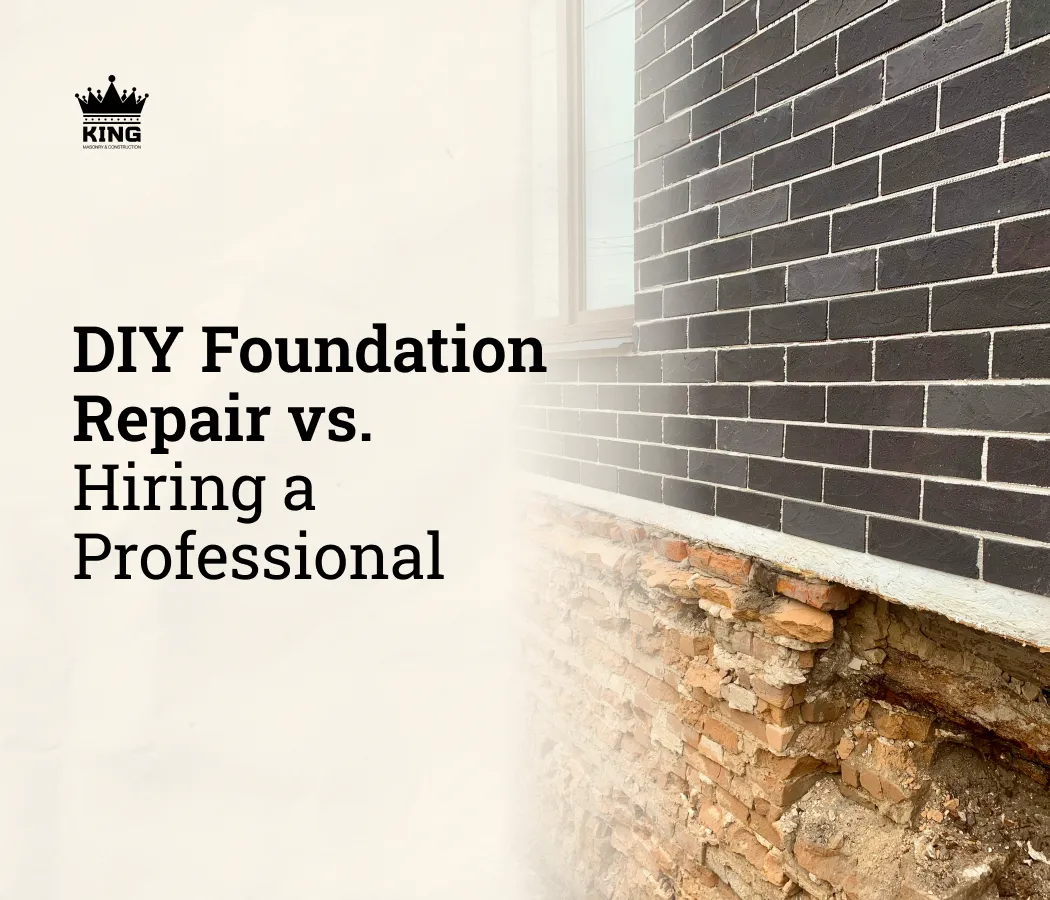
DIY Foundation Repair vs. Hiring a Professional
A quick search for foundation crack repair turns up plenty of caulk tubes, epoxy kits, and hydraulic cement products marketed directly to homeowners. For very minor, cosmetic issues, some of these DIY foundation repair products can be reasonable stopgap measures. But foundation problems exist on a wide spectrum, and treating a structural issue like a cosmetic one can mask a much bigger problem while it continues to worsen underneath a fresh patch.
Here is how to think about the DIY foundation repair vs. professional decision, based on what the damage actually indicates.
When a DIY Approach Might Be Reasonable
Very small, stable hairline cracks in poured concrete that are not actively leaking and have not changed in width over time are sometimes reasonable candidates for a homeowner-applied sealant, primarily to prevent minor moisture seepage. This is a cosmetic and preventive measure, not a structural repair — and it's roughly the outer limit of where DIY foundation repair makes sense.
When You Need a Professional Evaluation
Active Water Intrusion
If water is actively coming through a crack or wall, a surface product will not address the underlying drainage or hydrostatic pressure issue causing it. A patched leak often resurfaces elsewhere on the same wall within a season or two.
Cracks That Are Growing or Wide
Cracks wider than roughly a quarter inch, or ones that are visibly changing over a few months, point to ongoing movement rather than old, settled damage. This requires an assessment of the underlying cause, not just a filler.
Bowing, Leaning, or Shifting Walls
Any wall that is bowing inward, leaning, or has visibly shifted from its original position is a structural concern. This is well outside the scope of a DIY fix and can pose a safety risk if left unaddressed.
The Cost Trade-Off of DIY vs. Professional Repair
Part of what makes DIY foundation repair tempting is the upfront cost difference — a tube of hydraulic cement or an epoxy kit runs a fraction of what a professional assessment and repair typically cost. But that comparison only holds up if the underlying cause of the damage is genuinely cosmetic. When a DIY patch is applied to a structural issue, the homeowner often ends up paying twice: once for the patch that didn't solve anything, and again later for the professional repair that addresses the actual cause, frequently at a higher cost than if it had been handled correctly the first time.
This is why getting a written estimate and clear diagnosis upfront is worth the time, even if the DIY route still ends up being the right call for a minor issue. Knowing the actual cause changes the calculation entirely — a homeowner who understands they're dealing with a genuinely cosmetic, stable hairline crack can proceed with a sealant with real confidence, rather than guessing.
What a Professional Assessment Actually Involves
One reason DIY foundation repair is hard to evaluate on your own is that diagnosing the cause of a crack requires more than a visual check. A professional assessment typically includes measuring crack width and monitoring for change, checking the surrounding grading and drainage patterns, examining the crack's orientation and location relative to load-bearing points, and, in some cases, using moisture meters or other diagnostic tools to understand what's happening behind the visible surface.
This is also where homeowners sometimes discover that what looked like an isolated issue is connected to a broader concern — for example, a crack near a corner of the foundation that's actually related to exterior drainage carrying water toward that specific point rather than away from the house. A surface patch wouldn't reveal or resolve that connection, but a proper inspection would.
Making the Right Call for Your Situation
If you're still unsure which category your situation falls into, a reasonable rule of thumb is this: if you can point to a clear, unchanging hairline crack with no moisture and no other symptoms elsewhere in the home, a DIY sealant is a low-risk starting point. If there's any water, any movement, any width beyond a hairline, or any other sign elsewhere in the home — a sticking door, an uneven floor, a separating trim piece — it's worth getting a second opinion before reaching for a patch kit. The cost of a professional evaluation is small relative to the cost of misdiagnosing a structural issue and letting it progress unaddressed for another year or two.
The Risk of Masking a Structural Problem
The biggest risk of a DIY approach on anything beyond a cosmetic crack is that a surface patch can hide visible warning signs while the underlying cause poor drainage, soil pressure, or settlement continues unaddressed. By the time the problem resurfaces, it is often more extensive, and more disruptive, than it would have been if diagnosed early. This is one of the main reasons a trustworthy foundation repair contractor will want to inspect the full picture before recommending a fix, rather than just treating the visible symptom. Once you've decided to bring in a professional, our guide on how to find the right foundation repair contractor covers what to look for and the questions to ask.
For related guidance, take a look at our contact us page.
Frequently Asked Questions
Can I use hydraulic cement to fix a foundation crack myself? For a small, stable, non-structural crack, hydraulic cement can offer a temporary seal against minor moisture. It does not address why the crack formed, so it is best treated as a short-term measure rather than a permanent fix for anything beyond cosmetic damage.
How do I know if a crack is structural or cosmetic? Structural cracks tend to be wider, horizontal or stair-stepped, actively growing, or accompanied by other signs like bowing walls or sticking doors. A professional evaluation is the most reliable way to tell the difference with confidence.
Is it dangerous to ignore a bowing basement wall? Yes, over time bowing indicates ongoing pressure against the wall that can progress to cracking, structural failure, or wall collapse if left unaddressed. This is one of the clearest signs that professional evaluation is needed rather than a DIY approach.
Will DIY foundation repair void a home warranty or insurance claim? It can, depending on your policy or warranty terms. Unlicensed or undocumented repair work sometimes complicates future claims, so it's worth checking your specific coverage before attempting repairs yourself.
What tools do professionals use that homeowners typically don't have access to? Professionals often use structural reinforcement systems, engineered carbon fiber or steel bracing, epoxy or polyurethane injection systems for deep cracks, and diagnostic tools to assess soil and drainage conditions — none of which are part of typical consumer DIY kits.