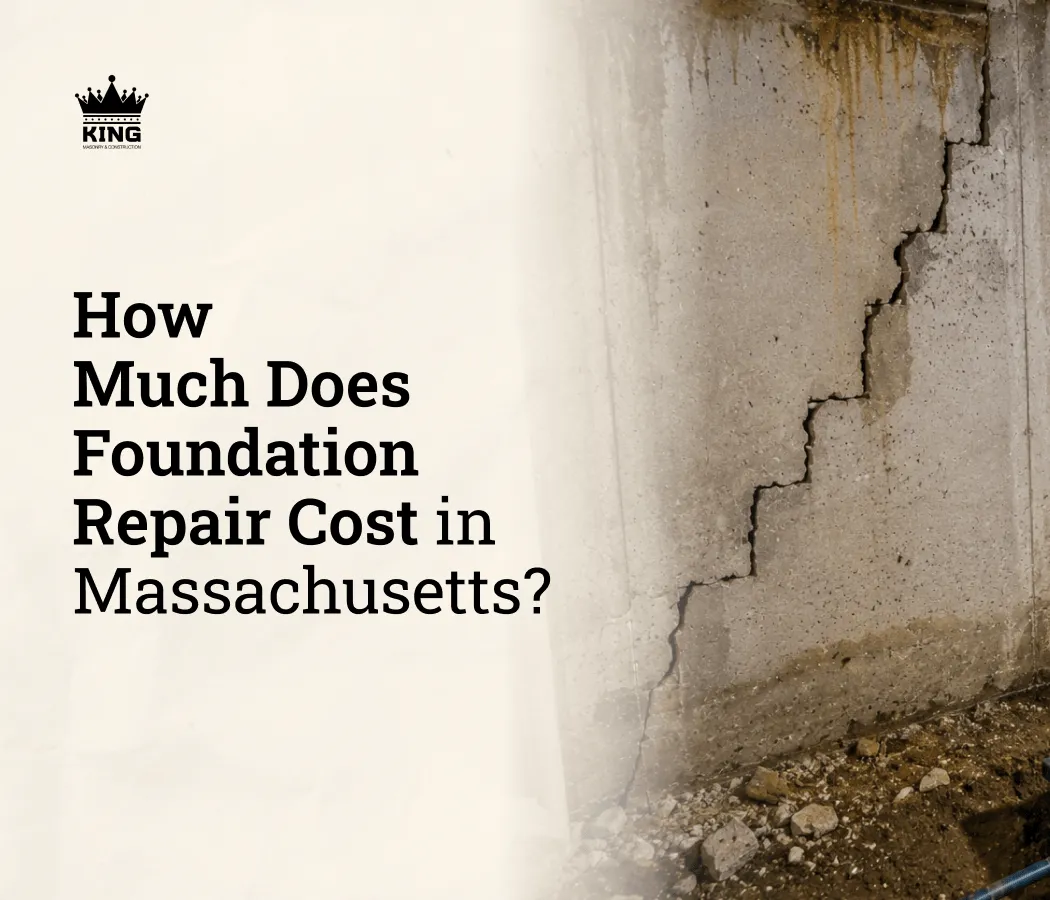
How Much Does Foundation Repair Cost in Massachusetts?
Foundation repair costs in Massachusetts vary significantly depending on the type of damage, the repair method required, soil conditions, and property accessibility.
Minor foundation crack repairs are generally more affordable than structural reinforcement or foundation stabilization. More extensive repairs involving push piers, helical piers, bowing walls, or deteriorating fieldstone foundations typically require a larger investment.
The actual cost depends on the repair method, the extent of the damage, the materials required, and whether the foundation is poured concrete, concrete block, or historic fieldstone.
This guide explains the common foundation repair methods used across Greater Boston, the South Shore, and the South Coast, along with the factors that influence pricing and how to choose the right solution for your property.
Foundation Repair Cost in Massachusetts: Quick Reference
Repair Method | Cost Considerations | When It's Used |
|---|---|---|
Polyurethane crack injection | Generally among the more affordable repair options | Active water leaks through stable cracks |
Epoxy crack injection | Cost depends on crack condition and accessibility | Structural bonding of non-moving cracks |
Carbon fiber straps | Depends on the extent of wall movement and reinforcement needed | Bowing walls with limited deflection |
Steel beams and wall anchors | More extensive structural reinforcement | Severe bowing or active inward movement |
Push piers | Major structural stabilization investment | Settling foundations with accessible stable bearing soil |
Helical piers | Specialized structural stabilization | Lighter loads, unstable soils, or limited access |
Slabjacking with polyurethane foam | Depends on slab size and lifting requirements | Sunken slabs, garage floors, and walkways |
Fieldstone foundation repair | Varies significantly with age and deterioration | Historic stone foundations requiring repointing or reinforcement |
Crawl space structural repair | Depends on damaged structural components | Sagging joists, failed posts, and settling supports |
These comparisons reflect general residential repair considerations.
Commercial projects and historic restorations in Boston, Brookline, and Newton may require additional labor, specialized materials, permits, and access arrangements.
An on-site assessment is necessary to determine the appropriate repair method and provide an accurate estimate.
Why Foundation Repair Costs Vary So Much in Massachusetts
Site-specific conditions explain why similar foundation problems can result in very different contractor estimates across Massachusetts.
Soil Type
Clay soils can expand and contract as moisture conditions change, placing lateral pressure on foundation walls.
This can contribute to bowing walls and structural movement in communities such as Norwood, Dedham, and Brockton.
Parts of the South Shore and South Coast, including Marshfield, Wareham, and Dartmouth, contain sandy soils and areas with elevated groundwater levels.
These conditions can contribute to foundation settlement and water intrusion.
Older Boston neighborhoods may also contain granite ledge or other difficult subsurface conditions.
Bedrock can provide stable bearing support, but it may complicate foundation stabilization when specialized drilling or alternative pier installation methods are required.
Foundation Type
A ranch home in Hingham with poured concrete foundation walls requires a different repair approach than a historic multifamily home in Brookline with a rubble fieldstone foundation.
Poured concrete foundations often develop cracks that can be treated with appropriate injection methods when conditions allow.
Fieldstone foundations may require repointing, parging, drainage improvements, or structural reinforcement.
Traditional crack injection is generally not appropriate for a stone wall constructed with historic lime mortar.
Property Access
A walk-out basement on a spacious property in Pembroke provides more room for equipment and material handling.
A tightly spaced residential property in Boston may require manual excavation, smaller equipment, or additional site preparation.
Limited access can increase labor requirements and affect the total project cost.
Seasonal Conditions
Massachusetts winters can complicate exterior excavation work because of frozen soil, frost conditions, and weather-related access restrictions.
Some interior foundation repairs, including crack injection and certain stabilization methods, may continue during colder months.
Exterior waterproofing and extensive excavation can be more weather-dependent.
Contractors should evaluate site conditions before confirming an installation schedule.
Concerned About Foundation Movement?
If you're noticing horizontal cracks, inward bowing, or doors that suddenly won't close properly, a professional foundation assessment can help determine whether repairs are necessary.
Explore Kings Masonry & Construction's foundation repair services to learn more about available repair solutions.
Foundation Crack Repair Cost
Foundation crack repair is among the most common and generally more affordable foundation services in Massachusetts.
However, not every crack requires the same treatment.
The correct repair method depends on whether the crack is structural, whether water is entering, and whether the foundation is still moving.
Polyurethane Crack Injection
Polyurethane injection is commonly used to seal water leaks through otherwise stable foundation cracks.
The material expands as it cures, helping seal the crack and accommodate limited movement.
This method can be appropriate when moisture intrusion is the primary concern and structural stabilization is not required.
Pricing depends on crack accessibility, wall thickness, moisture conditions, and the extent of the damage.
Epoxy Crack Injection
Epoxy injection is used when structural bonding is the primary objective.
The epoxy bonds separated concrete surfaces and helps restore continuity across an appropriate, stable crack.
Because epoxy is rigid, it may not be suitable where ongoing foundation movement is present.
Using the wrong injection material can result in recurring cracks and unnecessary repair expenses.
For a detailed explanation of crack types, repair methods, and pricing considerations, read our guide to foundation crack repair costs in Boston.
When Is DIY Foundation Crack Repair Appropriate?
Minor cosmetic maintenance may be appropriate for a superficial hairline crack in a stable, dry poured concrete wall.
However, a professional evaluation is recommended when cracks appear to be structural or accompanied by other warning signs.
Avoid attempting DIY structural repairs when you notice:
Stair-step cracks in masonry walls
Horizontal foundation cracks
Active water intrusion
Inward wall movement
Widening or recurring cracks
Significant separation between masonry sections
The underlying cause should be identified before selecting any repair method.
Bowing Wall Repair: Carbon Fiber, Steel, and Wall Anchors
When a basement wall begins to bow inward, usually because of lateral soil pressure or hydrostatic pressure, repair costs can increase significantly.
The appropriate solution depends on the severity of the movement, the foundation material, and the structural condition of the wall.
Carbon Fiber Straps
Carbon fiber reinforcement is commonly used for bowing basement walls with limited movement.
The straps bond to the interior face of the wall using structural epoxy and help resist further inward movement.
Carbon fiber reinforcement generally stabilizes the wall rather than pushing it back into its original position.
The total cost depends on the wall dimensions, the extent of the bowing, and the reinforcement layout specified for the project.
Steel Beam Systems
Steel beam reinforcement may be recommended when wall movement exceeds the practical limits of carbon fiber systems.
The beams provide additional structural support to help resist inward pressure.
Installation requirements depend on the wall condition, floor and framing connections, accessibility, and the engineering design.
Helical Wall Anchors
Helical wall anchors extend through the foundation wall into suitable soil outside the building.
Depending on the system and structural conditions, they may help stabilize the wall or allow controlled correction of inward movement.
These systems require exterior access, which can be challenging on tightly developed properties in Boston and Brookline.
For more information about diagnosis and repair options, see our bowing basement wall repair guide for Boston.
Push Pier Foundation Repair Cost
Push piers are widely used for stabilizing settling foundations in Massachusetts.
They are typically considered when the soil supporting a foundation can no longer reliably carry the structural load.
Push pier installation is a major structural repair, and the total cost depends on the stabilization design, soil conditions, foundation accessibility, and installation requirements.
How Push Piers Work
A push pier is a steel tube that is hydraulically advanced into the ground beneath the foundation footing.
The installation process uses the weight of the structure to help advance the pier toward stable, load-bearing soil or bedrock.
Once suitable bearing conditions are reached, the foundation load can be transferred to the deeper support system.
Push piers work best when:
The structure has sufficient weight to support the installation process
Stable bearing soil or bedrock can be reached
Access is available to expose the foundation footing and install support brackets
The foundation is suitable for the proposed stabilization system
Foundation Lifting vs. Stabilization
Foundation stabilization and foundation lifting are related but different procedures.
Stabilization aims to prevent further settlement by transferring structural loads to stable bearing material.
Foundation lifting may be attempted when the structure and installed pier system can safely accommodate controlled movement toward the original elevation.
Whether lifting is appropriate depends on the condition of the foundation, the extent of settlement, and the potential effects on interior finishes and building materials.
Some structures may be suitable for partial elevation correction.
Others may need to be stabilized in their existing position to avoid additional damage.
A qualified contractor and, where appropriate, a structural engineer should determine the safest approach.
Helical Pier Foundation Repair Cost
Helical piers are another commonly used solution for foundation settlement and structural support.
Unlike push piers, helical piers are advanced into the soil using a hydraulic torque system rather than relying on the weight of the building.
This makes them useful for structures and soil conditions where conventional push pier installation may not be appropriate.
When Are Helical Piers Recommended?
Helical piers may be suitable when:
The structure is relatively light, such as a deck, porch, or addition
Soil conditions require specialized deep foundation support
Equipment access is restricted
Structural support is needed before new construction begins
The proposed foundation design requires an alternative to conventional footings
Helical piers are also used for certain coastal construction projects in communities such as Marion, Mattapoisett, and Wareham, where soil and groundwater conditions can complicate conventional foundation work.
For more information, read our guides on helical pier installation and how to choose helical piles.
Push Piers vs. Helical Piers
The decision between push piers and helical piers should be based on engineering requirements, soil conditions, building loads, and installation constraints.
Price alone should not determine which system is selected.
A contractor should explain the proposed support method and how it addresses the underlying cause of foundation movement.
Slabjacking and Polyurethane Foam Leveling
Slabjacking, also called polyjacking or foam leveling, is commonly used to raise settled concrete slabs.
It is typically appropriate for concrete flatwork rather than full basement foundation walls.
The cost depends on the size of the affected slab, the amount of settlement, the required lift, and site accessibility.
How Polyurethane Foam Leveling Works
Small access holes are drilled into the affected slab.
Specialized polyurethane foam is injected beneath the concrete, where it expands and helps fill underlying voids.
The expansion may raise the slab toward its intended elevation.
Polyurethane foam generally cures quickly, although the exact return-to-service time depends on the material and installation conditions.
Where Slabjacking Is Used
Common applications include:
Sunken garage floors
Settled walkways
Concrete patios
Pool decks
Slab-on-grade additions
Tilted concrete steps
Where Slabjacking Is Not Appropriate
Slabjacking is not a substitute for structural foundation stabilization.
It generally cannot correct significant settlement of basement foundation walls or stabilize deteriorating fieldstone foundations.
Those conditions may require pier systems, masonry reconstruction, or other engineered repairs.
Fieldstone and Older Foundation Repair
Massachusetts has a substantial inventory of historic homes, including properties with fieldstone and rubble foundations.
These foundations are common in older communities such as Brookline, Newton, Dedham, and New Bedford.
Fieldstone foundation repair costs vary considerably depending on the condition of the masonry, mortar deterioration, structural movement, and moisture problems.
Common Fieldstone Foundation Repairs
Typical work may include:
Repointing deteriorated lime mortar joints using compatible mortar
Parging interior masonry surfaces where appropriate
Improving drainage and controlling water intrusion
Installing sump systems when required
Reinforcing damaged structural sections
Replacing severely deteriorated masonry
Addressing settlement or localized instability
Historic stone foundations require careful material selection.
Mortar that is too hard or incompatible with the original masonry can cause additional deterioration.
Why Contractor Experience Matters
Fieldstone foundation repair requires knowledge of traditional masonry construction.
A contractor experienced primarily with modern poured concrete foundations may not be familiar with the behavior of historic stone and lime mortar.
Ask prospective contractors about their experience with fieldstone foundations and how they select compatible repair materials.
A properly designed repair should address the source of deterioration while preserving the integrity of the existing masonry.
Crawl Space Foundation Repair Cost
Crawl space foundation repair costs in Massachusetts depend on the structural components that need attention.
Problems can involve floor framing, support posts, foundation piers, moisture intrusion, or settlement.
Common Crawl Space Problems
Sagging Floor Joists
Sagging or damaged joists may require reinforcement using sister joists, additional framing, or appropriately designed steel supports.
Failed Support Posts
Deteriorated wood posts or inadequate supports may need replacement with properly installed structural posts and suitable footings.
Settling Foundation Supports
Movement beneath crawl space supports may require foundation stabilization, including helical piers when appropriate.
Standing Water and Moisture
Moisture problems may require vapor barriers, sump systems, drainage improvements, or other water-management solutions.
Why Moisture Control Is Important
Crawl spaces in parts of the South Shore and South Coast, including Wareham, Carver, and Plymouth, can experience moisture problems related to groundwater and seasonal conditions.
Repairing damaged framing without addressing the source of moisture can allow deterioration to continue.
A complete repair plan should evaluate both the structural problem and any underlying drainage or moisture issues.
What's Not Included in Most Foundation Repair Quotes?
Foundation repair estimates do not always include every service needed to complete the project.
Homeowners should confirm what is covered before signing a contract.
Structural Engineer's Report
Some foundation repairs require evaluation or documentation from a structural engineer.
A stamped report may be needed for permitting, lending, insurance, or engineering purposes.
Engineering services may be billed separately from the contractor's installation work.
Building Permits
Foundation repair projects may require local permits and inspections depending on the scope.
Permit requirements and fees vary by municipality.
Ask the contractor whether permit applications, fees, and inspections are included.
Drainage and Waterproofing
Foundation stabilization does not automatically resolve moisture or groundwater problems.
Additional drainage work may be necessary when water contributed to settlement, wall movement, or deterioration.
Possible solutions include interior drainage systems, sump pumps, exterior excavation, and waterproofing membranes.
Interior and Exterior Restoration
Foundation repairs may involve removing drywall, finished flooring, landscaping, or other building materials.
Restoring these areas may not be included in the original repair price.
Confirm restoration responsibilities before work begins.
Unexpected Damage
Additional problems may become visible after excavation or demolition.
A reputable contractor should explain how unforeseen conditions will be documented, priced, and approved.
Request an Itemized Foundation Repair Estimate
Kings Masonry & Construction provides written estimates that identify the proposed repair scope and clarify included services.
Learn more about our foundation repair services and available structural repair solutions.
Will Homeowners Insurance Cover Foundation Repair?
Foundation repair is often excluded from standard homeowners insurance coverage when damage results from gradual settling, earth movement, hydrostatic pressure, or long-term water intrusion.
Coverage may be possible when foundation damage results from a sudden event covered under the policy.
Examples may include certain accidental impacts or covered plumbing-related incidents.
However, coverage depends on the specific policy, exclusions, endorsements, and cause of damage.
For more information, read our guide to homeowners insurance and foundation damage in Massachusetts.
Before assuming that a foundation repair is covered or excluded, review your insurance policy and speak with your insurance agent.
A contractor can help evaluate the physical damage, but coverage decisions should be discussed with an appropriately licensed insurance professional.
How to Tell If You Actually Need Foundation Repair
Not every foundation crack indicates structural failure.
Likewise, a wet basement does not automatically mean the foundation is unstable.
However, certain warning signs deserve professional attention.
Common Signs of Foundation Problems
Stair-step cracks in brick or concrete block walls
Horizontal cracks in poured concrete foundations
Doors or windows that suddenly become difficult to operate
Sloping, sagging, or bouncy floors
Gaps developing between trim and ceilings
Separation around window frames or exterior masonry
Active water entering through foundation cracks
Visible inward bowing of basement walls
Recurring cracks after previous repairs
Evidence of foundation settlement or movement
The severity of the problem depends on the underlying cause, the structural condition, and whether movement is continuing.
For a more detailed explanation, read our guide to the common signs of foundation problems.
When several warning signs appear together, scheduling a professional foundation assessment is especially important.
Get a Free On-Site Foundation Estimate
Foundation repair costs are best determined after a contractor inspects the actual property.
Soil conditions, foundation type, structural movement, access, and moisture problems can affect both the recommended repair method and the final price.
Kings Masonry & Construction provides foundation evaluations and repair services throughout Greater Boston, the South Shore, and the South Coast.
Our team can assess visible foundation concerns, explain possible repair approaches, and provide a written estimate based on the proposed work.
Schedule Your Free Foundation Estimate
Serving Brookline, Newton, Dedham, Braintree, Hingham, Weymouth, Plymouth, New Bedford, Brockton, and surrounding Massachusetts communities.
Frequently Asked Questions
How Much Does Foundation Repair Cost on Average in Massachusetts?
Foundation repair costs in Massachusetts vary widely depending on the repair method and extent of damage.
Minor crack injection is generally less expensive than structural reinforcement or deep foundation stabilization.
Bowing wall repairs, push piers, helical piers, and extensive masonry reconstruction typically require larger investments.
An on-site assessment is the most reliable way to determine the likely cost for a specific property.
How Much Do Foundation Repairs Cost for a Settling Foundation?
Settling foundation repair costs depend on the extent of movement, the building load, soil conditions, and the stabilization system required.
Push piers and helical piers are common solutions for certain types of foundation settlement.
The total project cost depends on the foundation design, installation requirements, equipment access, and whether lifting is appropriate.
A contractor should evaluate the structure and underlying soil conditions before recommending a system.
What Is the Cost of Foundation Lifting Versus Stabilization?
Foundation lifting and stabilization may use similar structural support systems, but the scope of work can differ.
Stabilization aims to prevent further movement.
Lifting attempts to return the affected structure toward its original elevation when conditions allow.
The cost depends on the pier system, structural condition, installation requirements, and extent of the proposed correction.
Not every foundation can be safely lifted.
How Much Does Crawl Space Foundation Repair Cost?
Crawl space foundation repair costs depend on the cause of the problem.
Damaged floor joists may require reinforcement, while failed support posts may need replacement.
Settling supports may require structural stabilization.
Moisture problems can also require vapor barriers, sump systems, or drainage improvements.
The contractor should evaluate both the structural damage and any underlying moisture conditions before providing an estimate.
Is Foundation Shifting Repair Cost Different From Settling Repair?
Yes. Foundation settlement and shifting can involve different structural problems and repair methods.
Settlement generally involves downward movement caused by inadequate soil support or other subsurface conditions.
Shifting may involve lateral movement, frost-related displacement, expansive soil pressure, or hydrostatic pressure.
Depending on the cause, repairs may involve pier systems, carbon fiber reinforcement, wall anchors, drainage improvements, or structural reconstruction.
The appropriate repair method has a significant influence on the final price.
Are Free Foundation Inspections Actually Free?
Some foundation contractors in Massachusetts offer complimentary on-site evaluations and repair estimates.
These visits may include a visual assessment, discussion of visible problems, and a proposed repair scope.
However, a contractor's free estimate is not the same as a formal structural engineering inspection.
Stamped engineering reports, specialized testing, and other professional services may involve separate fees.
Before scheduling an appointment, confirm what is included in the complimentary evaluation and whether additional services will be required.