
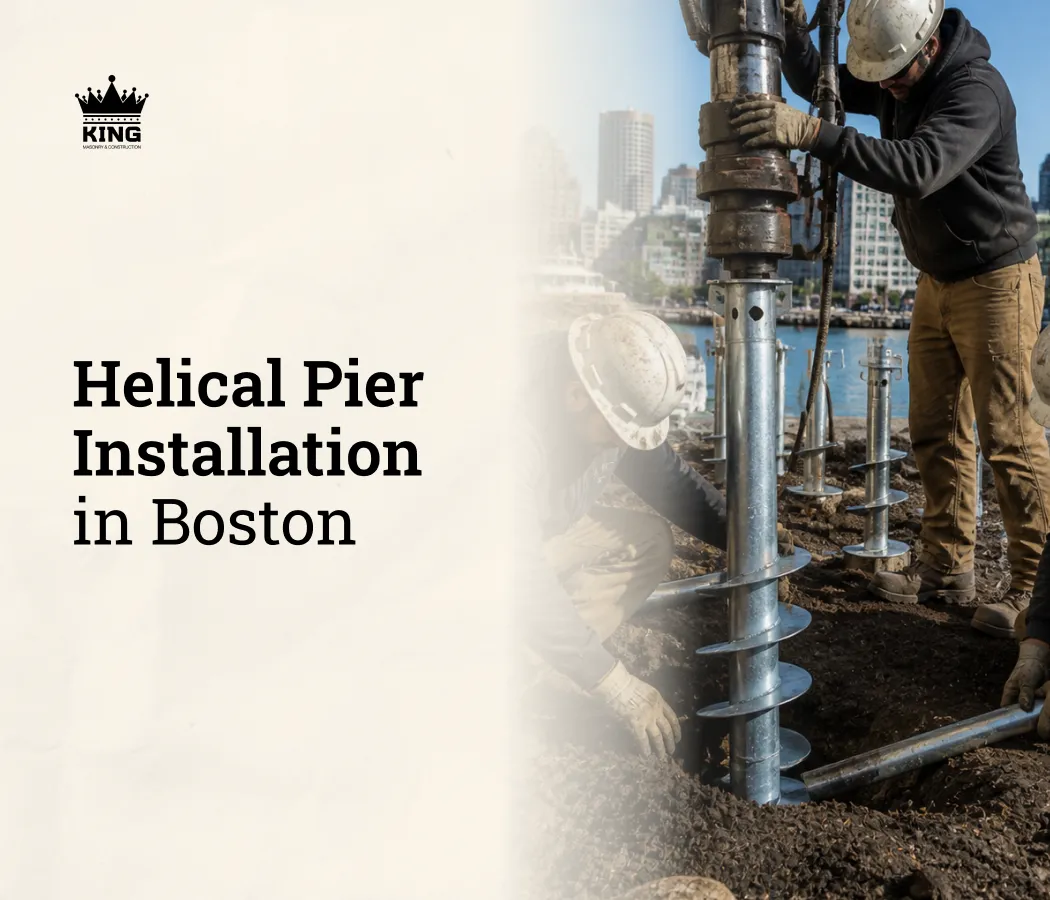
Helical Pier Installation in Boston: A Complete Guide
Boston is a beautiful city but it is not a kind one to foundations. Between the thick marine clay left behind by glaciers, the brutal freeze-thaw cycles that hit every winter, and the high water table lurking beneath neighborhoods like Back Bay and Charlestown, Boston homes face foundation stress that most other cities simply do not. If your home is showing signs of settling or shifting, helical pier installation may be exactly the solution your foundation needs.
This guide walks you through everything what helical piers are, how they work, what the process looks like, and how to find the right contractor in the Boston area.
⚡ Quick Facts: Helical Pier Installation in Boston
Typical cost: $1,500–$3,500 per pier; full projects range from $10,000–$30,000+
Installation time: 1–3 days for most residential jobs
Depth: Piers are driven until they reach stable load-bearing soil or bedrock
Best for: Settling foundations, new construction on poor soil, limited-access sites
Boston-specific concern: Marine clay and glacial till are major drivers of foundation movement in Greater Boston
What Is a Helical Pier?
A helical pier — also called a helical pile or screw pile — is a steel shaft with one or more helical plates (resembling giant screws) welded along its length. It is drilled into the ground hydraulically until it reaches stable bearing soil, then mechanically connected to your home's foundation to transfer the structural load downward, away from the failing surface soil.
How Helical Piers Differ from Push Piers and Concrete Piers
Push piers (also called resistance piers) are hydraulically driven straight down using the weight of the structure itself as resistance. They work well on heavier buildings but can underperform on lighter structures that do not provide enough downward force.
Concrete piers are poured in place and rely on the surrounding soil for support — which is a problem if that soil is the reason your foundation is failing in the first place.
Helical piers, by contrast, are installed with a torque motor and do not rely on the building's weight during installation. They can be used on new construction, lightweight structures, and in tight or low-clearance areas — making them particularly well-suited to the dense, older housing stock found throughout Boston.
Signs You Need Helical Pier Installation
Foundation settlement rarely announces itself dramatically. More often, it shows up gradually through a cluster of subtle symptoms. Contact a foundation specialist if you notice any of the following:
Diagonal cracks running from the corners of doors and windows
Horizontal or stair-step cracks in brick or block foundation walls
Floors that feel bouncy, soft, or noticeably uneven
Doors and windows that stick, drag, or no longer latch properly
Gaps forming between walls and ceilings or floors
Bowing or leaning basement walls
Visible separation between the chimney and the main structure
Water intrusion following a consistent pattern along foundation walls
Any single sign warrants a professional inspection. Multiple signs appearing together suggest active settlement and should be addressed promptly.
How the Installation Process Works
A proper helical pier installation follows a structured, multi-step process. Here is what to expect from start to finish.
Step 1: Foundation Inspection and Engineering Assessment
A qualified foundation contractor will first assess the extent of settlement, review soil conditions, and determine how many piers are needed and where they should be placed. For larger projects, a structural engineer may be brought in to specify the pier layout and load requirements.
Step 2: Site Preparation and Excavation
Small areas around the foundation are excavated — typically just enough to expose the footing. Because helical piers can be installed with compact equipment, this process causes minimal disruption to landscaping and surrounding structures.
Step 3: Pier Installation
Using a hydraulic torque motor mounted on a mini-excavator or skid-steer, each helical pier is rotated into the ground. As the helical plates advance through the soil, installation torque is monitored continuously. When torque readings indicate the pier has reached stable bearing capacity, installation stops. This step typically takes 20–45 minutes per pier.
Step 4: Bracket Attachment and Load Transfer
A steel bracket is welded or bolted to the base of each pier and connected to the existing foundation footing. Hydraulic jacks are then used to carefully lift and stabilize the foundation — transferring the structural load from the failing surface soil onto the newly installed piers.
Step 5: Backfill and Site Restoration
Excavated areas are backfilled and compacted. Most residential helical pier projects are completed within 1 to 3 days, with the home remaining livable throughout the process in most cases.
Why Helical Piers Are Ideal for Boston
Foundation repair in Boston presents challenges you would not find in cities built on bedrock or dense sand. Several factors make helical piers a particularly strong fit for this market.
Boston's Glacial Till and Marine Clay
Much of Greater Boston sits on glacial till — a dense, unsorted mix of clay, silt, sand, and gravel deposited during the last ice age. Below that, in areas like the South End, Back Bay, and parts of Cambridge, lies thick marine clay (sometimes called "Boston Blue Clay") — a soft, highly compressible material notorious for causing slow, ongoing settlement. Helical piers can be drilled through these layers until they reach stable material below.
Filled Land and High Water Tables
Significant portions of Boston — including Back Bay and the Seaport District — were built on filled tidal land in the 19th century. Foundations in these neighborhoods sit on timber piles or on fill over soft organic material. As the water table fluctuates or timber piles decay, settlement accelerates. A pier and beam foundation system using helical piers can arrest this movement and stabilize the structure.
Older Housing Stock
The majority of Boston's residential buildings were constructed before 1950, many before 1900. These homes often have rubble stone or brick foundations with shallow footings that were never designed to handle long-term soil movement. Helical piers can be retrofitted to these older foundations with minimal demolition.
Limited Access
Row houses, triple-deckers, and tight urban lots leave little room for heavy equipment. Because helical piers can be installed with compact machinery and hand-held units in some cases, they are one of the few foundation settlement solutions that work practically in Boston's dense residential neighborhoods.
Cost of Helical Pier Installation in Boston
Pricing for helical pier installation in Boston varies based on several factors, but here are realistic ranges to help you plan.
Typical Price Ranges
Per pier: $1,500 – $3,500
Small residential project (4–6 piers): $8,000 – $18,000
Mid-sized project (8–12 piers): $18,000 – $35,000
Complex or large-scale projects: $40,000+
Factors That Affect Your Final Cost
Depth to bearing soil is the biggest variable — the deeper the crew must drill to reach stable ground, the more material and time is required. In areas with deep clay layers, this can add significantly to the per-pier cost.
The number of piers depends on the size of the affected foundation area and the load that needs to be transferred. A structural engineer's assessment will determine this accurately.
Site accessibility affects labor time. Tight yards, interior basement installations, and low-clearance spaces require specialized equipment and more setup time.
Foundation condition matters too. A foundation with significant cracking or bowing may require wall repair in addition to pier installation.
Always get at least two to three written quotes from licensed Boston foundation contractors before committing. Be cautious of estimates that seem dramatically lower than others without a clear explanation.
How to Choose a Helical Pier Contractor in Boston
Choosing the right contractor is as important as choosing the right repair method. The screw piles and equipment are only as good as the crew installing them.
Certifications and Licensing to Look For
Massachusetts Construction Supervisor License (CSL) — required by the state for structural work
CHANCE Certified Installer — Hubbell/CHANCE is a leading helical pier manufacturer; certified installers have completed formal training on their system
ICC Certification — the International Code Council offers certifications in foundation and structural repair disciplines
Manufacturer warranties — reputable contractors can offer transferable warranties backed by the pier manufacturer, not just their own company
Questions to Ask Before Signing a Contract
Do you pull the necessary permits for this work in Boston?
Will a structural engineer be involved in specifying the pier layout?
How do you determine when a pier has reached adequate bearing capacity?
What does your warranty cover, and is it transferable if I sell the home?
Can you provide references from similar projects in the Boston area?
Red Flags to Avoid
Be cautious of contractors who pressure you to sign quickly, refuse to pull permits, cannot provide proof of insurance, or offer verbal-only warranties. Foundation repair is a long-term investment — the paperwork matters as much as the work.
A Trusted Local Option: Kings Masonry
For Boston-area homeowners looking for an experienced local contractor, Kings Masonry is a well-regarded option for helical pier installation and foundation repair services. With deep familiarity with Boston's challenging soil conditions and older housing stock, Kings Masonry brings the kind of local expertise that makes a real difference on complex foundation projects. Whether you're dealing with settlement in a Back Bay brownstone or a triple-decker in Charlestown, their team can assess your situation and recommend the right approach.
Ready to Stabilize Your Foundation?
Boston homes have survived centuries of harsh winters, high water tables, and difficult soil but they need the right support to keep doing so. If your home is showing signs of foundation settlement, helical pier installation is one of the most reliable and minimally invasive solutions available for the conditions Boston presents.
The best next step is a professional inspection. A qualified Boston foundation contractor can assess your specific situation, confirm whether helical piers are appropriate, and give you an accurate project scope — often at no cost for the initial evaluation.
Do not wait for small cracks to become structural problems. Reach out today for a free foundation inspection and get the answers your home deserves.