
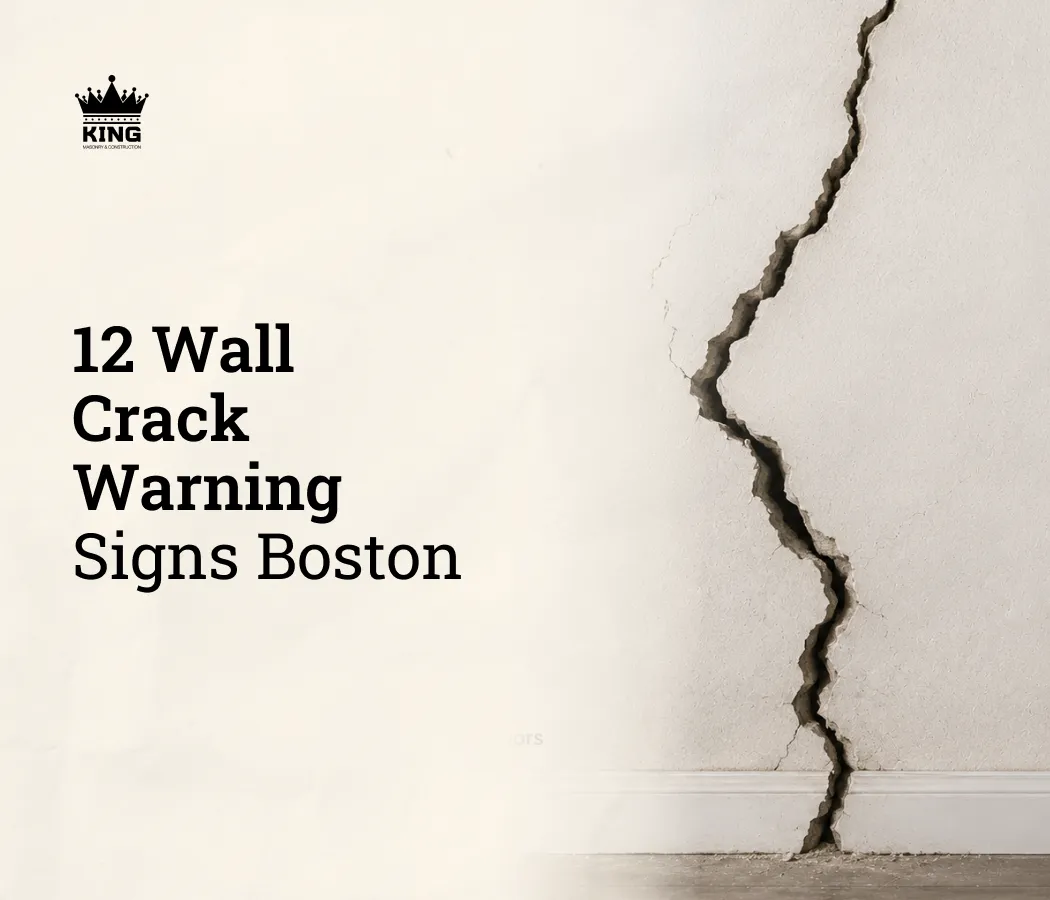
12 Wall Crack Warning Signs Boston Homeowners Should Never Ignore
Foundation problems rarely show up overnight. Most start as small wall cracks, sticking doors, or a slightly uneven floor that's easy to dismiss. By the time the damage is obvious, repair costs have often doubled or tripled.
This guide covers the 12 most common wall crack warning signs, what each one usually means, and when it's time to call a foundation contractor.
Quick Answer: Wall Crack Signs You Should Never Ignore
The most reliable wall crack warning signs include:
Horizontal or stair-step wall cracks in basement walls
Vertical wall cracks wider than 1/8 inch
Doors or windows that stick or won't latch
Gaps between walls, ceilings, or floor trim
Uneven, sloping, or sagging floors
Wall cracks in drywall, especially above doorways and windows
Bowing or leaning basement walls
Water seepage or efflorescence on foundation walls
Exterior brick or stone wall cracks following a stair-step pattern
Gaps around exterior doors and window frames
A chimney pulling away from the house
Standing water or saturated soil near the foundation
If you see two or more of these together, schedule a foundation inspection.
Why Wall Cracks Get Worse Over Time
Soil expansion, drainage issues, and freeze-thaw cycles in New England climates put steady pressure on a home's foundation walls. Minor wall cracks let in moisture. Moisture weakens concrete and corrodes rebar. Once structural integrity is compromised, the damage accelerates.
In Massachusetts, properties built on clay-heavy soils or near coastal water tables face higher wall stress than homes on stable bedrock. Older homes with rubble or fieldstone foundations are particularly vulnerable.
Catching a wall crack early usually means a targeted repair rather than full underpinning or wall replacement. For a full breakdown of repair options and costs, see our guide on Foundation Crack Repair Cost in Boston.
12 Wall Crack Warning Signs
1. Horizontal Wall Cracks in Basement Walls
Horizontal wall cracks are the most serious crack pattern. They typically mean the wall is being pushed inward by soil and hydrostatic pressure. Left alone, the wall can bow, lean, or eventually collapse.
What to look for: a horizontal line running across the block or poured concrete wall, often midway up the wall.
If your basement wall already shows signs of inward movement, read our full guide on Concrete Foundation Cracks: Small Problem or Serious Damage?
2. Stair-Step Wall Cracks in Block or Brick
Stair-step wall cracks follow the mortar joints of concrete block or brick walls. They almost always point to differential settling — meaning one part of the foundation is sinking faster than another.
In a brick veneer, stair-step wall cracks may also indicate a shelf angle or lintel issue. A masonry contractor should evaluate which.
3. Vertical Wall Cracks Wider Than 1/8 Inch
Hairline vertical wall cracks are common as concrete cures and rarely a structural concern. Wall cracks wider than 1/8 inch, cracks that widen with seasonal changes, or cracks that show daylight or active water need professional assessment.
4. Doors and Windows That Stick
When a foundation shifts, door and window frames pull out of square. Doors stop latching, windows jam, and gaps appear around the frame. If multiple doors and windows develop these symptoms at the same time, the cause is usually foundation wall movement rather than humidity.
5. Gaps Between Walls, Ceilings, or Floor Trim
Crown molding pulling away from the ceiling, baseboards lifting off the floor, or a visible gap where two walls meet are all signs that the framing is shifting because the foundation beneath it has moved.
6. Uneven or Sloping Floors
Place a marble in the middle of a room. If it rolls consistently in one direction, the floor is sloped. A slope of more than 1 inch over 15 feet is generally considered significant and warrants inspection.
Sagging floors over a crawl space often point to failing support posts, beam rot, or settling piers rather than a full wall crack issue — but the diagnosis still requires a professional eye.
7. Drywall Wall Cracks Above Doorways and Windows
Wall cracks that run diagonally from the upper corner of a door or window frame are caused by the wall flexing as the home settles unevenly. A single small wall crack may be cosmetic. Multiple diagonal wall cracks across several rooms suggest a structural cause.
8. Bowing or Leaning Basement Walls
A foundation wall that visibly bulges inward, leans, or shows a pronounced curve has lost its ability to hold back the soil behind it. Bowing walls with active wall cracks require structural reinforcement — carbon fiber straps, wall anchors, or steel I-beams — and should not be ignored.
9. Water Seepage, Efflorescence, or Mold on Foundation Walls
Persistent dampness, white chalky residue (efflorescence), or visible mold on basement walls indicates water is entering through wall cracks or porous concrete. Water intrusion both signals foundation wall cracks and accelerates them by corroding rebar and freezing inside the wall.
This is also where drainage and waterproofing intersect with wall crack repair. Fixing the wall crack without fixing the water source rarely solves the problem. Our guide on Basement Waterproofing in Boston covers what to do before the next storm season.
10. Exterior Brick or Stone Wall Cracks
On the outside of the home, look for:
Stair-step wall cracks in brick veneer
Vertical wall cracks running the full height of a wall
Separation between the brick and window or door trim
Spalling brick faces where the surface is flaking off
These wall cracks often appear before interior signs become severe and are easier to inspect in daylight. When the cracking is contained to the masonry skin, a focused brick and stonework repair may resolve it without touching the structural foundation.
11. Chimney Pulling Away From the House
A leaning chimney or a visible gap between the chimney and the home's siding is one of the clearest signs of foundation settlement. Chimneys are heavy and often sit on their own footing, so they reveal differential movement — and related wall cracks — faster than the main structure.
In the Boston and South Shore market, where many homes have masonry chimneys older than the rest of the structure, this is a common finding. See our Chimney Repair services for what a chimney inspection typically covers.
12. Standing Water or Saturated Soil Near the Foundation
If water pools next to the foundation after rain, if downspouts discharge within a few feet of the house, or if the soil around the perimeter stays wet long after the surrounding lawn has dried, hydrostatic pressure is building against the foundation wall. This is the leading cause of bowing walls, wall cracks, and basement leaks in New England.
Our Drainage and Waterproofing services address grading, French drains, and perimeter water control before it reaches the wall.
How to Inspect Your Own Foundation for Wall Cracks
Before calling a contractor, do a basic walkthrough:
Walk the perimeter outside. Look for wall cracks, gaps, and grading that slopes toward the house.
Check the basement walls. Bring a flashlight. Look at corners, mid-wall areas, and around any penetrations such as pipes or windows.
Test interior doors and windows. Open and close every interior door. Note any that stick.
Use a level on floors. A 4-foot level or laser level will reveal slope quickly.
Photograph and date every wall crack. If a crack widens over the next 60 to 90 days, that's diagnostic information a contractor will want.
If you spot two or more warning signs — especially horizontal wall cracks, bowing walls, or water intrusion — the next step is a professional inspection.
When Wall Crack Damage Requires Professional Repair
Some wall crack symptoms are cosmetic. Others are urgent. Here's a rough decision framework:
Monitor only:
Single hairline vertical wall crack, no water, no widening
Minor cosmetic drywall wall cracks in one location
One sticking door after a humid summer
Call a contractor within 30 days:
Multiple wall cracks across several walls
Wall cracks wider than 1/8 inch
Doors and windows sticking throughout the house
Visible gaps in trim work
Water intrusion or efflorescence on basement walls
Call immediately:
Horizontal wall cracks in any foundation wall
Visible bowing, leaning, or shifting
Wall cracks that grow visibly within days
Standing water inside the basement after rain
A chimney pulling away from the house
What Causes Wall Cracks in Massachusetts Homes
Local factors that drive wall crack damage across the South Shore and Greater Boston:
Expansive clay soils that swell when wet and shrink when dry
High water tables in coastal communities like Hingham, Cohasset, and Marshfield
Freeze-thaw cycles that expand water trapped inside small wall cracks
Aging fieldstone and rubble foundations in homes built before 1940
Poor drainage and grading, especially in homes with original gutters or no perimeter drainage
Tree root pressure near older foundations
Understanding the cause matters because the wall crack repair changes based on it. A foundation failing from hydrostatic pressure needs drainage work alongside structural repair. A foundation failing from settlement needs underpinning or piers. For a full picture of what our team covers, visit our Foundation and Basement page or read our step-by-step basement foundation repair guide.
What Happens If You Ignore Wall Cracks
Wall crack damage compounds. Common outcomes when warning signs go unaddressed for one to three years:
Repair costs increase 2 to 5 times as small wall cracks become structural failures
Insurance claims may be denied for damage that could have been prevented with reasonable maintenance
Property value drops, with home inspectors flagging wall cracks during resale
Secondary damage develops: rotted framing, mold, plumbing leaks, pest entry
In severe cases, walls can fail suddenly, especially during heavy spring rains or after frost heave
Wall crack repair is rarely cheaper to delay.
How Kings Masonry and Construction Approaches Wall Crack Repair
Kings Masonry and Construction provides foundation and basement work across the South Shore and Greater Boston, including Hingham, Cohasset, Weymouth, Brockton, New Bedford, and surrounding towns. The team handles:
Foundation wall crack repair and waterproofing
Bowing wall stabilization with carbon fiber or steel reinforcement
Fieldstone and rubble foundation restoration
Underpinning and structural repair
Foundation drainage and exterior waterproofing
Masonry repairs where brick, block, or stone is part of the foundation system
Every inspection includes a written diagnosis of the cause — not just the wall crack symptom — and a phased repair plan when a full fix isn't immediately needed.
Frequently Asked Questions
How do I know if a wall crack is serious?
Horizontal wall cracks, stair-step wall cracks, and any vertical wall crack wider than 1/8 inch should be evaluated by a contractor. Hairline vertical wall cracks in poured concrete are usually cosmetic and stable.
Can wall cracks fix themselves?
No. Wall crack damage worsens with each freeze-thaw cycle, each heavy rain, and each season of soil movement. The earlier the wall crack repair, the lower the cost.
Is wall crack repair covered by homeowners insurance?
Most standard policies exclude wall crack damage caused by settling, soil movement, or hydrostatic pressure. Damage from a covered event such as a burst pipe may be covered. Check your specific policy.
How long does a wall crack inspection take?
A typical residential wall crack inspection takes 45 to 90 minutes and includes interior, basement, and exterior assessment.
Do I need a structural engineer or a contractor for wall cracks?
For most residential wall crack issues, an experienced foundation contractor can diagnose and repair. A structural engineer's report may be required for severe wall crack damage, insurance claims, or pre-sale disclosures.
How quickly do wall cracks get worse in Massachusetts?
Local freeze-thaw cycles can widen an unrepaired wall crack by 1/16 inch or more per winter. Coastal homes with high water tables typically see faster wall crack deterioration than inland properties on well-drained soil.
Schedule a Wall Crack Inspection
If you've spotted any of the wall crack warning signs above, the next step is a professional evaluation. Kings Masonry and Construction provides foundation inspections across Hingham, Boston, and the South Shore, with written reports and clear repair recommendations.
Call us at (857) 249-5127 or contact us online to schedule your wall crack inspection.