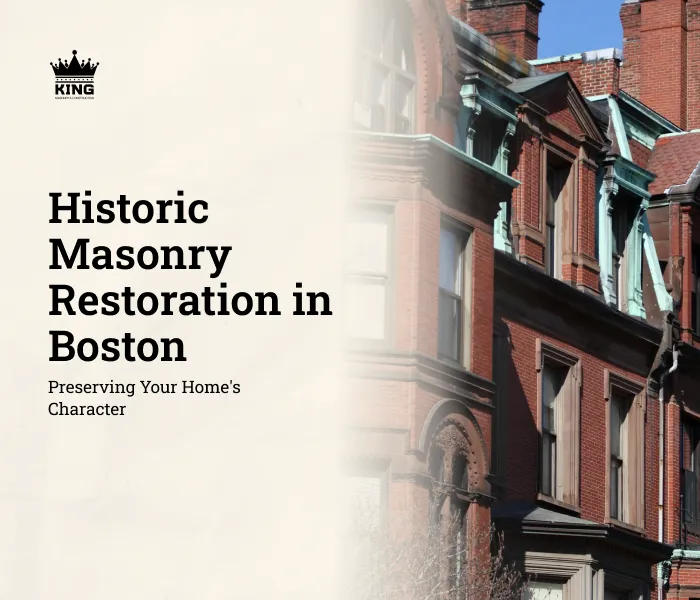
Historic Masonry Restoration in Boston: Preserving Your Home's Character
A brownstone on Beacon Hill has mortar joints that have lasted 150 years. Then a well-meaning contractor repoints them with Portland cement. Within five years, the brick faces start cracking and spalling. Water gets in. Freeze-thaw cycles rip the damage wider. A repair that should have protected the building for another century instead accelerates its decay.
This happens across Boston every year. Back Bay row houses, South End brownstones, North End brick tenements, Charlestown triple-deckers historic masonry requires a fundamentally different approach than modern construction. The wrong materials don't just fail. They cause irreversible damage to irreplaceable buildings. Using incorrect mortar is a prime example of how cosmetic brick damage vs structural risks can escalate into a total facade failure.
Here's what every owner of a pre-1930s masonry home needs to know about restoring it correctly.
Why Historic Masonry Requires Specialized Restoration
Buildings constructed before the 1930s use a completely different masonry system than what contractors work with today. The bricks are softer. The mortar is lime-based, not Portland cement-based. And the walls were designed to move expanding and contracting with temperature, absorbing moisture and releasing it, settling gradually over decades.
This system works because every component plays a specific role. The lime mortar is deliberately softer than the brick. It acts as the sacrificial element: it absorbs stress, takes on moisture, and wears out first so the brick doesn't have to. When the mortar eventually deteriorates after 75 to 100 years, you replace the mortar. The brick stays intact. That's the design.
Modern Portland cement mortar flips this equation. It's harder than the historic brick it surrounds. Instead of absorbing stress, it transfers that stress into the brick. Instead of letting moisture evaporate through the joints, it traps water inside the wall. The result: cracked brick faces, spalling surfaces, and moisture damage that penetrates deep into the structure.
Here's the critical distinction:

This is why historic masonry restoration demands masons who understand the original building system. A contractor experienced with modern construction may be highly skilled, but if they apply modern materials to a 19th-century wall, they'll damage it. The National Park Service is clear on this: repointing mortar should always match or be slightly weaker than the original.
Common Challenges in Restoring Boston's Historic Brick and Stone
Boston's housing stock presents unique restoration challenges that go beyond standard masonry repair. Here's what makes this work difficult and what separates a competent restoration from a damaging one.
Mortar matching is complex. Original mortar in a Beacon Hill Federal-style row house isn't the same as the mortar in a South End Victorian brownstone, even though both are lime-based. The sand aggregate, lime ratio, pigmentation, and joint profile all vary by era, neighborhood, and sometimes by individual builder. Proper historic masonry restoration starts with a mortar analysis typically costing $200 to $500 to identify the exact composition before any new material is mixed.
Brick sourcing is a challenge. When damaged bricks need replacement, you can't pick up a matching unit at a supply yard. Historic brick was fired at lower temperatures, making it softer and more porous than modern brick. It varies in color, texture, and dimension. Salvage yards and specialty manufacturers are the typical sources. Expect to pay $3 to $10 per salvaged historic brick compared to under $1.50 for standard modern units.
Brownstone deterioration requires specialized repair. Boston's iconic brownstone facades the Connecticut River sandstone that defines Back Bay and the South End are vulnerable to water damage and spalling. Unlike brick, brownstone can't be replaced one unit at a time. Damaged sections need to be patched with a custom-colored repair compound or cut out and replaced with matching stone.
Historic district regulations add requirements. If your home sits in a designated historic district Beacon Hill, Back Bay, or the South End Landmark District exterior work requires review by the local architectural commission. Replacement materials must approximate the original in composition, appearance, and texture. Mortar color must match the weathered appearance of the existing joints, not stand out as obviously new.
Water damage compounds over time. By the time most homeowners notice failing mortar, moisture has often already migrated into the wall cavity. Efflorescence (white salt deposits), interior plaster damage, and musty odors are warning signs that the problem goes deeper than the surface. A thorough restoration addresses the water path flashing, grading, gutter drainage before touching the mortar. For older homes, addressing the root cause through specializedbrick wall repair for cracks and water damage is the only way to ensure long-term stability
The Restoration Process: What to Expect
Historic masonry restoration follows a deliberate sequence. Skipping steps is how damage happens. Here's the workflow for a professionally executed stone masonry repair or brick pointing project on a pre-1930s building.
How Do You Repair Damaged Masonry?
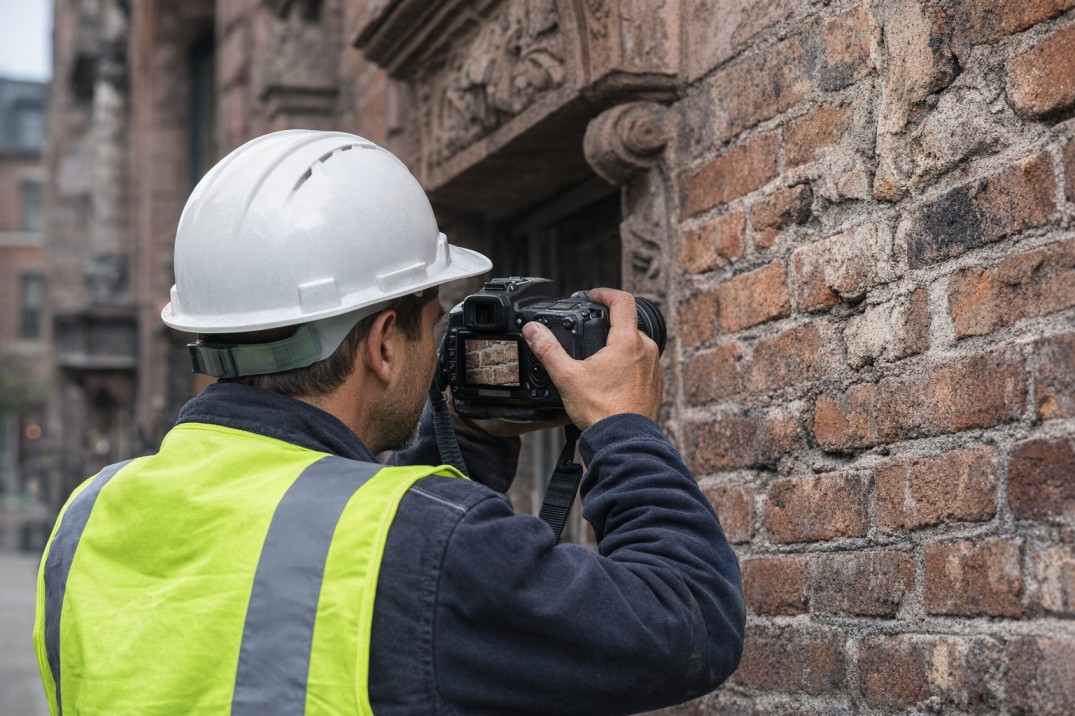
Step 1: Assessment and documentation. A qualified mason inspects the full facade, identifying all areas of deterioration failed mortar joints, cracked or spalling brick, damaged brownstone, and signs of structural movement. On historic properties, this often includes photographic documentation required by the local landmarks commission.
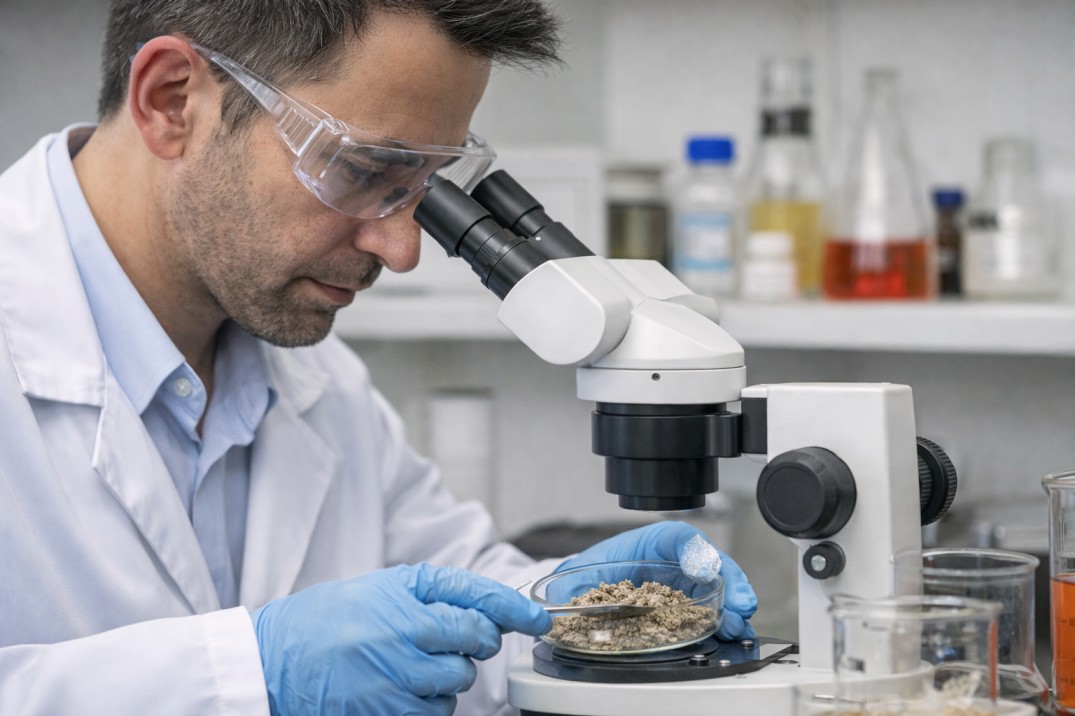
Step 2: Mortar analysis. A sample of original mortar is removed and analyzed for composition lime-to-sand ratio, aggregate type, and pigments. This guides the formulation of replacement mortar that matches the original in strength, color, texture, and vapor permeability.
Step 3: Careful mortar removal. Deteriorated mortar is removed to a minimum depth of 3/4 inch ideally a full inch. On historic buildings, hand chisels are preferred over power grinders. Angle grinders chip the edges of soft historic brick, creating visible, permanent damage. Hand removal adds 30% to 50% to labor costs, but it protects the masonry units.
Step 4: Joint cleaning and preparation. Dust, debris, and loose particles are cleared using brushes and compressed air. The joints and surrounding brick are dampened with a light mist. Dry masonry pulls water from fresh mortar too rapidly, weakening the bond.
Will New Mortar Stick to Old Mortar?
Yes, but only when preparation is done correctly. New mortar bonds mechanically to the joint surfaces the sides of the brick and the back of the cleaned-out channel. It does not glue itself to old mortar like adhesive. This is why depth matters. Remove only 1/4 inch of old mortar and skim new mortar over the top, and the repair has almost no grip. It will pop out within months.
The critical requirements for a lasting bond:
Remove to adequate depth minimum 3/4 inch, ideally equal to the width of the joint
Clean all surfaces no dust, no loose debris, no paint or sealant
Dampen but don't soak surfaces should be damp to the touch, not dripping
Use compatible mortar lime-based for pre-1930 buildings, never Portland cement on soft historic brick
Pack in layers apply mortar in lifts of 3/8 inch, letting each layer firm up before adding the next

Step 5: Mortar application and tooling. Fresh mortar is packed into the joints in thin layers using a pointing trowel. Once it reaches the brick face, it's tooled to match the original joint profile flush, concave, grapevine, or struck, depending on the building's era and style.
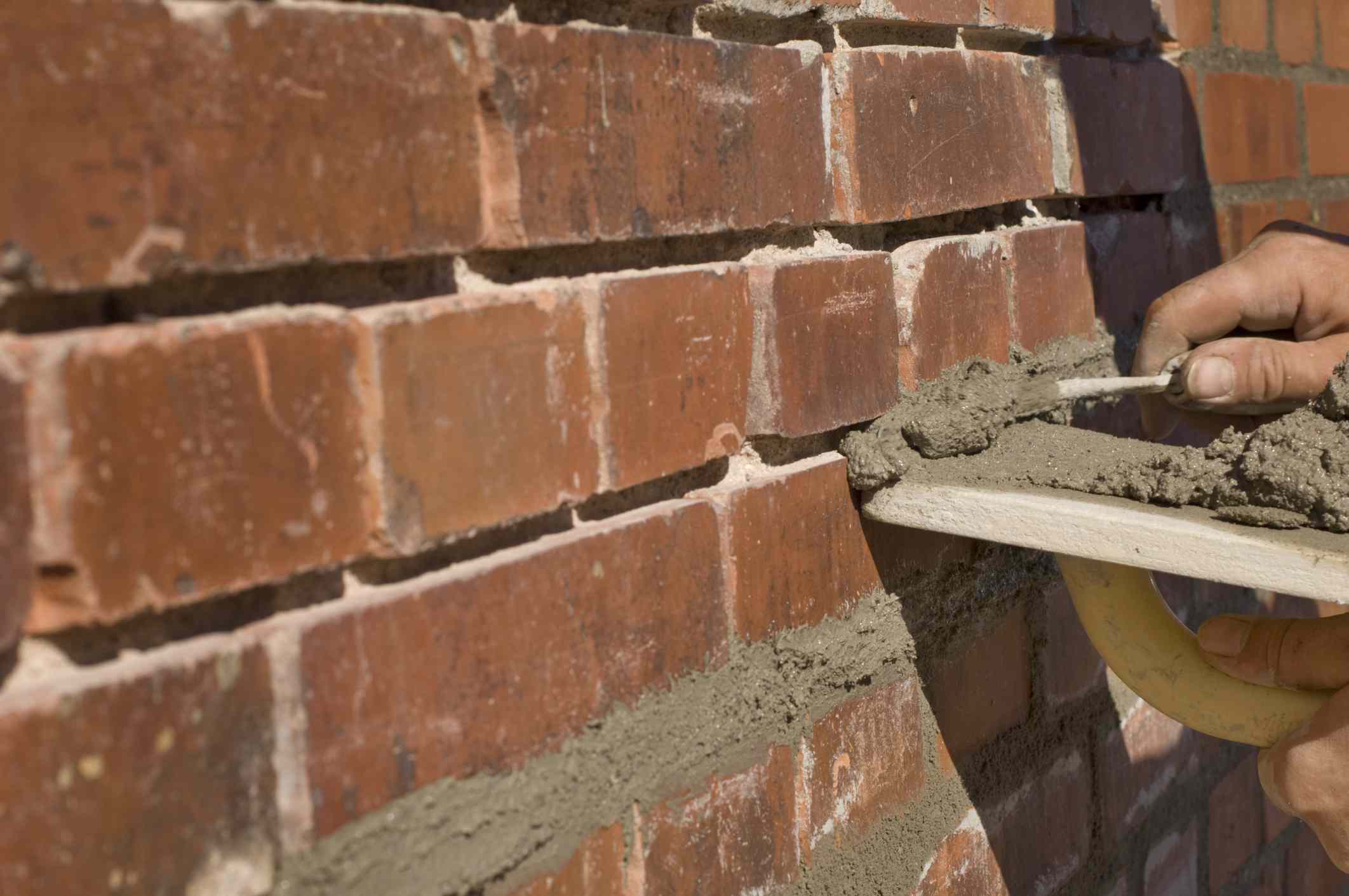
Step 6: Curing. The new mortar must cure slowly over several days. In warm or dry conditions, the mason mists the fresh joints to prevent premature drying. Lime mortar cures through carbonation absorbing carbon dioxide from the air a slower process than Portland cement hydration. Full curing can take weeks to months, though initial set occurs within days.
The cost for comprehensive masonry restoration on a historic Boston home typically runs $15 to $30 per square foot for repointing with custom lime mortar. Full facade projects range from $8,000 to $25,000 depending on size, condition, and accessibility. Scaffolding alone adds $2,000 to $5,000 for multi-story brownstones.
What Time of Year Is Best for Masonry Restoration?
Lime mortar is even more temperature-sensitive than modern Portland cement mixes, making seasonal planning essential for historic masonry restoration.
The ideal window in Boston: May through October. You need consistent temperatures between 40 and 90 degrees Fahrenheit for at least 72 hours after mortar application and ideally longer, since lime mortar cures more slowly than cement-based products.
Here's what happens outside that range:
Below 40 degrees: Water in the mortar freezes before it cures. Ice crystals expand inside the joint, creating weak, porous mortar that crumbles within months. This is the most common reason for repointing failures in New England. Lime mortar is especially vulnerable because its slower cure time extends the freeze-risk window.
Above 90 degrees: Mortar dries too rapidly. The surface sets before the interior cures, creating a weak bond. Lime mortar needs sustained moisture to carbonate properly. Hot, dry conditions prevent this.
Ideal conditions (50 to 75 degrees): Mortar cures slowly and thoroughly. Moderate humidity helps maintain moisture levels in the joint without supplemental misting.
Rain matters too. Heavy rain within 24 hours can wash uncured mortar out of joints. Light rain after the initial set is actually beneficial for lime mortar it provides moisture needed for continued carbonation.
Seasonal planning for Boston homeowners:

One practical note: the best masonry contractors in Boston book months in advance. If you want work done in May or June, call in January or February. Waiting until spring often means your project slides to fall.
Trust Kings Masonry with Your Historic Home
Boston's historic homes are built to last centuries but only when they're maintained with the right materials and techniques. Every year, repairs done with the wrong mortar cause damage that costs thousands to reverse.
If your home was built before 1930 and the mortar joints are deteriorating, you need a mason who understands historic masonry systems not just modern construction methods.
Kings Masonry & Construction specializes in historic masonry restoration across the Boston metro area, including Boston, MA,Brookline, MA, Newton, MA, Dedham, MA,Braintree, MA, and Norwood, MA. We restore brick facades, brownstone surfaces, and stone masonry using period-appropriate lime mortar and traditional techniques.
Here's what we bring to every historic restoration project:
Mortar analysis and matching - We identify the original mortar composition and formulate a replacement that matches in strength, color, texture, and breathability
Hand-tool joint preparation - We protect soft historic brick by using hand chisels rather than power grinders where the masonry requires it
Lime mortar expertise - Our crews are experienced with natural hydraulic lime (NHL) mortars, hot lime mixes, and pozzolanic formulations for pre-1930 buildings
Historic district compliance - We understand the review requirements for Beacon Hill, Back Bay, South End, and other designated landmark districts
Free on-site assessment - We inspect the full facade, identify all areas of concern, and provide a written estimate with clear scope and pricing
Your home has stood for over a century. The right restoration ensures it stands for another.
Contact Kings Masonry & Construction for a free historic masonry restoration estimate.
Frequently Asked Questions (FAQ)
1. Why can't I use standard cement for my historic Boston home?
Standard Portland cement is too hard and non-porous for historic bricks (pre-1930). Because historic bricks are soft, they need a lime-based mortar that can "breathe" and flex. Using cement traps moisture and causes the bricks to crack or "spall" as they struggle to expand and contract.
2. What is "Spalling" and is it fixable?
Spalling occurs when the face of a brick flakes off or crumbles away. In Boston, this is usually caused by water trapped inside the brick freezing and expanding. While the damaged brick cannot be "smoothed over," it can be replaced with a salvaged historic brick that matches the original's strength and color.
3. How do I know if my home is in a Boston Historic District?
Neighborhoods like Beacon Hill, Back Bay, the South End, and parts of Charlestown are designated Landmark Districts. Any exterior masonry work in these areas requires approval from the Boston Landmarks Commission. We can help you navigate the application process and ensure all materials meet their strict standards.
4. What is a "Sacrificial" mortar joint?
In historic preservation, the mortar is designed to be the "weakest link." It is meant to absorb moisture and weathering so that the bricks remain protected. It is much cheaper to repoint mortar every 75 years than it is to replace an entire wall of historic brick.
5. How long does lime mortar take to cure?
Unlike modern cement which sets in hours, lime mortar cures through a process called carbonation, which can take weeks or even months to reach full strength. However, it is stable enough to withstand typical weather within a few days, provided it is protected from extreme frost or direct, intense heat.