
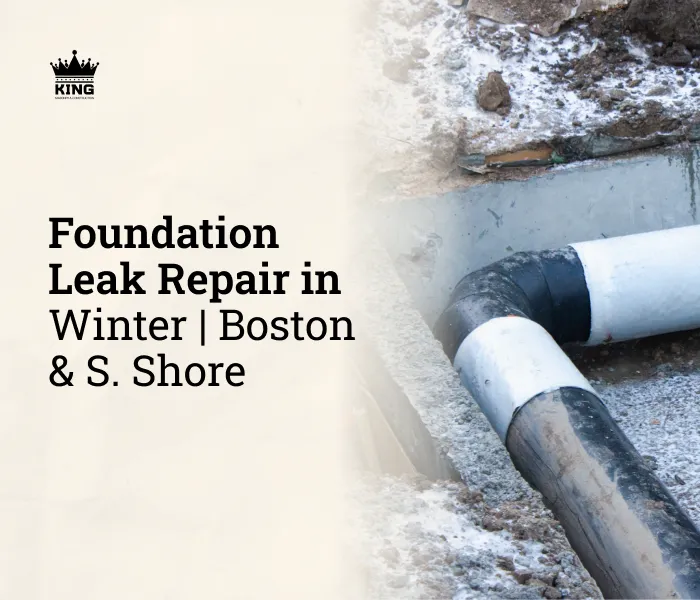
Foundation Leak Repair in Winter | Boston & S. Shore
A foundation leak in July is annoying. A foundation leak in January is a race because every freeze that follows can turn a trickle into a widening crack and a bigger repair. If you've found water in the basement after a cold snap or a thaw, the first job isn't to panic, it's to figure out where it's coming from and when it shows up. That's the heart of smart foundation leak repair winter work, and it's very doable this time of year.
We get a version of the same phone call constantly between December and March: "I don't understand it, the ground is frozen, why is water suddenly showing up in my basement?" It's a fair question, and it's exactly the question this guide is built to answer. Foundation leak repair winter projects make up a big share of our cold-season calls precisely because the assumption that frozen ground equals a dry basement is backwards. Frozen ground is often the cause, not the cure. Once you understand the mechanism, the timing of a leak stops being mysterious and starts being a genuinely useful diagnostic clue which is the whole approach we'll walk through below.
Key Takeaways
Timing is a clue. A leak that appears during a thaw points to snow melt; one that shows during a freeze often points to pressure or a specific entry path.
Most winter leaks start at a crack or the cove joint. Water finds the weakest path, then freeze-thaw enlarges it.
Interior repairs run all winter. Crack injection and interior drainage aren't stopped by cold; exterior excavation may wait for a thaw.
A leak is a moving target. Left alone, freezing water in a crack widens it every cycle, so a small leak rarely stays small.
Diagnosis first, then fix. Matching the leak's timing and location to the cause is what makes the repair actually hold.
Quick Answer
Foundations leak in winter mostly from snow melt and freeze-thaw: meltwater pools against the foundation, frozen ground stops it from draining, and it enters through cracks or the floor-wall joint. Interior fixes — polyurethane crack injection, interior drainage with a sump — work year-round, which is why foundation leak repair work rarely has to wait. Exterior sealing may wait for a thaw. Trace the leak by when and where it appears, then match the fix to the source.
Why Does My Foundation Leak in Winter?
Understanding the mechanism is the real foundation of good foundation leak repair winter planning — once you know why the water is showing up, deciding what to do about it gets a lot simpler. It feels backwards — the ground is frozen, so where's the water coming from? The answer is that frozen ground is the problem, not the protection. Soil frozen down toward the frost line can't absorb water. So when a thaw melts the snowpack, or a warm winter rain lands on frozen ground, that water runs across the surface and collects against your foundation instead of soaking away. Foundation leaking from snow melt is the single most common winter pattern we see, and it's the starting point for understanding almost every other symptom described in this guide.
From there it's about paths. Water pressed against the wall looks for the easiest opening: a shrinkage crack, the cove joint where slab meets wall, a tie-rod hole, or a gap around a pipe penetration. Once it's using that path, the freeze-thaw cycle goes to work — water in the crack freezes, expands, widens the crack, and next time more water gets through. That's why foundation leaking cold weather complaints tend to worsen across a season rather than staying steady, and it's also why homeowners who ask us "why does my foundation leak in winter" almost always turn out to have some version of this same freeze-widen-leak-more loop running quietly in the background.
Then there's pressure. As saturated soil freezes against the foundation, it can increase the load pushing water inward — a subtler form of winter water intrusion foundation trouble that shows up as seepage through the wall face rather than a single obvious crack. This kind of pressure-driven seepage is one of the trickier cases we see, because there's often no single crack to point to — the water is finding its way through the porous concrete itself under enough force.
The Three Winter Water Sources, Compared
It's worth separating the three distinct sources that can all produce the same soggy basement floor, because each one calls for a slightly different response.
Snow melt over frozen ground is by far the most common driver of a foundation leak repair winter call. It's seasonal, it's predictable (it follows thaws), and it's almost entirely preventable with grading and drainage work.
Winter rain on frozen or saturated soil behaves almost identically to snow melt — the ground can't take the water, so it runs to the foundation — except it can happen even without snow on the ground, catching people off guard on an otherwise unremarkable rainy December day.
Frost-driven pressure is the odd one out. It doesn't require a thaw at all; it can happen during a hard freeze, as expanding, frozen, saturated soil presses directly against the wall and pushes moisture through existing pores, joints, or hairline openings. This is the source most likely to be mistaken for "the house is just old and damp," when in reality it's an active, ongoing hydraulic process.
Knowing which of these three is driving your particular leak is most of the battle in choosing the right fix, which is exactly why the timing-and-location approach below works so well.
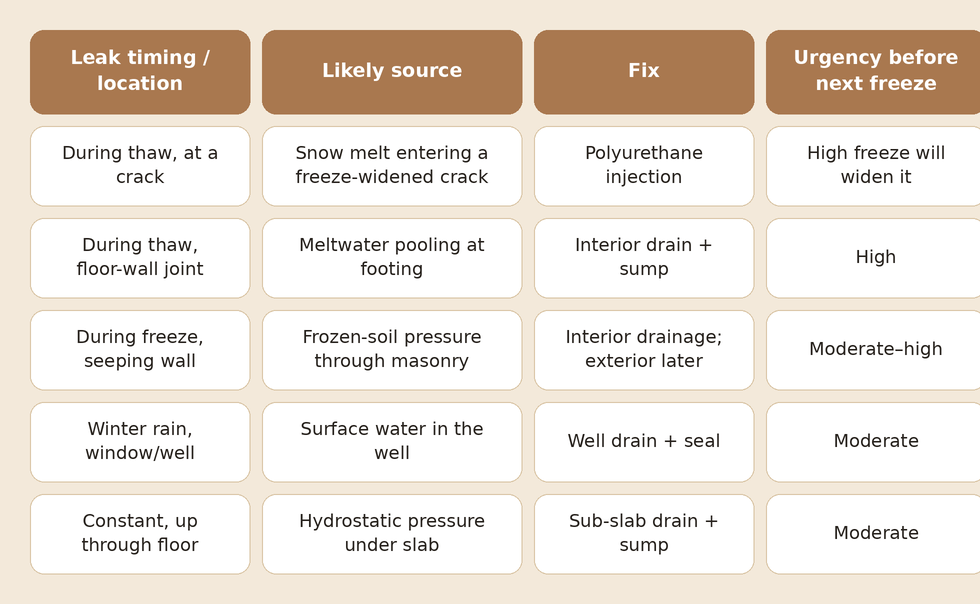
Leak Timing and Location: Source, Fix, and How Urgent
The same diagnostic logic, laid out so you can find your row at a glance.
Fixing Foundation Water Leaks Before Winter — and During It
There's a proactive version of this and a reactive version. The proactive one — fixing foundation water leaks before winter — is the easier, cheaper path: seal known cracks while they're dry in fall, test the sump pump, and correct grading before the ground freezes so meltwater is directed away. Homeowners who invest in fixing foundation water leaks before winter almost always spend less overall than those who wait, simply because they never give the freeze-thaw cycle a live crack to work on.
The reactive one is what we do mid-season when a leak has already appeared, and the reassuring part is that most of it works fine in the cold. Interior foundation crack repair by injection and interior drainage are indoor jobs. The way you stop foundation leaks winter problems is by treating the interior path now and scheduling any exterior excavation for a thaw — the leak gets controlled immediately, and the outside face gets its permanent treatment when the ground cooperates. In practice, this two-step approach is how the majority of our foundation leak repair winter jobs get handled: stabilize and stop the water now, finish the exterior work in spring if it's needed at all.
What a Typical Winter Repair Visit Looks Like
When we get a call about active water, the first visit is almost entirely diagnostic — walking the basement with the homeowner, asking exactly the timing and location questions the tool above asks, checking gutters, downspouts, and grading outside, and inspecting the crack or joint itself. From there, if it's a straightforward crack, polyurethane injection can often happen the same visit, since the material is designed to be pumped directly into an active, even damp, crack and cure regardless of ongoing minor seepage. If the diagnosis points to a broader issue — pressure through the wall face, or water up through the floor — that's usually a slightly larger job involving interior drainage installation, and we'll walk through sizing and layout with the homeowner before scheduling installation. Either way, the goal of any foundation leak repair winter visit is the same: stop the active water first, then plan any longer-term exterior correction for when conditions allow it.
What You Can Check vs. What Needs a Pro
You can be a great diagnostician here: note exactly when the leak appears (thaw, freeze, rain), photograph where the water enters, check that gutters and downspouts move roof melt away, and pour a bucket into the sump pit to confirm the sump pump runs. That information alone makes any repair faster and more accurate. What needs us is the actual repair — correct crack injection, interior drainage design, sump installation, and any structural call if a "leak" turns out to be a crack that's also moving. If water is entering fast or the crack is horizontal, skip the monitoring and call.
A Short Glossary for Winter Water Problems
It helps to have the vocabulary straight when you're describing a leak to a contractor, since the words you use point directly at the likely cause:
Cove joint — the seam where the basement floor slab meets the foundation wall; the single most common winter leak location.
Efflorescence — the white, chalky residue left behind when water carrying dissolved minerals evaporates on a concrete or masonry surface; a sign that water has been moving through, even if it's currently dry.
Hydrostatic pressure — the force exerted by water (or water-saturated, freezing soil) pushing against a foundation wall or slab; the driving force behind seepage through a wall face and water rising through a floor.
Frost heave — the upward or lateral movement of frozen, expanding soil; a major contributor to both structural pressure on walls and the surface water that drives foundation leaking from snow melt.
Weeping / seeping — water passing slowly through the body of the concrete itself rather than through one visible opening, typically driven by pressure rather than a specific crack. If this is your situation, our guide on how to stop water seeping through basement walls goes deeper on the fixes.
Frequently Asked Questions
These are the questions we hear most often from homeowners researching foundation leak repair winter options for the first time, along with the straight answers we'd give on a phone call.
Why does my foundation leak in winter?
Frozen ground can't absorb water, so snow melt and winter rain run across the surface and pool against the foundation. That water enters through cracks or the floor-wall joint, and freeze-thaw cycles widen those paths over the season. So even though the ground is frozen, winter is actually a common time for foundation leaks to appear or worsen — which is exactly why so many people ask why does my foundation leak in winter the first time it happens to them.
Can a foundation leak be repaired in winter?
Yes. Polyurethane crack injection and interior drainage systems are installed from inside and work regardless of temperature, so foundation leak repair in winter is routine. Exterior waterproofing that needs excavation is usually scheduled for a thaw because frozen ground is hard to dig. The interior repair controls the leak immediately either way, and it's the core of how we approach foundation leak repair winter calls across the South Shore.
Why does my foundation only leak when the snow melts?
Because snow melt is the water source. The frozen ground beneath the snow can't absorb the meltwater, so it flows toward the lowest point — often your foundation — and pushes in through the nearest opening. Once the melt stops and the ground refreezes, the water source disappears, so the leak seems to come and go with the thaw. This pattern is the clearest sign of foundation leaking from snow melt rather than a groundwater or plumbing issue.
How do I stop foundation leaks in winter fast?
Short term, redirect the water: shovel snow away from the wall, extend downspouts, and clear ice from drains and window wells. For the entry point itself, interior polyurethane crack injection can seal an active leaking crack quickly. In Boston and the South Shore we handle emergency winter leak repairs when water is actively coming in, and it's one of the more common reasons homeowners search for foundation leak repair winter services on short notice.
Is a small foundation leak in winter urgent?
More than it looks. A small leak means water is sitting in a crack — and when that water freezes, it expands and widens the crack, so next thaw more comes through. Left through a full winter, a minor seep can become a significant crack plus interior moisture damage. Sealing it promptly stops that cycle, which is the whole logic behind treating foundation leaking cold weather symptoms early rather than waiting them out.
Does homeowners insurance cover foundation leak repair in winter?
It depends heavily on the policy and the cause. Sudden, accidental water damage is sometimes covered, but damage attributed to gradual seepage, lack of maintenance, or normal freeze-thaw wear is frequently excluded from standard policies. It's worth reviewing your specific policy language or asking your insurer directly, since coverage for winter water intrusion foundation issues varies a lot from carrier to carrier — this isn't something we can advise on as contractors.
Can I use a caulk or hardware-store sealant instead of professional crack injection?
Surface sealants can sometimes slow a very minor, dry hairline crack, but they don't fill the crack's full depth the way injected epoxy or polyurethane does, and they tend to fail under real hydrostatic pressure or continued freeze-thaw movement. For anything actively leaking, a surface product is a short-term patch at best proper foundation leak repair winter work injects material through the full depth of the crack, which is what actually stops the water long-term.
Water Coming In This Winter? Let's Trace It and Stop It.
Don't wait for the next freeze to make it worse. King's Masonry & Construction offers free foundation leak diagnostics across Boston, the South Shore, and the South Coast — Brookline, Newton, Quincy, Plymouth, New Bedford, Dartmouth, and the surrounding towns. Whether it's a single dripping crack or a broader water problem, our approach to foundation leak repair winter work is the same: find the source, control it now, and plan any exterior work for a thaw.