
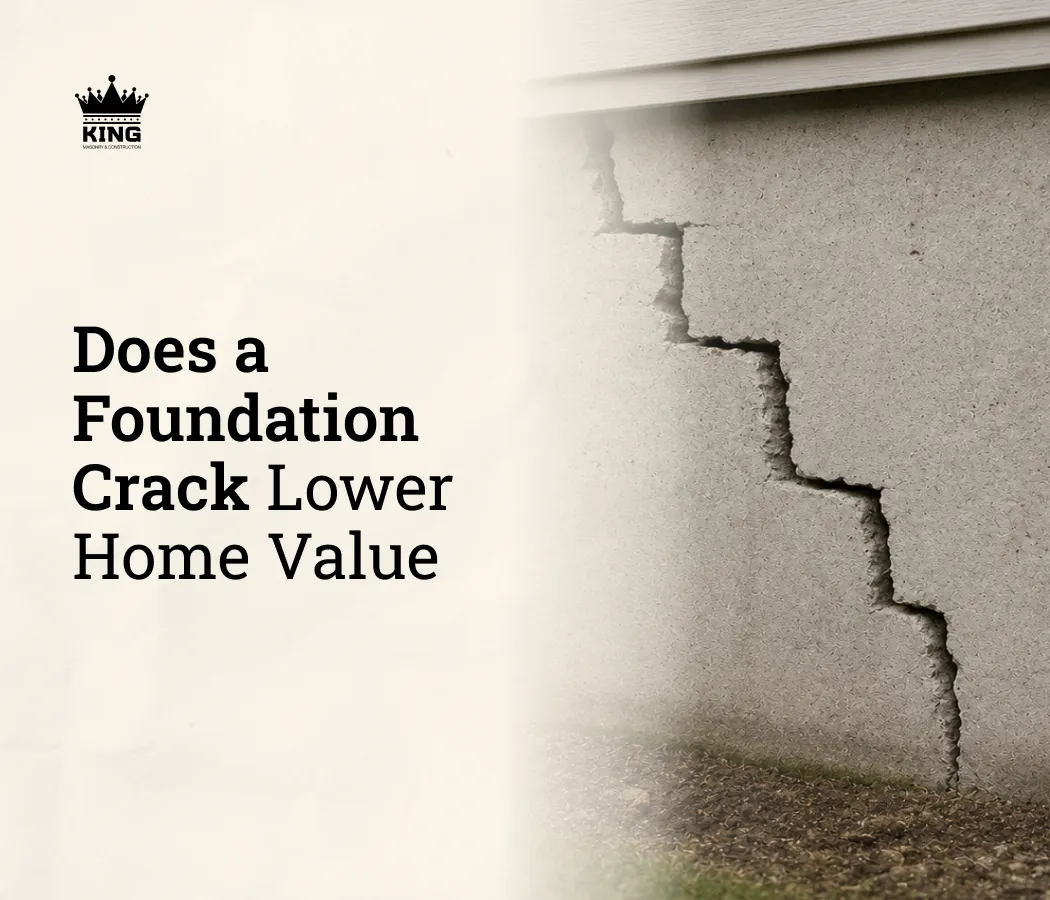
Does a Foundation Crack Lower Home Value? What Boston and Newton MA Buyers Need to Know
You're getting ready to list your home in Newton or Boston. The inspection comes back and the inspector flags a foundation crack. Or maybe you're on the buyer's side — you've found the house you want, and there's a crack in the basement wall that the seller is calling "normal settling."
Either way, the question is the same: does a foundation crack actually lower home value, and if so, by how much?
The short answer is yes — but the impact varies enormously depending on the type of crack, whether foundation crack repair has been completed, and how it's disclosed. A horizontal crack in a bowing basement wall will hit a sale price far harder than a stable hairline vertical crack with documented foundation crack repair from five years ago. Understanding the difference can mean tens of thousands of dollars in negotiation, repair decisions, and final sale price.
Quick Answer: How Foundation Crack Repair Affects Home Value
Repaired and documented — little to no negative impact on sale price
Unrepaired horizontal crack — $20,000 to $50,000+ price reduction or deal falls through
Bowing or leaning wall — most likely to kill a deal without completed foundation crack repair
Stable vertical crack, no water — low to no impact when professionally assessed
Active crack with water infiltration — moderate to high impact regardless of orientation
If your inspection flagged a foundation crack, the next step is a professional foundation crack repair assessment — not a price reduction negotiation.
How Home Inspectors Evaluate Foundation Cracks in Massachusetts
In Massachusetts, home inspectors are required to assess the foundation and report on visible cracks, water intrusion, and signs of structural movement. What they find goes directly into the inspection report — and that report goes directly to the buyer.
Inspectors categorize foundation conditions broadly as:
Satisfactory — no significant issues noted
Marginal — minor issues present, monitoring recommended
Poor — significant defects present, professional evaluation required
A foundation crack, depending on type and condition, can trigger any of these ratings. A flagged foundation condition almost always leads to one of three outcomes: the buyer requests foundation crack repair before closing, the buyer requests a price reduction, or the buyer walks away.
Which Foundation Cracks Hurt Home Value the Most
Not all cracks affect sale price equally. Here is how buyers, inspectors, and their attorneys typically view each type — and how foundation crack repair changes the equation.
Horizontal Cracks
Horizontal cracks are the highest-risk finding in any home inspection. They signal lateral soil pressure pushing the wall inward — the same force that leads to bowing walls and eventual structural failure if foundation crack repair is not addressed.
A disclosed horizontal crack with no foundation crack repair history will almost always result in a significant price reduction or a repair requirement before closing. In competitive markets like Newton and Brookline, many buyers simply walk away rather than take on the uncertainty.
Value impact: High. Expect price reductions of $20,000 to $50,000 or more, or foundation crack repair as a condition of sale.
Bowing or Leaning Walls
A wall that is visibly bowing inward — even slightly — is considered an active structural defect. Buyers in Massachusetts have access to experienced real estate attorneys who will advise them not to close on a home with an unrepaired bowing wall without either a significant concession or completed foundation crack repair backed by a transferable warranty.
Value impact: Very high. This is the category most likely to kill a deal outright if foundation crack repair is not completed before listing.
Stair-Step Cracks
Stair-step cracks in brick or block walls signal differential settlement — one part of the foundation sinking faster than another. Buyers and their inspectors know this pattern well. An active stair-step crack, or one with visible displacement, will raise serious questions about whether the settlement has stabilized and whether foundation crack repair is needed.
Value impact: Moderate to high, depending on width, displacement, and whether a contractor has documented that movement has stopped.
Vertical Cracks — Stable and Repaired
A stable vertical crack that has been professionally treated with foundation crack repair — injected with epoxy, documented, and carrying a transferable warranty — is a very different conversation. Many buyers, especially experienced ones, understand that hairline shrinkage cracks in poured concrete are common in New England homes and are not structural issues.
Value impact: Low to none when foundation crack repair is properly completed and documented. The repair actually becomes a selling point rather than a liability.
Active Vertical Cracks With Water Infiltration
Any crack — regardless of orientation — that is actively leaking water changes the conversation significantly. Water intrusion introduces concerns about mold, wood rot, and long-term structural integrity that buyers find difficult to price and easy to walk away from. Foundation crack repair that also addresses the water source is the only complete solution.
Value impact: Moderate to high, particularly if there is visible efflorescence, staining, or any sign of mold.
What Massachusetts Disclosure Law Requires
Massachusetts is a buyer-beware state, but sellers are required to disclose known material defects. A foundation crack that a seller is aware of — and that could affect the value or habitability of the home — falls under this requirement.
Failing to disclose a known foundation issue can expose a seller to post-closing claims. The practical advice from real estate attorneys in this market is consistent: disclose what you know, and complete foundation crack repair before you list.
A completed foundation crack repair with documentation is a disclosure that builds buyer confidence. An unrepaired crack is a disclosure that builds buyer anxiety.
What Buyers Should Do When They Find a Foundation Crack
If you are buying a home in Boston, Newton, or the surrounding communities and the inspection turns up a foundation crack, here is a practical framework:
Step 1: Identify the crack type. Horizontal crack or visible bowing? This is a structural concern that requires a specialist evaluation before you proceed. Vertical hairline crack in poured concrete with no water and no history of change? This may be cosmetic. Use our guide on Horizontal vs Vertical Foundation Cracks to understand what you're looking at.
Step 2: Request a specialist foundation crack repair assessment. A home inspector's report flags concerns. A foundation contractor's assessment diagnoses the cause, quantifies the damage, and specifies the foundation crack repair needed. These are different things. Before negotiating on price, get a contractor's written assessment so you know what you're actually dealing with.
What Sellers Should Do Before Listing
If you are preparing to sell in Boston, Newton, Brookline, or the South Shore and you know there is a foundation crack:
Get a foundation inspection before you list. Know exactly what you have before the buyer's inspector finds it. A pre-listing foundation inspection costs a few hundred dollars and gives you time to make an informed foundation crack repair decision rather than a reactive one.
Complete foundation crack repair and document everything. A repaired crack with a transferable warranty is an asset, not a liability. It demonstrates that you maintained the home responsibly and gives buyers nothing to negotiate against.
Don't complete foundation crack repair without fixing the cause. A crack that comes back after foundation crack repair because the underlying drainage or soil issue was never addressed is worse than a crack that was never repaired. It raises questions about whether the seller knew and tried to hide it. See our Basement Waterproofing guide for what addressing the water source typically involves.
Get a transferable warranty on foundation crack repair. When choosing a contractor, ask specifically about transferable warranties. This single document can remove a foundation crack from the buyer's concern list entirely.
How Kings Masonry and Construction Supports Pre-Sale Foundation Crack Repair
Kings Masonry and Construction works with homeowners across Boston, Newton, Brookline, and the South Shore who are preparing to list — or who have just received an inspection report with a foundation flag.
Our pre-sale foundation crack repair services include:
Full foundation inspection with written report
Crack injection (epoxy and polyurethane) for stable vertical and diagonal cracks
Carbon fiber strap installation for horizontally cracked and bowing walls
Drainage correction and exterior waterproofing where water is the source
Transferable warranty on all structural foundation crack repair
Documentation package suitable for real estate disclosure
Every inspection includes a written diagnosis of the cause — not just the crack — and a foundation crack repair recommendation that accounts for what a buyer's inspector will be looking for. Visit our Foundation and Basement services page for a full overview.
Frequently Asked Questions
Does completed foundation crack repair affect home value?
A professionally completed foundation crack repair with a transferable warranty typically has little to no negative impact on home value. Many experienced buyers view documented foundation crack repair as a positive sign — it means the seller maintained the home and the issue has been resolved. The key is documentation: a written repair record and warranty are essential.
How much does a foundation crack reduce home value in Massachusetts?
It depends on the crack type and whether foundation crack repair has been completed. A stable hairline vertical crack may produce little to no reduction. A horizontal crack in a bowing wall can reduce sale price by $20,000 to $50,000 or more, or require foundation crack repair before closing. An active crack with water infiltration falls somewhere in between, depending on severity.
Can a buyer back out because of a foundation crack?
Yes. In Massachusetts, a standard purchase and sale agreement includes inspection contingencies that allow a buyer to request foundation crack repair, renegotiate price, or withdraw if inspection findings are not satisfactorily resolved. A significant foundation defect is one of the most common triggers for buyer withdrawal in the Boston market.
What is a transferable foundation crack repair warranty?
A transferable warranty is a contractor's guarantee that passes from the current homeowner to the next buyer at the time of sale. It covers the repaired area for a specified period — typically 10 to 25 years depending on the contractor and foundation crack repair type. For buyers, it provides assurance that if the foundation crack repair fails, the contractor is responsible. For sellers, it removes the crack from the buyer's concern list entirely.
How long does foundation crack repair take before a listing?
Most crack injection foundation crack repair takes one to two days. Carbon fiber strap installation for a single wall typically takes one day. Allow one to two weeks for scheduling and for any sealant to cure before listing photographs are taken.
Schedule a Pre-Sale Foundation Crack Repair Inspection
If you're preparing to list in Boston, Newton, or the South Shore — or if you're in the middle of a purchase and need an independent foundation crack repair assessment — Kings Masonry and Construction can help.
We provide written inspection reports, foundation crack repair estimates, and transferable warranties on all structural foundation work. Our team has worked with homeowners, real estate agents, and attorneys across Greater Boston on pre-sale foundation crack repair projects for over a decade.
Call (857) 249-5127 or contact us online to schedule your foundation crack repair inspection.