
Concrete Foundation Repair in Boston: Signs, Costs & Solutions
Concrete Foundation Repair in Boston: Signs of Damage, Costs, and Solutions
Your basement wall has a crack that wasn't there last year. The floor slopes near the back of the house. A white powder keeps appearing on the concrete no matter how many times you brush it off. These are signs your concrete foundation is failing and in Boston's climate, the damage accelerates fast.
This guide covers everything Boston homeowners need to know about concrete foundation repair: warning signs you shouldn't ignore, what repairs actually cost, which products and methods work, and when to call a professional.
5 Warning Signs Your Concrete Foundation Needs Repair
Foundation problems rarely announce themselves with a single dramatic event. They build slowly. By the time most homeowners notice, the damage has been progressing for months or years.
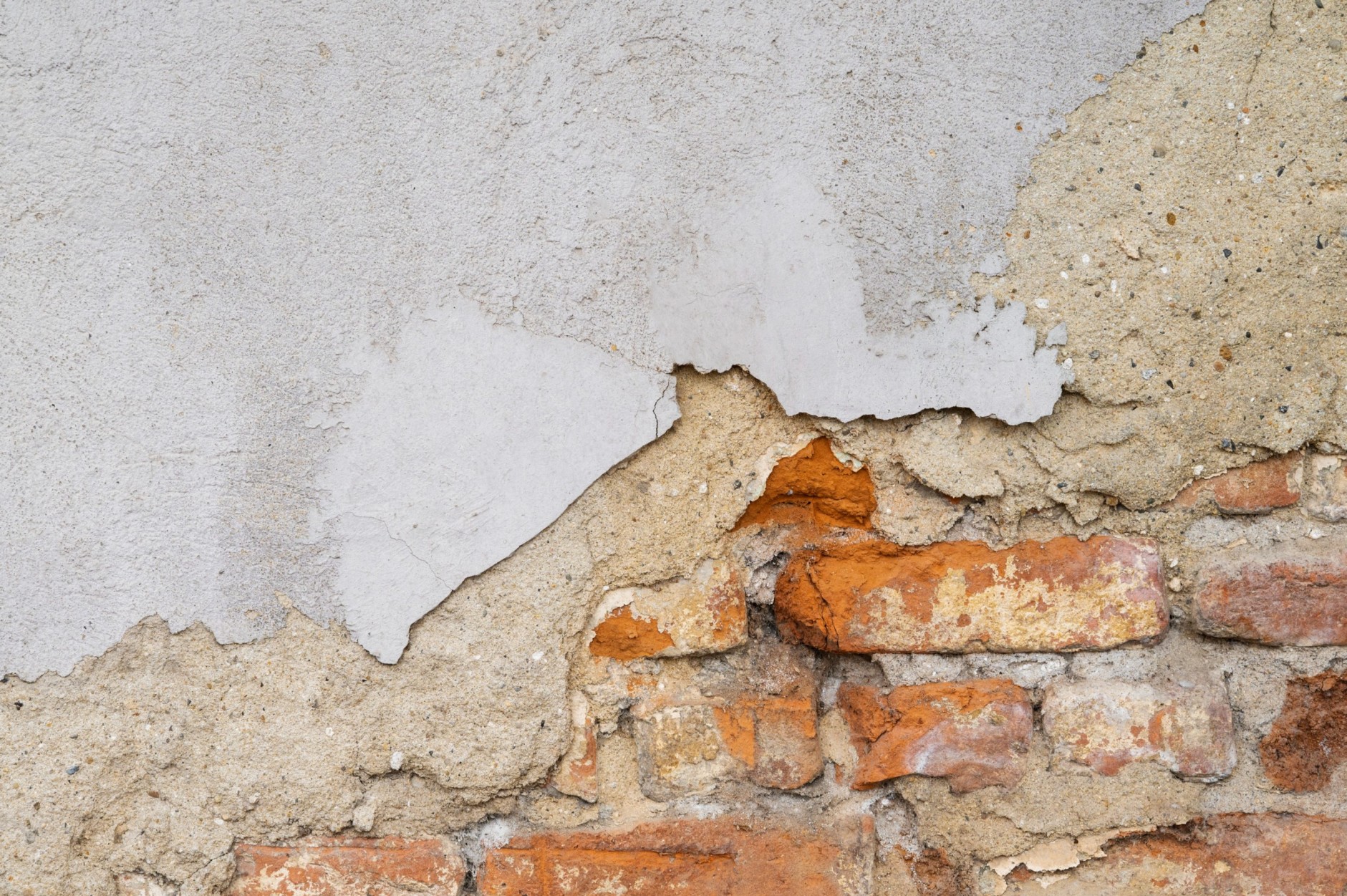
Here are the five warning signs that mean your foundation needs attention now, not next season.
1. Cracks in the foundation walls or floor. Not all cracks are emergencies, but all deserve a professional evaluation. Hairline cracks under 1/16 inch are often just signs of normal settling. However, horizontal gaps, stair-step patterns, or any opening wider than 1/4 inch signal serious structural movement. If you notice cracks growing over weeks or months, the issue is active and requires immediate assessment. Quality brick wall repair is the best way to stabilize these areas and prevent further displacement.
2. A crumbling foundation surface. If the concrete is flaking, spalling, or turning to powder when you touch it, the material itself is deteriorating. This is especially common in Boston homes built before 1950, where the original concrete mix may not have been as durable as modern formulations. A crumbling foundation won't fix itself it only gets worse through each freeze-thaw cycle.
3. Water intrusion or persistent dampness. Water intrusion and persistent dampness are major red flags. Wet spots on basement walls, pooling water, or a musty smell all point to foundation breaches. Water is both a symptom and a cause: it enters through existing gaps, then freeze-thaw cycles widen them further. Addressing brick wall repair cracks water damage early is the only way to break this cycle and protect your home’s structural integrity.
4. Doors and windows that stick or won't close properly. When a foundation shifts, the entire frame of the house shifts with it. Doors that used to close smoothly suddenly drag. Windows jam. Gaps appear at the top of door frames. These are structural symptoms, not just annoyances.
5. Bowing or leaning basement walls. This is the most serious sign. A wall that leans inward even 1/2 inch is under lateral pressure from soil and water outside. Left unaddressed, bowing walls can eventually fail. If you see this, call a structural engineer before calling a contractor.
One warning sign on its own may be minor. Two or more showing up together almost always means your foundation needs professional evaluation.
How to Repair a Crumbling Concrete Foundation
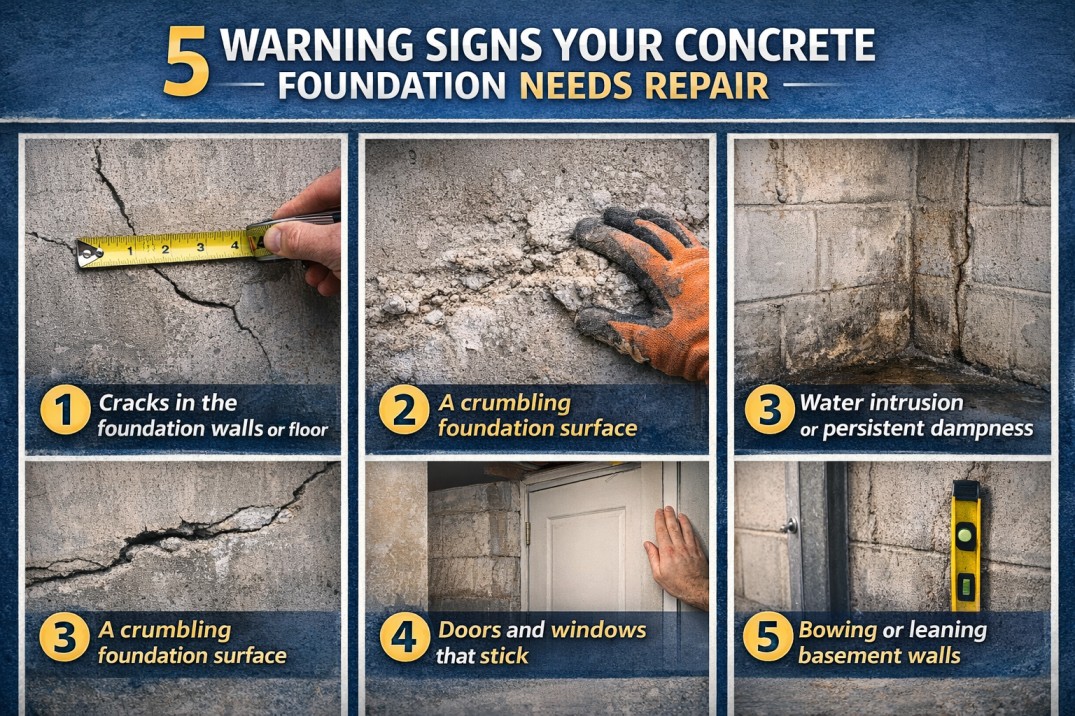
A crumbling concrete foundation is one of the most common issues in older Boston homes. Decades of moisture exposure, road salt runoff, and freeze-thaw cycles break down the concrete surface until it literally falls apart in your hands.
Here's how the repair process works, from minor surface deterioration to full structural rebuilding.
For surface-level crumbling (less than 1 inch deep):
Remove all loose and deteriorated concrete using a wire brush, chisel, or grinder. You need to get down to solid material.
Clean the surface thoroughly. Remove dust, debris, and any efflorescence (that white powder).
Dampen the existing concrete. Dry concrete pulls moisture from the repair material before it can bond.
Apply a bonding agent to improve adhesion between old and new material.
Apply a polymer-modified repair mortar or concrete resurfacer in layers no thicker than 1/2 inch. Build up multiple layers for deeper areas.
Cure properly keep the repair damp for at least 24 to 48 hours.
For deeper deterioration (more than 1 inch deep or structural):
Surface patching won't solve structural crumbling. When the deterioration runs deep, contractors typically use one of these approaches:
Shotcrete or gunite overlay. A new layer of concrete is sprayed onto the existing wall at high pressure, often reinforced with steel mesh. This adds structural strength and creates a new waterproof surface.
Full section replacement. The damaged section is removed and re-poured with modern concrete. This is the most expensive option but the most permanent.
Carbon fiber reinforcement. For walls that are crumbling and beginning to bow, carbon fiber strips bonded to the surface can stabilize the structure while a resurfacing layer addresses the deterioration.
The biggest mistake homeowners make with a crumbling foundation is treating it as cosmetic. If the concrete is turning to powder, there's a moisture problem driving the deterioration. Patching the surface without fixing the moisture source means you'll be patching again in two to three years.
Concrete Foundation Repair Costs in Boston (2026)
Foundation repair is not cheap. But it's always less expensive than the structural failure you get from ignoring the problem. Here's what Boston homeowners should expect to pay in 2026.
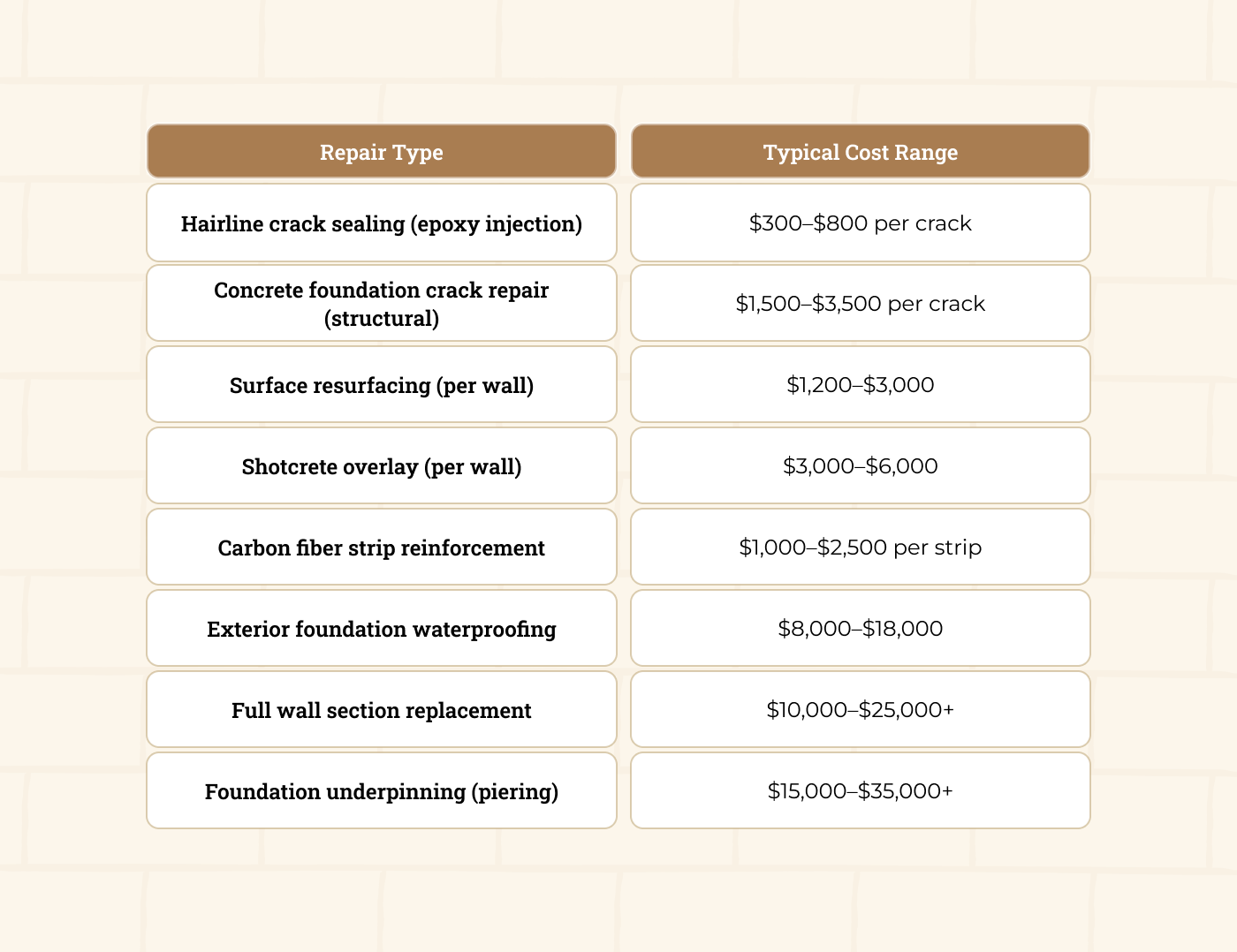
How much does concrete foundation repair cost overall? Most Boston homeowners spend between $2,500 and $8,000 for moderate foundation repairs. Simple crack injections on the low end, structural reinforcement or partial wall rebuilds on the high end.
What drives costs up in Boston specifically:
Access difficulty. Dense lot spacing means excavation equipment often can't reach the foundation. Manual digging adds labor costs.
Permitting. Structural foundation work in Boston requires permits and sometimes engineering sign-offs, adding $500 to $2,000 to the project.
Historic homes. Pre-1950 foundations often use rubble stone or low-grade concrete that requires specialized repair techniques.
Water table. Parts of Back Bay, South Boston, and East Boston have high water tables that complicate exterior foundation work.
The cost of doing nothing is always higher. A $500 crack repair today prevents a $15,000 wall replacement five years from now.
Best Concrete Foundation Repair Products and Methods
Not every crack or crumble needs the same fix. The right concrete foundation repair products depend on the type and severity of the damage.
Epoxy injection systems. Best for structural crack repair in poured concrete foundations. Epoxy bonds the crack closed with a material stronger than the original concrete. Brands like Simpson Strong-Tie, Sikadur, and Rhino Carbon Fiber make professional-grade epoxy injection kits. Epoxy works only on dry, stable cracks it won't bond in wet conditions.
Polyurethane foam injection. Best for cracks that are actively leaking water. Unlike epoxy, polyurethane stays flexible after curing, which accommodates minor foundation movement. It also expands to fill irregular crack geometry. The tradeoff: it doesn't add structural strength like epoxy does.
Hydraulic cement. A fast-setting product that stops active water leaks in minutes. Useful for plugging holes where pipes penetrate the foundation wall or for emergency leak stops. Not a long-term structural repair it's a temporary measure until a permanent fix is applied.
Polymer-modified repair mortars. Products like Quikrete Concrete Resurfacer or Sika RepairCrete are designed for resurfacing spalled and crumbling concrete. They bond to existing concrete and provide a durable new surface layer. Best for cosmetic and moderate surface deterioration.
Carbon fiber reinforcement strips. These aren't a product you buy at the hardware store they're professionally installed. Carbon fiber strips are bonded to bowing or cracking walls with structural epoxy to prevent further movement. They're ten times stronger than steel by weight and don't corrode.
Exterior waterproofing membranes. Products like Tremco or Henry foundation coatings are applied to the outside of the foundation wall after excavation. They prevent water from reaching the concrete in the first place, which is the only way to stop moisture-driven deterioration at its source.
Which method is right for your foundation? A quick guide:
Exterior vs. Interior Foundation Repair: Which Do You Need?
This is one of the most common questions homeowners ask, and the answer depends on what you're trying to fix.
Interior foundation repair addresses problems from inside the basement. This includes crack injections, interior drainage systems (like French drains tied to a sump pump), carbon fiber reinforcement, and surface resurfacing. Interior work is less disruptive, less expensive, and can often be completed in one to three days.
Interior repair is the right choice when. You have isolated cracks that aren't caused by exterior water pressure. The foundation surface is deteriorating but the wall is structurally sound - You need a drainage solution to manage water that's already entering the basement - Budget is limited and the damage is moderate
Exterior concrete foundation repair means excavating the soil around the foundation to access the outside of the wall. This allows contractors to apply waterproofing membranes, install exterior drainage, repair or replace deteriorated sections from the outside, and address the root cause of water infiltration.
Exterior repair is the right choice when. Water is entering through the wall from outside, not from interior condensation. The foundation coating or damp-proofing has failed. Soil pressure is causing bowing (the soil must be relieved from outside). You want to prevent further deterioration, not just manage the symptoms. Grading or drainage issues around the home are contributing to the problem
The Honest Answer for Most Boston Homes
You often need both. Interior work manages symptoms and stabilizes the structure, while exterior work fixes the underlying cause. A good contractor will explain which combination makes sense for your specific situation rather than pushing the most expensive option. When evaluating your property, our masonry services boston ensure that both the aesthetic and structural layers of your home are addressed correctly.
When to Call a Professional Foundation Contractor in Boston
Some foundation issues are genuinely DIY-friendly. A single hairline crack in a poured concrete wall can be sealed with a retail epoxy injection kit for under $100. Minor surface patches on a sound foundation are manageable with the right materials and preparation.
But foundation work has a hard line between DIY and professional, and crossing it can turn a moderate problem into a catastrophic one. If you are dealing with a foundation basement that shows signs of failure, DIY "quick fixes" can often mask a deeper structural threat.
Call a professional immediately if you see:
Any horizontal crack in a basement wall.
Cracks wider than 1/4 inch or cracks that are growing.
A wall that is bowing, leaning, or bulging inward.
Water entering the basement under pressure (not just seeping).
Floors that are noticeably uneven or sinking.
Structural cracks combined with sticking doors or windows.
A crumbling foundation that extends deeper than surface level.
What to look for in a Boston foundation contractor:
Licensing. Massachusetts requires a Home Improvement Contractor (HIC) registration. Verify it's current.
Insurance. Both general liability and workers' compensation. Ask for certificates, not just verbal confirmation.
Structural engineering relationships. Good foundation contractors work with structural engineers when the situation warrants it. If a contractor dismisses the need for engineering on a serious structural issue, that's a red flag.
Specific foundation experience. General contractors and foundation specialists are not the same thing. Ask how many foundation projects they've completed in the past year.
Written scope and warranty. Get everything in writing: what will be repaired, what materials will be used, the timeline, the total cost, and the warranty terms. Foundation repair warranties should be a minimum of five years for crack injection and ten years or more for structural work.
References from similar projects. Ask for references from jobs similar to yours same type of foundation, same type of damage, same neighborhood if possible.
A note on timing: Boston's foundation repair season runs roughly from April through November. Exterior work requires unfrozen ground for excavation, and most repair materials need temperatures above 40 degrees to cure properly. If you notice problems in winter, get an assessment done so you're first in line when the season opens.
Protect Your Home's Foundation Before Small Problems Become Big Ones
Every foundation issue starts small. A hairline crack. A damp spot after heavy rain. A patch of concrete that feels soft when you press on it. The homeowners who save the most money are the ones who act at this stage not after the wall starts bowing or the basement floods.
If your Boston home is showing any signs of foundation damage, don't wait for the next freeze-thaw cycle to make it worse.
Kings Masonry & Construction provides expert concrete foundation repair throughout the Greater Boston area. From crack injection and surface restoration to full structural reinforcement, we diagnose the root cause and fix it right the first time. We are licensed, insured, and deeply experienced with the region's specific challenges specializing in both modern poured concrete and historic masonry restoration for Boston’s iconic brownstones.
Don’t Wait for a Minor Crack to Become a Major Crisis. Foundation issues only get more expensive the longer you wait. Protect your Boston home’s structural integrity today with a professional assessment.
Schedule Your Free Foundation Inspection with Kings Masonry & Construction
Frequently Asked Questions (FAQ)
1. Which types of foundation cracks are considered an emergency?
While all cracks should be monitored, horizontal cracks, stair-step cracks in masonry, and any crack wider than 1/4 inch are serious red flags. If a crack is growing over several weeks or is accompanied by bowing walls, it indicates active structural movement and requires an immediate professional assessment.
2. What is the white powder appearing on my basement walls?
That white, chalky substance is called efflorescence. It occurs when moisture seeps through the concrete and leaves behind salt deposits on the surface. While the powder itself isn't dangerous, it is a clear symptom of persistent water intrusion that will eventually degrade your foundation.
3. Is it normal for an older Boston home's foundation to crumble?
It is common, but it is not "normal" or safe to ignore. In homes built before 1950, older concrete mixes are more susceptible to spalling (surface flaking) due to decades of Boston’s freeze-thaw cycles. If the concrete turns to powder when touched, the structural integrity is being compromised by moisture.
4. When is the best time of year for foundation repair in Boston?
The ideal window is between April and November. Most repair materials, such as epoxy and mortar, require temperatures above 40°F to cure properly. Additionally, exterior repairs involving excavation are much more difficult and costly once the ground freezes in the winter.
5. How do I choose between interior and exterior repair?
Interior repair (like epoxy injection) is best for sealing isolated cracks and managing minor dampness on a budget. Exterior repair is necessary when you need to stop water from reaching the wall in the first place or when soil pressure is causing the wall to bow. Often, a combination of both provides the most permanent solution.