

Brick Wall Repair: How to Fix Cracked, Crumbling, or Damaged Brick in Boston Homes
A crack in a brick wall might look small at first. But in Boston’s climate, even a minor crack can quickly turn into a serious structural problem.
Water enters the wall through damaged mortar joints or cracked bricks. When winter temperatures drop, that trapped moisture freezes and expands. Over time, this freeze-thaw cycle pushes bricks apart, weakens mortar joints, and causes sections of the wall to crumble or bulge outward.
Brick wall repair can involve several different types of work depending on the severity of the damage. Common repairs include:
Replacing cracked or spalled bricks
Repointing deteriorated mortar joints
Stabilizing leaning or bulging walls
Rebuilding damaged sections of brickwork
In this guide, we’ll explain the most common brick wall problems in Boston homes, how professional masonry contractors repair them, and when it’s time to call an expert.
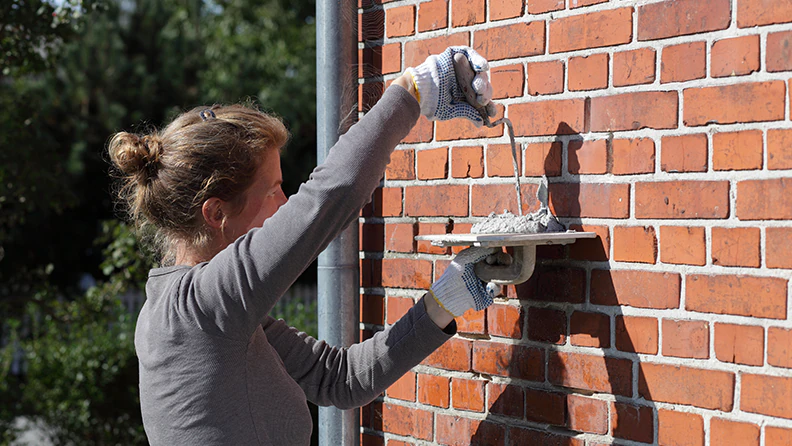
Concrete vs. Masonry: Why the Difference Matters for Repairs
Homeowners often use the terms concrete and masonry interchangeably. In reality, they are very different building systems, and the repair methods are not the same.
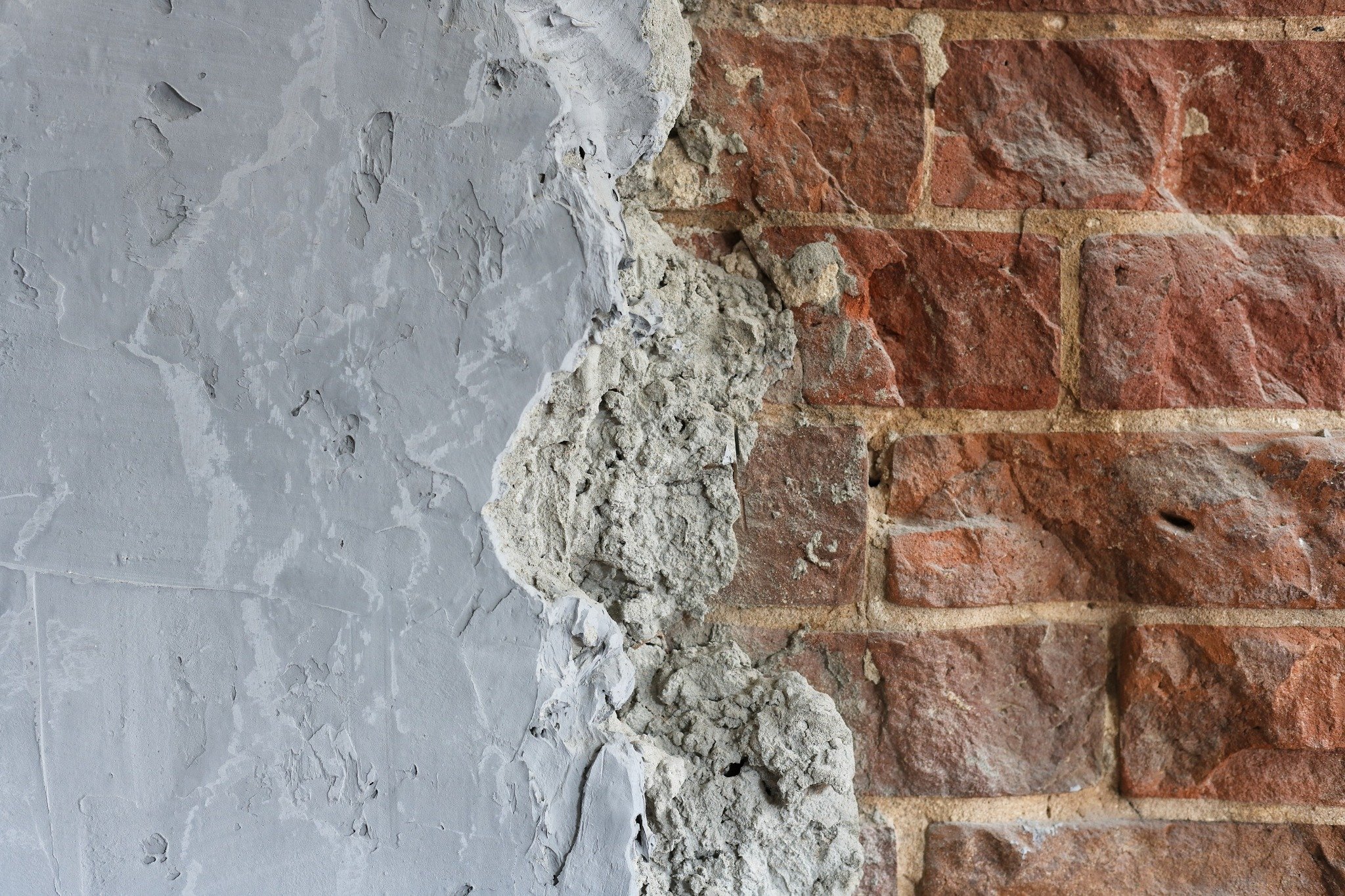
What Is Concrete?
Concrete is a single poured material made from:
Portland cement
water
sand
gravel or crushed stone
Once poured, it cures into a solid slab. Concrete is commonly used for:
foundations
driveways
sidewalks
basement walls
When concrete cracks, it usually fails as a single unit, meaning repairs often involve patching, sealing, or replacing sections of the slab.
What Is Masonry?
Masonry is built using individual units joined together with mortar, such as:
bricks
concrete blocks
natural stone
Many Boston homes rely on traditional brick construction, which is why understanding stone masonry services Boston can help homeowners choose the correct repair approach. A brick wall is a classic masonry structure. The important difference is that masonry is modular. Each brick and each mortar joint can be repaired or replaced individually.
This makes masonry repair much more precise. For example:
A cracked brick can be removed and replaced
Mortar joints can be renewed through repointing
Sections of the wall can be rebuilt without replacing the entire structure
Why This Matters
If a contractor suggests concrete repair for a brick wall, ask questions.
Brick structures require masonry repair techniques, including:
mortar matching
brick replacement
joint repointing
Using the wrong materials can actually accelerate damage.
Many Boston homes built before 1960 feature extensive brick masonry, especially in facades, chimneys, and exterior walls.
Common Causes of Brick Wall Damage in Boston
Boston’s environment is particularly tough on brick structures. Several factors accelerate masonry deterioration in the region.
Freeze-Thaw Cycles
The biggest threat to masonry in New England is freeze-thaw damage. Freeze-thaw damage often leads to cracks in brick or mortar, which should be inspected before the damage spreads.
Water enters through small cracks in mortar or brick. When temperatures drop below freezing, that water expands by about 9%, putting pressure on the surrounding masonry.
Boston experiences roughly 90–100 freeze-thaw cycles per year, which slowly weakens brick walls over time.
Moisture Infiltration
Moisture infiltration is the primary driver behind the need for brick wall repair for damage in older Boston homes. Water typically finds its way into a masonry wall through several common points of failure:
Damaged Flashing: Worn or improperly installed metal seals at rooflines, chimneys, or window headers.
Clogged Gutters: Overfull gutters that cause water to overflow and pour directly down the face of the masonry.
Missing Caulking: Gaps around window and door frames that allow wind-driven rain to penetrate the building envelope.
Poor Foundation Drainage: Improper grading that allows water to pool at the base of the wall and wick upward into the brickwork.
Once moisture enters the wall system, it travels through the porous masonry, leading to progressive damage such as:
Efflorescence: Unsightly white salt deposits left on the surface as water evaporates.
Interior Water Stains: Moisture migrating all the way through the wall to damage interior plaster, paint, or drywall.
Spalling Bricks: The most serious stage, where trapped water freezes and expands, causing the brick faces to crack, flake, or pop off entirely.
Mortar Deterioration
Mortar joints are designed to wear out before the bricks themselves.
Typically, mortar lasts 25 to 50 years before it needs to be repointed.
When joints erode more than ¼ inch behind the brick face, water begins entering the wall more easily and damage accelerates.
Salt Damage
Road salt and de-icing chemicals can cause significant masonry damage. Many homeowners ignore early warning signs such as cosmetic brick damage, which can lead to deeper masonry deterioration.
Salt crystals form inside the pores of the brick and expand, leading to flaking, scaling, and crumbling surfaces. This is common on:
front steps
foundation walls
brick near driveways
Structural Movement
Some Boston neighborhoods are built on historic filled land, which can lead to foundation settling. Uneven settling can cause stair step cracks foundation patterns along mortar joints.
When foundations shift unevenly, brick walls often develop stair-step cracks along mortar joints, a classic sign of structural movement.
From Technician John: Recently, a client in stair-step cracks and crumbling bricks near their foundation. Upon inspection, we found that clogged gutters were directing water into the masonry, causing severe freeze-thaw damage.
The Fix: We cleared the moisture source, replaced the damaged bricks, and performed a precision historic mortar match. The Result: The wall’s structural integrity was restored in just two days, preventing a much more expensive full rebuild.
Is It Better to Drill Into Brick or Mortar?
When installing fixtures on a brick wall, many homeowners wonder whether to drill into the brick itself or the mortar joints.
Drill Into Mortar for Most Installations
Mortar is softer and easier to drill. If something goes wrong, repairing mortar is also far simpler than replacing a brick.
Mortar joints are intentionally designed as the sacrificial component of a masonry wall.
For light-to-medium loads (under about 50 pounds), drilling into mortar is usually the safest choice.
Drill Into Brick for Heavy Loads
For heavier installations like:
TV mounts
heavy shelving
structural brackets
drilling directly into the brick may be necessary for strength.
However, always drill into the center of the brick, never near the edges where cracking is more likely.
Should You Drill Masonry Fast or Slow?
Speed matters when drilling into brick or mortar.
Professional Brick Wall Repair Services in Boston
Brick wall damage rarely improves on its own. Each winter freeze-thaw cycle pushes moisture deeper into the masonry and expands existing cracks.
Professional brick repair services typically include:
brick replacement
mortar repointing
structural stabilization
partial wall rebuilding
historic mortar matching
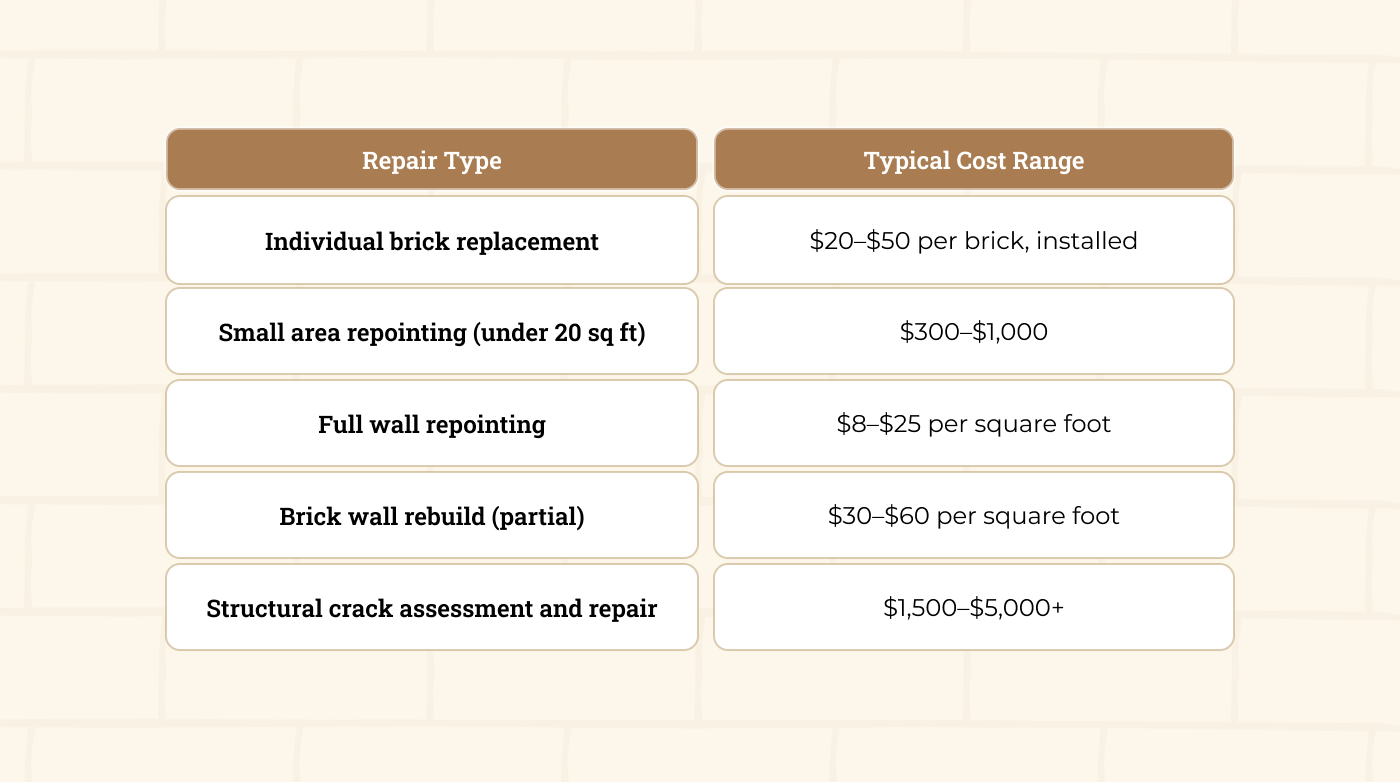
Typical Brick Repair Costs in Boston
Start Slowly
Begin at a low drill speed with light pressure. This prevents the drill bit from slipping across the surface and creating an uneven hole.
Some professionals lightly tap the drilling point with a masonry nail to create a small indentation before drilling.
Increase to Moderate Speed
Once the hole begins forming, increase the drill to moderate speed. Allow the bit to cut naturally rather than forcing it through the material.
Applying too much pressure can:
overheat the drill bit
dull the carbide tip
crack the surrounding masonry
Use a Hammer Drill for Brick
A hammer drill adds a small percussive motion while rotating, making it much easier to drill through brick or concrete.
For most masonry projects, this tool dramatically reduces effort and produces cleaner holes.
When to Call a Professional Brick Repair Contractor
Small masonry issues can sometimes be repaired by homeowners. However, larger brick wall problems should always be handled by experienced masons.
Call a professional if you notice:
multiple cracked bricks across a wall
bulging or leaning brickwork
stair-step cracks in mortar joints
widespread mortar erosion
damage above the first story
problems in historic brick structures
These issues often indicate structural or moisture problems that require professional evaluation.
Get a Professional Brick Wall Repair Estimate
If you’re seeing cracked bricks, crumbling mortar, or bulging brickwork, it’s best to address the issue early.
Small repairs today can prevent major structural damage in the future.
Kings Masonry & Construction provides professional brick wall repair services across the Greater Boston area, including mortar matching for historic homes and structural masonry restoration.
Contact us today for a free brick wall repair estimate and protect your home before the next Boston winter.
Frequently Asked Questions (FAQ)
1. How long does a typical brick repair project take?
Most small-to-medium residential repairs, such as repointing a single wall or replacing a few dozen bricks, can be completed in 1 to 3 days. Larger structural repairs or full chimney rebuilds may take a week or more, depending on the weather.
2. Can I repair cracked bricks myself with caulk?
We do not recommend using caulk or waterproof sealants on brick cracks. Masonry needs to "breathe" to allow moisture to escape. Using the wrong materials can trap water inside, leading to faster deterioration and structural rot.
3. Is it possible to match the mortar color on an older Boston home?
Yes. At Kings Masonry & Construction, we specialize in historic mortar matching. We analyze the sand grain and pigment of your existing mortar to ensure the repair is nearly invisible once it cures.
4. When is the best time of year for brick repair in Boston?
The ideal time is between late spring and late fall when temperatures stay above freezing. While some emergency repairs can be done in winter using specialized heaters and enclosures, masonry work generally requires consistent temperatures for the mortar to cure correctly.
5. Does a small crack always mean structural failure?
Not necessarily. Many cracks are "hairline" and result from natural settling. However, if a crack is wider than 1/8 inch, follows a stair-step pattern, or if the bricks are physically crumbling (spalling), you should have it inspected immediately to prevent a minor issue from becoming a major structural failure.