When to Replace Your Chimney Cap: Signs and What to Expect | Kings Masonry Boston
A chimney cap doesn't last forever. Boston's winters with their freeze-thaw cycles, heavy snow loads, and nor'easters accelerate wear faster than most climates. The question most homeowners face isn't whether the cap will eventually need replacing, but whether that time has already come.
This guide gives you a clear answer.
What Is a Chimney Cap and Why Does It Matter?
A chimney cap sits at the top of the flue and serves as your chimney's primary defense against the elements. It blocks rain, snow, and ice from entering the flue, prevents animals from nesting inside, and stops downdrafts from pushing smoke back into the home.
When it fails even partially water gets in. And in masonry, water is the enemy.
Repair vs. Replacement: How to Tell the Difference
Not every chimney cap problem requires a full replacement. Here's how to read the situation:
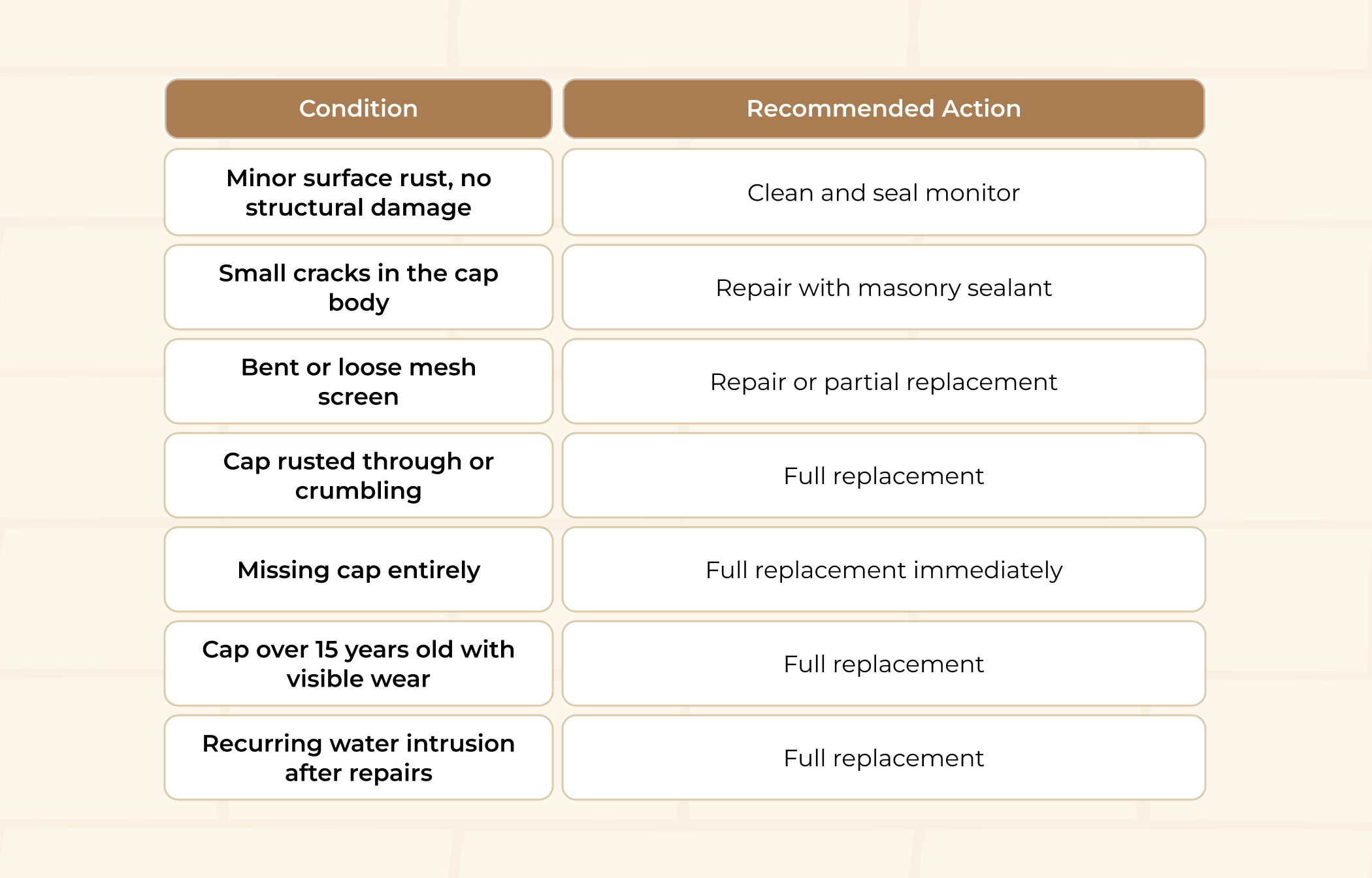
Full replacement
If the cap has been patched before and water is still getting in, replacement is the more reliable long-term solution.
For a broader look at chimney cap warning signs, read our Chimney Cap Failing Signs Guide.
6 Clear Signs It's Time to Replace Your Chimney Cap
1. Visible Rust or Corrosion Through the Metal
Surface rust on a galvanized steel cap is normal after several years. But when the rust has eaten through the metal creating holes or structural weakness no amount of sealing will hold. The cap needs replacing.
2. Water in the Firebox After Rain
Open the damper after a heavy rain and check the firebox. Moisture, puddles, or a damp smell confirm that water is entering the flue. If this is happening despite a cap being in place, the cap is no longer doing its job.
3. Animals or Debris Inside the Flue
A functioning chimney cap with an intact mesh screen keeps birds, squirrels, and raccoons out. If you're hearing scratching sounds or finding nesting material near the fireplace, the mesh has failed or the cap has shifted and replacement is the most reliable fix.
4. Cracked or Broken Cap Body
Physical cracks in the cap body visible from the ground with binoculars allow water to enter and freeze inside the material. In Boston's winters, that freeze-thaw cycle causes the crack to expand rapidly. A cracked cap won't improve on its own.
5. Smoke Backdrafting Into the Home
A damaged or incorrectly seated cap disrupts the chimney's draft. If your fireplace is pushing smoke into the room rather than drawing it up and out, cap condition is one of the first things to check alongside the damper and flue liner.
6. The Cap Is More Than 15 Years Old
Galvanized steel caps typically reach the end of their reliable lifespan at around 10–15 years in New England's climate. If you don't know when the cap was last replaced and it's showing any signs of wear, proactive replacement is the smarter decision.
Chimney Cap Materials: Which One Is Right for Your Home?
When replacing the cap, material selection affects how long the next cap will last.
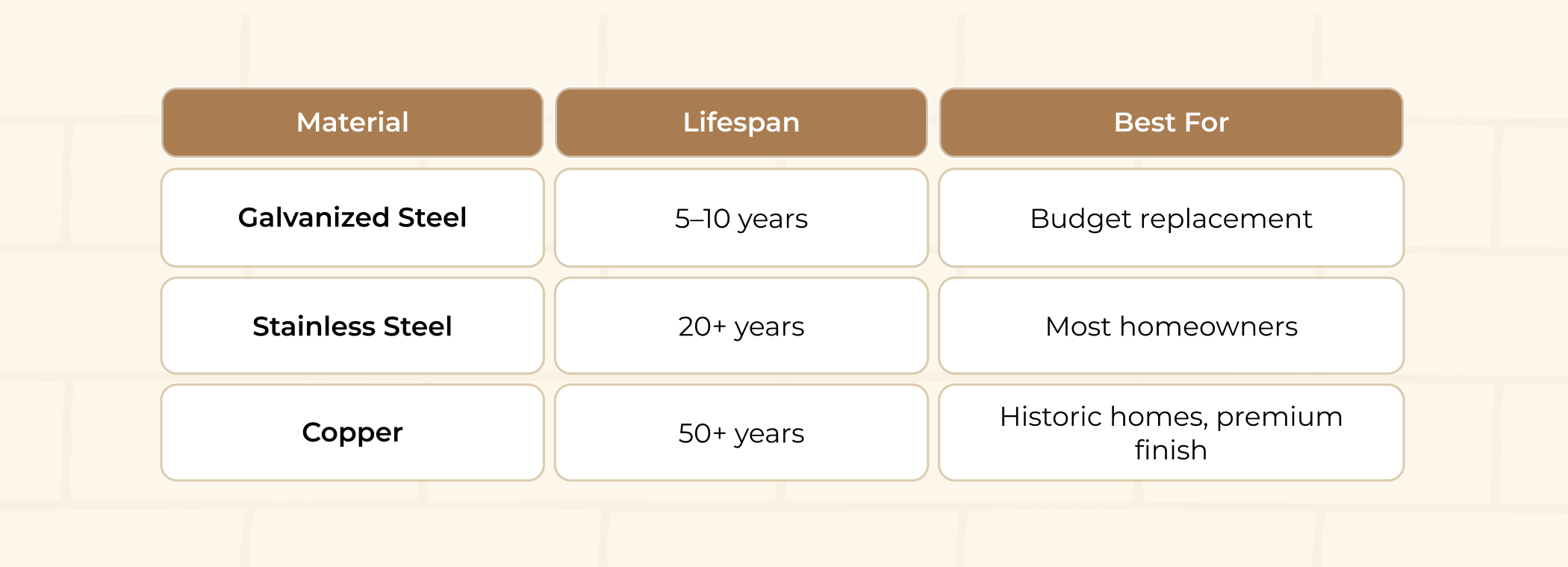
Stainless steel is the most practical choice for the majority of homeowners. It handles freeze-thaw cycles without corroding, doesn't require maintenance, and will outlast a galvanized replacement by a decade or more. Copper is worth considering for historic properties where appearance matters, but it carries a premium.
What to Expect During a Chimney Cap Replacement
A professional chimney cap replacement is a straightforward process. Here's what it typically involves:
Inspection the technician assesses the cap, chimney crown, flue liner, and mortar joints to identify any damage that should be addressed at the same time
Removal the old cap is removed and the flue opening is cleared of any debris or deteriorated material
Sizing the replacement cap is measured and fitted to the correct flue dimensions. An incorrectly sized cap is a common issue with DIY replacements
Installation the new cap is secured and sealed to prevent movement and water infiltration
Crown check if the crown shows cracking or deterioration, repairs are made before the new cap is installed to ensure a sound base
The job is typically completed in a single visit. For more on what a full chimney inspection involves alongside cap replacement, see our Summer Chimney Inspection Guide.
How Long Does a New Chimney Cap Last?
Lifespan depends almost entirely on material:
Galvanized steel: 510 years in New England's climate
Stainless steel: 20+ years with no maintenance required
Copper: 50+ years often the last cap a chimney will ever need
Investing in stainless steel over galvanized typically means one replacement instead of three or four over the same period.
Ready to Replace Your Chimney Cap? Get a Free Quote.
If your chimney cap is showing any of the signs above or you simply don't know when it was last replaced the right move is a professional inspection before the next winter arrives.
Kings Masonry & Construction provides expert chimney cap replacement and chimney repair across Boston, Hingham, Newton, and surrounding Massachusetts communities. We assess the cap, crown, and flue in a single visit and give you a clear, honest recommendation no pressure, no guesswork.
Call us for a free quote: (857) 249-5127
Frequently Asked Questions
How do I know if my chimney cap needs repair or full replacement?
If the cap has surface rust but is structurally intact, cleaning and sealing may extend its life. If the metal has rusted through, the body is cracked, or water is entering the flue despite the cap being in place, replacement is the more reliable solution. A professional inspection gives you a definitive answer.
Can I replace a chimney cap myself?
On a single-story home with easy roof access, a standard cap swap is within DIY range for a confident homeowner. On multi-story homes which covers most of Boston's housing stock working at height without proper safety equipment creates serious risk. Incorrect sizing is also a common DIY mistake that leads to ongoing problems.
How often should a chimney cap be inspected?
Annual inspection is the standard recommendation. The best time in Boston is late spring or early summer after the winter has done its worst and before you need the chimney again in the fall.
What happens if I don't replace a failing chimney cap?
Water enters the flue and begins deteriorating the liner, damper, and mortar joints. Animals can nest inside the flue, creating fire hazards and odor problems. Over time, unchecked water intrusion causes significant structural damage to the chimney and the masonry surrounding it — repairs that far exceed the cost of a simple cap replacement.
Do you replace chimney caps in Boston?
Yes. Kings Masonry & Construction handles chimney cap inspection, repair, and replacement across Boston and surrounding communities. Call (857) 249-5127) for a free on-site assessment.