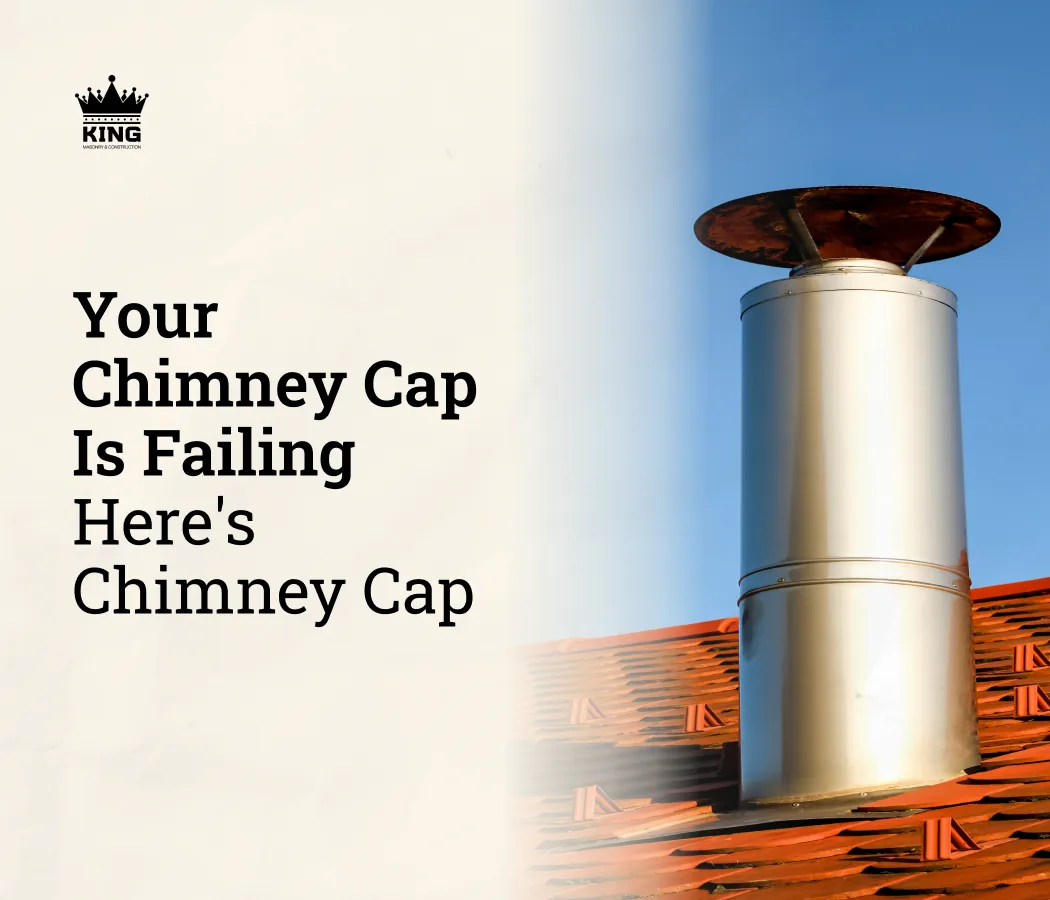
Your Chimney Cap Is Failing Here's How to Tell Before It's Too Late
Most homeowners never think about their chimney cap until something goes wrong. By the time water is pooling in the firebox or animals are nesting in the flue, the damage is already done. Catching a failing chimney cap early is the difference between a quick fix and a major structural repair.
Here's exactly what to look for.
What Does a Chimney Cap Actually Do?
A chimney cap sits at the very top of your flue and acts as the first line of defense against everything Boston's weather throws at your chimney. It keeps rain, snow, and ice out of the flue, blocks animals from nesting inside, and prevents downdrafts from pushing smoke back into your home.
Without a functioning cap, your chimney is an open pipe exposed to moisture, debris, and wildlife year-round. In a climate like Boston's, that's a serious problem.
6 Signs Your Chimney Cap Is Failing
You don't need to climb on the roof to spot most of these. Some are visible from the ground; others show up inside the house.
1. Rust Stains on the Chimney Exterior
Orange or brown streaks running down the outside of the chimney are a reliable sign that the metal cap is corroding. As the cap rusts, it loses structural integrity and water begins finding its way in.
2. Water Inside the Firebox
After heavy rain, open the damper and check the firebox. Any moisture, puddles, or damp smell points directly to a compromised cap or chimney crown. Water inside the flue accelerates deterioration of the liner, damper, and mortar joints.
3. Animals or Debris in the Flue
Birds, squirrels, and raccoons are drawn to open chimney flues for nesting. If you hear scratching sounds, notice animal odors, or find nesting material near the fireplace, your cap's mesh screen has failed or the cap is missing entirely.
4. Visible Cracks or Corrosion on the Cap
If you can see the cap from ground level using binoculars, look for visible rust, bent edges, cracks, or sections that have broken away. A galvanized steel cap that's been exposed to New England winters for more than a decade will show significant wear.
5. Damaged Mortar Around the Crown
The chimney crown is the concrete slab that surrounds the flue at the top of the chimney. When the cap fails and water gets in, it accelerates cracking and spalling of the crown. Crumbling mortar around the cap base is a sign the problem has already progressed.
6. Unusual Drafting or Smoke Backdraft
A damaged cap can allow wind to push air down the flue instead of letting combustion gases escape. If your fireplace smokes into the room or drafts inconsistently, a compromised cap may be disrupting the airflow.
Chimney Cap Failure: What You're Risking by Waiting
A failing chimney cap is not a cosmetic issue. Left unaddressed, the consequences compound quickly:
Water damage to the flue liner clay tile liners crack when repeatedly exposed to moisture and freeze-thaw cycles, often requiring full relining
Deteriorating damper a rusted or warped damper can't seal properly, driving up heating costs and letting cold air into the home
Mold and efflorescence moisture inside the chimney structure causes mold growth and white salt deposits on the exterior masonry
Structural damage to the crown and masonry water that freezes inside cracks expands and accelerates spalling, eventually compromising the chimney structure itself
Animal infestations nesting materials are a fire hazard, and animals trapped inside the flue create health and odor problems
The longer a failing cap goes unaddressed in Boston's climate, the more damage accumulates especially through winter freeze-thaw cycles.
For a full picture of what a professional chimney inspection covers, read our Summer Chimney Inspection Guide.
Chimney Cap Repair vs. Replacement at a Glance
Not every failing cap needs a full replacement. Here's how to determine which route makes sense:
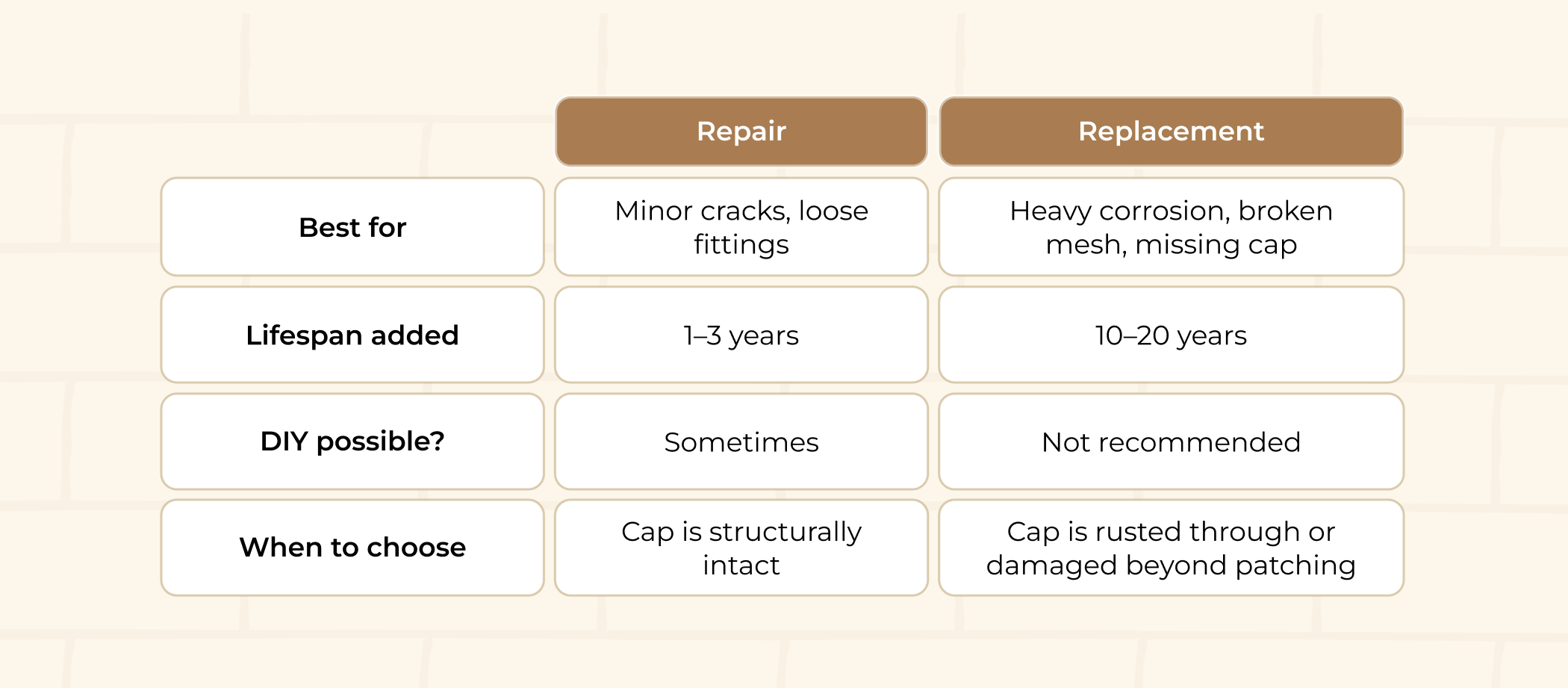
In most cases, if a cap is showing visible corrosion or has been in place for more than 10-15 years, replacement is the more practical long-term decision.
For a complete overview of chimney maintenance priorities, see our Chimney Maintenance Guide for Boston Homeowners.
Chimney Cap Materials Compared
If you're replacing the cap, material selection matters especially in Boston's climate.
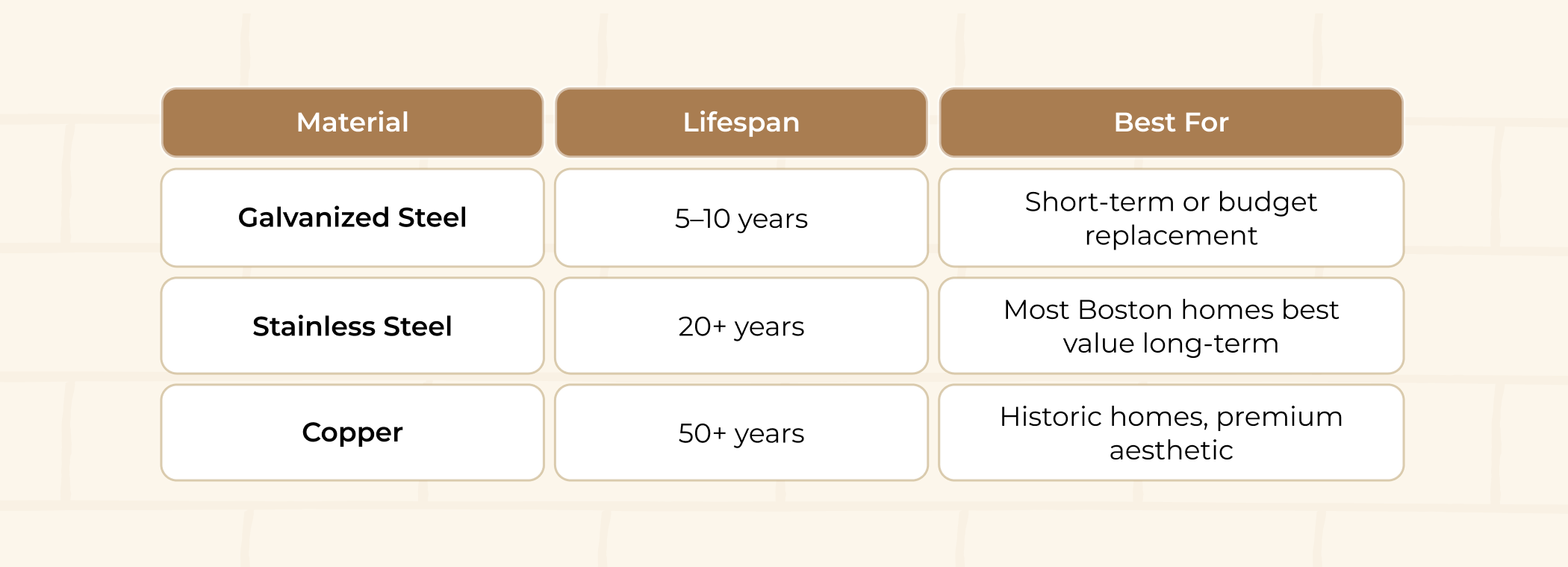
Stainless steel is the most practical choice for the majority of Boston homes it handles freeze-thaw cycles well, resists corrosion, and doesn't require maintenance. Copper is worth considering for historic properties where aesthetics matter.
Boston Winters Don't Wait Neither Should You
If your chimney cap is showing any of the signs above, the right time to address it is before the next rain or the first freeze not after.
Kings Masonry & Construction provides professional chimney cap inspection, repair, and replacement across Boston and surrounding areas. Our team assesses the cap, crown, and flue condition in a single visit and gives you a clear, honest recommendation.
Call us: (857) 249-5127
Frequently Asked Questions
How long does a chimney cap last?
It depends on the material. Galvanized steel caps typically last 5-10 years in New England's climate before corrosion becomes a problem. Stainless steel caps last 20 or more years with no maintenance. Copper caps can last the lifetime of the chimney 50 years or more.
Can I replace a chimney cap myself?
On a single-story home with a low-pitch roof and easy access, a straightforward cap swap is within DIY range. On multi-story homes or steep rooflines which covers most of Boston's older housing stock working at height without proper safety equipment creates serious risk. A professional installation is the safer and more reliable option.
How do I know what size chimney cap I need?
Chimney caps are sized by the outer dimensions of the flue tile. A technician measures the flue opening and selects a cap with the correct fit and overlap. Using an incorrectly sized cap is a common DIY mistake a cap that's too small won't seal properly, and one that's too large can create drafting problems.
Does homeowner's insurance cover chimney cap damage?
It depends on the cause. Damage from a sudden event such as a storm or fallen branch is typically covered under a standard homeowner's policy. Gradual deterioration from age and weathering is generally considered maintenance and is not covered. Check your policy or contact your insurer to clarify your specific coverage.