

How to Know If Your Brick Steps or Walkway Need Repair This Summer
Boston winters are brutal. Repeated freeze-thaw cycles crack mortar, loosen bricks, and shift entire walkway sections often without homeowners noticing until the damage becomes serious. Summer is your window to inspect, repair, and protect your brickwork before the next winter hits.
Here's exactly what to look for.
Why Summer Is the Right Time for Brick Repair in Boston
Mortar needs warm, dry conditions to cure properly. Repairs done in summer bond stronger, last longer, and give your brickwork time to fully set before fall moisture and winter frost return.
Waiting until fall is too late by then, new cracks are already forming.
4 Key Signs Your Brick Steps or Walkway Need Repair
1. Deteriorating Mortar Joints
Mortar is the first thing to fail. Run a screwdriver across the joints if it crumbles easily or mortar is visibly missing, repointing is needed.
Crumbling or missing mortar between bricks
Stair-step cracks running diagonally across joints these can signal foundation settlement
Repointing is one of the most common and cost-effective brick walkway repairs in Boston. Catching it early prevents water from penetrating deeper into the structure.
For a deeper look at brick damage types, read our guide on Brick Wall Repair: How to Fix Cracked, Crumbling, or Damaged Brick in Boston Homes
2. Brick Damage and Structural Movement
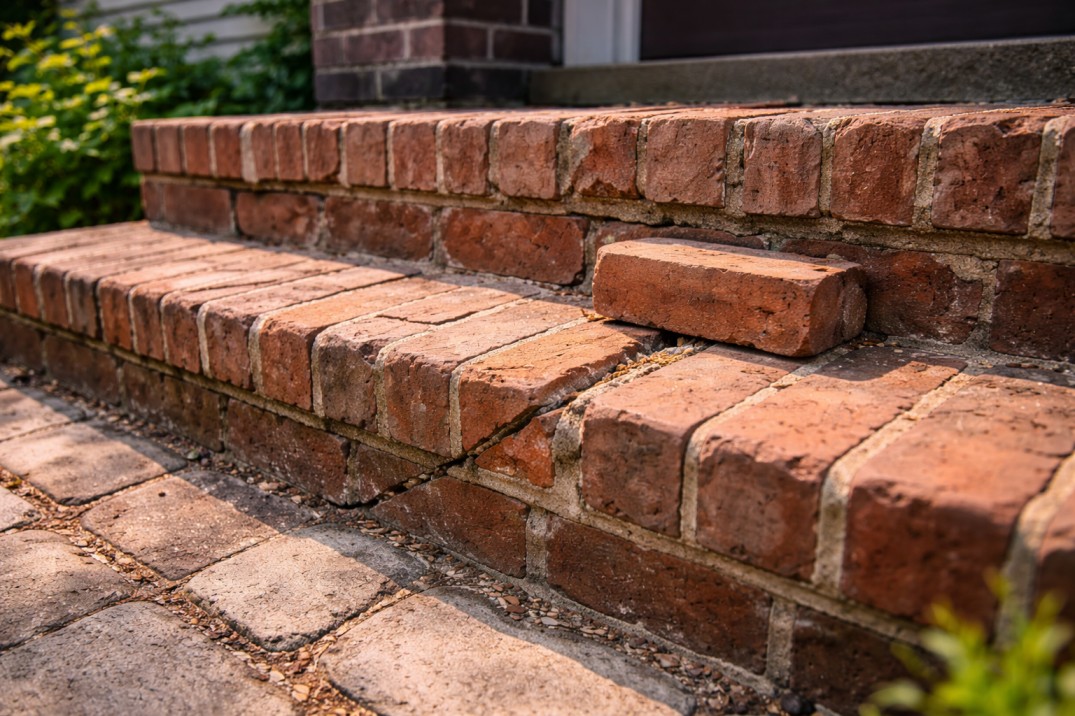
Spalling bricks when the brick face flakes or pops off, water has entered and frozen inside the material
Loose or tilted bricks safety hazard on steps, requiring immediate attention
Bulging or bowing surfaces outward movement in a step structure or wall is a sign of serious structural failure
Pro tip: If any element is leaning or a crack is wider than a quarter-inch, contact a Boston masonry contractor right away.
3. Water Damage Indicators
Water is the root cause of most brick walkway issues in Boston. Look for:
Efflorescence white, powdery salt deposits on the surface mean water is moving through the brick
Pooling water standing water on your walkway shifts the base over time
Moss, mold, or weeds growing in joints a sign of persistent moisture and failing mortar
4. Uneven or Unsafe Surfaces
Walkways with humps or low spots are tripping hazards
Steps that wobble, are uneven in height, or shift when stepped on need structural repair not just cosmetic work
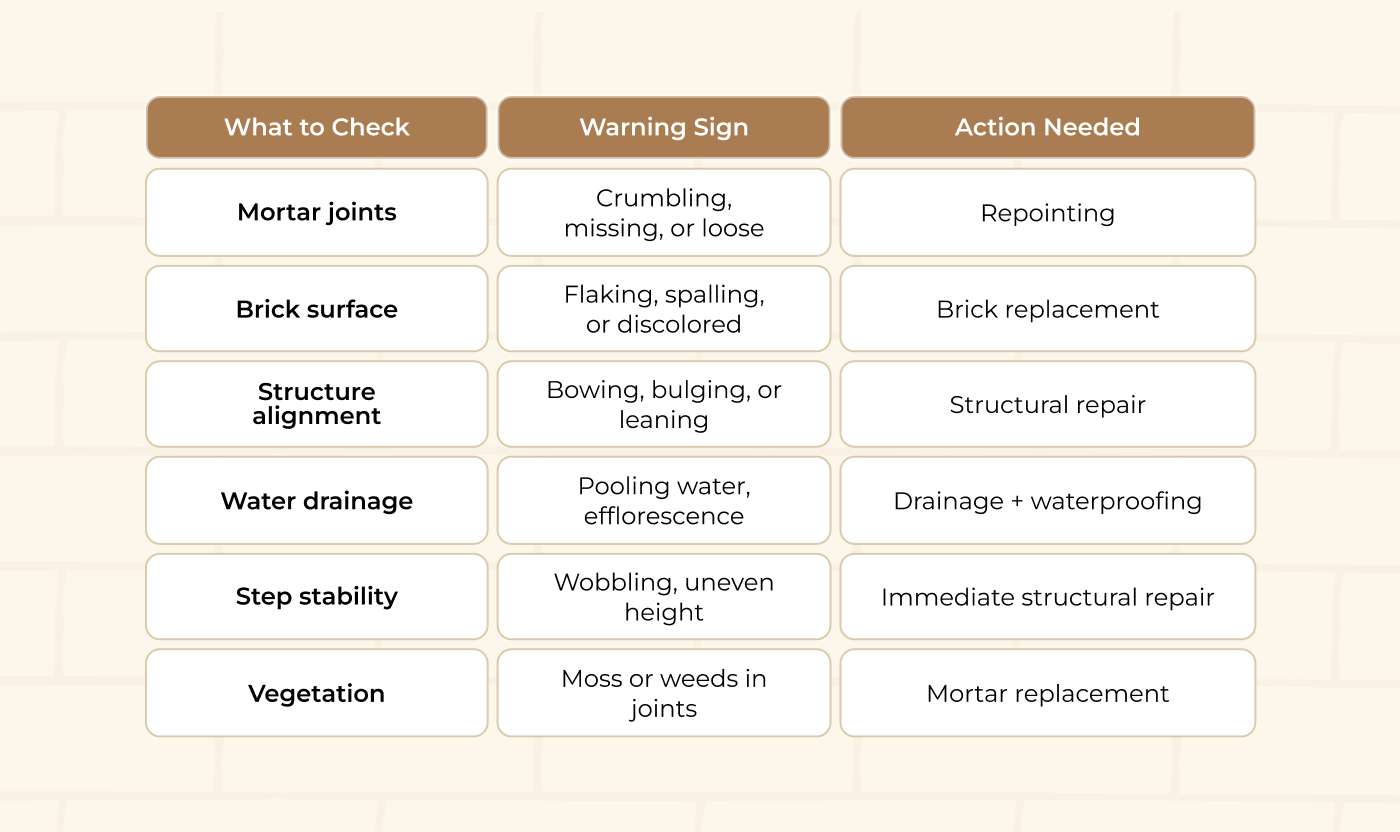
Quick Inspection Checklist
Learn more in our detailed guide: Foundation Crack Repair: How to Identify, Assess, and Fix Cracks Before They Spread
Don't Wait Until Fall
Summer brick repair in Boston isn't just cosmetic it's preventive. Every season you delay, freeze-thaw cycles push existing damage further. A small repointing job today can prevent a full step rebuild next spring.
Kings Masonry & Construction provides professional brick steps and walkway repair across Boston, Brookline, Newton, and surrounding Greater Boston communities. If you noticed any of the signs above, get a free on-site estimate before the window closes.
Frequently Asked Questions
Do cracks in brick always mean foundation problems?
Not always. Most cracks in brick steps and walkways are caused by freeze-thaw damage or mortar deterioration not foundation issues. However, diagonal stair-step cracks across multiple joints can indicate foundation settlement and should be evaluated by a professional.
When is the best time to repair brick steps in Boston?
Summer is ideal. Warm, dry conditions allow mortar to cure properly. Repairs done in summer bond stronger and protect the structure before fall moisture and winter freeze-thaw cycles.
Are brick steps more expensive than concrete?
Brick steps typically cost more upfront than poured concrete, but they last significantly longer when properly maintained. In Boston's climate, well-maintained brick outperforms concrete over time because individual bricks can be replaced without redoing the entire structure.
How often should brick walkways be inspected in Boston?
At least once a year ideally every summer after winter freeze-thaw season. Early detection prevents small issues from becoming costly structural repairs.
Can I repair brick steps myself?
Minor cleaning or loose brick resetting may be DIY-friendly, but repointing and structural repairs require the correct mortar mix for Boston's climate. Wrong materials can accelerate damage. Professional repair is recommended for anything beyond surface-level maintenance.