
Best Time to Fix Your Walkway in Boston | Kings Masonry
If you've been putting off driveway or walkway repairs, timing matters more than most homeowners realize especially in Boston. Get it wrong and repairs fail within a season. Get it right and your surface lasts years longer.
Here's the complete seasonal breakdown for Boston driveway and walkway repair.
Why Timing Matters for Boston Walkways
Boston's climate is extreme. Harsh winters leave behind cracked asphalt, heaved pavers, and deteriorated mortar and the window to fix them properly is shorter than most people think.
Temperature, humidity, and ground conditions all affect how well repair materials bond and cure. A patch laid in November is a temporary fix at best. The same repair done in July lasts years.
Seasonal Breakdown: Best Time for Driveway and Walkway Repair in Boston
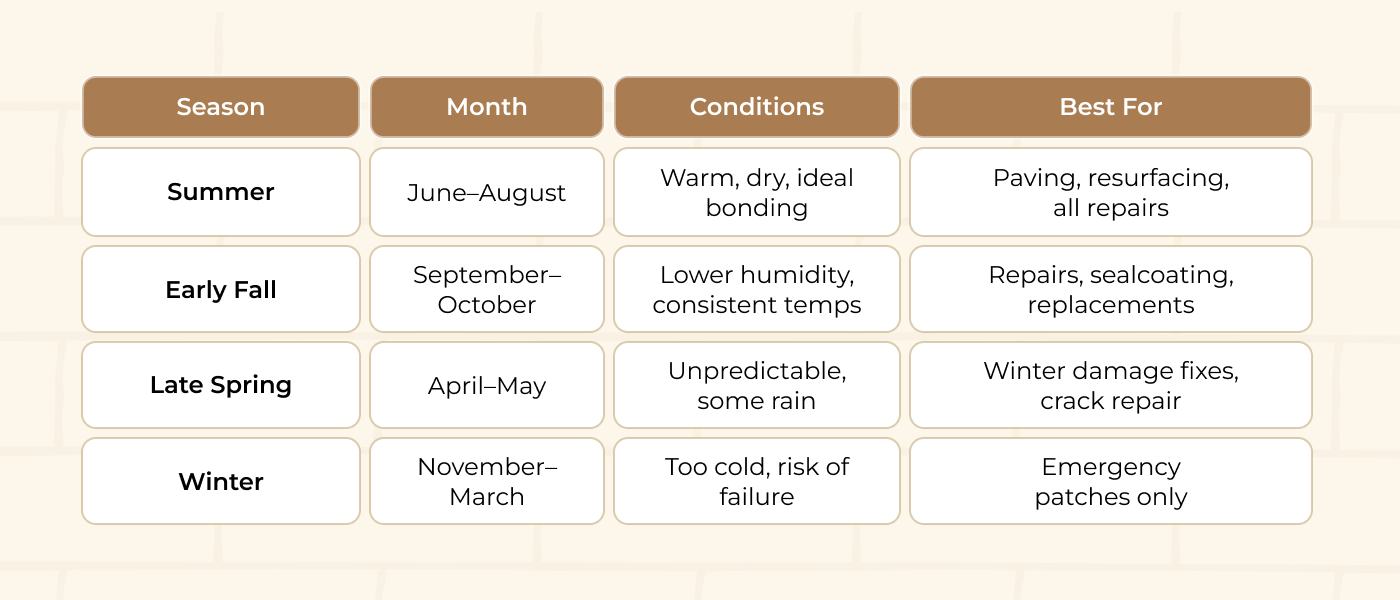
The Best Time: Summer (June–August)
Summer is peak season for driveway and walkway repair in Boston and for good reason. Temperatures between 70°F–85°F allow asphalt to compact and bond properly to the base, producing a stronger, longer-lasting surface.
Why summer works best:
Warm ground temperatures ensure proper material adhesion
Dry conditions prevent moisture from interfering with curing
Brick and mortar repairs cure fully before fall rain arrives
One important note: Good contractors in Boston fill up fast in summer. Call for estimates in March or April to secure your spot.
Second Best: Early Fall (September-October)
Early fall is an underrated window for driveway and walkway repair. Lower humidity helps materials cure cleanly, contractors are slightly less busy than in summer, and you can still complete full resurfacing or replacement projects before frost arrives.
Is October too late to seal a driveway? Early October is generally fine sealant needs temperatures consistently above 50°F to cure. By late October in Boston, nights drop too cold. If you're sealing in fall, aim to finish by mid-October at the latest.
Third Best: Late Spring (April-May)
Late spring is the right time to assess and begin fixing winter damage, but Boston weather in April and May is unpredictable. Rain delays are common, and ground temperatures can still be too low for quality asphalt work early in the season.
Best uses in late spring:
Inspecting and documenting winter damage
Crack filling and minor patching
Scheduling summer repairs before contractor calendars fill up
Worst Time: November-March
Cold temperatures below 50°F make quality driveway installation and resurfacing virtually impossible. Asphalt won't compact or bond properly, mortar won't cure, and any repairs done in freezing conditions are likely to fail by spring.
Winter repairs should be treated as temporary emergency fixes only plan for proper repair when conditions allow.
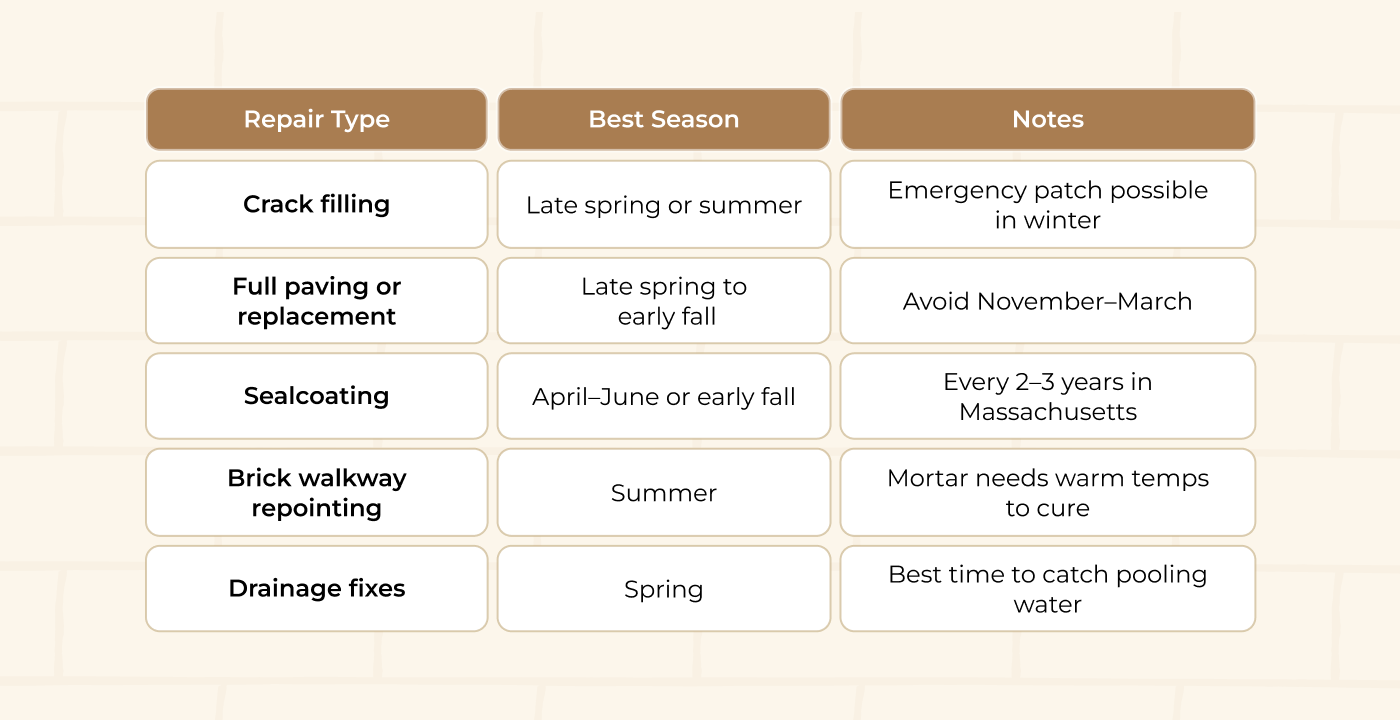
Repair Type Guide by Season
Warning Signs Your Driveway or Walkway Needs Repair Now
Don't wait for complete failure. Address these early:
Cracks wider than a quarter-inch water enters, freezes, and widens them each winter
Potholes or depressions indicate base failure beneath the surface
Heaving or uneven sections caused by frost or tree root movement
Pooling water means drainage has failed and base damage is likely forming
Loose or missing edging allows surface material to shift and crumble
Book Before the Season Fills Up
The best contractors in Greater Boston are booked out weeks in advance during summer. If your driveway or walkway has cracks, uneven sections, or visible winter damage, now is the time to act not August.
Kings Masonry & Construction provides professional driveway and walkway repair across Boston, Brookline, Newton, and surrounding Greater Boston communities. Get a free on-site estimate and secure your spot before the summer calendar fills.
FAQ
Can cracks in my driveway be repaired without full replacement?
Yes in most cases. Surface cracks and minor potholes can be patched and sealed effectively if the base is still structurally sound. Full replacement is only needed when the base has failed or damage is widespread across the surface.
How long does driveway repair take in Boston?
Most crack repairs and patching jobs are completed in a single day. Full resurfacing or replacement typically takes 1–3 days depending on size, with a curing period of 24-72 hours before normal use.
Does rain affect driveway repair?
Yes. Asphalt and mortar repairs should not be done on wet surfaces or during rain. Even light rain immediately after application can disrupt bonding and curing. Dry, warm days are essential for quality results.
What's the difference between resurfacing and repaving a driveway?
Resurfacing adds a new layer over the existing surface and works when the base is intact. Repaving removes the old surface entirely and rebuilds from the base up needed when damage is deep or widespread. If repaving isn't enough and you're considering a fresh start, our guide on patio and walkway installation in Boston covers materials, costs, and what to expect from a new installation.