
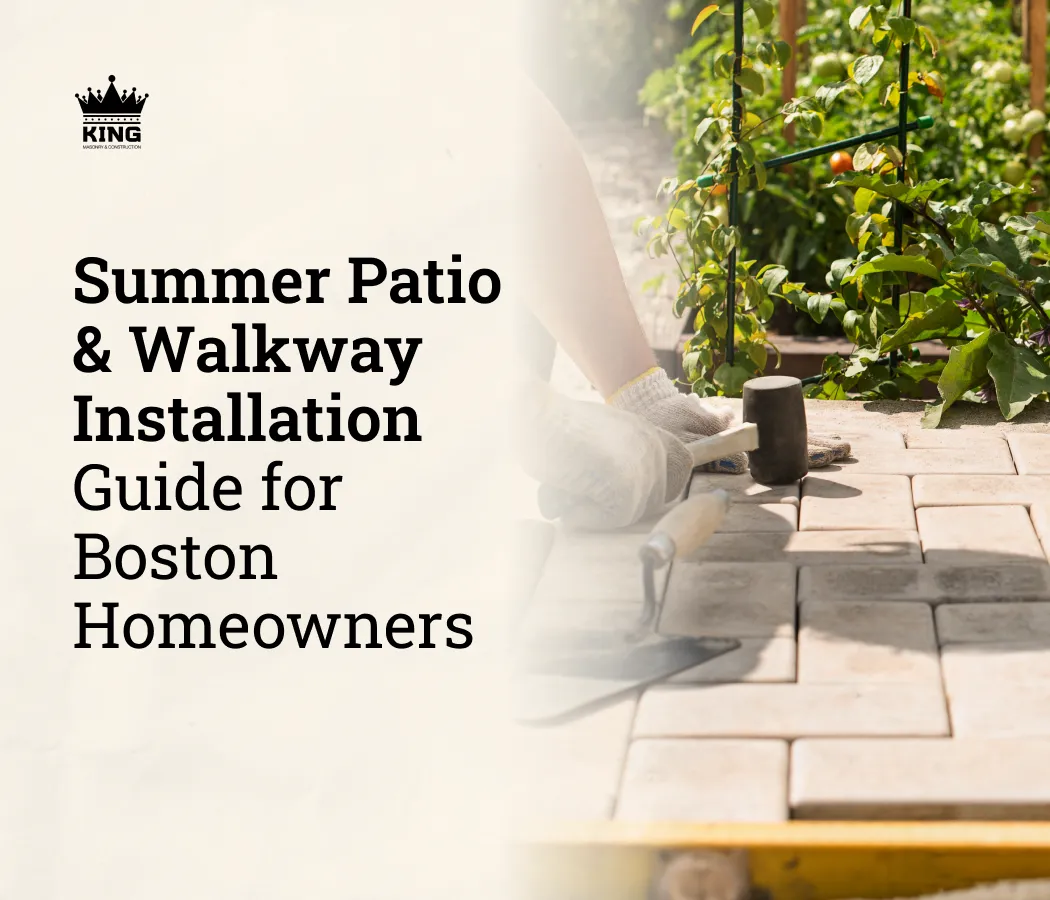
Summer Patio & Walkway Installation in Boston: Materials, Costs & Guide
Summer is the best time to add a patio or walkway to your Boston home and one of the most common projects homeowners put off until it's too late in the season. The right material, the right timing, and the right contractor make the difference between a surface that lasts decades and one that fails after the first New England winter.
Here's everything you need to know before starting your project.
Why Summer Is the Best Time for Patio and Walkway Installation in Boston
Patio and walkway installation requires warm, dry ground conditions for proper base compaction, material bonding, and curing. Boston summers June through August provide the most consistent window for quality results.
Warm ground temperatures allow base materials to compact properly
Dry conditions prevent moisture from interfering with mortar and setting materials
Maximum curing time before fall rain and winter freeze-thaw cycles arrive
Full contractor availability though peak season books fast, summer offers the widest selection of qualified contractors
Pro tip: Call for estimates in April or May. Quality patio and walkway contractors in Greater Boston are often booked 4-6 weeks out by June.
Patio and Walkway Material Options
Choosing the right material for Boston's climate is as important as the installation itself. Each option has different performance characteristics, costs, and maintenance requirements.
Brick Pavers
Classic New England aesthetic, highly durable, and individually replaceable if damaged. Brick pavers handle freeze-thaw cycling well when properly installed on a compacted base with adequate drainage.
Natural Stone
Bluestone, granite, and fieldstone offer premium aesthetics and exceptional longevity. Natural stone is heavier and more expensive to install but requires minimal maintenance and holds up well in Boston's climate.
Concrete Pavers
Manufactured pavers offer consistent sizing, wide color and style options, and good freeze-thaw resistance when properly sealed. More affordable than natural stone with comparable durability.
Poured Concrete
Lower upfront cost but more vulnerable to Boston's freeze-thaw cycles than paver systems. Poured concrete develops cracks over time that cannot be individually repaired — the entire slab must be replaced when damage becomes significant.
Gravel or Crushed Stone
The most affordable walkway option. Low maintenance, excellent drainage, and easy to install. Not suitable for all applications best for informal garden paths rather than main entry walkways.
Is It Cheaper to Lay Pavers or Pour Concrete?
Poured concrete has a lower upfront installation cost. However, when a section of poured concrete cracks which is common in Boston's freeze-thaw climate the repair often requires replacing the entire slab. Pavers cost more upfront but allow individual unit replacement, making long-term maintenance significantly less expensive.
For Boston homeowners planning to stay in their home for 10+ years, paver systems typically offer better long-term value than poured concrete.
Can You Lay a Patio in October?
Early October is the borderline window in Boston. Ground temperatures need to be consistently above 50°F for base materials and setting compounds to perform correctly. By mid-to-late October in Greater Boston, nighttime temperatures regularly drop below this threshold.
Patio installation started in October runs the risk of:
Inadequate base compaction in cooling ground
Mortar and jointing sand not curing before first frost
Freeze-thaw damage to a freshly installed surface before it's fully set
If your project isn't underway by September, plan for the following spring rather than rushing a late-season install.
Key Steps in Professional Patio and Walkway Installation
1. Site Assessment and Design Evaluate drainage, slope, soil conditions, and intended use. Poor drainage planning is the most common cause of patio failure in Boston water that can't drain away causes base erosion and surface movement.
2. Excavation Remove existing surface material and excavate to proper depth typically 6-12 inches depending on material and use.
3. Base Preparation Install and compact a crushed stone base layer. This is the most critical step a properly compacted base prevents settling and drainage problems for decades.
4. Edge Restraints Install permanent edge restraints to prevent paver migration at the perimeter.
5. Material Installation Set pavers, stone, or pour concrete over the prepared base according to the chosen pattern and design.
6. Jointing and Sealing Fill joints with polymeric sand or mortar. Apply a breathable penetrating sealer to protect the surface from Boston's freeze-thaw cycling and staining.
Start Your Project This Summer
A well-installed patio or walkway adds usable outdoor space, improves curb appeal, and increases property value but only if it's built properly for Boston's climate. Cutting corners on base preparation or material selection means repairs within a few winters. If your existing walkway or steps are already showing wear, our guide on how to know if your brick steps or walkway need repair helps you decide whether to repair or start fresh.
Summer schedules fill fast. Book your free estimate now and let Kings Masonry & Construction build the patio or walkway your home deserves.
FAQ
Do I need a permit for patio installation in Boston?
Most residential patio installations do not require a permit in Boston if they are at grade and not attached to the structure. Raised patios, retaining walls over 4 feet, or any work affecting drainage may require permits. Your contractor will advise based on your specific project.
How long does a brick patio last in Boston?
A properly installed brick paver patio on a well-compacted base with adequate drainage can last 25–50 years in Boston's climate with routine maintenance. Individual pavers that crack or settle can be replaced without disturbing the surrounding surface.
What pattern should I choose for brick pavers?
Herringbone is the most structurally stable pattern for driveways and high-traffic areas the interlocking angle distributes load effectively. Running bond and basket weave are popular for patios and walkways. Pattern choice is primarily aesthetic for low-traffic residential applications.
Can pavers be installed over an existing concrete slab?
In some cases, yes if the existing slab is structurally sound, level, and has adequate drainage. However, adding paver height above the existing slab affects transitions to doors, steps, and adjacent surfaces. A professional assessment determines whether overlay or removal and replacement is the better approach.
What is polymeric sand and why does it matter?
Polymeric sand is a jointing material that hardens when wet, binding paver joints together and resisting erosion, weed growth, and ant activity. It is strongly recommended over regular sand for Boston installations regular sand washes out over winter and requires frequent replacement.