
How Much to Flash a Chimney in Boston, MA?
Quick answer:
Flashing a chimney in Greater Boston typically runs from the low-to-mid hundreds for a straightforward repair or re-seal up to the upper hundreds or low 4 figures for a full flashing replacement in copper or on a steep, hard-to-reach roof. Cost depends on repair vs. full replacement, roof pitch and access, flashing material, and whether a leak has already caused damage underneath. These are ranges — a real number needs an on-site look.
If your chimney leaks, I'd put money on the flashing before I even climb up. Flashing — the metal that seals the joint where the chimney meets the roof — is the single most common place a chimney lets water in. I've traced more "mystery" ceiling stains to failed flashing than to any other cause on the South Shore, and the fix is usually far cheaper than the water damage it prevents.
Here's what flashing a chimney costs, and what makes one job pricier than another.
How much does it cost to flash a chimney?
Short answer: A targeted repair or re-seal sits in the low-to-mid hundreds; a full flashing replacement runs into the upper hundreds to low 4 figures, more with copper or a difficult roof.
Job type | What's involved | Cost band* |
|---|---|---|
Re-seal / minor repair | Re-caulking, resealing counter-flashing, small patches | Low-to-mid hundreds |
Partial replacement | Replacing failed step or counter-flashing sections | Mid hundreds |
Full flashing replacement | New step + counter-flashing, properly integrated | Upper hundreds to low 4 figures |
*Ballpark ranges for planning only. Roof pitch, height, material, and any hidden water damage set the real price.
What is chimney flashing, and why does it leak?
Short answer: Flashing is the layered metal seal where the chimney passes through the roof. It leaks because caulk-only "flashing" fails, metal corrodes, or storms and freeze-thaw work the seal loose — and once it's open, wind-driven rain pours straight into the roof and masonry.
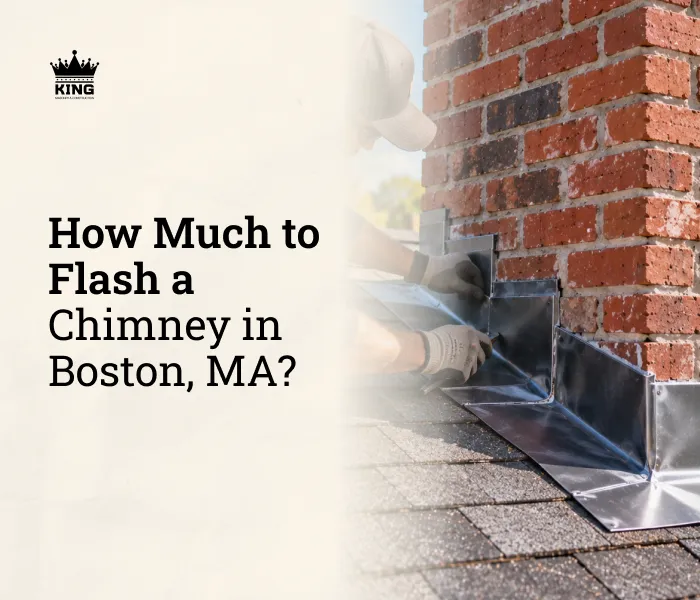
Proper flashing is 2 layers working together: step flashing woven into the roof shingles, and counter-flashing set into the chimney's mortar joints. The cheap version — a bead of roofing tar smeared around the base — always fails, usually within a few years. Our region is hard on it: the late-September 2026 nor'easter drove 3-plus inches of wind-blown rain across Boston, and that kind of horizontal rain finds every weak seam. Once water gets past the flashing, it doesn't just stain a ceiling; it soaks the framing and the chimney, which is how a small flashing problem becomes the water damage inside a chimney I get called about. If you're seeing stains on the wall beside the chimney, our post on water seeping through a chimney wall helps pin down the source.
Flashing is part of a system with the crown and cap, which is why our chimney crown, cap, and flashing services page treats them together — fixing one while ignoring the others often just moves the leak.
Is it cheaper to repair or replace chimney flashing?
Short answer: Repair is cheaper up front, and it's the right call when the flashing is fundamentally sound but has a failed seal or a small damaged section. Replacement costs more but lasts far longer when the flashing is corroded, was never installed properly, or has leaked long enough to need doing right.
The trap I warn people about: repeatedly re-caulking flashing that was never installed correctly. You'll pay for the same "repair" every couple of years while water keeps working underneath. On a chimney that's leaked for a while, a proper replacement — integrated step and counter-flashing — is the cheaper choice over any real timeframe. If the leak is already causing damage, our chimney leak and water damage services address the flashing and the damage together.
What drives chimney flashing cost the most?
Short answer: Roof pitch and height, the material, repair vs. full replacement, and hidden damage under the old flashing move the number most.
Roof access. A steep or 3-story roof means more setup and safety, which is labor.
Material. Aluminum is affordable; copper and lead cost more but last for decades and suit historic homes.
Scope. A re-seal is quick; integrating new step flashing into the shingles and counter-flashing into the mortar is skilled work.
What's underneath. If water has already rotted decking or soaked the masonry, that repair adds to the flashing cost — and catching it during routine chimney maintenance is far cheaper than after a ceiling collapses.
Why choose Kings Masonry & Construction
At Kings Masonry & Construction, you get:
A licensed and insured team with 15-plus years of chimney and masonry work across Boston and the South Shore
A 4.9-star local rating
Free, no-obligation on-site quotes 7 days a week
We find the real source of the leak, show you photos, and quote the fix honestly.
Frequently asked questions
How much does it cost to flash a chimney in Boston, MA?
A flashing repair or re-seal typically runs low-to-mid hundreds. A full flashing replacement runs upper hundreds to low 4 figures, and more with copper or on a steep, high roof. Roof access, material, and hidden water damage set the real price, so an on-site look is needed.
Why is my chimney leaking when it rains?
The most common cause is failed flashing, the metal seal where the chimney meets the roof. Other causes include a missing or damaged cap, a cracked concrete top, and water soaking through worn brick or mortar. Leaks that appear only in wind-driven rain usually point to the flashing or cap.
How long does chimney flashing last?
It depends on the material and the installation. Tar or caulk patches can fail within a few years. Properly installed metal flashing lasts much longer, and copper or lead can last for decades.
Does homeowners insurance cover chimney flashing repair?
Usually not for wear or gradual leaks, which most policies exclude. Water damage from a sudden event, like a storm tearing the flashing loose, may be covered. Check your policy and talk to your agent.
Can I flash a chimney myself?
Small re-seals are possible for experienced DIYers on a low, safe roof. Proper flashing, with step and counter-flashing woven into the shingles and mortar, is skilled work. Doing it wrong usually means the leak comes back, and working on a steep roof is dangerous.
How long does it take to flash a chimney?
A re-seal or small repair often takes a few hours. A full flashing replacement is usually done in a day, depending on the roof and any damage found underneath.
Should I replace chimney flashing when I get a new roof?
Yes. It's the cheapest time to do it, since the roof is already open. Reusing old flashing on a new roof is a common cause of leaks right after a reroof.
The bottom line
Flashing is the most common reason a chimney leaks, and one of the more affordable things to fix if you fix it right.
A proper repair or full replacement stops the water.
A smear of caulk just delays the next leak.
With the way our nor'easters drive rain sideways, well-installed flashing is some of the cheapest protection on your roof.
Stop the leak at the source. If you've got a stain near your chimney anywhere in Boston or the South Shore, Kings Masonry & Construction offers free, no-obligation on-site quotes 7 days a week. Book a free quote.