
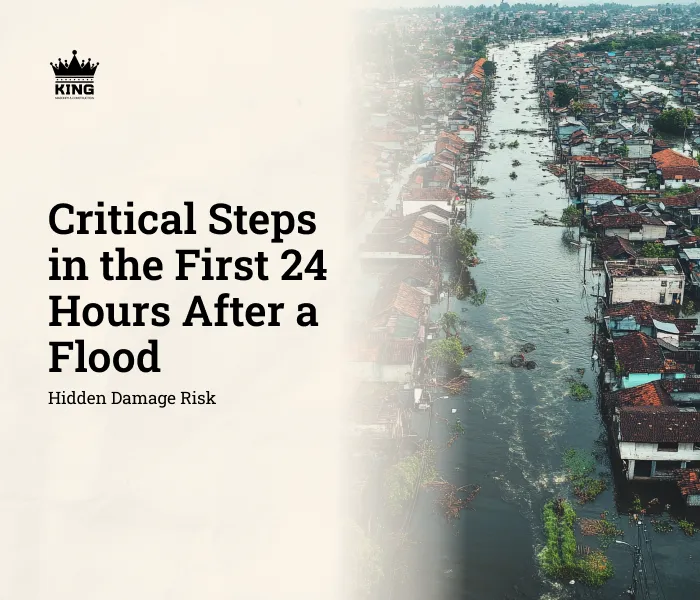
Critical Steps in the First 24 Hours After a Flood
A flood can happen in minutes. Water rushes in, and suddenly your home is in crisis mode. The first 24 hours after a flood are critical. What you do in these hours can mean the difference between manageable damage and catastrophic loss.
Mold can start growing within 24 to 48 hours. Structural damage worsens if water sits. Insurance companies need proper documentation. This guide walks you through exactly what to do when your home floods.

Safety First: Protect Yourself
Before you touch anything, make sure it's safe.
Turn off the electricity at the main breaker. Floodwater conducts electricity. Don't touch wet switches, outlets, or appliances. If you can't reach the breaker safely, call an electrician.
Avoid walking through contaminated water. Floodwater often contains sewage, chemicals, and bacteria. Wear rubber boots, gloves, and a mask if you enter the water.
Check for structural damage before re-entering. Look for cracks in walls, foundation issues, or sagging ceilings. If the building feels unstable, leave immediately and call professionals.
Don't use the gas until it's been inspected. Floodwater can damage gas lines. If you smell gas, leave the house and call emergency services.
Document Everything for Insurance
Take photos and videos before you move anything. Insurance companies need evidence of the damage.
Photograph:
Water lines on walls (this shows flood height)
Damaged furniture and belongings
Affected rooms and areas
Close-ups of specific damage
List everything damaged. Write down:
Item name
Approximate age
Original cost (estimate if unsure)
Current condition
Take notes on the date and time the flood started. Record the water level if possible. Document the cause of the flooding (heavy rain, burst pipe, storm surge, etc.).
Save all receipts and photos. Upload them to cloud storage so they're not lost. This documentation is essential for your insurance claim.
Start Water Removal Immediately
The longer water sits, the more damage occurs. Begin removing water as soon as it's safe.
If water is shallow (a few inches), use a wet vacuum. Rent one if you don't own one. It removes water much faster than mopping.
If water is deeper, use pumps. Submersible pumps are powerful and efficient. Pump water away from your foundation to prevent additional flooding.
Open windows and doors to create airflow. If weather permits, let fresh air circulate through the home. This helps speed up the drying process.
Use fans to move air around. Box fans and shop fans help dry wet floors and walls. Point them toward wet areas.
Turn on the air conditioning if it still works. The AC helps dehumidify the space and reduce moisture.
Dry Everything Quickly
Move wet belongings outside to dry in the sun. Sunlight naturally kills mold and bacteria.
Furniture: Pull cushions off and prop them up outside. Remove drawers and stand them upright.
Carpets and rugs: If they're not too damaged, pull them up and hang them to dry. Some can be salvaged.
Documents and photos: Lay them flat to dry or stand them like cards. Don't stack wet paper.
Mattresses: Stand them on edge. They take time to dry completely.
Leave doors and cabinets open. Moisture gets trapped inside closed spaces. Open everything to allow air circulation.
Wring out textiles and clothing. Hang them on lines to dry rather than leaving them bundled.
Check for Structural and Systems Damage
Water weakens structures and damages electrical systems. Walk through your home and assess the damage.
Look for:
Warped or buckling drywall
Separated molding or trim
Cracks in concrete or foundation
Discoloration or soft spots on walls
Visible mold (black, green, or orange patches)
Check your HVAC system. Floodwater damages heating and cooling units. Don't run the system until it's been inspected.
Inspect appliances. Washing machines, water heaters, and furnaces often can't be repaired after flooding. They may need replacement.
Test electrical outlets carefully. Don't plug anything in until an electrician checks the system. Water exposure creates fire and shock hazards.
When to Call Professional Flood Damage Restoration
Some situations require professional help. Don't try to handle everything yourself.
Call professional flood damage restoration services if:
The water level was high (over 1 foot)
The flooding involved sewage or contaminated water
The water damage affects large areas of your home
You see visible mold growth
Structural damage is visible
Your HVAC or electrical systems are damaged
Professionals have the equipment and expertise to handle serious flood damage repair. They use industrial dehumidifiers, air movers, and specialized drying techniques. They identify hidden moisture that can cause mold later.
Professional flood damage restoration also handles mold remediation and sanitization. This is important for your health and safety.
File Your Insurance Claim
Contact your insurance company within 24 to 48 hours of the flooding.
Report:
The date and time the flooding occurred
The cause of the flood
Photos and documentation you've collected
A preliminary estimate of damage
Your contact information
Ask your insurance company:
What documentation they need
How to file your claim
If you can get an adjuster to inspect
What repairs can begin before approval
Keep all receipts for emergency repairs and water removal. You can often claim these expenses.
Document the drying and restoration process. Photos showing the cleanup and rebuilding help support your claim.
Follow up with your insurance company regularly. Don't assume they received everything. Confirm they have all your documentation.
Are u searching for flood damage restoration near me ?
The hours after a flood are chaotic. But quick action prevents worse problems. Remove water, dry everything, document damage, and call professionals when needed.
Flood damage restoration is possible, but timing matters. What you do in the first 24 hours protects your home and supports your recovery. If your home has experienced significant flood damage, professional flood damage repair services in your area can help you get back on track safely and completely.
Don't wait when dealing with water damage, contact Kings Masonry to ensure your home is properly restored and protected from future issues. We provide professional flood damage restoration services you can trust.