How to Prevent Chimney Collapse During an Earthquake
Unreinforced masonry chimneys are among the most dangerous structural elements in a home during an earthquake. They topple, send debris through roofs, and collapse into living spaces often with little warning. If your Boston home has an older brick chimney, here's what you need to know.
Why Masonry Chimneys Fail in Earthquakes
Traditional brick and mortar chimneys are heavy, rigid, and unanchored to the home's framing. During seismic activity, this combination is dangerous the chimney moves independently from the house, causing it to crack, separate, or collapse entirely.
Unreinforced masonry (URM) chimneys are considered high-risk in any seismic event, even minor ones.
4 Methods to Prevent Chimney Collapse
1. Structural Bracing and Anchoring
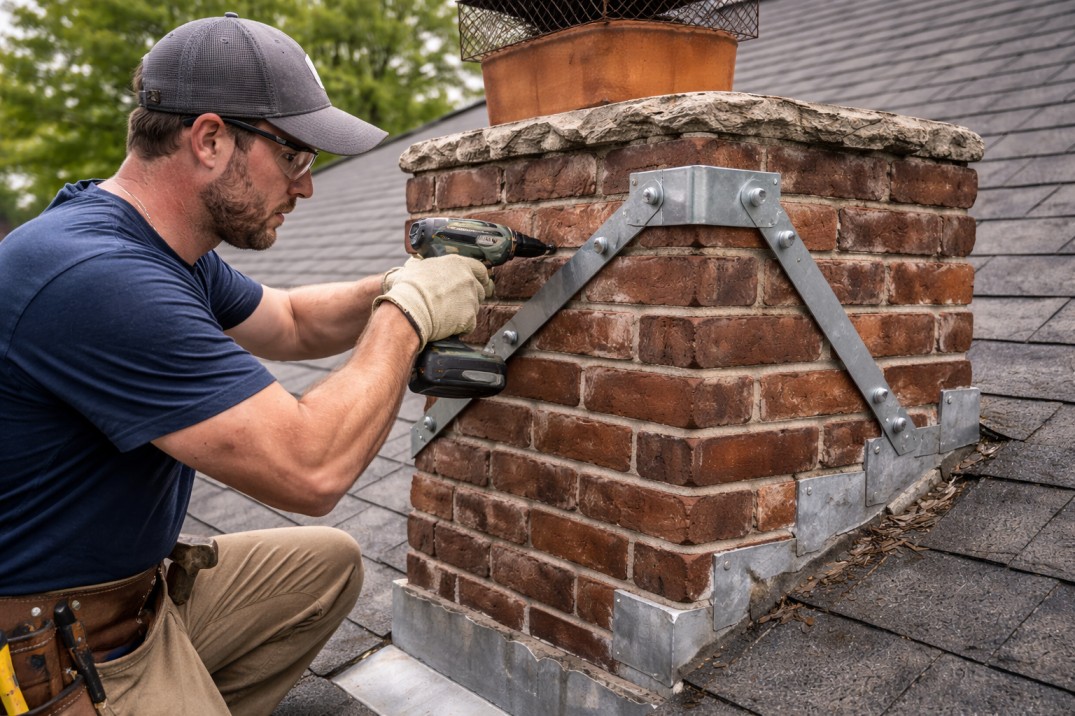
Securing the chimney to the home's framing is the most common retrofit approach.
Steel straps (T-straps) tie the chimney to roof and floor joists
Angle iron braces bolted in a V-shape from chimney to roof rafters provide lateral support
Internal rebar and concrete reinforce the flue enclosure from within
2. Partial or Complete Removal
Removing the most vulnerable section eliminates the collapse risk entirely.
Remove above the roofline replace the exposed brick section with a lighter metal flue
Complete demolition removes all risk if the fireplace is no longer in use
Faux chimney a lightweight braced exterior box maintains curb appeal without the structural danger
3. Reinforcing the Existing Structure
Concrete filling with rebar increases internal strength
Plywood bracing in the attic acts as a safety barrier, preventing falling masonry from punching through the ceiling
Repointing replaces deteriorated mortar note that repointing alone is maintenance, not seismic reinforcement
4. Replacing with Lightweight Systems
Factory-built metal flue inside a wood-framed chase dramatically reduces mass and collapse risk
Reinforced concrete footing prevents the chimney base from shifting during ground movement
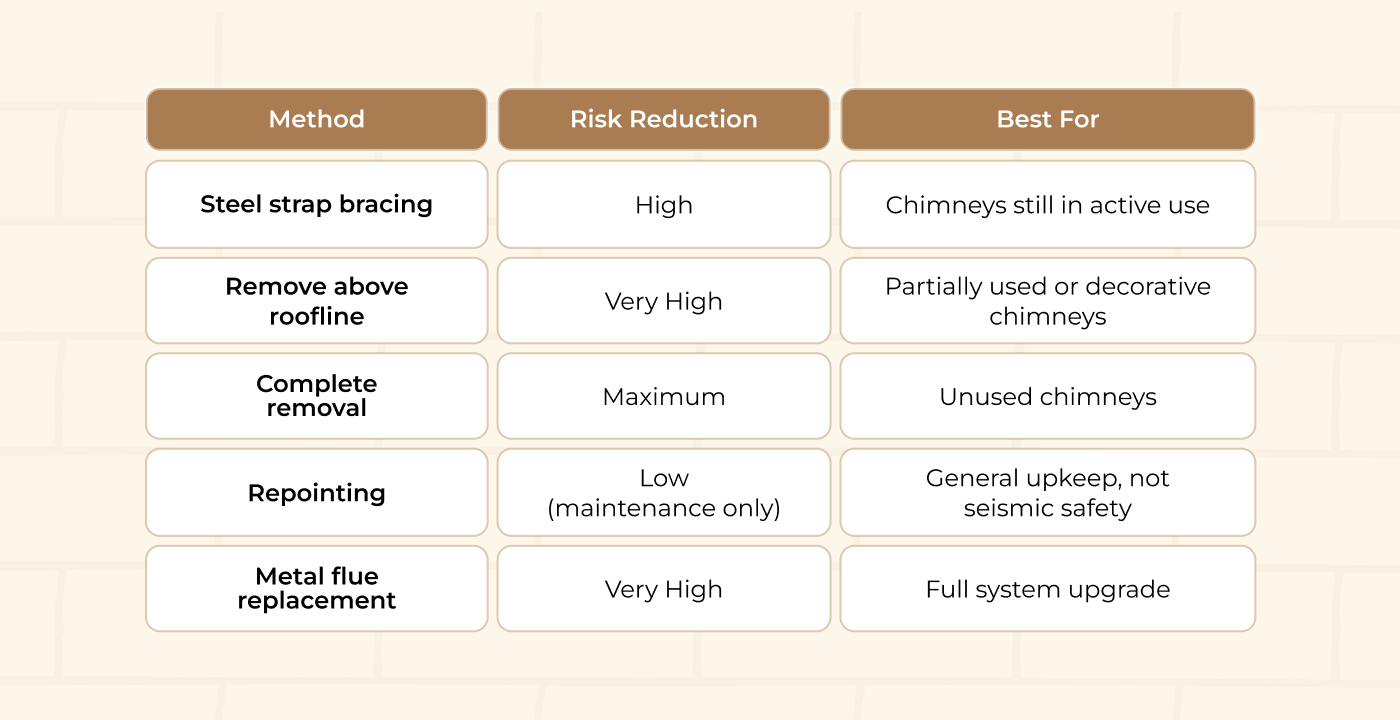
Chimney Retrofit Options at a Glance
Get a Professional Chimney Inspection First
Any seismic retrofit should begin with a licensed inspection. A structural professional can assess your chimney's current condition, identify the highest-risk areas, and recommend the most appropriate solution for your specific home and Boston's building codes.
Kings Masonry & Construction provides professional chimney repair and reinforcement across Boston, Brookline, Newton, and surrounding Greater Boston communities. Schedule a free on-site estimate before the next season arrives.
Frequently Asked Questions
How do you stabilize a chimney?
The most effective approach combines steel strap anchoring to the roof framing with internal reinforcement using rebar and concrete. For older Boston homes, removing the above-roofline section and replacing it with a metal flue is often the safest and most practical solution.
How do you prevent structures from collapsing during earthquakes?
Connecting heavy masonry elements to the building's structural frame is key. Unreinforced chimneys, parapets, and walls need to be anchored, reinforced, or replaced with lighter materials to reduce collapse risk.
What are 5 things to avoid during an earthquake?
Don't stand near a chimney, don't shelter in a doorway, don't run outside during shaking, don't use elevators, and don't stand near windows or unsecured heavy furniture.
How do you stop things from falling down a chimney?
A properly fitted chimney cap prevents debris, animals, and water from entering. For seismic safety, a damper system combined with structural bracing keeps the flue protected during and after an event.